
IFT WORLD
IFT Congratulates 50-Year Members; Getting to Know Felicia Loo
IFT recognizes 50-year members
The following individuals are celebrating their 50th anniversary as members of IFT: Sam Adapa, Steve Bates, Dennis J. Breitbart, John Bruhn, R. C. Chandan, Joseph WS Cheung, Marion L. Cremer, Theron W. Downes, Basant Dwivedi, Thomas C. Everson, Bruce M. Floyd, Gary M. Geist, Donald Gertzman, Thomas A. Gibson, Orlando Guedez, Yong D. Hang, Paul Jelen, Franco M. Lajolo, Kuen Ho Lee, David Levally, David R. Lineback, Shimon Mizrahi, Robert L. Olson, Gary A. Reineccius, Terence W. Richardson, Robert E. Ross, I. Sam Saguy, Thomas C. Sando, Robert F. Schiffmann, James K. Stewart, John G. Surak, Hank J. Van Driel, Herb Weiss, and Janusz M. Zak.
For John Bruhn, extension specialist emeritus at the University of California, Davis, IFT has been a part of his life since his university days. “IFT captured my attention first when I was awarded the IFT Gerber Scholarship as a junior (1957) and senior (1958) at Michigan State University,” he says.
While continuing his graduate studies, and later, as a member of the faculty at the University of California, Davis, Bruhn recalls, “The Northern California Section, Dairy Foods Division, and IFT overall each provided me opportunities for society leadership, knowledge growth, and lifelong friends. IFT was an important source of scientific information that I applied to real-world problems in the food and dairy industries. IFT was the one society that meaningfully contributed to my career.”
IFT thanks all of these valued members for their support.
Hung awarded Koehler-Ayers Professorship
IFT member Yen-Con Hung is the first recipient of the newly established Koehler-Ayers Professorship at the University of Georgia (UGA).The professorship is designated for a UGA faculty member with an outstanding record in externally funded research and/or scholarly publications who is engaged in teaching, research, public service, or a combination of such duties.
Hung is a professor in the UGA College of Agricultural and Environ-mental Sciences whose research program focuses on the development and application of advanced processing techniques to solve food safety and quality problems. After studying the use of electrolyzed oxidizing (EO) water as a disinfectant, Hung developed technology to apply EO water to ensure the safety of meat, poultry, fresh produce, and other foods. The technology also reduces bacterial contamination and disinfects food contact surfaces, contributing significantly to the foodservice and food manufacturing industries.
Hung’s dedication to global outreach and collaboration has helped to build safer food systems around the world, earning him UGA’s D. W. Brooks Award for Excellence in Global Programs in 2018 and the Bor S. Luh International Award from IFT in 2020. He also received the UGA Creative Research Medallion in 2002 and the D. W. Brooks Award for Excellence in Research in 2011.
Clemens’ column concludes
The May 2020 issue of Food Technology marked the final installment of a well-known column in our pages. For nearly two decades, Food Technology Contributing Editor Roger Clemens has provided insightful editorial content on food, health, and nutrition in his column. We offer our gratitude to Roger for his years of service to Food Technology as the creator and author of the Food, Medicine & Health column.
Have some news to share about yourself or another IFT member? Email mmalochleb@ift.org.
Getting to Know Felicia Loo
Each month, we meet one of IFT’s valued volunteers.
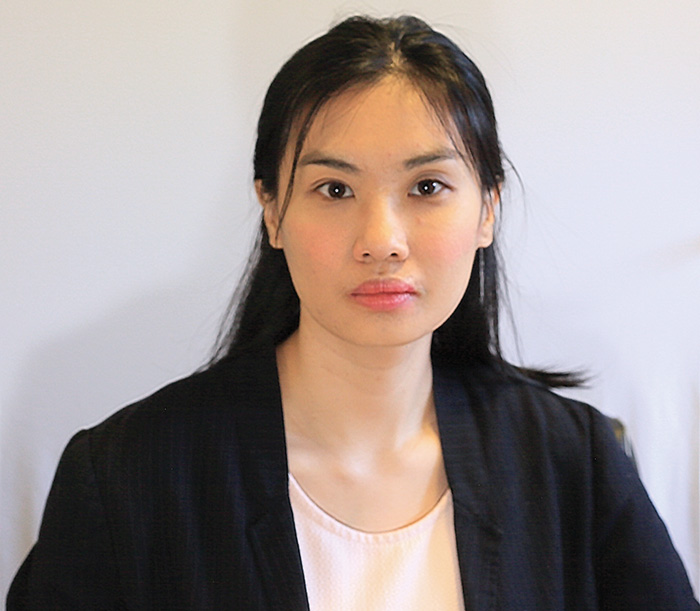
Being employed as a freelance food safety consultant has given Felicia Loo the opportunity to immerse herself in a variety of disciplines, which is one of the reasons she embraces change and continuous learning. “I enjoy the flexibility and diversity with the work that I do with my clients,” she says. “My projects vary—from food safety program development, implementation, training, and internal audit to project management.”
A graduate of the University of British Columbia with a BSc in food science, Loo is currently pursuing a post-graduate
certificate in quality management at the Memorial University of Newfoundland. She has been a part of IFT since 2011, when she was a student. Since then, she has served in multiple capacities and is currently the chair for the British Columbia Section. “Through volunteering with IFT, we build trust, common purposes, and a sense of community,” she says. “The connection, ideas exchange[d], and the time that we spend together build an ever-lasting bridge for a global food science community.”
Along with the connections she has forged through IFT, Loo’s work experiences and the opportunities they have brought “have allowed me to learn about myself and also have the freedom to help those who need food safety guidance the most,” she reflects. Looking ahead, this experience will undoubtedly help her assist her clients with the many changes taking place.
“Food wastage has gone up around the world due to COVID-19, as food cannot go through the supply chain soon enough to reach consumers,” she says. “We are seeing consumers starting to shift from foodservice to home-cooked food, and gaining some cooking skills there. Food businesses, regardless of size, have adapted to the ‘essential’ situation at the moment, and there is no evidence whether or not this is temporary or permanent. The overlapping uncertainties make it harder for food companies and the supply chain in general to forecast—or should I say, our forecast is a high-stakes bet that the trend that we see will continue or discontinue.”
Other issues wrought by the pandemic, observes Loo, are a slowing of the regulatory and third-party certification audit process, which is “leaving the food industries to self-regulate,” she says. “I think we will see both challenges and opportunities in the self-regulation situation, especially when the current focus for many food businesses is to survive ….”
In the midst of a global pandemic, the connections we make with others are more important than ever, which is why Loo finds IFT’s core value of Community so fitting. “Food scientists play multiple roles in advancing our food science knowledge, bridging the gap between science and consumers while supporting the food industries,” she says. “It is essential to acknowledge that all of us are doing essential services in building our communities.”
Authors
-
Margaret Malochleb
Categories
-
Career Development
-
Professional Development
-
Leadership
-
Food Technology Magazine


