
INGREDIENTS
Fats and Oils: Attitudes Evolve, Options Expand

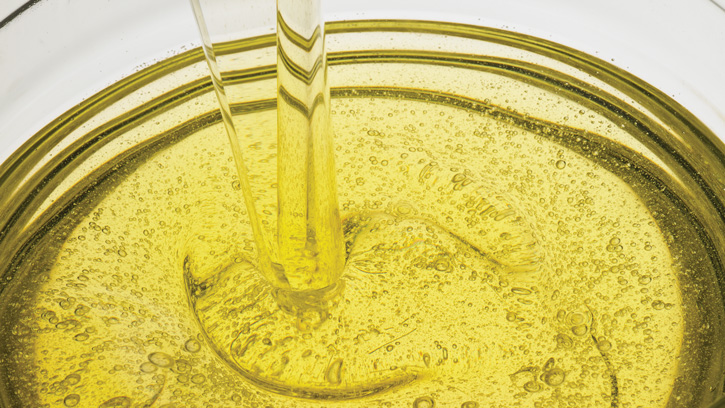
Many consumers are feeling better about fat consumption and have come to recognize that not all fats and oils are created equal. Photo courtesy of the United Soybean Board
Fats and oils are no longer four-letter words for consumers. More and more, shoppers are factoring nutrition and sustainability into their decisions about which fats and oils they want to see—or not see—on food and beverage labels.
Consumer attitudes about fats have shifted significantly from the days when they were all tarred with the same brush. Most global consumers now say that the amount of fat (70%) and the type of oil (67%) are important factors in determining which packaged foods to buy, reports Cargill’s 2020 FATitudes survey, with olive, avocado, and coconut oils tops for impact on purchase and perceptions of healthfulness. In addition, nearly two-thirds (61%) of U.S. consumers report avoiding certain fats or oils.
“As in past surveys, Cargill found consumers track fats and oils by closely reading labels on packaged food, and what they learn helps guide their purchasing decisions,” says Jamie Mavec, marketing manager at Cargill. “A ‘no saturated fat’ claim is the most influential, with 53% of consumers in 2020 saying they are more likely to purchase these products.”
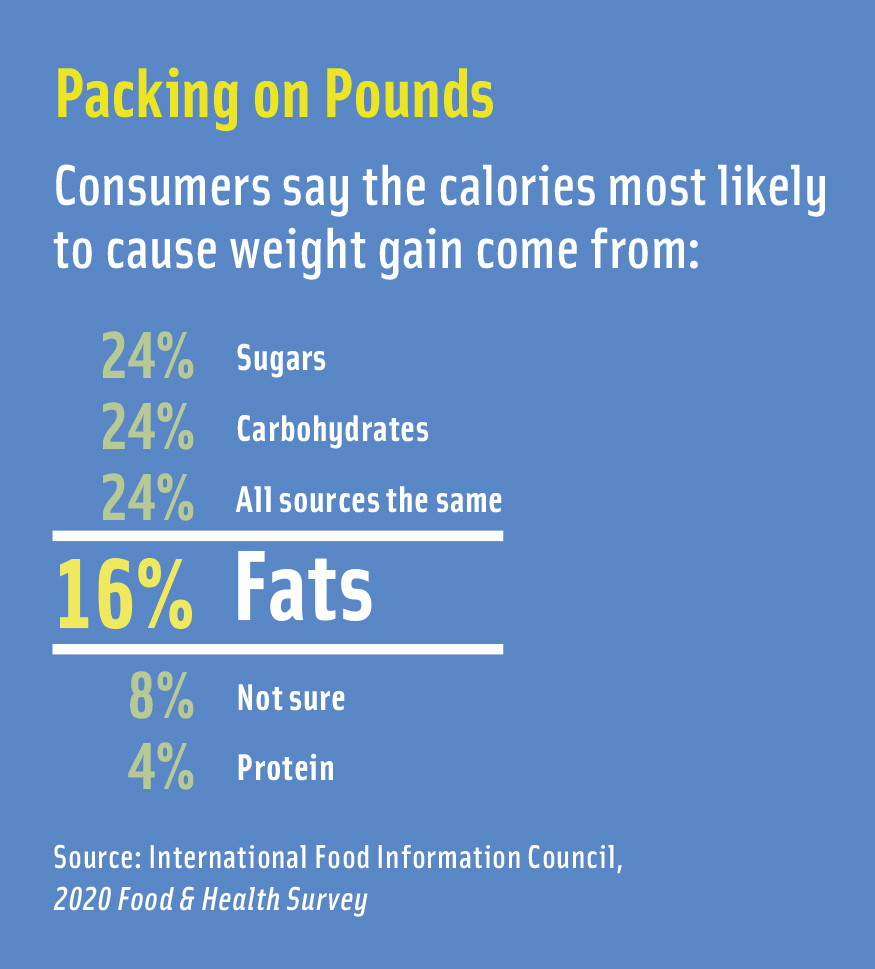
Source: International Food Information Council, 2020 Food & Health Survey
In addition, when asked which calorie sources were most likely to cause weight gain, just 16% of survey respondents chose fats compared with 24% for both sugars and carbohydrates, according to the International Food Information Council’s (IFIC) 2020 Food & Health Survey.
Trending interest in high-fat, low-carbohydrate ketogenic diets is another driver of evolving consumer willingness to move past old attitudes about the healthfulness of fats and oils. A ketogenic or high-fat diet was the third-most popular among the 43% of Americans who followed a specific diet or eating pattern in the past year, behind only intermittent fasting and clean eating, according to IFIC’s 2020 Food & Health Survey. In fact, the global ketogenic diet market is projected to grow from $10.2 million in 2019 to $15.3 million by 2027, a compound annual growth rate of 5.3%, reports The Insight Partners market research firm.
“Fats and oils are functional and necessary ingredients across applications, from baking, frying, emulsions, and more. The foods we consume are evolving to include plant-based food systems, tailored nutrition, and a focus on clean label and sustainable ingredients,” says Michelle Peitz, who works in technical solutions and marketing at ADM Oilseeds. “With these changes come different demands for oil ingredients. Formulators have to be prepared to satisfy these demands as they strive to create great-tasting products.”
Sustainability Sets the Standard
Even as consumers become more open to focusing on the nutritional and health benefits of fats and oils, they are narrowing their requirements for what they consider an acceptable level of sustainability for ingredients in food products. Already, 59% of consumers say it is important that the foods they purchase or consume are produced in an environmentally sustainable way, according to the IFIC survey, and the percentage of consumers who say environmental sustainability has a real impact on their purchases is up from 27% in 2019 to 34% in 2020.
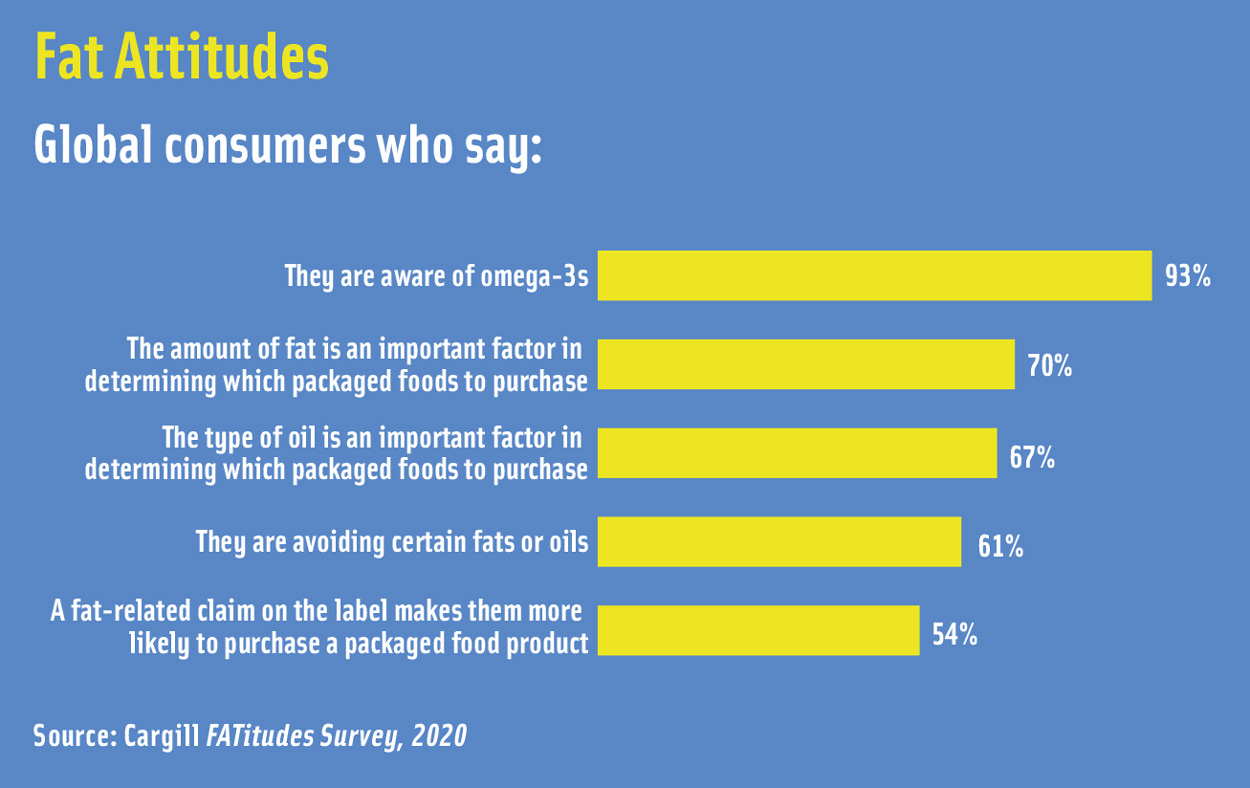
Source: Cargill FATitudes Survey, 2020
“Intense public pressure and corporate concerns regarding agricultural impacts on the environment and improvements to sustainable practices will dominate the oils and fats landscape for many years to come,” says Susan Knowlton, senior research manager at Corteva Agriscience.
Michelle French, director, global sustainability programs at ADM, says that “the greatest change we’ve seen in formulations hasn’t been which ingredient is used, but rather the focus on how that ingredient is sourced. . . . There is a recent shift in demand for more transparent and traceable fats and oils,” she says. “For instance, if an oil solution can be traced through the supply chain to the field it was grown, companies can conduct due diligence to make sure that commodity was sourced in a sustainable and responsible manner. We continue to see market demand for certified fats and oils, such as Roundtable for Sustainable Palm Oil (see sidebar on page 44) and Round Table on Responsible Soy.”
“Sustainable ingredients are important to consumers, especially in terms of where and how the ingredients were grown,” agrees John Jansen, vice president of strategic partnerships at United Soybean Board. He says some ingredient companies have made this a priority and direct consumers’ attention to the sustainability of their supply chain with labels such as the Sustainable U.S. Soy Mark.
Some formulators are also responding to consumer demand for sustainability and clean labels by utilizing expeller (mechanically) pressed oils in addition to non-GM and organic oils, says Jennifer Tesch, chief marketing officer at Healthy Food Ingredients. “The growth of sustainability and traceability, driven by consumer demand, will continue to evolve,” she says.
Fats and Oils for Plant-Based Foods
The mushrooming $7 billion U.S. plant-based foods market, which has seen 43% sales growth in the past two years, according to the Plant Based Foods Association, continues to create new challenges for formulators. Fats and oils are integral in formulating textural and flavor aspects to help these plant-forward foods mimic the traditional eating experience of animal-based products, says ADM’s Peitz.
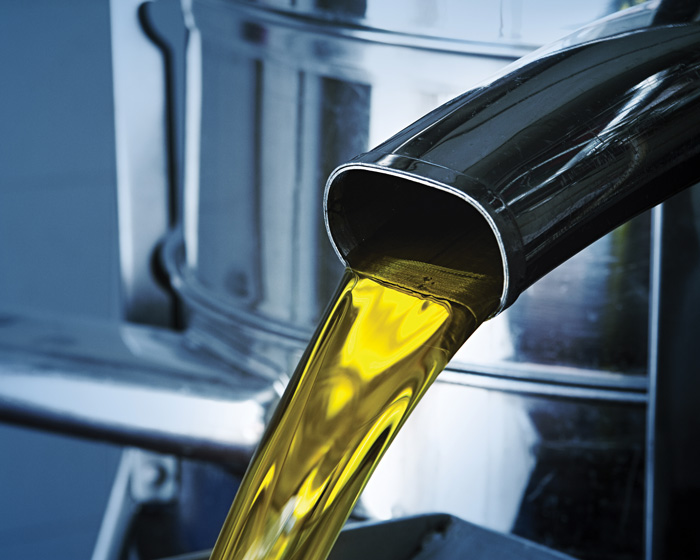
Consumers are seeking more transparency and traceability in the fats and oils used in the foods they purchase. © SensorSpot/E+/Getty Images
“In meat alternatives, fat sources are used for food fortification or adding essential nutrients, creating succulence by replicating the ‘juicy’ experience associated with animal-derived meat, as well as adding to the texture,” says Cargill’s Mavec. “In dairy alternatives, fats and oils provide critical solids that promote favorable texture, sensory, and mouthfeel.”
Consumers also have certain attributes they’re looking for in plant-based foods, so formulators need to balance both form and function in the fats and oils they use for these products.
“In keeping with the expectations of plant-based food consumers, plant-based foods tend to be clean label and derived from sustainable sources,” says Jeffrey Fine, senior director, customer innovation at AAK, which offers the AkoVeg line of fats for plant-based applications. “This means that the fats and oils used in plant-based foods must comply with these expectations as well.”
Most global consumers now say that the amount of fat and the type of oil are important factors in determining which packaged foods to buy.
Oil blends can help meet formulation challenges for some plant-based dairy alternatives. “Custom oil blends are . . . helpful in creating butter alternatives,” says Peitz. “For example, palm and soy or palm and canola blends have the functionality of shortening and can reduce saturates by up to 20%.” For a plant-based coffee creamer, “we can create the desired look and mouthfeel . . . by incorporating sunflower, soybean, coconut, palm, and rapeseed or canola oils into the formulation,” she adds.
New ways to structure liquid oils for use in plant-based applications that require solidity continue to be developed, says Knowlton. That includes the incorporation of blends with solid sources of fat and/or specialized emulsifiers, processing techniques such as interesterification, and new methods not yet commercialized, such as the use of oleogels and oleofoams.
Knowlton says a recent journal article described an oleogel application in which high oleic oils were used to simulate pork fat in bologna sausage without a negative impact on taste or functionality.
Stable Goals
The World Health Organization is aiming to phase out industrially produced trans fat from the global food supply by 2023, and on Jan. 1, 2021, the United States hit its final compliance date for manufacturers to stop adding partially hydrogenated oils (PHOs) to food, following the U.S. Food and Drug Administration’s (FDA) 2015 determination that PHOs were no longer Generally Recognized as Safe (GRAS). The disappearance of added trans fat has been good news for heart health but has also created formulation issues, especially for stability.

Soybean-based interesterified shortenings can be used as a drop-in replacement for the partially hydrogenated shortenings in baked goods. Photo courtesy of the United Soybean Board
“Partially hydrogenated oils (trans fats) were inherently stable in formulations and easy for customers to store and use. With many replacement options, some of the functionality—especially around shelf-life stability, plasticity, and shortening storage—became more complex,” says John Satumba, global bakery technical lead and regional R&D director for North America, global edible oil solutions, at Cargill, which in 2019 introduced PalmAgility, a palm-based shortening that is more temperature tolerant, has greater plasticity, and stores easily.
“Since FDA revoked GRAS status of PHOs, the food industry has relied on several other fat/oil formulations, depending on the functionality they are looking for. These include high stability oils, fully hydrogenated oils, and interesterified oils, among others,” says Knowlton.
The FDA’s trans fat action “seemed to open a new door for soybean-based interesterified shortenings, which are now available and can be used as a drop-in replacement for the banned partially hydrogenated shortenings in bakery applications like cookies, pies, cakes, and icings,” says Dennis Strayer, United Soybean Board oils consultant. “The use of high oleic soybean oil has also been growing as a replacement for the partially hydrogenated soybean oil used in frying applications.”

Olive oil, avocado oil, and coconut oil are among the oils with the highest impact on packaged foods purchases, according to Cargill research. © AlexPro9500/iStock/Getty Images Plus
High oleic oils, which are also known as high stability oils and contain high levels of monounsaturated fats, are just a decade old and came into prominence as a substitute for PHOs containing trans fat, says Knowlton.
“Initial use of these oils was mostly in liquid applications, such as frying and spray oils, but has since been used in solid fat applications that require additional structuring or processing to provide the necessary functional and textural properties,” she says.
Knowlton adds that “foods made with commodity oils often require additional preservatives because the high level of polyunsaturated fatty acids leads to instability over time. Because of their unique composition, high oleic oils can be up to two to three times more stable under oxidative conditions compared to commodity oils.”
“There is a renewed interest in extending shelf life, and this can be accomplished by either using high stability oils such as high oleic sunflower or high oleic safflower oil where possible, or by using natural antioxidants,” agrees AAK’s Fine.
Sustainable Progress for Palm Oil
Despite continuing consumer concerns about the role its production plays in global deforestation, palm oil remains the world’s top consumed vegetable oil, reports the database company Statista. The worldwide palm oil market is projected to reach $52.3 billion by 2025, a compound annual growth rate of 5.6% from 2018 to 2025, according to ReportLinker’s Global Palm Oil Industry report.

Fresh oil palm fruits. © slpu9945/iStock/Getty Images Plus
In the United States, however, consumption of soybean, corn, and canola oils still far surpasses that of palm oil, suggest data from the U.S. Department of Agriculture’s Economic Research Service. The increasing demand for environmentally friendly food and beverage products has made palm oil suspect to some consumers in the United States and other countries, but efforts to encourage and highlight sustainability throughout the palm oil supply chain are ongoing.
The nonprofit Roundtable on Sustainable Palm Oil (RSPO) was established in 2004 with goals of promoting palm oil production practices that help reduce deforestation, preserving biodiversity, and respecting the livelihoods of rural communities in oil-producing countries. Today, 19% of palm oil globally is certified by RSPO, and the group’s 5,000-plus members include 40% of the world’s palm oil producers. The RSPO trademark, launched in 2011, is used on more than 400 consumer products in 67 countries.
EPG Fat-Reduced Fat Goes to Market
Epogee’s innovative EPG (esterified propoxylated glycerol) replaces fat with . . . a lot less fat.
The GMO-free, modified plant-based oil, which is made from rapeseed, can replace up to 85% of the digestible fat in a formulation, says Jayme Caruso, chief commercial officer at Epogee.
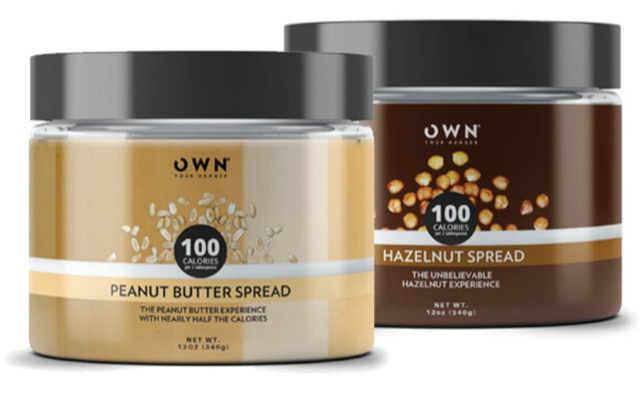
Formulated with EPG alternative fat technology, OWN Your Hunger spreads have roughly half the calories of regular peanut butter and hazelnut spreads. Photo courtesy of OWN Your Hunger
“EPG dramatically improves the nutritional aspects of the foods it is used in because it has 92% fewer calories and labeled grams of total fat and saturated fat than its traditional counterparts,” says Caruso. EPG can also enable improvements in healthy products that are already low in calories from fat, he says, by adding back the taste and function of fat without significantly impacting the nutrition panel.
“Because EPG is made from fat . . . [it] does not require the addition of sugar or other ingredients, like starches, gums, binders, preservatives, and flavor enhancers currently used in low-fat and low-calorie foods,” said Sarah Malenich, senior director of marketing at Epogee, in a press release.
The first consumer product with EPG rolled out in 2018, and it’s currently used in several retail brands—including Nick’s Swedish-style Light Ice Cream, OWN Your Hunger peanut butter and hazelnut spreads, and Sweet Nothings chocolate candies. Epogee expects multiple new products to hit local grocery store shelves this year, says Caruso.
Caruso also says that EPG avoids the unpleasant side effects of fat replacers from other eras. “Unlike previous attempts in the fat replacement category, EPG’s starting material is fat, not starch or sucrose,” says Caruso. “Because EPG is solid at body temperature, there are no gastrointestinal issues with elevated consumption.”
EPG already has achieved Generally Recognized as Safe (GRAS) status in 14 applications, including snack foods, plant-based protein products, beverages, and dairy product analogues, with more applications expected to join the GRAS list, says Caruso.
Cultured Fats on the Cusp of Commercialization
Cultivated from animal fats without harming animals, cultured fats are emerging as a solution to sustainably beef up the taste and texture of plant-based meats.
Three global startups are fast approaching commercialization of cultured fats produced from chicken, duck, pork, and beef cells. Mission Barns, a Silicon Valley–based cellular agriculture company launched in 2018, takes pork, poultry, or beef cells and feeds them a plant-based feedstock inside a cultivator. Peace of Meat, which was established in Belgium in 2019 and acquired in late 2020 by cultured meat producer Meat-Tech 3D, has developed stem cell–based bioreactor technology for cultivating animal fats from chicken and ducks. And Spanish startup Cubiq Foods is producing cultivated fat enriched with microencapsulated omega-3s.
“Mission Fat behaves and functions like conventional animal fat,” says Eitan Fischer, CEO of Mission Barns. “Compared to plant oils such as coconut or canola, Mission Fat offers a much meatier mouthfeel and has higher melting points, which leads to improved fat retention and a juicier final product.
“A big trend we’re seeing right now in plant-based meat is the desire for reduced fat content,” adds Fischer. “We’ve found that because of the functional advantages of Mission Fat, we can use less total fat than incumbent products, which use plant oils—in some cases as little as half as much—while still resulting in a significantly improved product.”
“Our main focus is to use the cultured fat as an ingredient to plant-based meats and fully cultured products,” says David Brandes, co-founder, Peace of Meat, whose research suggests that 68% of plant-based meat producers would be likely or very likely to use cultivated meat ingredients in their plant-based products. “Peace of Meat cell-cultured fat supports ambitions toward a cleaner and shorter label, reducing the number of ingredients by up to 60% whilst improving taste and texture of plant-based meats.”
Down the road, cultured fat ingredients may also be targeted to a wider range of products. “Mission Fat can be used in any products that could benefit from the use of animal fat, including sweets and cosmetics,” says Fischer.
Brandes says he expects cell-cultured products industrywide to be ready to enter commercial markets in significant volumes starting in 2022 in Asia, in 2023 in the United States, and by 2024 in the European Union.
Authors
-
Elizabeth Brewster Writer
Elizabeth Brewster is a freelance writer based in Evanston, Ill. (lib500@comcast.net).
Categories
-
Culinary and Ingredient Trends
-
Food Product Development
-
Food Ingredients and Additives
-
Fats and Oils
-
Food Technology Magazine


