
New Research on Ingredients, Product Introductions, and More

PRODUCT DEVELOPMENT

© BartekSzewczy/iStock/Getty Images Plus
Trending Opportunities
Prinova research indicates that consumers are turning to tea, coffee, and energy drinks as they reduce their alcohol intake. The report also suggests that even more drinkers—younger ones in particular—would cut back if a wider range of healthy nonalcoholic beverages were available. To explore current trends in the beverage space, Prinova surveyed 1,277 physically active European consumers. More than four in 10 (42.5%) said they had reduced their alcohol intake over the past three years, compared with just 15% who reported drinking more. Consumers aged 25–34 were the most likely to say they were consuming less alcohol.
Among those who had cut down on alcohol, most were turning to healthier beverage options, including coffee, tea, still water, and juices/smoothies, with preferences varying by age, gender, and location. Consumers over the age of 65 were five times more likely than average to have increased their consumption of dairy beverages, while alcohol-free beer was significantly more popular with those in demographic segments older than Gen Z.
RESEARCH
© HandmadePictures/iStock/Getty Images Plus
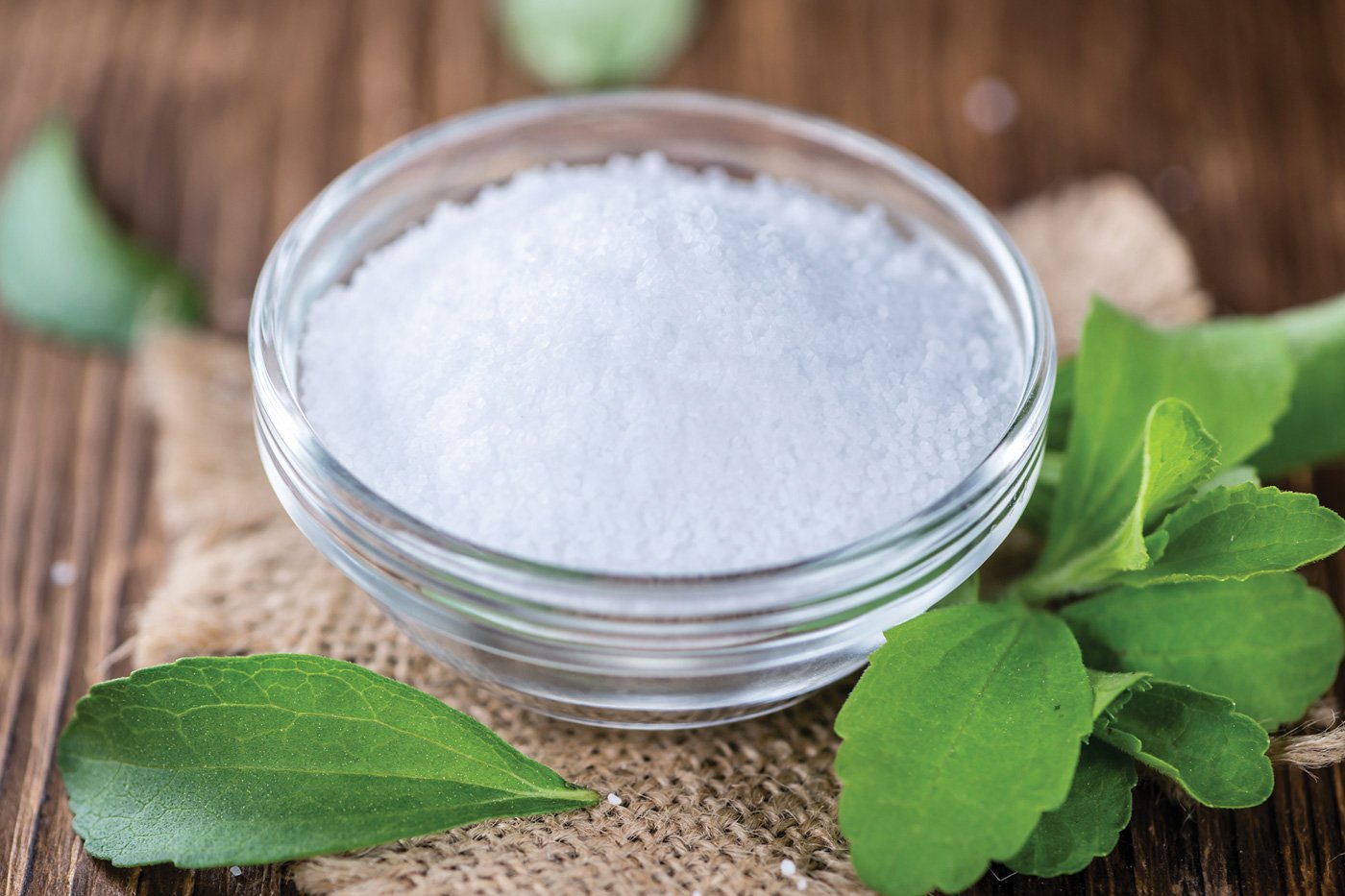
Research funded by Cargill and published in the Journal of Nutrition found stevia had no significant effect on the human gut microbiome, adding to the considerable body of research supporting the sweetener’s use in foods and beverages. The four-week study tracked the effect on the gut microbiome of daily consumption of a beverage sweetened with a high dose of stevia and one sweetened with sucrose. Among the key findings, daily consumption of a stevia-sweetened beverage was well tolerated by study participants, had no significant effects on the relative abundance of gut microflora, and had no significant effects on microbial production of short-chain fatty acids (which have notable beneficial biological functions) over four weeks. The research builds on dozens of previous studies affirming the safety and benefits of stevia sweeteners, including another recent Cargill-funded study exploring how stevia influences appetite, energy intake, and blood glucose levels.
A preclinical study provided further evidence of the neuroprotective and cognitive enhancement benefits of BrainPhyt, a standardized extract of microalgae Phaeodactylum tricornutum (PT) from Microphyt. It contains 2% fucoxanthin, a carotenoid and potent antioxidant that fortifies neurotransmitters and neuronal networks and omega-3 fatty acids. The study was published in the peer-reviewed journal Marine Drugs. Microphyt utilized a mouse model with accelerated aging induced by D-galactose exposure to study the effects of BrainPhyt on cognitive function, oxidative stress, and inflammation parameters. Results showed that BrainPhyt provided significant protection against memory and behavior issues caused by D-galactose. Higher doses of BrainPhyt not only mitigated but completely reversed the D-galactose-induced cognitive decline.
EverGrain announced that a newly published clinical study on brewer’s spent grain protein isolate (BRP), the byproduct of barley used in the beer brewing process, demonstrated its digestibility and extensive techno-functionality characteristics. The study examined EverPro Barley Protein, made from Upcycled Certified brewer’s spent grain, with regard to its functionality and digestibility, in comparison to a variety of commercially available alternative proteins, including whey, soy, rice, and two pea protein sources. The study concluded that EverPro Barley Protein is highly digestible, behaves similarly to whey protein isolate regarding high protein solubility, foaming capacity, and surfactant properties, provides a near complete amino acid profile with lysine as the single limiting amino acid, and exhibits the highest oil-binding capacity of all examined protein ingredients.
Ardent Mills released its inaugural Trend to Table report, which dissects over 10,000 survey results to better understand what drives consumer decision-making related to food choices. Notably, it highlighted tension points within consumer preferences. For example, while 80% of respondents emphasized seeking healthier foods to meet their dietary goals, 68% also prioritized indulgent treats. This tension reflects the complex interplay between health-conscious choices and the desire for enjoyable, indulgent treats, presenting both challenges and opportunities for food manufacturers.
NEW PRODUCTS

© kieferpix/iStock/Getty Images Plus
Nektium developed a new water-soluble formulation of its nootropic Zynamite for cognitive and sports nutrition drinks. Zynamite S is designed for drink applications, such as ready-to-drink beverages, where solubility, heat stability, taste neutrality, and transparency in solution are key. Used to support mental and physical energy, Zynamite is a Mangifera indica extract created from sustainably harvested mango leaves.
NutriLeads BV announced that BeniCaros, its precision prebiotic and immune-training fiber for foods, beverages, and dietary fibers, is now available in five product options to accommodate diverse customer formulation needs. The expanded product lineup includes varying concentration levels of the active ingredient (Rhamnogalacturonan-I or RG-I) to allow for larger daily serving sizes. These variations in purity are also designed to meet European regulatory requirements and align with a wide range of application needs.

© VeselovaElena/iStock/Getty Images Plus
Butter Buds launched Cheese Buds Simple Cheddar Cheese Concentrate, making it possible to increase overall cheddar cheese flavor with very low inclusion levels to deliver a natural, indulgent cheddar taste without the need to declare as “flavor” or “natural flavor” for a cleaner label. Now manufacturers have a cost-effective way to deliver gourmet taste in a variety of applications, including sauces, seasonings, soups, and baked goods.
INDUSTRY UPDATE
Nutrition21 LLC offers insight into the cognitive health category, noting it is poised to be one of the fastest-growing health areas of the year. The company’s latest white paper highlights the role cognitive health plays for today’s wellness consumer, key considerations when formulating a cognitive health supplement, and how manufacturers can bridge the gap by incorporating nooLVL, a nootropic ingredient associated with safely improving the ability to focus.
Consumer demand for cognitive health solutions has grown significantly since the pandemic and now competes with the desire for digestive and immune health as a consumer priority. Supplements launched in North America positioned toward mental acuity have had a compound annual growth rate of nearly 20% from 2020 to 2023. And Google Trends data show a steady growth in the search term “cognitive health” in the United States over the past four years, reflecting a greater number of consumers seeking information about the topic and looking for health solutions that can help support cognitive health and performance.
dsm-firmenich opened a new pilot plant in Plainsboro, N.J., offering a full range of capabilities and equipment to help customers move from development on the benchtop to small scale-up production in the pilot plant that will inform and accelerate final large-scale production. The pilot plant is focused on scaling up beverage production and will support applications such as juices, ready-to-drink coffee and tea, sports drinks, carbonated soft drinks, sparkling water, and energy drinks, as well as dairy and plant-based products like milks, creamers, and protein shakes.
Oobli announced it has received a “No Questions” letter from the U.S. Food and Drug Administration, accepting the company’s conclusion that the Oubli Fruit Sweet Protein (known by its scientific name as brazzein) is Generally Recognized as Safe (GRAS) for use as a sweetener in foods and beverages.
Sethness Roquette appointed Integral Food Ingredients as the company’s sole distributor for Australia.
HOWTIAN completed a comprehensive Life Cycle Assessment of its key stevia product lines. For the basis of its analysis, Switzerland-based Société Générale de Surveillance determined what the environmental footprint would be from producing and processing HOWTIAN’s Reb A 97 in order to generate the equivalent sweetness of 1 metric ton of white sugar. When these results were compared to like-for-like metrics for cane sugar, the study found that HOWTIAN achieved 78% reduction in CO2 emissions compared to cane sugar, 77% reduction in water usage, and 94% reduction in agricultural land usage.
Arla Foods Ingredients took a major step toward its carbon reduction goals with the construction of an electric heat pump facility at its primary processing plant in Denmark. The €32 million project is Arla’s largest single investment in net-zero initiatives to date. Scheduled to go live in 2025, the facility at the Danmark Protein site in Denmark will be able to convert 2.8 MW of electricity into 8 MW of heat. The shift to heat production by electricity instead of gas will cut the site’s greenhouse gas emissions by an estimated 14,500 tonnes CO2 equivalent a year—a 22% reduction compared with 2023.
Bonumose, a producer of tagatose, and ASR Group, its distributor, announced that tagatose attained the NutraStrong Prebiotic Verified certification. NutraStrong Prebiotic Verified is an industry-spanning program that classifies products with relevant and specific standards for each product category. These standards set a baseline of quality and testing to ensure the market is providing customers with quality prebiotic products.
M2 Ingredients completed the expansion of its facility to 155,000 square feet of organic mushroom cultivation and processing space, which sets a new benchmark for functional mushroom cultivation in North America. Certified 100% organic and boasting a BRCGS AA-rating, the new facility doubles the company’s 2023 capacity with plans to triple it by 2025.ft
Do you have any innovations or updates to share? Please send news to suppliercentral@ift.org.
Hero Image: © HandmadePictures/iStock/Getty Images Plus
Authors
-
IFT STAFF
Categories
-
Food Categories
-
Food Ingredients and Additives
-
Beverages
-
Food Technology Magazine
-
Prebiotics
-
Probiotics
-
Sweeteners


