
Peak Protein: Ancient Wisdom, Modern Science

 Cindy Stewart
Food Technology Magazine
Learning Objectives
-
Obtain a new perspective on how traditional and biomass fermentation processes have evolved and continue to evolve through the advancement of science to provide traditional and unique proteins and ingredients.
-
Review key health benefits of foods produced via traditional and biomass fermentation and future research needs.
-
Understand the origins of probiotics and how fermented foods and probiotics are related but are different in their definitions.
Fermentation is one of the oldest forms of food preservation, and fermented foods are some of the oldest and most important foods that add value, nutrition, unique flavors and textures, and stability to raw agricultural products. Compared to conventional farming, the production of fermented products requires reduced land, generates fewer greenhouse gas emissions, and consumes less water (Stewart June 2024).
Fermentation intersects several major food trends. It’s a process that is natural, sustainable, global, functional, provides unique sensory experiences, creates nutritious foods, enables food security and preservation, and is part of every culture around the globe, driving a resurgence of fermented foods in the retail sector. Interest in fermentation from home cooks has skyrocketed, with thousands of books, fermentation kits, classes, and clubs available. Restaurant chefs are embracing umami-packed fermented ingredients, including miso, natto, gochujang, and koji. Globally, Technavio predicts the market for fermented foods will reach $846 billion by 2027.
Many fermented proteins and ingredients we eat today have been produced for thousands of years. The earliest evidence of fermented fish was found in Sweden, and dates to 9,600–8,600 years ago. Tempeh, soybeans fermented with Rhizopus, may be the oldest food technology in the history of the Javanese people, perhaps more than 1,000 years old. Lup cheong, Chinese fermented sausage, dates to 589 BC, and the Romans produced dry fermented sausage to preserve meat after slaughter. Protein-rich fermented dairy products such as yogurt, kefir, and cheese date back thousands of years, as do ingredients such as soy sauce, miso, doenjang, and vinegar.
Categories and Classifications
Fermentation can be categorized according to the main biochemical pathway into four basic categories: alcoholic, lactic, acetic, and alkali fermentation. Steinkraus proposed a seven-category classification based on the microorganisms and the changes (chemical, physical, and nutritive) occurring during fermentation. In this classification, vegetable-protein meat substitutes (e.g., tempeh), high salt/meat-flavored amino acid/peptide sauces and fermented paste (e.g., fish sauce, miso), and leavened and sourdough breads were added as separate categories (Mannaa et al. 2021).
Continuously interacting microbiota of fermentation ecosystems, encompassing different types of bacteria, yeast, and fungi, play a major role in the quality and safety of fermented foods. Often a consortium of microorganisms is involved in fermentation. For example, kombucha uses a symbiotic culture of bacteria and yeast and comprises three main types of fermentation: alcoholic, lactic, and acetic (Figure 1).
The International Scientific Association for Probiotics and Prebiotics defines fermented foods as “foods made through desired microbial growth and enzymatic conversions of food components” (Marco et al. 2021). This definition accommodates the many products made globally from diverse starting materials that are produced by fermentation but might not have living microorganisms at the time of consumption. Even though fermented foods do not meet the definition of a probiotic, many still contain live cultures and the byproducts of the fermentation process, which can confer health benefits.
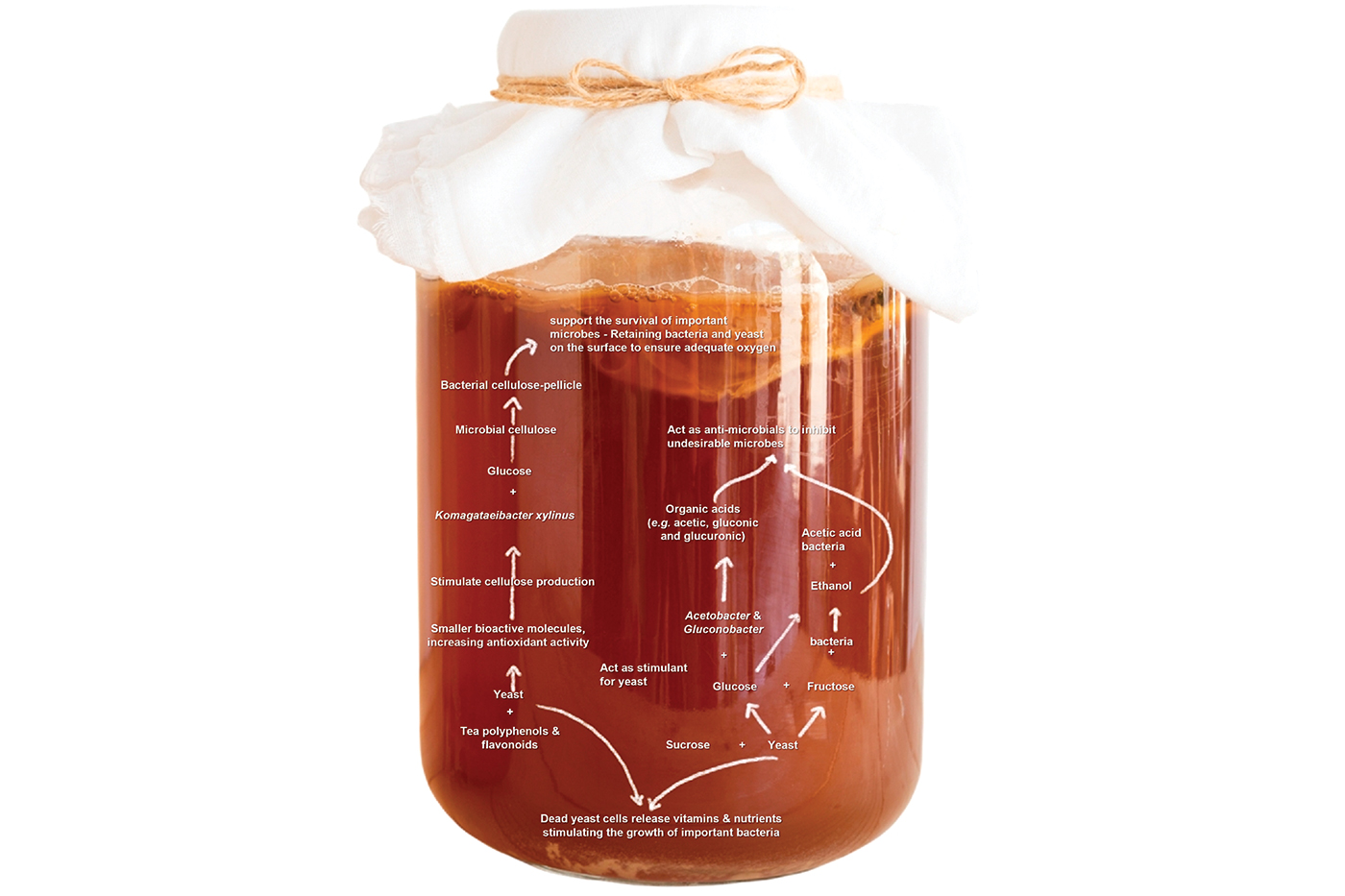
Figure 1. An illustration of the metabolic interplay and functional compatibility of kombucha fermentation microbiota, representing a model for the adaptation and symbiosis of the microbiota in the fermentation ecosystem. (From Mannaa et al. Evolution of food fermentation processes and the use of multi-omics in deciphering the roles of the microbiota. Foods. 2021 Nov 18;10(11):2861. doi: 10.3390/foods10112861. PMID: 34829140; PMCID: PMC8618017.) © 2021 by the authors. Licensee MDPI, Basel, Switzerland. This article is an open access article distributed under the terms and conditions of the Creative Commons Attribution (CC BY) license (https://creativecommons.org/licenses/by/4.0/).
Health and Nutrition Benefits
There is widespread scientific agreement that consumption of fermented foods has many health benefits, including enhancing the gut microbiome (Figure 2). They help to achieve a healthy ratio of bacteria and yeasts, improving metabolism. The cultures in fermentation processes produce enzymes, which can help digest other foods eaten with them and improve overall nutrition adsorption.
Epidemiological evidence suggests that diets rich in fermented foods can reduce the risk of disease and enhance longevity and health. A diet with higher intake of microbe-containing foods was associated with positive health outcomes, including lower blood pressure, body mass index, waist circumference, blood sugar, and triglycerides, according to a recent study analyzing national food consumption data (Hill et al. 2023). Research describing the mechanisms of how fermented foods affect human physiology is limited, and therefore defining these gaps provides a basis for future research.
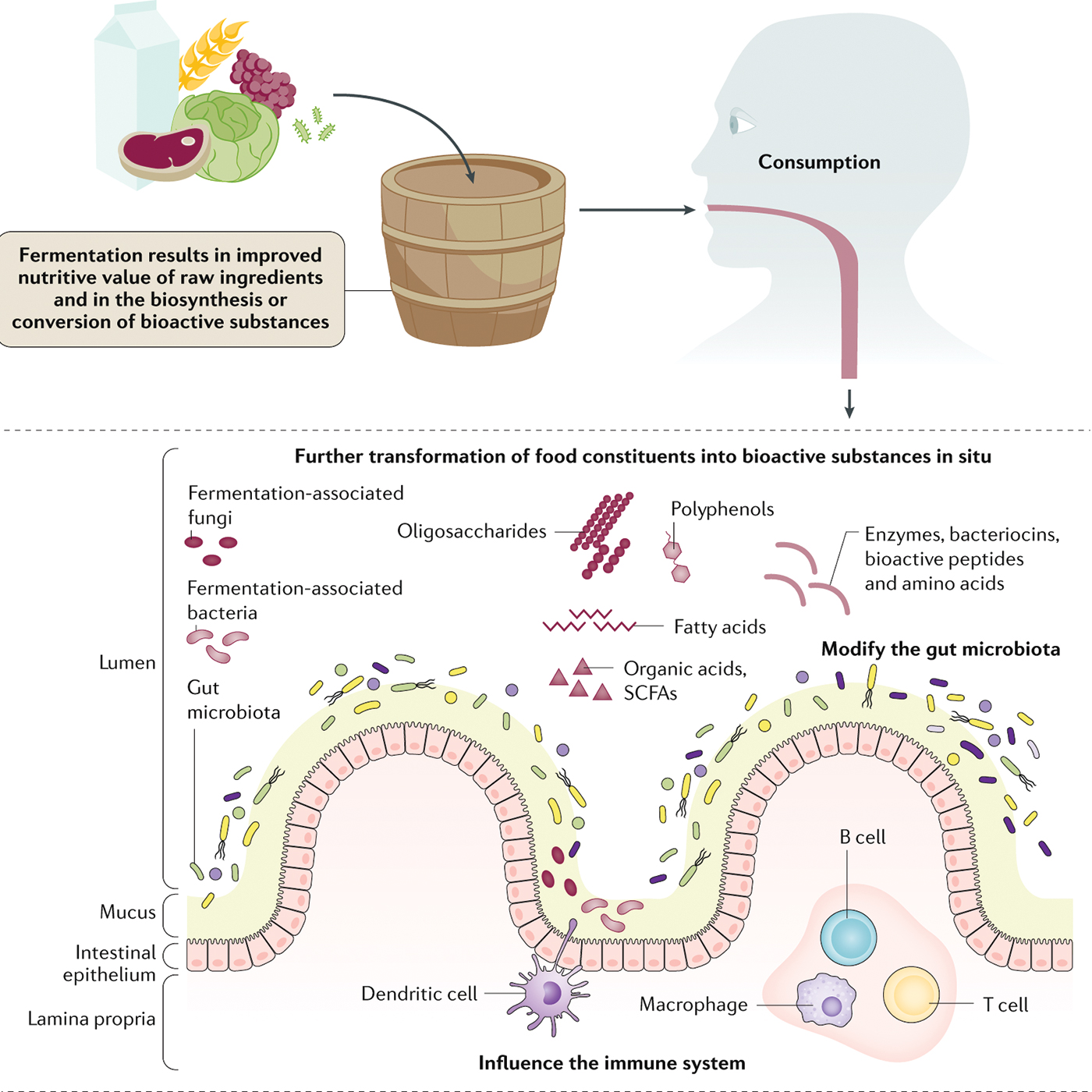
Figure 2. Mechanistic basis for the health benefits of fermented foods. (From Marco et al. The International Scientific Association for Probiotics and Prebiotics (ISAPP) consensus statement on fermented foods. Nat Rev Gastroenterol Hepatol 18, 196–208 (2021). https://doi.org/10.1038/s41575-020-00390-5.) © 2021 by the authors. Licensee ISAPP/Springer Nature. This article is an open access article distributed under the terms and conditions of the Creative Commons Attribution (CC BY) license (https://creativecommons.org/licenses/by/4.0/).
Protein Fermentation Processes
The evolution of food fermentation processes started before humans discovered microorganisms. Indigenous microbes were used to ferment foods. Today, advanced genomic and analytical tools are being used to understand the microbes, microbial community, and environment dynamics in fermentation ecosystems (Mannaa et al. 2021). The evolutionary steps include:
- Spontaneous fermentation: Traditional process relying on microorganisms that are naturally occurring on the raw foods undergoing the fermentation process. This was the main method for producing fermented foods throughout history and remains in practice today in small-scale production, developing countries, and household settings
- Back-slopping: Fermentation is started by taking a small portion of a fresh fermentation batch and transferring it to fresh raw ingredients as an inoculum for the next batch. This method reduces the risk of failure and facilitates the competitive ability of the fermentation microbes, which adapt over time to the food substrate and conditions.
- Starter cultures: With the evolution of microbiological techniques, specific starter cultures have been isolated from fermented foods and characterized. They are used today on the industrial scale and for some home processes (e.g., yeast purchased to make bread). Well-defined starter cultures accelerate fermentation processes, restrict the growth of harmful microbes, and impart desired sensory properties in the final product. Fermentation is used to produce industrial-scale starter cultures.
- Genetic improvement of starter cultures: Fermentation processes have significantly improved, using molecular biology techniques. Advanced tools allowing for high-throughput screening for specific targeted genes and metabolic pathways have resulted in the selection of better performing and well-adapted starter cultures for improved fermentation. Additionally, natural selection and evolution techniques (adaptive laboratory evolution, genome shuffling, and genome editing), have been used to enhance the performance of existing strains.
- Microbiota dynamics: Continuously interacting microbiota of food fermentation ecosystems, encompassing different types of bacteria, yeast, and fungi, play a major role in shaping the quality and safety of fermented foods and beverages. The recent advancement of next-generation gene sequencing and integrated multi-omics analysis has enabled the identification of microbial composition, microbe-microbe, and microbe-environment interactions within food fermentation ecosystems. This understanding can provide opportunities to improve fermentation processes further, for safer and better-quality products with desired organoleptic properties and extended shelf life.
Through these approaches, starter cultures can provide many improved functionalities to the fermented food, including secretion of glucose to increase sweetness; production of vitamins, antifungal compounds, bacteriocins; unique textures and aromas; increased acidification rates; elimination of biofilm formation; and bacteriophage resistance.
In biomass fermentation, the microorganisms themselves are the final product. It is a key process for producing large quantities of protein-rich foods. The first breakthroughs came at the beginning of the 20th century, with the production of single-cell proteins as a more sustainable protein source. A good example of this is the production of mycoprotein, which comes from fungal mycelium formed by intertwined hyphae in a network, resulting in protein-rich fibrous structure reminiscent of meat. Mycoprotein, which is designated as generally recognized as safe (GRAS) by the U.S. Food and Drug Administration, can be obtained through the fermentation of certain types of fungi with GRAS status such as:
- Fusarium venetarum (Quorn, ENOUGH)
- Fusarium strain flavolapis, discovered in geothermal springs (Nature’s Fynd)
- Various fungi, including Aspergillus and Trichoderma (MycoTechnology)
The production of fungal mycelium biomass can be broadly categorized into two main types of fermentation: solid-state fermentation (SSF) and submerged fermentation (SmF). Stirred-tank and air-lift bioreactors could also be used in submerged cultivation. By leveraging these fermentation processes, various fungal mycelium-based food products have been and can be developed, including meat substitutes, protein supplements, protein isolates, flavor enhancers, and other functional food ingredients.
As mycoproteins are balanced proteins, with all essential amino acids present, they are suitable for both food and feed applications. Their cell walls contain a “fibrous chitin–glucan matrix” (with a fiber content of at least 6%), making them a food source that is high in fiber and can include beta-glucans and prebiotic fiber. Research has reported that Fusarium fungi help maintain healthy blood cholesterol levels and blood glucose and insulin levels, promote muscle synthesis, and increase satiety.
Probiotics and Starter Cultures
More than a century ago, Elie Metchnikoff first introduced the concept that gut flora can be modified, and harmful microbes replaced with beneficial ones to confer health benefits. He suggested that drinking fermented milk would establish harmless bacteria in the gut and decrease the pH, providing an environment in which the growth of proteolytic bacteria would be suppressed. His studies about the drink found that it contained a probiotic called Lactobacillus bulgaricus that seemingly improved health and increased the lifespan of villagers living in the Caucasus Mountains.
We know that probiotics can positively impact the digestion and utilization of proteins in the gastrointestinal tract. The Food and Agriculture Organization of the World Health Organization defines a probiotic as “live microorganisms which when administered in adequate amounts confer a health benefit on the host” (Hill et al. 2014). The term “probiotic” should only be used when there is a demonstrated health benefit conferred by well-defined and characterized live microorganisms. For these reasons, the terms “fermented food” and “probiotics” cannot be used interchangeably. Lactic acid bacteria and Bifidobacteria are the most commonly used probiotic genera. However, species from other genera, such as Bacillus and Saccharomyces, are also used as probiotics. The production of probiotics and starter cultures is typically by a controlled batch fermentation with suspended cultures. When the fermentation is completed, the cells (biomass) are concentrated from the spent medium and then lyophilized to produce powders. For starter cultures, there is an option that the concentrated cells may be frozen into pellets.
What’s Ahead
Let’s go back to our question: Does the key to meeting global protein demands and sustainable food production lie in the microscopic worlds of fermentation and cellular agriculture? Before we answer, let’s take a look at precision fermentation and cellular agriculture in Part 2, which will be published in November.
Hero Image: © xijian/E+/Getty Images Plus
Authors
-
Cindy Stewart Founder and Principal
Cindy Stewart, PhD, CFS, is the founder and principal of Innovative Food Science Consulting, which provides consulting, advisory, and technical due diligence services to the food and food ingredients, biotech/food tech, and venture capital industries. Stewart is past president (2017–2018) and Fellow of the Institute of Food Technologists.
Categories
-
Fermentation
-
Biotechnology
-
Novel Technologies
-
Food Quality
-
Food Microbiology
-
Food Technology Magazine
-
Food Processing and Technologies
-
Applied Science


