
Specialty Mushrooms Break the Mold

Specialty varieties like shiitake and oyster are increasingly gaining ground on the humble button mushroom in the $50 billion global mushroom market, projected to achieve a 9.7% compound annual growth rate (CAGR) from 2022–2030, according to Grand View Research. Surging consumer preferences for vegan and plant-based diets, along with higher demand for value-added mushrooms, are growing the market for all types of edible fungi, say industry observers, especially specialty varieties.
“If you’re developing a specialty product aimed at a foodie or premium audience, leaning into specialty mushroom varieties ups the quality and specialty perception,” says Anne-Marie Roerink, retail analyst and principal with 210 Analytics. “Shiitakes are the greatest share of the [specialty mushroom] category. In Asian frozen or deli-prepared dishes, we tend to see an even greater variety such as maitake and beech mushrooms.”
Button mushrooms account for nearly two-thirds of mushroom volume worldwide, with a projected 8.9% revenue-based CAGR from 2022–2030, according to Grand View Research, while oyster mushrooms could see an 11.3% revenue-based CAGR. The Asia Pacific region is by far the market leader for mushrooms with nearly 80% of global revenue, followed distantly by Europe and then North America.
Fresh mushrooms make up 90% of global sales despite the challenges of their limited shelf life, reports Grand View Research. Technological advancements are helping to extend fresh mushroom longevity, however, such as StePacPPC’s new modified atmosphere packaging with a high water-vapor transmission rate designed to maintain the freshness of whole and sliced white mushrooms and whole specialty mushrooms such as oyster and shiitake.
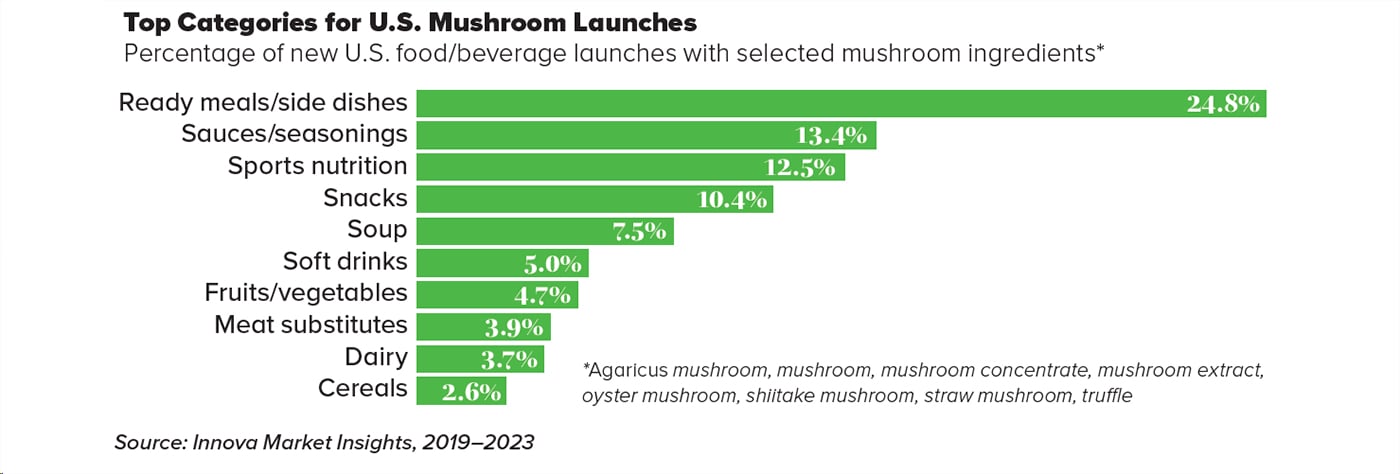
Source: Innova Market Insights, 2019–2023
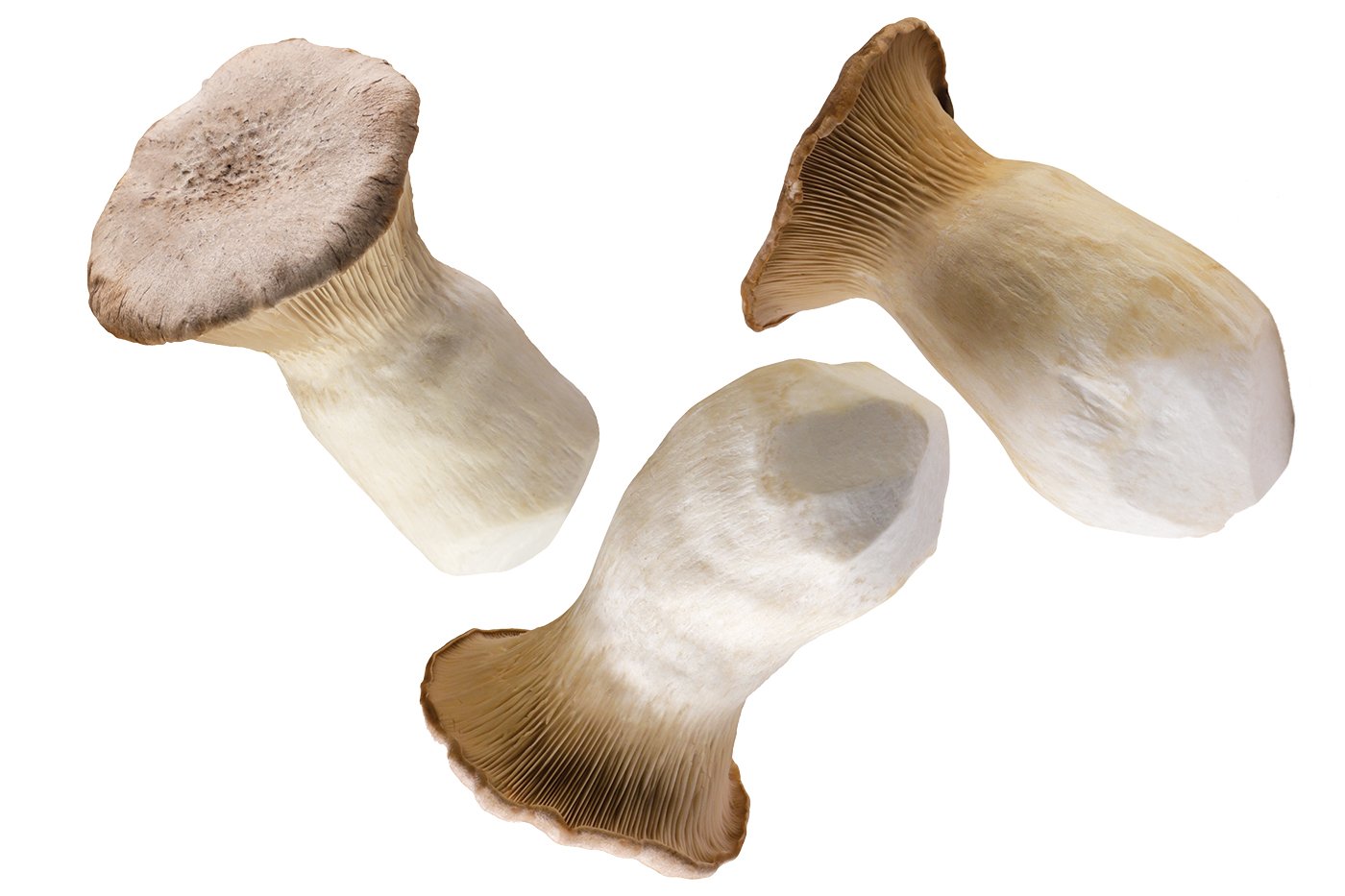
© Inna Tarasenko/iStock/Getty Images Plus
Mushroom and Fungi Glossary
Agaricus—genus of mushroom-forming fungi that includes button and field mushrooms, characterized by a fleshy cap with gills growing on the underside
Button—white, mild-flavored immature form of Agaricus bisporus, the most commonly consumed and cultivated mushroom globally
Chanterelle—orange, yellow, or white funnel-shaped mushroom that often has a mildly peppery taste
Cremini—medium-brown, slightly mature, deeper-flavored form of Agaricus bisporus; also baby bella
Enoki—long, thin white mushroom with crunchy texture and mild flavor, often used in Asian cuisines
Fungal protein—high-quality protein obtained from fungi through fermentation, stepwise fractionation, and extraction processes
Fungus—eukaryotic organism that lacks chlorophyll and does not photosynthesize, including mushrooms, yeasts, molds, smuts, mildews, and rust
Fusarium venenatum—high-protein microfungus that grows in long threadlike cells
Gills—thin, papery structures that produce spores and hang vertically under a mushroom cap
Maitake—bouquetlike mushroom that grows at the base of trees, consumed for centuries in China and Japan; also hen-of-the-woods, ram’s head, sheep’s head
Morel—earthy, nutty-flavored mushroom that resembles a honeycomb, commercially harvested primarily in the wild
Mushroom—fleshy, spore-bearing fruit body of a fungus
Mushroom cap—structure on top of a mushroom that holds the gills
Mycelium—white or grayish-white rootlike structure of a fungus through which it receives nourishment
Mycoprotein—single-cell protein made from Fusarium venenatum by fermenting fungi spores with glucose and other nutrients
Oyster—delicately textured white, gray, or tan mushroom with broad oyster- or fan-shaped cap
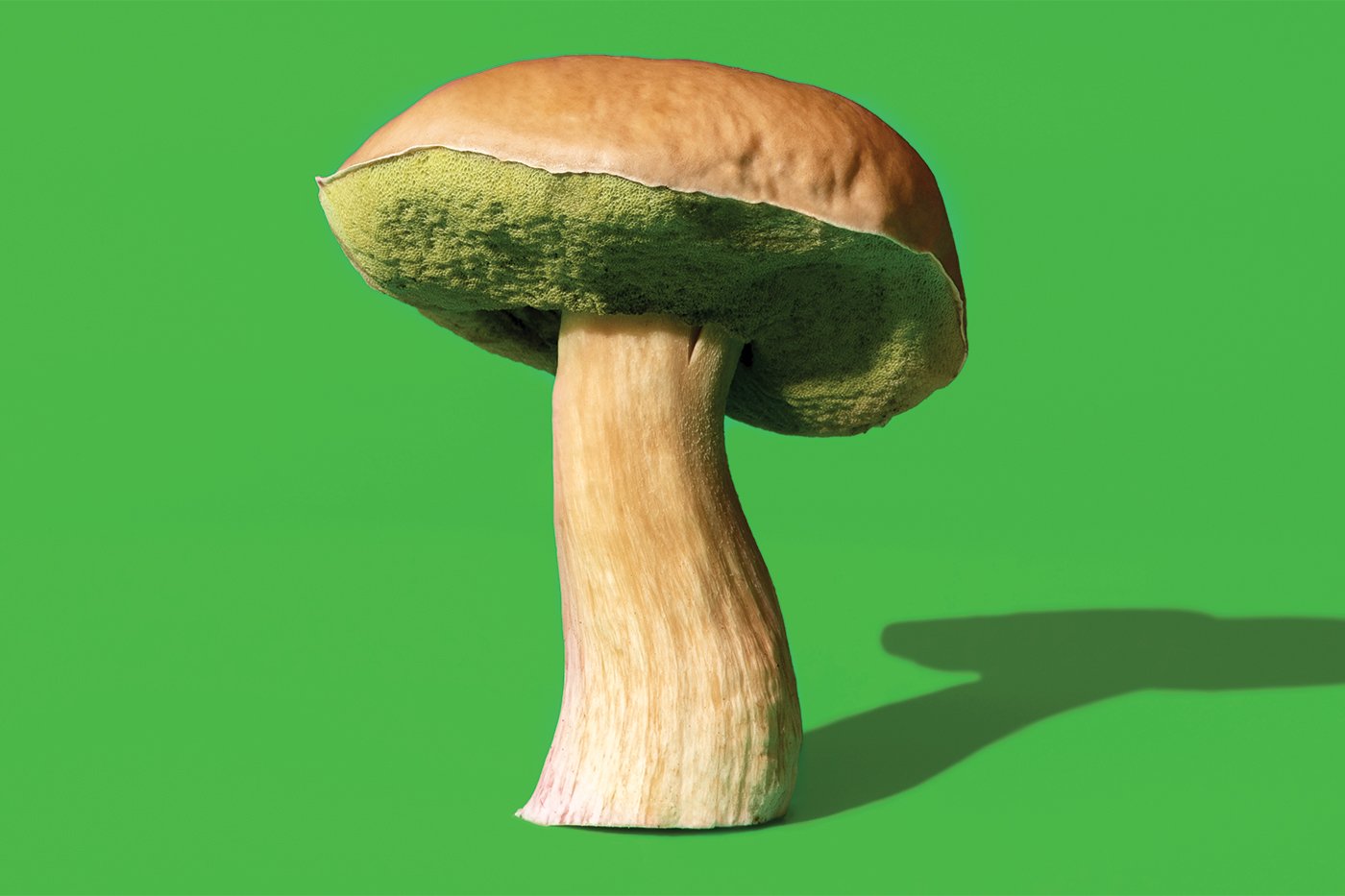
Porcini—brown-capped mushroom with thick white stalk and nutty, earthy flavor
Portabello—large dark-brown, earthy-flavored mature form of Agaricus bisporus
Shiitake—fuzzy, chocolate-brown capped mushroom with light brown stem and creamy, buttery, meaty flavor, used frequently in East Asian cuisine
Spawn—mycelium used to inoculate a new substrate on which mushrooms can grow
Truffle—flavorful dark brown, black, or beige-white fruiting body of a subterranean fungus that is one of the most expensive foods in the world
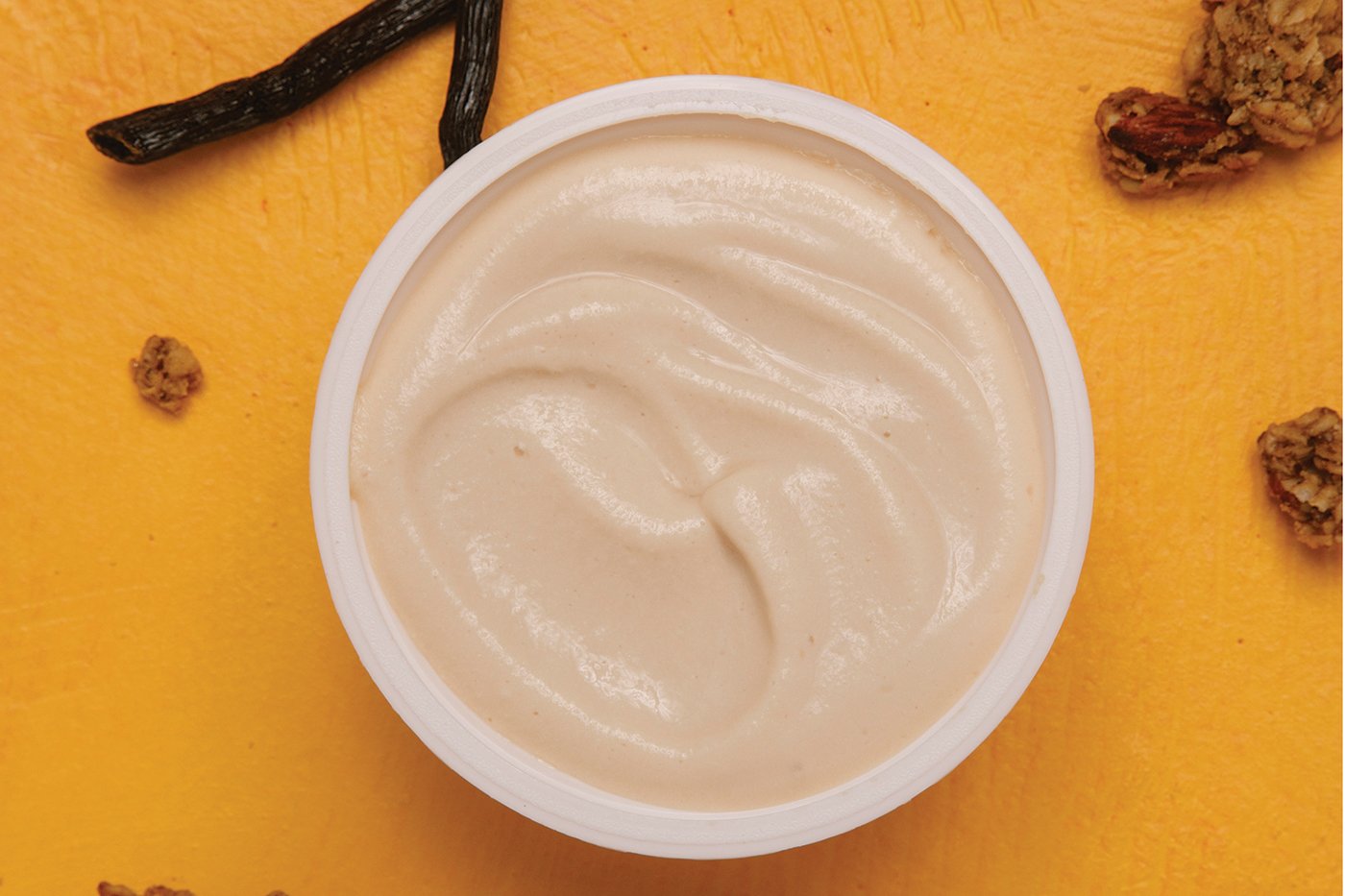
Nature's Fynd Vanilla Fy Yogurt. Photo courtesy of Nature's Fynd
Fungal Protein Alternatives
The most common fungal protein-based food products include:
Meatless chicken patties
Meatless breakfast patties
Meatless sausages
Meatless burgers
Dairy-free cream cheese
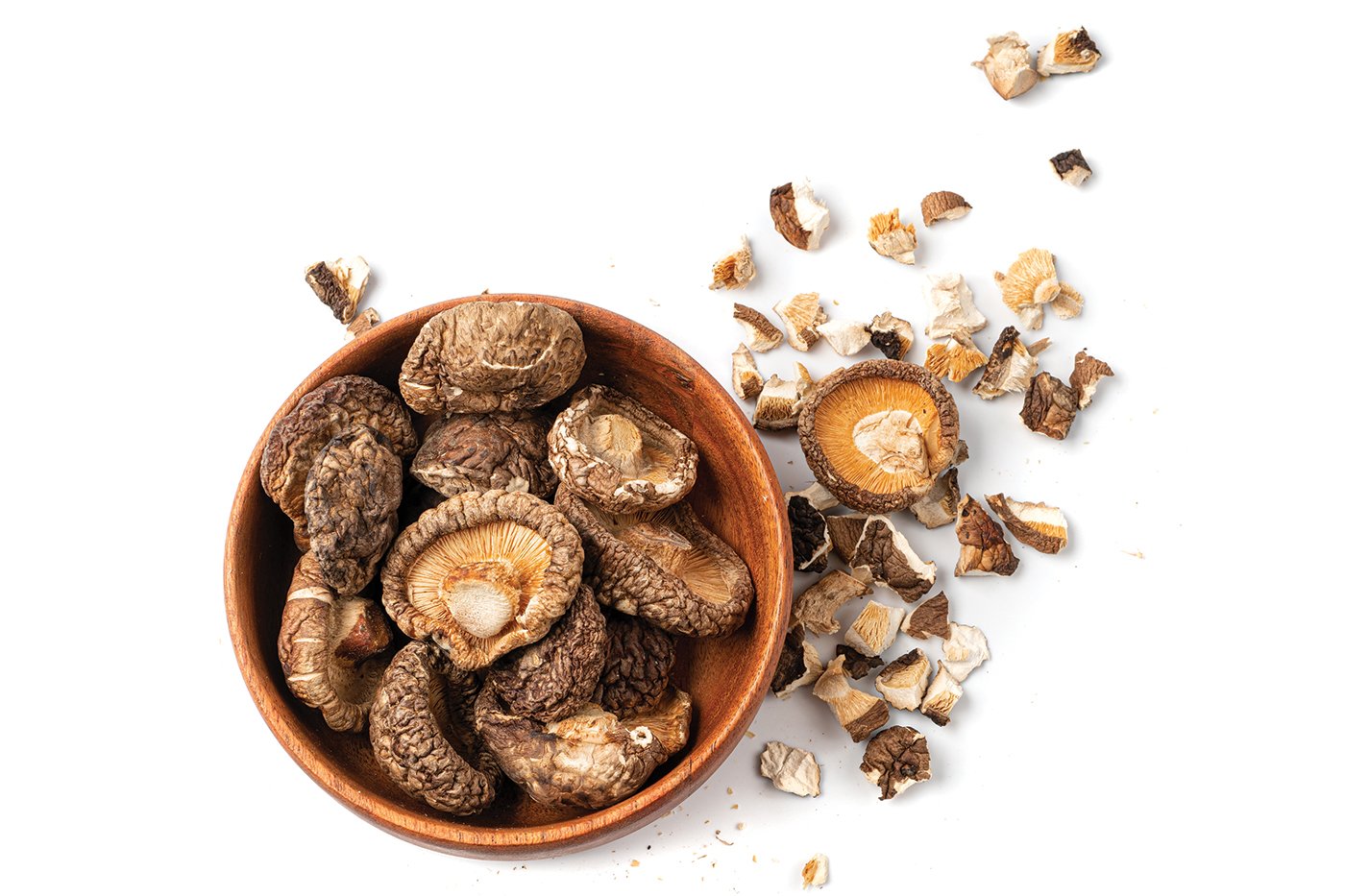
© Oksana Ermak/istock/Getty Images Plus
Shiitake Specialties
Distinctively flavored shiitake mushrooms are poised for growth as consumers continue to experiment with Asian cuisines and vegan/vegetarian foods:
- New U.S. product launches with shiitake mushroom ingredients saw a 29% compound annual growth rate (CAGR) from 2019–2023, second only to that of the common Agaricus mushroom, according to Innova Market Insights data.
- Innovative U.S. retail food companies are expanding the shiitake category with products like Popadelics vacuum-fried shiitake mushroom chip in truffle parmesan, Thai chili, and rosemary and salt flavors.
- Research firm Maximize Market Research projects the global shiitake mushroom market will hit nearly $2.37 billion by 2029 for an 8.4% CAGR from 2023–2029.
© Say-Cheese/istock/Getty Images Plus
Mushrooms Grow Green
U.S. mushroom farms have a smaller environmental footprint than almost any other farms:
1 lb of mushrooms requires only 1.8 gal water and 1 kW electricity, and generates just 0.7 lb CO2 equivalents.
1 acre of land can produce 1 million lb of mushrooms annually.
Source: American Mushroom Institute, The Mushroom Council

© DronG/istock/Getty Images Plus
Fungus Among Us
The fungal protein industry is finding a sweet spot in accelerating demand for sustainable alternative protein sources. Research firm Future Market Insights projects that total global sales of Fusarium venenatum–based fungal protein, which accounts for the largest share of the market, will experience a 10.4% compound annual growth rate from 2023–2033.
In January 2024, Nature’s Fynd rolled out the first dairy-free, fungi-based yogurt at Whole Foods Market stores nationwide: Dairy-Free Fy Yogurt in strawberry, peach, and vanilla flavors made with Fusarium strain flavolapis. And in February, Cargill and fungal protein company ENOUGH announced they are expanding their partnership with a goal of growing more than 1 million tons of ABUNDA mycoprotein—produced by feeding fungi with sugars from sustainably sourced grain—cumulatively by 2033.ft
TO LEARN MORE
To view the full article with infographics, please download the pdf or view in the September Food Technology Digital Edition.
Hero Image: © Jun Zhang/iStock/Getty Images Plus
Authors
-
Elizabeth Brewster
is a freelance writer based in Evanston, Ill. (lib500@comcast.net).
Categories
-
Food Business Trends
-
Consumer and Marketplace Trends
-
Culinary and Ingredient Trends
-
Food Product Development
-
Food Ingredients and Additives
-
Applied Science
-
Food Technology Magazine


