
Plant-Based Eating Trends

Learning Objectives
-
Understand nutritional advantages when moving to more plant-based eating patterns that include more fiber, potassium, and phytochemicals.
-
Appreciate the challenges of moving to more plant-based eating patterns: less high-quality protein and other nutrient deficiencies that result from removing animal products from the diet.
-
Gain insight into additional challenges with novel plant-based proteins, such as taste, cost, food safety, and quality.
What is the perfect human diet? Humans have survived on a wide range of diets over time, mostly reflecting access to the food supply. Since humans are omnivores, they can survive on a wide range of foods from both plants and animals. Protein needs are based on ideal body weight (0.8 g protein/kg body weight for adults), but amounts of carbohydrates and fats in healthy diets vary greatly (Slavin 2012). Traditional Arctic diets contain 80% of calories as fat while traditional African diets can be 80% of calories as carbohydrates. The trick for good nutrition is to consume diets that contain the appropriate number of calories, adequate protein, and essential vitamins, minerals, and fluids.
Generally, carbohydrates are the least expensive macronutrient, so recommended diets are high in carbohydrates. The Dietary Reference Intakes (DRIs) support that 45% to 65% of our calories come from carbohydrates, ideally starch staples that bring along dietary fiber. Quality carbohydrates also have some protein, although no plant food provides complete protein (Ahnen et al. 2019). Thus, usual food guides such as MyPlate include both animal and plant foods on the plate, currently grains, vegetables, fruit, dairy, and protein.
Plant-based diets, and more specifically, plant-based proteins, have been the subject of growing interest from researchers and consumers because of their potential health benefits as well as their positive environmental impact. Of course, plant proteins are found in plant foods, and the positive health benefits of plant foods are linked to dietary fiber, vitamins, minerals, and phytochemicals. In epidemiological studies it is not possible to separate out the health benefits of plant foods in general as opposed to plant proteins specifically. Few vegans, who consume only plant-based proteins, are included in existing prospective cohort studies. Isolated proteins (soy, pea) have been used in intervention trials, but often to improve biomarkers linked to disease risk, including serum lipids or blood pressure. Plant foods contain more than dietary fiber, and are rich sources of bioactives, which may provide health benefits (Timm et al. 2023).
Health Benefits of Plant Intake
Vegetarian diets have been promoted since the 18th century by men and women in search of physical and spiritual health. Vegetarian theorists who professed to follow the tenets of the ancient philosopher Pythagoras believed that diet should be part of an ascetic lifestyle. Vegetarianism was also symbolic of a commitment to health and social reform. Consumption of certain plant foods, fruits, vegetables, and legumes was thought to prevent or cure ailments ranging from headaches to heart disease. Plant foods are widely promoted in dietary guidance, and dietary fiber is a nutrient of concern in the American diet.
Potential Adverse Components
Fruits, legumes, leafy vegetables, roots, and tubers vary greatly in their composition, with fruits being devoid of protein, but often good sources of vitamin C and vitamin A. The protective components of fruits and vegetables include dietary fiber, minerals, vitamins, and phytochemicals, but these phytochemicals also have potential adverse effects. For example, cyanogenic glycosides in seeds in fruit may be toxic, so generally eating the seeds of common fruit is not recommended. Legumes include hemagglutinins, lectins, and trypsin inhibitors that may be removed by soaking, cooking, or other processing techniques. Leafy vegetables include glucosinolates, while roots and tubers include glycoalkaloids.
Usual diet practice recommends moderation and variety in eating and appropriate cooking and processing steps to manage any risk from the food and processing technique. Other compounds in plant foods that may have adverse effects include aflatoxins, pesticides, herbicides, nitrates, Alar, goitrogens, enzyme inhibitors, phenolic compounds, saponins, and inositol hexaphosphate. Additionally, phytates and oxalates can impact absorption (e.g., for iron), making them “anti-nutrients” of concern.
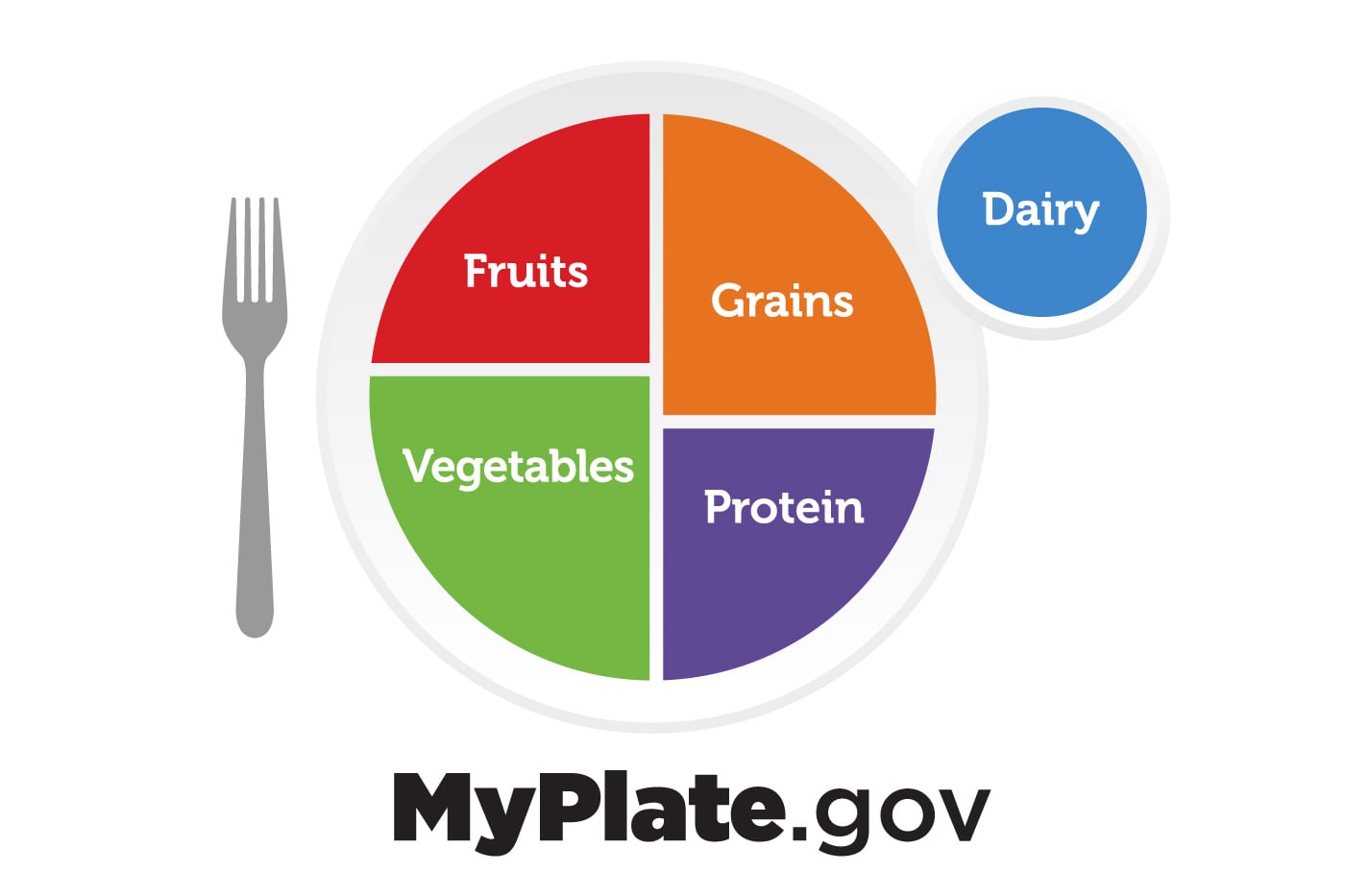
Photo courtesy of USDA/MyPlate.gov
Moving to Plant Proteins
Grains and legumes provide the largest quantities of plant protein in the diet. Vegetables, nuts, and seeds can also provide protein, but the protein is incomplete. Generally, it is accepted that if calorie needs are met with a wide variety of plant protein sources then protein needs also can be met. As public health officials encourage consumers to adopt dietary patterns with larger amounts of their protein coming from plant-based sources, it will be critical for the scientific community to reach a consensus on how plant-based protein quality is measured. Labeling regulations in the United States require that protein quality be measured with Protein Digestibility Corrected Amino Acid Score (PDCAAS). Large-scale studies measuring PDCAAS for multiple plant-based proteins are limited. In general, eating 20% more plant protein is necessary to consume the equivalent essential amino acids compared to animal-based proteins.
Unintended Consequences
Although we are concerned with limitations of protein quantity and protein quality in plant foods, there are other concerns with moving away from animal products. The four nutrients of concern in the American diet identified by the Dietary Guidelines for Americans include dietary fiber, potassium, calcium, and vitamin D. Increased consumption of plant foods may improve intakes of dietary fiber and potassium, but will not improve intakes of calcium and vitamin D. The dairy group of MyPlate.gov is not a recommendation to drink milk. It is a recommendation that to get the RDA for calcium and vitamin D requires consumption of two or more servings from the dairy group daily. This can be obtained from fluid milk, cheese, or yogurt. One serving from the dairy group also provides 8 g of protein, a reason to include dairy products in the protein group (Hess and Slavin 2016).
As consumers move from cow’s milk to plant-based milks, they are also affecting prenatal health as dairy products are a key source of iodine, and iodine intake supports brain, bone, and organ development (Lundquist et al. 2024). Iodine intake is particularly important during growth and development. As consumers replace dairy products with plant-based alternatives, they are decreasing their iodine intake because plant-based milk alternatives are not fortified with iodine.
In general, eating 20% more plant protein is necessary to consume the equivalent essential amino acids compared to animal-based proteins.
Plant-based dairy products also provide little protein, and the protein is of low value. Rather than the 8 g of high-quality protein in a dairy serving, most plant-based milks provide only 1 g of protein. Calcium and vitamin D are also missing in plant-based milks, although recent regulations have required soy milk used in school lunches to be fortified with calcium and vitamin D.
Animal-based protein sources provide high-quality protein, but also provide essential nutrients, most notably iron and zinc. As consumers remove eggs, meat, fish, and other animal products from their diet, they are removing high-quality protein and other essential nutrients that are included in these products. Protein is not a nutrient of concern in the current American diet, but movement toward plant-based meats, dairy, fish, and eggs could result in protein deficits, especially in vulnerable groups. Although it is generally accepted that plant foods are more “sustainable,” the ultra-processing associated with turning peas into hot dogs can be questioned as a win for consumer health and society (Raiten et al. 2020). In fact, the calculated climate footprint (CO2 per kg product) of almond and soy milks was found to be higher than that of skim milk, while oat milk was found to be slightly lower (The Big Climate Database 2025).
Within food safety and quality, plant-based proteins bring a unique set of challenges. The primary carbohydrate in milk is lactose, in meat, it is glycogen, and in pea, soy, and mushroom, it is various starches and oligosaccharides, which means that the organisms able to thrive in each and to what extent can vary considerably. Additionally, legacy practices for increasing shelf life and safety of these products (pasteurization and fermentation for milk, curing, smoking, and fermentation for meat) have not been as well-established in plant-based counterparts. Luckily, cooking of both plant-and animal-based meats has been shown to effectively reduce pathogens similarly (Luchansky et al. 2020).
By 2050, there will be an estimated 9 billion people worldwide, resulting in a huge demand for quality protein of both animal and plant origin.
Toward More Plant-Based Eating
Only food that is eaten provides nutrients and can improve health. Plants provide a wide range of essential nutrients, especially dietary fiber, vitamins, minerals, and phytochemicals. Our recommendations for whole grains (Korczak et al. 2020), fruits, vegetables, legumes, nuts, and seeds continue to develop, but for consumers with limited cooking skills, time, and cultural grounding, moving to a vegan diet is difficult. High-quality protein, calcium, vitamin D, iron, and zinc are likely limited on a vegan diet, and as consumers turn to plant-based milks and meats, they should appreciate that they may be making improvements in dietary fiber intake, but may be moving toward nutrient deficiencies, depending on their food choices.
By 2050, there will be an estimated 9 billion people worldwide, resulting in a huge demand for quality protein of both animal and plant origin. Because plants have limited amounts of protein and the protein they contain is low quality, processing techniques will be required to make plants into high-quality protein. The soy industry has responded to the challenges because it has been required to make high-quality protein for infant formula and soy milk for school lunches. Soy has advantages since it is higher in protein quantity than other plants, and the protein quality is higher than for grains and other plant foods. To produce plant proteins that are complete will require multiple processing steps. Consumer sentiment about ultra-processing may be another potential watch out for development of new plant proteins.
Hero Image: © Jenifoto/iStock/Getty Images Plus
Authors
-
Joanne Slavin Professor
Joanne Slavin, PhD, is a professor in the Department of Food Science and Nutrition at the University of Minnesota, Twin Cities, and served as a member of the 2010 Dietary Guidelines Advisory Committee (jslavin@umn.edu).
-
Sarah Engstrom Senior Scientist
Sarah Engstrom, PhD, is a senior scientist with Grande Custom Ingredients Group (sarah.engstrom@grande.com).
Categories
-
Food Health Nutrition
-
Food Ingredients and Additives
-
Food Technology Magazine
-
Plant Based
-
Applied Science


