
INGREDIENTS
Beyond the Cup of Coffee and Tea
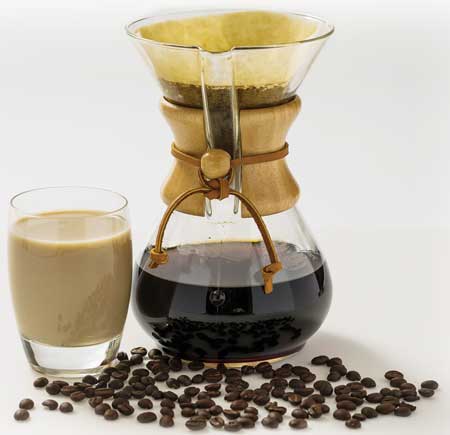 Some people can’t imagine starting their day without a cup of coffee, and many enjoy having a warm cup of tea on a cold day. Widely consumed around the world, coffee and tea truly are part of people’s daily rituals. But there’s more to coffee and tea than just delicious, comforting beverages. They’re ingredients in their own right, turning up in a diverse range of products like bakery goods, spice and seasoning blends, yogurt, frozen desserts, and alcoholic beverages. Creative product developers and culinary professionals are transforming foods and beverages with brewed coffee and tea, loose leaf tea (whole, ground, and powdered), flavorings, extracts, and concentrates to give foods earthy, fruity, grassy, bitter, and floral flavors, to name just a few. Experts offer their take on coffee and tea ingredient innovations and some key applications that show new potential for coffee and tea.
Adding Flavor With Extracts
“The growth of tea in food products is being driven by consumer demands for healthier options and flavor variety,” says Eric Nakata, vice president of culinary and innovation with S&D Coffee & Tea, Concord, N.C. (sdcoffeetea.com). “In the restaurant sector, tea has been used in smoking proteins, adding subtly to vinaigrettes, upscaling petite desserts, and increasing bar sales by incorporating tea into craft adult beverages like martinis or mocktails.”
Watch a video in which Sue Maiocchi of S&D Coffee & Tea and John Harper Crandall of Amelia Bay offer more insights on advances in tea and coffee ingredients.
S&D Coffee & Tea’s portfolio includes tea extracts and concentrates in black tea, green tea, white tea, rooibos, and chai tea versions produced from different leaf varietals from varying origins via a proprietary process. “Food manufacturers are using tea extracts in their processes as it allows them the ability to drive real tea into their finished goods at a concentrated level,” says Nakata. He points out some unexpected formulas where these ingredients are turning up. “Examples include green tea ice cream base, sweet tea vodka, and tea-infused biscuits and scones. Instead of using flavoring, they are able to call out the use of real tea, whether it’s for a health cue or flavor cue.” Culinary professionals, product developers, and bakers can find further inspiration on the company’s website, which features recipes that incorporate the company’s tea ingredients. Black tea extracts and green tea extracts are formulated into sweet applications such as waffles, doughnuts, and smoothies. Others show how well tea pairs with savory ingredients such as in a mole sauce for chicken; in marinades for bulgogi, salmon, and tofu; in vinaigrettes; and to cook rice.
In addition to its tea ingredients, S&D Coffee & Tea also produces a line of coffee ingredients, including coffee for foodservice and individual pods, and coffee extracts (both hot brew and cold brew) and concentrates. One of the latest trends in coffee is cold brew coffee, which is prepared by steeping coffee at room temperature for a minimum of 10 hours. The lack of heat produces coffee that is less acidic and less bitter and has a smoother taste. S&D Coffee & Tea captures the flavor nuances of cold brew coffee in its cold brew coffee extracts to enhance the flavor of cold brew coffee beverages and to add cold brew coffee flavor to other specialty coffee beverages. Cold brew coffee has become so popular that Starbucks, Seattle, Wash. (starbucks.com), developed Nariño 70 Cold Brew Coffee, a 70/30 blend of Columbian and East African coffees slow-steeped in cool water for 20 hours, and recently introduced Nitro Cold Brew (cold brew coffee infused with nitrogen) on tap at Starbucks locations in major U.S. cities.
Other coffee ingredients that S&D Coffee & Tea manufactures are liquid extracts for use in the formulation of cold beverages, both iced coffees as well as iced beverages with coffee such as iced lattes, iced cappuccinos, and iced blended, says Toby Foreman, senior coffee buyer at the company. “In addition, liquid extracts are being used as a component in the creation of recipes from barbecue sauce and baking goods to fine dining applications.”
 The company is also a leading coffee roaster, and Foreman explains that the company begins the process by giving consideration to the level of sourcing and identification of quality coffees from the country of origin. “The coffee roasting process is extremely important in bringing out the flavor and aromatics of the coffee. Depending on the origin, type, altitude (density), process, and bean size, the roasting process draws out what is innate in the green bean. The roasting process allows for the creation of soluble sugars and for the acidity, body, and texture of the coffee to develop.”
As with wine, growing regions affect the flavor and aroma of the coffee bean. Coffee grown in Central and South America is clean, bright, and sweet with citrus and vanilla notes whereas coffee grown in Indonesia is full-bodied with a round mouthfeel and notes of raisin, plum, and warming spices, says Foreman. African coffee can have flavor/aroma characteristics of wine, berry, or tea notes and a balance of both acidity and body. “Within each region there are microclimates that have unique effects on the coffees. Not all coffees are the same,” he adds. There’s also preference differences in roast levels, and Foreman points to a few among U.S. consumers. “Preference in roast levels typically falls into the different areas based on the range of seasonal changes that occur in the year. Southwest drinkers, with a mild winter climate and bright days, typically prefer mild, lighter-roasted coffees than those in the Midwest with more severe winter months. In addition, both increases in rainfall and foggy conditions can lead consumers to a darker, more full-bodied coffee.”
 Coffee and Tea Flavors in Yogurt and More
What other applications are featuring coffee and tea ingredients? Dairy, for one, says Michael Springsteen, vice president of business and product development at Virginia Dare, Brooklyn, N.Y. (virginiadare.com). “Both always pair well with dairy, and so as the yogurt segment has grown, we’re seeing those flavors show up in both spoonable and drinkable yogurts and other dairy—and dairy alternative—products.” As part of its Taste Foundations platform, Virginia Dare works closely with farmers and suppliers to source coffee and tea used in the production of extracts for inclusion in ready-to-drink (RTD) tea, coffee drinks, frozen desserts, alcoholic beverages, and more. “Healthier cereals, breads, and other bakery items have started incorporating green tea extracts for the health halo they contribute, and chefs are also using coffee and tea in savory items like vinaigrettes or meat rubs.”
There’s also plenty of innovation in tea and coffee beverages, with kombucha and tea sodas trending in the tea beverage category and specialty coffee beverages becoming more mainstream, says Springsteen. “Single-origin coffee and specialty coffee have had a revolutionary effect on the industry, prompting even more traditional brands to adopt trendy specialty beverages like ready-to-drink cold brew (sometimes infused with nitrogen for a draft beer–like froth), flat whites, and lattes flavored with more culinary and savory notes like lavender, cardamom, and even wasabi.” He adds that the single-origin coffee trend has piqued consumers’ interest in single-origin teas from regions like Argentina, Assam, and Sri Lanka, prompting Virginia Dare to extend its line of tea ingredient offerings. “We recently launched new single-origin tea concentrates to allow brands to tap into both of these trends, as they can be used to formulate RTD beverages with the flavor profiles of single-origin teas.”
 New Twists to Common Beverages
Flavor ingredients are great tools to grab the attention of consumers on the lookout for something a little different. How about sumac-flavored iced tea? Or a cold brew coffee–flavored carbonated beverage or cold brew coffee–flavored almond milk beverage? Sparking the creativity in product development were product concepts like these formulated by the scientists at David Michael, Philadelphia (dmflavors.com), for the Innovation Roadshow held this past September. Most importantly, they showed the versatility of coffee and tea flavors in products and showed how other flavors could be used to enhance coffee and tea beverages.
Sumac’s deep and complex flavor profile, which has citrusy, fruity, woody, and tart notes, complements the flavor notes of iced black tea. According to the company, its sumac flavor has a flavor that is like a less-tart lemon. The two cold brew coffee–flavored beverages—a carbonated one and almond milk—that the company featured show how the mellow and less bitter flavor of this popular coffee beverage can be used in RTD beverages for consumption across all dayparts. Use cold brew coffee flavor in the same applications that traditional coffee flavor is used, such as beverages, bakery products like cakes and snack bars, and dairy products like ice cream and milk.
Tea as a beverage, ingredient, and flavor appears in more food and beverage products across all categories. David Michael’s take on the tea trend looked at developing ideas for combining tea and flavors in beverages for non-tea drinkers. “Our two innovations were developed not only to appeal to tea enthusiasts but also to those who normally don’t consider themselves tea drinkers,” said Jim Wolfe, senior director of marketing. The first product concept, a carbonated black tea cola, was developed to bridge the gap between tea and soft drinks, he told attendees during a presentation at the Innovation Roadshow. The tea was flavored with a cola flavor from the company’s portfolio of cola flavors and sweetened with sugar. The other product concept was a hot root beer–flavored rooibos beverage, an interesting way to experience the flavor of root beer, which is typically featured in a cold, carbonated soft drink.
 Clean Label Tea, Coffee Ingredients
Something that is top of mind for many consumers is the type of ingredients that food manufacturers are using in formulations. This push for clean label ingredients has led to an expansion of ingredients that are derived from natural sources or minimally processed. Included in this are brewed liquid tea and coffee extracts from Amelia Bay, Johns Creek, Ga. (ameliabay.com).
They’re produced using a closed continuous brewing system that ensures the volatile aroma and flavor compounds are captured to give finished products the true aroma and flavor of tea or coffee without having to use flavorings or top notes. The proprietary process also yields an ingredient that does not cloud a finished beverage or produce sedimentation. When used in products—typically to formulate beverages with signature flavor—they are labeled as brewed tea or brewed coffee. “Brewed tea and coffee extracts remain in liquid form from brew to finished formulation,” says John Harper Crandall, vice president of sales. “Volatile flavors are retained and robust brewed flavor profiles become possible versus lower quality instant tea powders. Amelia Bay’s brewed liquid extracts help brands position their product as the highest quality—from a flavor, appearance, and stability standpoint—and allow brands to command a premium price.” The lineup of brewed liquid tea extracts includes green tea, black tea, white tea, and oolong tea while the coffee ingredients include 100% Columbian coffee, Arabica, dark roast, French roast, green coffee, liquid coffee solids, and flavored coffee extract formulations. The company brews and formulates everything onsite at its facility in Johns Creek to ensure consistency and quality, he adds.
Crandall’s insights into the tea beverage category point to a growing use of clean label ingredients. “Using real brewed tea in tea-based formulations continues to be the most important differentiator when it comes to quality for the consumer. Amelia Bay’s brewed tea helps brands achieve this label claim to set their products apart on a crowded shelf.” Tea trends include lightly sweetened tropical flavors and functional blends such as lemongrass, ginger, and higher levels of antioxidants derived from dark berries or the tea itself, says Crandall. As far as coffee trends are concerned, Crandall says that “flavored coffees as well as strong, robust blends with unconventional ingredients are trending currently.”
Coffee and tea are two of the most consumed beverages around the world. Consumers enjoy the diverse range of flavors of coffee and tea. Now, thanks to advancements in ingredient development, innovative product developers and chefs have the tools to bring coffee and tea flavors to a wide range of food products.
Next month’s Ingredients section will cover ingredients used in bakery applications.
Researchers Update Coffee Taster's Flavor Wheel
More than 20 years ago, the Specialty Coffee Assoc. of America (SCAA) developed the Coffee Taster’s Flavor Wheel as a communication tool for the coffee industry. Its development came before advances in sensory science made over the subsequent years, so researchers got to work to revamp the flavor wheel based on new insights into coffee flavor lexicon, sensory science, and statistical methods (Spencer et al. 2016).
Updating the Coffee Taster’s Flavor Wheel first began with the formation of a lexicon of about 110 attributes of coffee flavor, aroma, texture/mouthfeel, and amplitude (overall impressions and interactions among other attributes) conducted by researchers at World Coffee Research (WCR) and Kansas State University. Researchers at the University of California, Davis, then took the information in the coffee sensory lexicon and organized it into scientifically valid clusters and levels that were used to produce the updated Coffee Taster’s Flavor Wheel. “Both the WCR Sensory Lexicon and SCAA and WCR Coffee Taster’s Flavor Wheel are living documents, allowing flexibility and space for additional coffee flavor descriptors as new attributes are added over time,” according to the authors of the study published in the Journal of Food Science.
Its Easy Being Green with Matcha
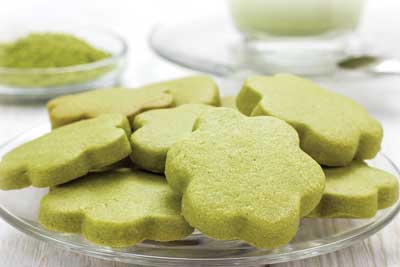 First consumed by Buddhist monks in Japan as a ceremonial beverage, matcha is now an on-trend tea beverage and ingredient in processed foods and in restaurant offerings in many areas around the world. Matcha is a gareen tea produced from certain tea plant varieties grown in Japan. When the plants reach the last few weeks of the growing cycle, they are covered with nets that produce enough shade to increase the levels of amino acids and chlorophyll in the leaves. The leaves are briefly steamed and slowly dried before being finely ground into a vibrant green powder. To prepare matcha, simply whisk the powder with water and drink the tea, which has fresh green and grassy notes with a hint of sweetness and umami. Tea leaves are nutrient-packed, most notably with flavonoids and the amino acid L-theanine, so it is thought that by consuming matcha tea, which essentially is just ground up tea leaves, consumers are reaping more of the health benefits of tea.
Ingredient manufacturers of matcha sell two varieties. Ceremonial matcha is used to make matcha in the traditional fashion—whisking it with water to make the beverage. The other is a culinary grade, which has been processed to be formulated easily into a number of food and beverage products where it imparts various shades of green and the characteristic flavors and aroma of matcha. Aiya America, Torrance, Calif. (aiya-america.com), offers several matcha ingredients formulated for use in specific applications such as ice cream, confections, tea beverages (both hot and cold), chocolates, bars, smoothies, cakes, and lattes. AOI Tea Company, Huntington Beach, Calif. (aoitea.com), also offers ceremonial matcha and several versions of culinary matcha as well as matcha blends. The blends include a matcha blended with chlorella for use in baking applications where the chlorella helps maintain the bright green color in the finished product, according to the company. There is also a matcha ingredient mixed with sugar to add sweetness to beverages and matcha that is flavored with different types of fruit flavors.
Consumers can even find matcha tea in products at the grocery store, specifically the spices and seasonings section. McCormick, Hunt Valley, Md. (mccormick.com), has released McCormick Gourmet Organic Matcha Green Tea with Ginger Seasoning, which it suggests using in desserts, as a seasoning on fish, blended into applications like pesto, or included in smoothies and lattes.
Tea Types
All tea comes from the leaves of the Camellia sinensis plant, an evergreen that produces dark green, shiny, elliptical-shaped leaves. Three varieties are recognized: one from China, another from Cambodia, and the third from Assam, India. From there, it gets even more diverse, with hybridization of these three varieties producing hundreds of regional varietals. As for rooibos, yerba mate, and herbal teas, they are technically not tea but rather infusions or tisanes. (Rooibos and yerba mate come from plants not related to C. sinensis.) While all tea comes from the same plant, the ways in which the tea leaves are processed produces the four types of tea styles that tea drinkers around the world enjoy. Manufacturers can further blend teas, smoke tea leaves, or add dried flowers, dried fruit, spices, nuts, aromatic botanicals, vanilla bean, or natural and artificial flavorings to give the tea additional levels of flavor and aroma complexity.
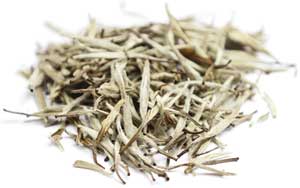 White tea undergoes the least amount of processing. It can be made from either the small white buds or the buds and a couple of tea leaves right below the bud, which gives the tea a slightly more complex flavor. The buds and leaves are withered to introduce moisture loss and allow chemical changes to take place that contribute to the flavor and aroma of the finished tea. After that, comes air drying and packaging. The resulting tea is pale in color with a light, delicate flavor.
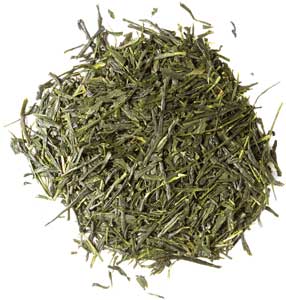 In making green tea, the leaves are plucked and withered to allow them to dry out a bit. Then they are subjected to heat treatment (either firing or steaming) to stop a particular enzyme that causes oxidation and the browning of the tea leaves, and to prevent fermentation. Each heat treatment method affects the flavors and aromas of the tea (pan-fired green teas typically have toasted and roasted notes while steamed green tea leaves are more vegetal and green in flavor and aroma). After the heat treatment, the leaves are rolled, dried, and packaged. Japan and China are the top producers of green tea, and tea growers in each country produce green teas that have different flavors and green shades depending on the heat treatment, growing regions, plant varietals, and other processing and handling conditions.
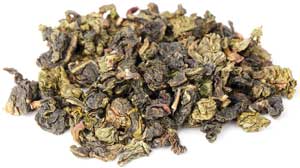 Oolong teas are partially oxidized, and the range of oxidation can be anywhere from light oxidation, which produces tea that is closer in color to green tea, to heavy oxidation, which leads to tea that is closer to black tea. After the plucked leaves are withered, they are then held at a temperature range of 71°F–79°F and 85% humidity to set the stage for oxidation when chemical changes occur that produce specific aromatic and color compounds. Lightly oxidized tea leaves produce tea that is vegetal and floral in flavor and aroma while tea leaves allowed to oxidize for longer produce tea that has fruity and woody flavors. The tea leaves are fired to stop the oxidation process, rolled, dried, and packaged.
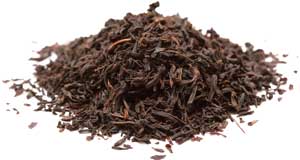 After plucking and then withering and rolling processes, tea leaves are fully oxidized to produce black tea. After oxidation, the leaves are fired, which allows chemical reactions between sugars and amino acids to take place, resulting in aromatic compounds that affect the flavor and aroma of the tea. Typically, black tea is strong and aromatic. Black teas from different regions can have flavors that are fruity, peppery, astringent, or slightly sweet.
The Rise of Premium Coffee, Tea
 The global tea and coffee markets continue to grow due in part to the strengthening of local tea and coffee cultures, an emphasis on premium products, and new offerings in coffee and tea products, according to analysts at Euromonitor International, London (euromonitor.com).
Whether in established or developing tea markets, consumers want premium options and are particularly interested in education and brand stories that detail the different varieties of tea, their provenance, and proper brewing techniques, writes Howard Telford, senior analyst for beverages, in a company report (Euromonitor 2016a). He adds that even in the mass market beverage category, consumers are looking for premium ready-to-drink teas as healthier alternatives to other beverages. To attract both new consumers and those drawn to the premium tea products, the mass market tea brands are focusing on aspects of the premium tea market. Expect to see more flavor varieties and line extensions and the expansion of tea specialist boutiques, says Telford.
Even in emerging markets, premium tea has taken hold and is expanding. The traditional tea-drinking nation of India is one example where this is the case. There, says Telford, premium tea consumption is increasing, driven mainly by an affluent, urban middle class. The growing numbers of urban, affluent consumers in Africa and Southeast Asia as well as health-conscious consumers are drinking tea for its functional and therapeutic benefits, he adds.
The emphasis on premium products has definitely taken hold in established coffee markets with consumers purchasing more whole bean and coffee pods than fresh ground coffee, according to a recently published report on the coffee market (Euromonitor 2016b). Michael Schaefer, global lead of food and beverages at Euromonitor International and author of the report, writes that a new form of global luxury has been formed by manufacturers and operators who have equated high-quality coffee with high-quality experiences. Acquisitions of specialty coffee shops, the global appeal of coffee shops, and the rollout of retail versions of specialty coffee shops’ products suggests that “coffee shops are becoming as important a part of the global luxury experience as any upscale boutique while also serving as incubators for entire new retail CPG categories,” writes Schaefer.
Members Only: Read more about coffee and tea ingredients at ift.org. Type the keywords into the search box at the upper right side of the home page.
 Karen Nachay,
Senior Associate Editor
knachay@ift.org
Authors
-
Karen Nachay
Categories
-
Food Product Development
-
Food Ingredients and Additives
-
Food Technology Magazine


