
Biotechnology: Beyond the Petri Dish
In this column, the author discusses how food biotechnology is evolving from scientific innovation into a scalable manufacturing platform capable of reshaping the future of food production through precision, sustainability, and operational discipline.

Learning Objectives
-
Understand how food biotechnology is scaling beyond the lab into commercial food production.
-
Learn how cost, reliability, infrastructure, and trust shape biotech adoption in food systems.
-
Gain insight into the strategies driving sustainable scale-up and integration of food biotechnology.
Biotechnology has reshaped how we produce food, enhance health, and approach sustainability. In the food sector, decades of research have demonstrated that biological systems can be engineered to produce proteins, fats, enzymes, and functional ingredients with high precision. Yet translating these innovations into commercially viable, reliable, and widely accepted food systems remains a core challenge.
The food biotechnology industry is now at an inflection point. Success is no longer defined by breakthroughs at the bench or pilot scale, but by the ability to operate consistently at commercial scale, manage cost and reliability, and earn trust across the value chain. Persistent barriers such as high production costs, process variability, infrastructure constraints, and consumer skepticism are better understood not as limitations of biotechnology, but as design constraints shaping its next phase.
The Biotech Landscape
Food biotechnology encompasses a broad set of technologies that extend beyond traditional fermentation, unified by a shared foundation: the use of biological systems as precision manufacturing tools. Conventional fermentation remains the backbone of the industry, supporting large-scale production of enzymes, amino acids, organic acids, and microbial biomass widely used in food systems. Building on this foundation, precision fermentation leverages advances in molecular biology and strain engineering to produce proteins, flavors, and functional ingredients, enabling tighter control over quality, functionality, and supply continuity (Verma et al. 2025).
Cell growth-based systems, including cultivated meat and microbial biomass platforms, aim to replicate or enhance complex food structures by growing cells directly. Gas fermentation further expands the landscape by converting carbon-based gases into edible biomass or functional ingredients, creating opportunities to integrate food production with carbon utilization and industrial waste streams. In addition, protein hydrolysis represents a complementary bioprocessing approach, converting intact proteins into peptides and amino acids with tailored functional and sensory properties. Beyond improving solubility, digestibility, and flavor, it also enables the valorization of underutilized protein streams into higher value ingredients.
The growing role of biotechnology is driven by both intrinsic advantages of the technology and external pressures driving the global food landscape.
These technologies establish food biotechnology as an advanced manufacturing platform, where bioprocesses enable precise control over nutritional, functional, and sensory attributes, complementing existing systems while enhancing value and efficiency.
Why It Matters Now
The growing role of biotechnology is driven by both intrinsic advantages of the technology and external pressures driving the global food landscape. From a technological perspective, biotechnology offers distinct advantages over conventional production methods. Biological systems enable a higher level of precision and control compared to traditional systems. Through fermentation and enzymatic processes, manufacturers can design ingredients with targeted nutritional, functional, and sensory attributes while maintaining consistent quality. Controlled production environments also enhance food safety and reduce exposure to environmental variability. Importantly, these systems can be deployed with greater geographic flexibility, strengthening resilience to supply chain disruptions.
At the same time, powerful external forces are creating a strong push for new production models (FAO 2021). Rising global demand and resource constraints are placing increasing pressure on land, water, and energy systems. Consumer and regulatory expectations continue to shift toward improved nutrition, transparency, and sustainability, while supply chain disruptions have exposed vulnerabilities. These pressures test the limits of existing production systems.
Biotechnology sits at the intersection of these forces. Its ability to decouple production from traditional constraints while delivering targeted functionality positions these scientific techniques as a compelling complement to existing food systems. As these pressures intensify, the question is how effectively it can be integrated, scaled, and trusted.
Signals of Progress
While challenges remain, recent developments across the food biotechnology landscape point to meaningful progress in overcoming barriers that once limited translation beyond the laboratory. These signals reflect a maturing industry, driven by incremental advances in infrastructure, capability, and integration with existing food systems along with technological breakthroughs.
One clear area of progress is the expansion of pilot and demonstration-scale infrastructure. Historically, limited access to fermentation capacity, scale-up expertise, and food-grade facilities created a bottleneck between laboratory success and commercial readiness. Increased investment in shared facilities and regional innovation hubs is beginning to ease this constraint. Improved access to intermediate scale production is enabling more efficient scale-up and faster iteration between development and manufacturing.
Progress is also evident in mainstream adoption. Fermentation-derived ingredients such as enzymes, organic acids, and microbial biomass are now well established, demonstrating that biologically produced ingredients can meet cost, quality, and safety requirements at scale. More recent categories, including fermentation-derived proteins and functional ingredients, are beginning to move beyond niche applications, offering further proof of scalability and market acceptance. Greater emphasis is now placed on process robustness, manufacturability, and economic viability earlier in development, owing to increased understanding of scale-up complexities and timelines.
These signals indicate that the industry is learning to address its core challenges, laying the foundation for more reliable scale-up and broader adoption. However, these advances also clarify the constraints that must still be addressed to enable sustained, large-scale adoption.
Designing for Scale and Adoption
Widespread adoption of food biotechnology is shaped by a set of interconnected constraints that span economics, engineering, infrastructure, sustainability, and consumer acceptance. These challenges reflect the realities of translating complex biological processes into reliable, cost-competitive manufacturing systems.
Economics remains the anchoring constraint. The cost of goods sold for biotechnology-derived ingredients is driven by capital intensity, operating costs, raw materials, process yields, and downstream complexity. While laboratory development often emphasizes peak productivity, commercial success depends on sustained throughput, uptime, and margin stability. Reliability failures, including contamination, downtime, or excessive cleaning, can quickly erode cost advantages. Therefore, cost must be engineered as a system level outcome. Strategies such as feedstock flexibility, simplified downstream processing, and co-product valorization can improve economics while enhancing efficiency.
In practice, these constraints manifest in specific operational challenges, including fermentation yield variability, batch contamination risks, downstream purification bottlenecks, and cleaning cycle inefficiencies that reduce uptime. Addressing these requires not only biological optimization but also disciplined process engineering, including robust control strategies, equipment design aligned with process requirements, and integration of real-time monitoring systems.
Engineering for reliability defines scalability. As bioprocesses scale, challenges related to contamination, variability, and process control become more pronounced. These are not biological uncertainties, but outcomes of equipment design and operating discipline. Robust systems, engineered through appropriate bioreactor design, automation, and cleaning strategies, are essential. Many failures originate upstream, where development decisions do not account for manufacturability. Closing the loop between research and manufacturing is critical to improving operational resilience.
Infrastructure and integration act as force multipliers. Innovative biotechnologies often require specialized equipment, but greenfield infrastructure development is not always practical or necessary. Strategic use and adaptation of existing fermentation and processing assets can accelerate scale-up and reduce capital burden. That said, infrastructure must be tightly aligned with process requirements. Success increasingly depends on integrated ecosystems that connect development, manufacturing, and supply chains rather than isolated facilities.
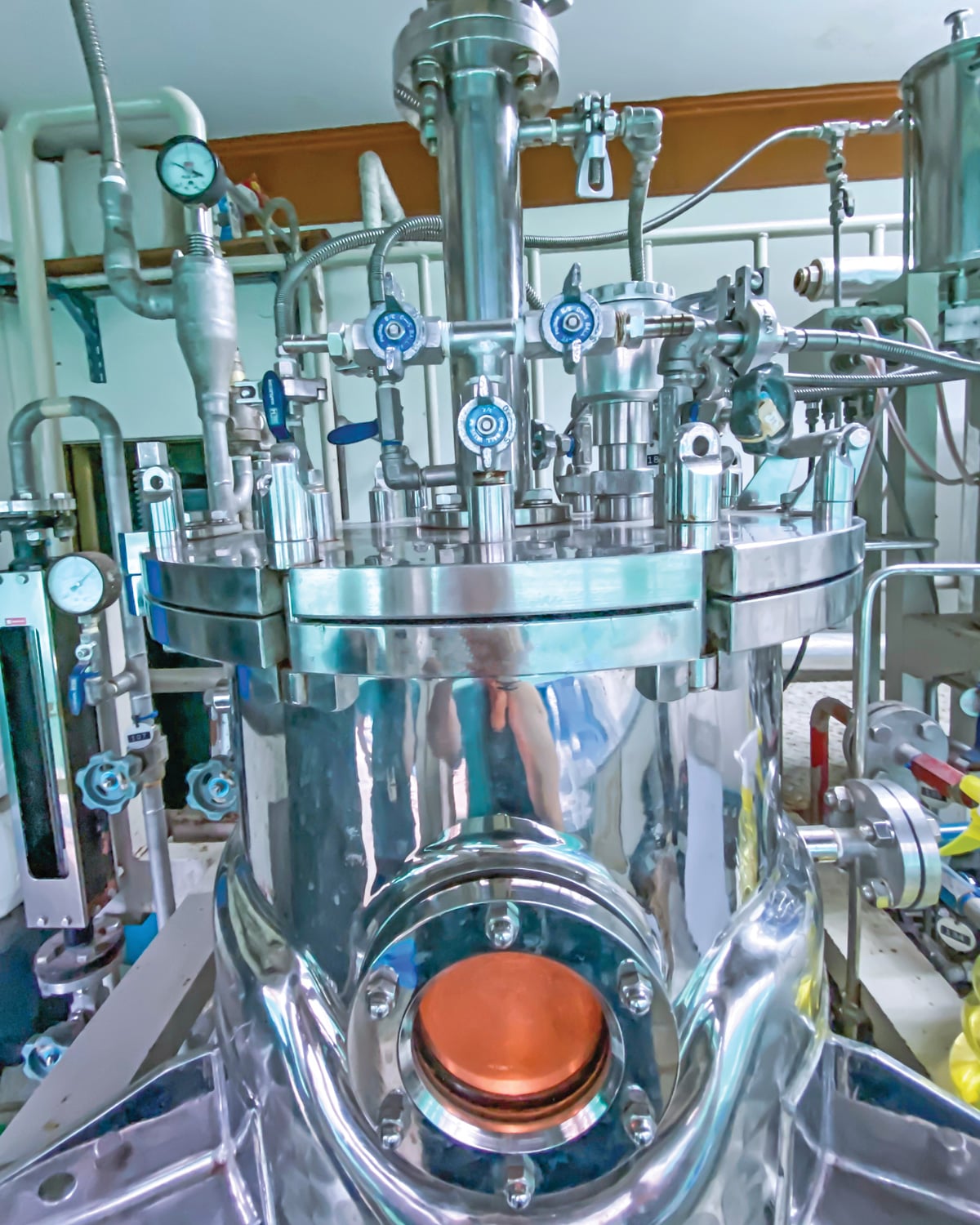
Sustainability becomes a core engineering parameter. As food biotechnology moves from promising innovation to industrial reality, scale-up itself must be designed through a sustainability lens. Commercial success will increasingly depend not only on biological performance and cost efficiency, but on how effectively manufacturing systems minimize resource intensity across energy, water, feedstocks, and waste.
This means prioritizing bioprocesses that improve yield while reducing life cycle environmental burdens through strategies such as renewable energy integration, water recirculation, lower-impact feedstock sourcing, co-product valorization, and modular infrastructure that can leverage existing industrial assets rather than requiring entirely new capital-intensive systems.
Sustainable scale-up also requires evaluating biotechnology platforms by full systems impact, not simply replacing conventional production but determining whether they can deliver measurable improvements in carbon footprint, land efficiency, and supply chain resilience at commercial volumes. In this next phase, the most competitive biotech manufacturers may be those that treat sustainability not as an add-on, but as a core engineering parameter alongside throughput, reliability, and margin.
Adoption depends on value, not substitution. Beyond technical execution, market acceptance is shaped by product performance and positioning. Biotechnology-derived foods are more likely to succeed when they deliver clear advantages, such as improved nutrition, functionality, consistency, or supply reliability, rather than simply replicating existing products. Framing biotechnology as an advanced manufacturing platform shifts evaluation from comparison to performance (Kanimozhi et al. 2026).
Trust is earned through execution. Trust emerges from consistent product quality, transparent practices, and alignment between development, manufacturing, and quality systems. Integrating safety, nutrition, and efficacy early in development, and communicating performance through data rather than claims, reduces uncertainty. Critically, consistency on a commercial scale is essential; when product performance varies, confidence erodes quickly.
Looking ahead, the impact of biotechnology will be determined less by innovation alone and increasingly by execution.
The operating model for the next phase of food biotechnology is defined by these factors. Success will depend not on solving individual challenges in isolation, but on integrating economics, engineering, infrastructure, and market value into a cohesive system that can scale reliably and earn sustained trust (Hassoun et al. 2022).
The Path Forward
The path forward for food biotechnology will be defined by disciplined integration into existing food systems and the progress will depend on aligning scientific innovation with economic reality, manufacturing discipline, and clear value creation. A clear roadmap should reflect the following tenets:
- Cost competitiveness remains foundational. Achieving this requires a shift toward development that prioritizes manufacturability alongside performance, supported by fit-for-purpose infrastructure. Sustainable cost reduction will come less from isolated breakthroughs and more from iterative process optimization, improved reliability at scale, and design that balances capital investment with operational efficiency.
- Integration with existing systems will determine scale. The impact from biotechnology will come from complementing established supply chains, processing capabilities, and distribution networks. Hybrid models that combine biological production with conventional processing can unlock efficiencies and accelerate adoption by leveraging existing infrastructure and expertise.
- Value-based positioning will drive adoption. Products that deliver clear advantages in the form of nutritional improvement, functional performance, consistency, or supply reliability, rather than direct substitution, will be poised to succeed. As these benefits become evident in real-world use, adoption can expand organically. Ultimately, success will be defined by integration, execution, and value delivery.
- Execution defines impact. Food biotechnology is moving from promise to practice, demonstrating its value through precision, consistency, and efficiency at scale. Progress across fermentation, bioprocessing, and cell-based systems shows that scientific feasibility can translate into real-world application. The remaining challenges such as cost, reliability, infrastructure alignment, and adoption reflect the discipline required to operate biological systems at scale. Addressing them depends on tighter integration between research and manufacturing, stronger process design, and decisions grounded in both technical and economic realities.

Connect With IFT’s Biotechnology Community
Interested in advancing the development and commercialization of biotechnology-derived foods and ingredients? IFT’s Biotechnology Division connects food science professionals working in microbial fermentation, plant cell culture, and other emerging applications.
Looking ahead, the impact of biotechnology will be determined less by innovation alone and increasingly by execution. Designing for manufacturability, operating with discipline, and delivering consistent value will define success. When these elements align, biotechnology moves beyond potential, becoming a durable and trusted foundation of modern food systems.
Hero Image: © real444/E+/Getty Images
Author
-
Manish Shrivastava
Manish Shrivastava is head of operations and engineering at Nuritas, where he spearheads the scale-up of AI-derived biotechnology innovations into commercial food manufacturing systems, and is the incoming chair of IFT’s Biotechnology Division (manish.shrivastava49@gmail.com).
Categories
-
Food Sciences
-
New Product Development
-
Biotechnology
-
R and D
-
Food Technology Magazine
-
Food Processing and Technologies
-
Sustainable Food Systems
-
Applied Science


