
Farming 4.0 Is Here

 Dale Buss
Food Technology Magazine
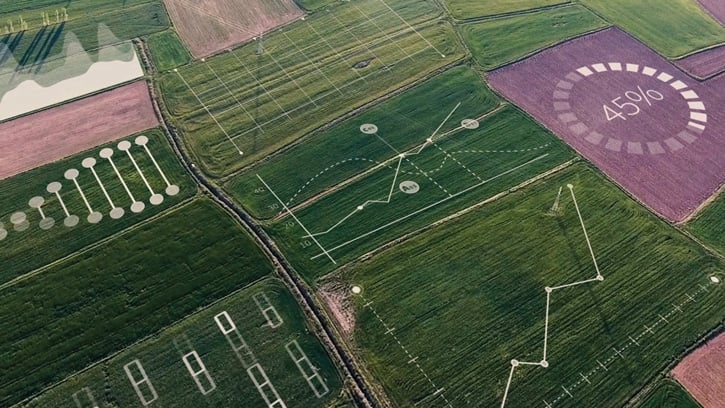
IBM and crop nutrition company Yara have teamed up to commercialize new digital platforms for optimizing food production. Photo courtesy of IBM
Tomorrow’s grain rows, vegetable fields, and specialty crop groves will be much busier places than the relatively passive acreage of yesterday. On the surface, sensors built into crops will signal soil conditions; digital irrigation systems will precisely direct water streams; and robotic guardians will pull weeds. In the air above, satellites and drones will photograph plants with enough precision to count the spots on a ladybug’s wing. In the soil below, new wonders of botanical manipulation and digital information will optimize available nutrients, elevate plant performance, and store results.
Meanwhile, the entire expanse will serve as a “carbon sink,” with cover crops and conservation tillage offsetting some of the greenhouse gas emissions produced elsewhere on the property, while also anchoring against erosion. And in barns and pens, innovations in zoology and engineering will drastically reduce environmental impacts from livestock. These activities will add up to a robust symphony of enhanced agricultural production, as new approaches and technologies increase sustainability, boost yields, and improve crop quality.
“There are numerous new exciting technologies that can be applied to raising agricultural productivity, safeguarding environmental health, and satisfying evolving consumer preferences,” says Adrian Percy, chief technology officer for ag tech investing firm Finistere Ventures, in an interview with UBS securities. “We need to completely transform our agricultural and food production systems to ensure food security for all, meet evolving consumer demands, and conserve our planet’s precious resources for generations to come.”
Rationalization of the supply chain, digitization of manufacturing, and streamlining of distribution all are accelerating an overhaul of how the world transports, processes, and retails food. But the technology revolution in agriculture may be setting the pace for the food industry with remarkable developments that occur before foodstuffs even get to the farm gate. Notably, this transformation is sweeping the relatively conservative arena of Midwestern row crops and livestock operations even as it has been transforming California dairies and produce farms.
Meet the Modern Farmer
Yesterday’s agricultural heroes in flyover country were folks like Don Stall, the Michigan farmer who obtained the top result in 2020’s National Corn Growers Association yield contest with a whopping 477 bushels per acre. Tomorrow’s heroes in America’s breadbasket will be farmers like Ken McCarty, with new skill sets that rely on technology, biology, and environmental awareness in addition to agricultural know-how.
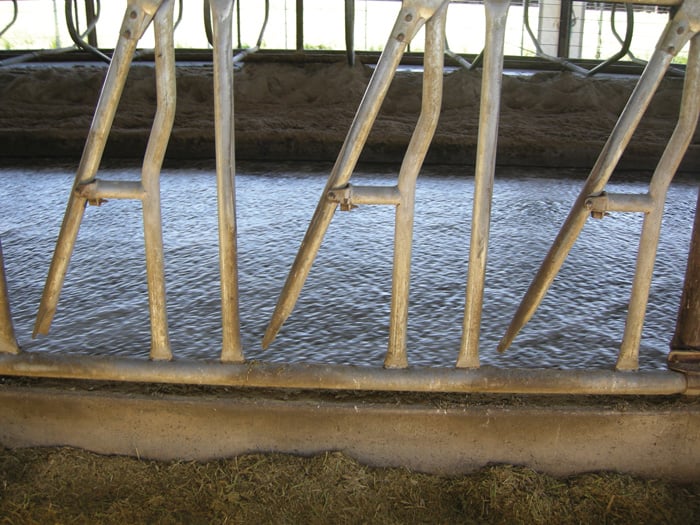
The sophisticated McCarty Family Farms operation uses recycled cleaning water to flush barn stall floors before it is directed to a lagoon and later reused for crop irrigation. Photo courtesy of McCarty Family Farms
With a handful of farms in Kansas and Nebraska, McCarty Family Farms milks nearly 9,000 cows and processes more than 32 million gallons of milk each year. Dependent on the underlying Ogallala Aquifer, which is being rapidly depleted across the Great Plains, the operation flushes manure from barns and recycles the water in lagoons that also supply nutrient-rich supplemental irrigation for crops. The McCarty operation is reclaiming 65,000 gallons of fresh water a day for cows to drink and is transitioning to less water-intensive crops, such as sorghum, for feed. Among many other conservation steps, the McCarty operation continually reclaims almost all of the sand that it uses for cattle bedding.
“It’s a delicate balance,” says McCarty. “We still need highly productive crops and still must have highly productive, well-cared-for animals, but we have to try to balance that with the need to be good stewards. Sustainability may not necessarily result in a higher price per unit of finished goods, but we’re finding it can drive down the costs of production and increase your competitiveness.”
What’s more, McCarty Farms’ efforts align it with the sensibilities of modern consumers. The company hired Sustainable Environmental Consultants to certify its environmental steps for both CPG customers (which include Danone North America) and consumers, and to translate its achievements into easily understandable metrics such as equating McCarty Family Farms’ carbon reductions with removing a certain number of cars from the road.
“Food and beverage companies are becoming very aggressive in the supply chain and looking at ways they can provide the verification to tell the story, so they can capture that information,” says John Harsch, president and chief operating officer of the consultancy.
From Farm Gate to Store Shelf
Even consumer packaged goods companies are paying more attention to the farm. Not insulating themselves from the first layers of the supply chain, more CPG giants now are digging into terra firma itself, attracted by the potential for cost savings and the possibilities for sustainability narratives to share with consumers. End processors’ interest in agriculture is extending to the world’s small family farms, which number about 500 million and are the crucial first stop for much of the global supply chain.
“Consumer preference, including a demand for more transparency and traceability in it, will increasingly drive behavior on the farm,” says Percy, who previously was head of crop science research and development for seed and ag chemical titan Bayer, in the 2019 interview with UBS.
Clearly, the farm is where the food industry’s two biggest environmental issues—water conservation and greenhouse gas emissions—can be most effectively addressed. About 70% of the planet’s fresh water is used for food production, according to the United Nations.
“Most of the world’s water-quantity problems are food related,” says John Robinson, managing partner of Mazarine Ventures, a firm that invests in water-related startups. “Going forward, humanity’s needs for water for agriculture will be increasingly stressed. Everyone is competing for the same water.”
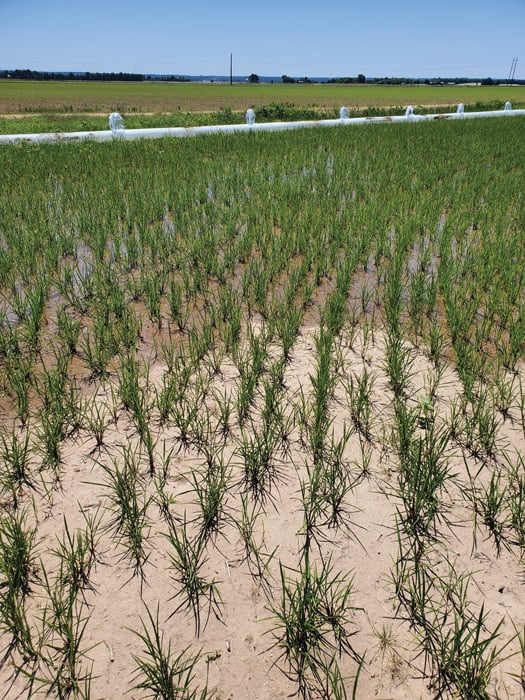
Anheuser-Busch works with the farmers who supply it with rice for use in brewing to help them produce more efficiently and sustainably. Photo courtesy of Anheuser-Busch
Rice farms use a lot of water to promote percolation and groundwater recharge, control flooding during heavy rains, and prevent weed growth in the fields. As America’s largest end user of rice, Anheuser-Busch is helping its 50 rice-supplying farms conserve water by improving the dispersion of water in irrigation systems and even using drones to help farmers level their land.
“Water is heavy and takes a lot of energy to move,” says Bill Jones, rice agronomy manager for the brewing giant. “As growers are adopting these more efficient methods, they’re able to save on energy costs, and also on their carbon footprint.”
Lundberg Family Farms, one of America’s largest rice-growing operations, is bringing more water conservation practices to bear, such as using GPS to communicate with the drag scrapers that level its fields, and for precision planting of rice. Such steps add to Lundberg’s legacy of organic farming that include its early incorporation of rice straw back into the soil instead of burning it or carting it off.
General Mills also is going out to the field, working directly with grain growers to improve soil, conserve water, and boost biodiversity on farms, which are critical to species ranging from songbirds to honeybees. Among other things, the CPG titan is paying farmers in Kansas to experiment with cover crops, and it recently gained federal organic certification for Gunsmoke Farms, a 34,000-acre spread near Pierre, S.D., that was managed conventionally for three decades.
“We’re focused on regenerative agriculture, an approach that can repair and enhance the functioning of an agricultural ecosystem,” says Steve Rosenzweig, General Mills’ senior soil scientist. “When you do that, it helps reverse negative trends across a bunch of areas, sequestering carbon and reducing dependence on fertilizer. It’s good for the environment and for the bottom line.”
It’s also good for appealing to health- and earth-conscious consumers. Annie’s, a unit of General Mills that began as an organic CPG startup, now sells mac-and-cheese and graham crackers in packaging that touts ingredients from Montana farms where regenerative agriculture is practiced.
Ag Tech Innovation
Ag tech also is advancing in labs as well as in the fields. For example, startup Benson Hill is combining Mendelian genetics with artificial intelligence to improve the nutrition and flavor profiles of crops. Founder and CEO Matt Crisp is tapping recent advances in gene editing and data analytics to improve vegetables as well as crops that are popular ingredients for plant-based products, such as soybeans and yellow peas. Benson Hill produces new seed lines, tries them out on thousands of acres, and plies them to food product innovators.
“Genetics is an underutilized lever for innovation,” Crisp says. “We use technology and other means to create nutrition density while retaining the yield profile that delivers profitability to growers.”
These activities will add up to a robust symphony of enhanced agricultural production, as new approaches and technologies increase sustainability, boost yields, and improve crop quality.
In Singapore, an affiliate of the Massachusetts Institute of Technology engineered a “nanobionic” optical sensor that is embedded in plant tissues and can monitor plants’ uptake of arsenic from contaminated water.
CubicFarms has introduced Land on a Stand, a hydroponic animal feed system that can raise grasses for fresh forage in just six days, automatically, in a controlled environment with minimal use of land, labor, and water.
The company is focusing on the dairy industry, where it estimates six of the units—each priced at about $100,000—will feed about 1,000 cows. “It’s all about input costs,” says Dan Schmidt, CubicFarms’ senior vice president of global sales. “We think we can prove we’re 15% more nutritious, using less energy and growing more dry matter than traditional ways.”
Dairy farming is the subject of some of the most intense work in lab-based agricultural innovation these days, much of it focused on cows’ enteric systems, the highly discussed source of methane emissions that may or may not be a significant contributor to climate change. Promising research being funded by Dairy Management, which represents 35,000 dairy farmers, includes increasing the lipid content of dairy cows’ feed, optimizing the amounts they’re fed, and introducing feed additives that may cut emissions by as much as 30%.
“Not every dairy farmer looks at this kind of thing and says this is a needed effort and they’re excited about it,” says Jim Wallace, senior vice president of Dairy Manage-ment. “But by and large, as we’ve talked it through, their skepticism has turned into optimism.”
Purely digital transformation of agriculture has been slower to come. For example, much has been made of blockchain technology and its potential to help every player in the agricultural supply chain track a cut of meat from farm to plate, but it wasn’t until November that Bayer announced the launch of a blockchain system it was funding. Bayer and Bosch have yet to commercialize a product from a joint venture to develop intelligent sprayers. And “smart implements” that will allow robotic weeding remain “in their early infancy,” UBS says.
“The desire to have the information is there, but there’s still not the capability to do it in an efficient, scalable way,” says Brett Bohl, managing partner of Bread & Butter Ventures, an ag tech investment outfit. The ability of farmers to place only one or two big bets on digital tech advancements each year because of the seasonal constraints of growing cycles is one factor that has hampered the adoption of such technologies, he says.
Some Digital Tools Gain a Foothold
Digital tools that can help farmers deal with the here and now have been adopted the most quickly. For example, Taranis provides drones that take ultra-high-resolution photos to help farmers assess what’s happening in their fields at the leaf-and-stem level. Then Taranis applies AI and machine learning to identify the success of fertility initiatives, the locations of weed breakthroughs, the effects of nutrition deficiencies on plants, and the extent of defoliation by pests or weather conditions.
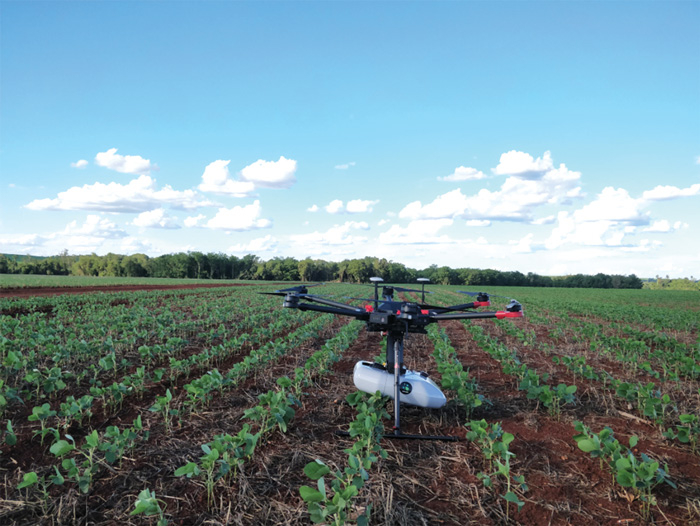
Precision ag imagery combined with artificial intelligence from Taranis supplies farmers with information that enables improved crop management. Photo courtesy of Taranis
IBM’s Weather Co. subsidiary works with crop nutrition expert Yara International to produce data from satellites and massage it with AI to tell farmers about the nutrient status of their land down to a resolution of 20 square meters—on its way down to 10 square meters. “Much land is over-fertilized,” says Luq Niazi, a global managing director for IBM whose purview includes agribusiness. “We can enable precision spreading of nutrients into the land that can reduce inputs by 10%–25%.”
Agtools is a worldwide software-as-a-service platform that gathers real-time government and institutional weather data for more than 500 specialty crop commodities to help farmers, buyers, and everyone else on the supply chain decide how to manage their forecasting and purchase orders.
The world of commodities exemplified by the Chicago Mercantile Exchange “is all about row crops,” says Agtools founder Martha Montoya. “Nobody does the specialty crops like tomatoes, strawberries, lettuce, nuts, and herbs. They’re much more complex. Now [with Agtools] farmers can plant or plan ahead because they’re able to see weather patterns about when to plant and potentially when to harvest. Before, you harvested and you just went off the cliff in terms of information about what was next.”
For example, Montoya says, for some reason every year in early June a significant storm affects Chicago, the destination for many foodstuffs. “Why harvest when the storm is going to backlog the system and damage the pricing and, therefore, damage you as a farmer?” she says. “People need to think about weather conditions in the supply chain destinations, not just on the farm.”
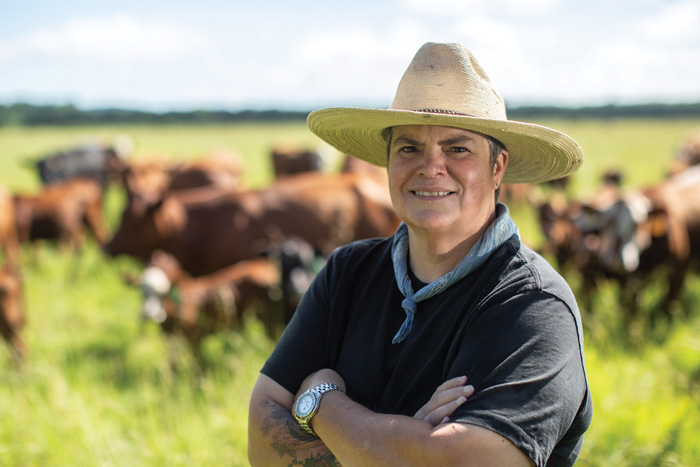
Heifer International ranch manager Donna Kilpatrick schools small farmers in regenerative agriculture techniques. Photo courtesy of Heifer International
The world’s legion of small farmers need the most help. Heifer International is a not-for-profit that is training small plot holders around the globe in regenerative ag practices, helped by major companies, including Tyson and Bayer. “There’s scientific evidence that these techniques can help cool the planet,” says Donna Kilpatrick, ranch manager for Heifer USA. “That’s why I’m passionate about it.”
Cargill is another huge organization that is teaching regenerative ag methods, trying to help more than two million smallholders in West Africa who supply much of the company’s raw cocoa. Cargill is helping farmers optimize cocoa yields through individual coaching. This includes showing them how to improve their income diversity and financial resilience by introducing trees for timber and fruit as well as by cultivating cassava and raising poultry. Cargill also is breaking down cocoa fruit into other marketable components besides cocoa per se. “We’re trying to change the sustainability of cocoa farming from top to bottom,” says Taco Terheuzen, Cargill’s director of cocoa sustainability.
At the same time, Cargill recently introduced CocoaWise, a digital portal that provides customers with easy access to data about the company’s cocoa supply chain. “Consumers want to know where their cocoa comes from,” Terheuzen says. “They want to associate with a brand or a product they know has a decent supply chain behind it.”
E-Connecting Farmers
Online agricultural communities now go far beyond the Farmers Only dating service. A number of serious business platforms have cropped up seeking to electronically connect one of America’s most geographically widespread economic communities.
For example, Farmers Business Network (FBN) says it’s bringing long-needed data transparency to the world of agricultural supplies. And Farmhub is a new online platform for sharing ideas and best practices among owners of small and medium-sized farms.
FBN is flourishing, long ago having passed the benchmark of $100 million in annual revenues and growing its customer network by about 70% since September alone. About 100 new dealers and retailers began selling via the FBN platform during that time as well.

Charles Baron Photo courtesy of Farmers Business Network
“We started in 2014 and now have more than 20,000 farmer members around the world, including Australia,” says FBN co-founder Charles Baron. “They own or manage more than 70 million acres of farmland, and they do a variety of things with us, including data analysis, buying crop protection and seeds, insurance, and even health-care insurance for farmers and their employees.
“Basically, we help farmers become more profitable,” Baron continues. “We help them manage their costs and get a secure foothold in the future, in their markets, and in the way they do business.”
Yet every new enhancement of FBN’s offering generates more resistance by entrenched players in the agricultural community, ranging from giant ag supply outfits such as Bayer to huge grain processors, Baron says. The company has experienced increasing “anti-competitive behavior and even bullying tactics” from industry legacy companies, according to Baron, and there is an ongoing investigation by Canadian regulators of farm-supply companies that stopped selling their wares through FBN.

Heidi Burns Photo courtesy of Farmhub
Ag tech veteran Heidi Burns founded Farmhub in Austin as a sort of Yelp for farmers who are looking for evaluations of “all the different solutions in ag tech and the new and novel products coming out,” she says. Agri-culture “is definitely behind other industries in terms of validating, ‘Should I go down this purchase path?’ for not-insignificant dollar spends.” Her marketing partners are among those pitching new tech solutions.
Yet rooting in the Farmhub community has broadened and deepened as farmer participants grapple not only with new technologies but also with new financial concepts such as agricultural carbon markets—and with the fact that “60% of U.S. farmland will change hands in the next five to 10 years,” Burns says.
“Some will stay in the family, and it will be up to the next, tech-savvy generation to take the risks,” she says. “Why risk the farm at this point on incorporating technology when you don’t know what the outcome is going to be?”
Making Almond Growing More Sustainable
The bounteous farms of California keep America rich in pomegranates, almonds, carrots, pistachios, lettuce, dates, and other fruit, vegetable, and nut staples. They have been proving grounds for agricultural sustainability practices because of the state’s sparse water supplies and strict environmental regulations. Digital experimentation also has come early to many farms there because California is awash in tech expertise.
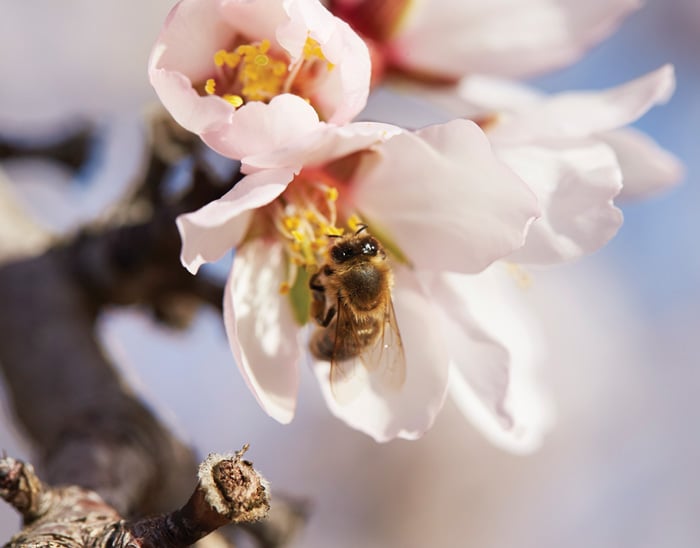
Bees play a key role in almond production, and the Almond Board is working to improve conditions for pollination. Photo courtesy of the Almond Board of California
As the chief scientific officer for the Almond Board of California, Josette Lewis has been at the forefront of innovation for one of the state’s most important specialty crops. She’s already helped oversee a crucial 33% reduction in the amount of water needed to grow a pound of almonds over the last 20 years, mitigating what once seemed an enormous obstacle to the commodity’s growth—and a big threat to almonds’ reputation with consumers.
Now Lewis is overseeing deployment of a new, $5.9 million investment by the almond growers’ organization in next-generation farming practices, including greater use of “micro irrigation,” which includes embedding sensors in trees to measure water flow up and down, and satellite imaging that can measure water stress in individual plants. Also under study are more ways to cut fertilizer runoff, to deploy almond farming byproducts in new ways, such as strengthening recycled plastics, and to work closely with bee farmers to ensure sufficient pollination of almond trees.
Some of Lewis’ most crucial work these days is with insects. Pollination comprises 15%–20% to of the annual cost of almond production, about on par with the costs of irrigation. But widespread bee colony collapse has made it more expensive for beekeepers to keep healthy bees and supply them to growers.
So as part of the board’s comprehensive efforts under its year-old Pollinator Protection Plan, member growers are experimenting with flowering cover crops such as clover that can provide alternative sources of pollen, especially early in the year when bees require nourishment after the winter.
Almond growers also may get some help from Crop Enhancement, a startup that developed a botanical extract that is sprayed on plants in a thin film to protect them against insects and disease. The product works particularly well against a scourge of almonds called the navel orange worm. The company is aiming for commercialization by sometime in 2022.
“Almonds are a very good fit for us and a sizable market,” says Jean Pougnier, CEO. “It will allow them to make a claim about sustainability that they can’t make today.” Only 23% of almond production in California is organic now, “and the main reason is that people don’t have control of this pest,” Pougnier says.
Authors
-
Dale Buss Writer
Dale Buss is an award-winning journalist and book author whose career has included reporting for The Wall Street Journal, where he was nominated for a Pulitzer Prize (daledbuss@aol.com).
Categories
-
Food Business Trends
-
Sustainability
-
Food Categories
-
Innovation and Insights
-
Dairy
-
Food Technology Magazine


