Food Safety Threats Heat Up With Climate Change
Warming oceans, prolonged droughts, extreme rainfall, and shifting supply chains are creating emerging hazards that demand a more forward-looking approach to food safety.
 Lisa Keefe
Food Technology Magazine
Key Takeaways
-
Warmer oceans, prolonged droughts, extreme rainfall, and flooding are increasing the prevalence and geographic range of pathogens, mycotoxins, and environmental contaminants.
-
Hazards such as Vibrio and aflatoxin are appearing in locations where they were previously uncommon, challenging risk models based on historical conditions.
-
Experts say climate data, supplier geography, weather patterns, and environmental conditions should be incorporated into HACCP plans and preventive controls.
The threat of Vibrio vulnificus contamination in humans marches northward along the East Coast of North America at a rate of about 30 miles a year. Warming oceans expand Vibrio’s range, and also its concentration by a factor of 1.5 for every 1°C average increase in water temperature.
On land, the Food and Agriculture Organization of the United Nations reports that mycotoxins have been detected in 80% or more of crops globally. In 2021, a drought in Central Europe caused the high prevalence of aflatoxins in maize from Serbia (84%) and Croatia (40%), up from about 10% in Serbia and 20% in Croatia in the three prior years.
In more recent memory, the heat wave that hit Europe over the summer cut the corn harvest by half in France, the European Union’s largest corn-producing country. That reduced the crop to its lowest level in 50 years, according to the U.S. Department of Agriculture, and food, feed, and ingredient companies are on the lookout for another wave of mycotoxin contamination.
In fact, drought—such as that seen affecting nearly half of the United States and England in 2026—sets the stage for a variety of food safety risks, especially when rain finally returns: greater concentration of neurotoxins in feed, higher concentrations of pesticide and fertilizer residues in crops, and pollutants, pathogens, pesticides, and fertilizer carried far and wide by rainwater washing over hard, compacted soil.
Climate change is forcing us to rethink how we identify, monitor, and control hazards.

But these weather events, while common, are spread out globally over time. To food company executives, climate change may look like a slow-moving phenomenon happening far away, easily kicked down the list of priorities when other issues seem more immediate. That would be a mistake, say food safety experts.
“The systems that we have today are built around historical patterns, things that we know have happened. That may not give us enough information to be able to take care of something that is occurring but that we might not be aware of,” says Jennifer Lott, senior director, tailored solutions and technical development director at SGS North America, a testing, inspection, and certification provider. “Climate change is forcing us to rethink how we identify, monitor, and control hazards.”
Recognizing what effects the weather—like this year’s “super El Niño”—has on a particular company’s supply chain is only a start. Incorporating that knowledge into Hazard Analysis and Critical Control Point (HACCP) plans, then adjusting processes and interventions accordingly, are the necessary next steps.
“Future-ready food safety systems connect climate change with day-to-day food safety practices,” Lott says. “The time to adapt is before climate-driven hazards become routine.”
More Reasons for Concern
Warming ocean waters are a key threat to food safety on multiple fronts. Consider the spread of dangerous concentrations of Vibrio bacteria: A handful of the world’s 80 Vibrio species affect humans, but among those are some that can be life-threatening. Vibrio bacteria are naturally occurring, and so, experts say, the coastal effects of climate change foster their growth and concentration in areas where cooler water temperatures have traditionally kept populations in check.
In addition, the Vibrio “season”—during which conditions are right for concerning levels of Vibrio in the water—has expanded to include reported infections as early as April in Maryland this year, with late October reports surfacing as far north as Massachusetts.
Warming ocean waters foster algal blooms, which introduce a variety of toxins that are absorbed by fish and shellfish.
Alongside Vibrio, warming ocean waters foster algal blooms, which introduce a variety of toxins that are absorbed by fish and shellfish. Crucially, the toxins are not destroyed by boiling, cooking, freezing, or washing. The advice to “avoid raw foods” isn’t enough under these circumstances.
“It’s important to note the way heat can accelerate microbial growth and spread contamination and mold pressures,” Lott says. “It may be that if something is coming in and you know that it’s been compromised, you may have to take an additional step” to ensure food safety.
Irradiation is an effective kill step for many foods, for example, although consumers by and large have been scared off the technology, and the radura sign it requires on packaging, so that it’s never gained a foothold in the market. High pressure processing also has many benefits, including reduced allergenicity in many foods. However, the technology as yet is too expensive and not available at a sufficient scale to be a practical consideration for most companies.
It Is the Heat
Away from the coasts, the summer of 2026 was more than hot; it was drought-dry, as has been the case in the western United States since 2000, according to the federal Drought Monitor. In addition to the heightened risk of mycotoxins, the lack of water increases the likelihood that pesticides and fertilizers, and their residues, will be found in higher concentrations on crops and throughout the supply chain.
“Shifts in temperature and precipitation patterns can affect when, where, and what molds develop, with implications for food safety as those crops become ingredients in foods ranging from bread and breakfast cereal to crackers and corn-based snacks,” notes Maria Wedel, vice president, food safety, quality & regulatory affairs for Cargill Food North America.
Shifts in temperature and precipitation patterns can affect when, where, and what molds develop, with implications for food safety as those crops become ingredients in foods.

“Similarly, changing pest populations in crop production systems may alter how and when crop protection products are used,” she adds. This makes careful monitoring and appropriate controls increasingly important in order to manage potential pesticide residue risk as crops move from the field through storage and into grain-based foods.
Says Lott, “We’re now seeing mycotoxins showing up in areas where we never saw them before because the conditions are changing.”
The Day the Rains Came
Rain, in the wake of drought, is welcome, in small amounts. Too much actually increases the food safety threat. Consider the parade of more than a dozen “atmospheric rivers” that dogged California’s Central and San Joaquin valleys in 2023, submerging tens of thousands of acres of agricultural land under floodwaters. Flooding fosters growth of certain types of mold, and crops grown in flooded soil can be contaminated with heavy metals and other pollutants, agricultural chemicals, microbes, and parasites. California, for one, requires producers to maintain a 30-foot buffer between soil that was flooded and crops grown in soil that was not.
“Irrigation and process water is the connective tissue” that can transport contamination further down the supply chain, says Kantha Shelke, founder of food science consultancy Corvus Blue. “Which is exactly why FDA (the U.S. Food and Drug Administration) in 2024 replaced the numeric preharvest water testing standard with a systems-based assessment that forces growers to evaluate heavy rain, flooding, and adjacent land use.”
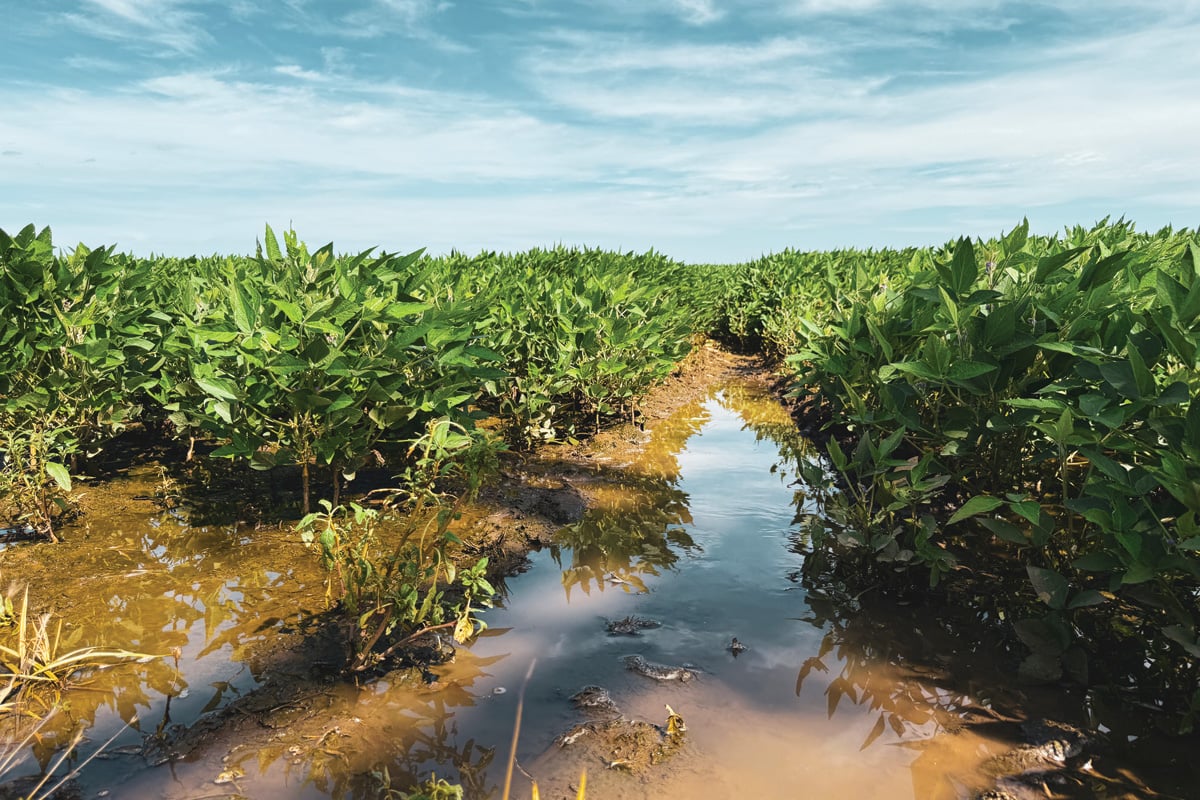
Crops grown in soil that’s been flooded can be contaminated with heavy metals, agricultural chemicals, microbes, and more. © Sanya Kushak/iStock/Getty Images Plus
Waterborne contamination of iceberg lettuce is thought to be a factor in the 2026 cyclosporiasis outbreak, the 2019 Romaine lettuce E. coli foodborne illness outbreak, and numerous fresh produce-related food illness events in between.
“Production losses or volatility can affect availability, procurement costs, margins, and ultimate consumer prices,” said Mayke Geradts, global sustainability lead – commodities, food & agri, ING Wholesale Banking, in an interview in September. “Climate risks beginning on the farm do not remain there.”
Supply Chain Risks
With that in mind, food safety in the United States is increasingly affected by climate events manifesting in other parts of the world, resulting in a higher likelihood of pathogens on fruit and produce imported from the Caribbean and Latin America, Vibrio in shellfish from Asia, and mycotoxins in beans, dried fruits, nuts, and coffee from Latin America, Asia, and Africa. The federal government monitors imports for contaminants, but the complex international supply chains of the 21st century underscore the need to understand and track climate issues as part of food safety—and for food technologists to embrace risk assessment as a job skill.
“Anyone who has written a hazard analysis under FSMA (the Food Safety Modernization Act) is already a risk assessor,” Shelke says.
Suppliers are key actors in food safety down the line in terms of their quality, reliability, customer relations, and adaptability to their own climate change-related challenges. Food safety assessments must consider all these variables for all vendors.
Complex international supply chains of the 21st century underscore the need to understand and track climate issues as part of food safety.
The challenge is in anticipating issues that haven’t even been imagined yet. Lott uses the analogy of changing from a supplier located in the Upper Midwest to one based in the Southwest: “In Ohio, we don’t have scorpions, but if I have to change to a supplier in Arizona, where they have scorpions, I have to think about whether scorpions can be something that’s a problem. And maybe there’s a test that I’m not used to dealing with that I need to start thinking about.”
Incorporating future climate change risks into a food safety plan is a change from having to “hit a test number” to meet FDA requirements, as has been the case historically. But the idea isn’t exactly new: For more than a decade, the agency has required that HACCP plans be reanalyzed whenever “new information” surfaces about potential hazards.
“A documented northward shift in aflatoxin risk or Vibrio range is precisely that kind of information,” Shelke says.
In 2024, the agency made the connection between climate change and food safety more explicit in its Final Rule on Pre-Harvest Agricultural Water, which names “environmental conditions,” including “heavy rainfall and flooding,” among the factors to be considered in an assessment.
The assessments themselves are “used to identify conditions that are reasonably likely to introduce known or reasonably foreseeable hazards into or onto produce or food contact surfaces, and to determine whether, and how soon, corrective or mitigation measures must be implemented to minimize risks,” according to the agency.
“That’s a regulator formally converting a food safety requirement into a risk-anticipation exercise—useful proof that this isn’t aspirational,” Shelke says.
Cargill, for one, uses various databases and software platforms for risk anticipation, or “horizon scanning.” The company has more resources than most and maintains one of the industry’s largest databases of mycotoxins, tracking strain, location, and commodity, among other variables, and early trend signals. Other programs model how various climate scenarios would affect its businesses through 2050, Wedel says.
The company also has the Cargill Hazard Alert System, “an AI-enabled program that monitors nearly one million external signals every year and sends relevant data to our subject matter experts to review,” she adds.
Some events just can’t be anticipated, “like earthquakes in Colombia,” Lott says. “But how are you managing the risk associated with drought, with flooding, with all these things we know are happening? What are you doing differently? Are you getting secondary suppliers in different regions? What are you doing to make sure that there’s no impact on your products?”
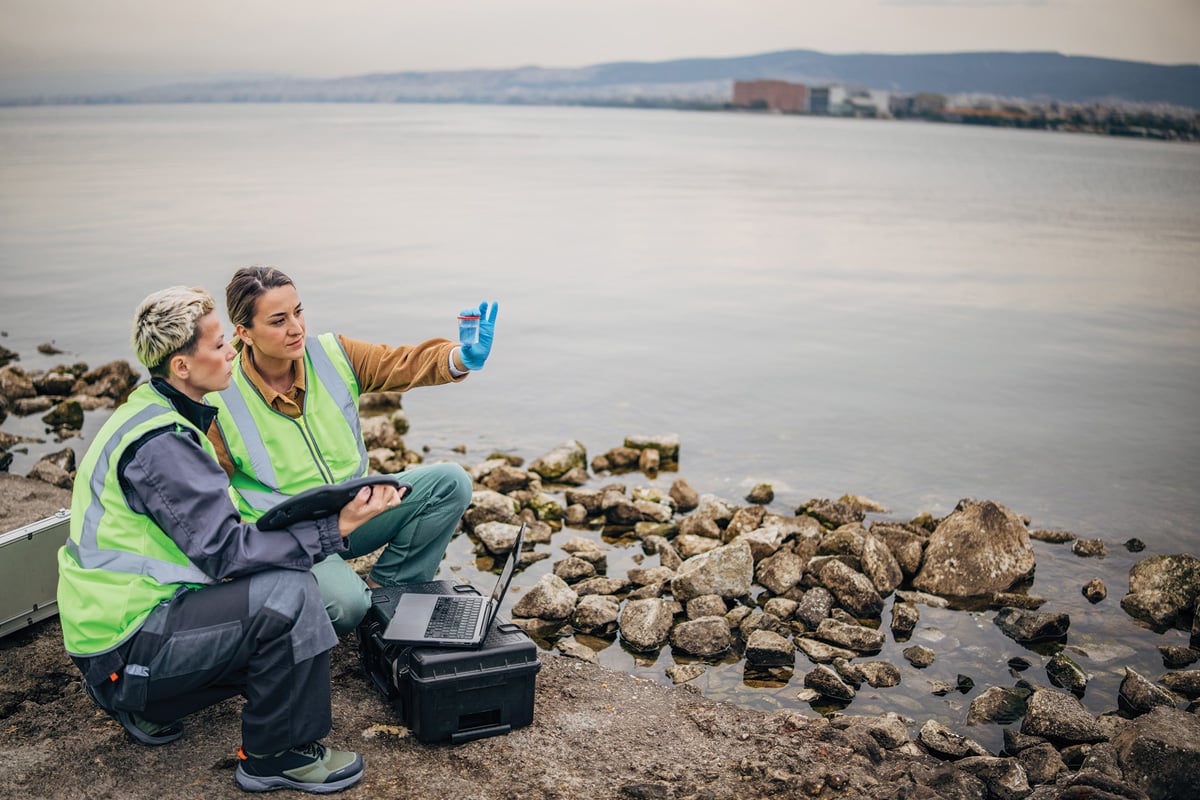
Environmental monitoring efforts help researchers better understand how changing climate conditions influence water quality and food systems. © South_agency/iStock/Getty Images Plus
Planning for Climate Impact
Crucially, food technologists working for companies smaller than Cargill still must do the same horizon scanning as part of their jobs. They won’t need a million data points, but the HACCP plan needs to reflect the company’s understanding of long-term shifts in its operations created by climate change.
“The piece that’s so important is that this is continuous improvement,” Lott points out. “It’s not reactive. We know these things are out there. There’s a possibility they’ll happen, so we need to be continuously driving improvement in how we manage so that we’re not in the position of saying ‘Oh, my gosh, what happened?’”
Several consulting firms offer services specifically geared toward risk anticipation and management. Lott’s SGS North America is one such service provider.
If a subscription to an outside firm isn’t in the budget, it is possible—if taxing—to build a climate change monitoring system in-house. Government agencies around the world have a wealth of relevant information available on their websites. Finding the useful data can be a time-consuming treasure hunt. Search and artificial intelligence platforms have made starting the process easier, however, although the results should be checked carefully for accuracy.
Ultimately, “sea surface temperature, growing-season rainfall, drought maps, and supplier geography belong in the hazard analysis alongside historical illness data and finished-product testing,” Shelke notes. “This is how you turn ‘climate change’ from a headline into a line item on this quarter’s agenda.”
Hero Image: © Getty Images AI Generator
Author
-
Lisa Keefe Writer and Editor
Lisa Keefe is a writer, editor, and creator of strategic b-to-b communications with more than three decades of experience in planning and content development (lisa@lisamkeefe.com).
Categories
-
Food Safety
-
FSMA
-
Pathogens
-
Foodborne Illness
-
Food Technology Magazine
-
Issues and Insights