
GRAS 29 Flavoring Substances

[PLEASE DOWNLOAD THE ARTICLE PDF IN ORDER TO READ THE ACCOMPANYING GRAS TABLES.]
In 1960, the Flavor and Extract Manufacturers Association (FEMA) Expert Panel began a program to assess the safety of flavor ingredients for their intended use in human food. The primary objectives of the FEMA GRAS program are to evaluate whether materials nominated by the flavor industry are “generally recognized as safe” (GRAS) for their intended use as flavor ingredients and to reevaluate existing FEMA GRAS flavoring ingredients’ GRAS status. The GRAS provision of the Federal Food, Drug, and Cosmetic Act defines a food additive as: “… any substance … which … may … [become] a component or … [affect] the characteristics of any food … if such substance is not generally recognized, among experts qualified by scientific training and experience to evaluate its safety, as having been adequately shown through scientific procedures … to be safe under the conditions of its intended use,” and thus requires that GRAS determinations are made by qualified experts in training and experience using scientific procedures.
This publication includes the results of the Expert Panel’s review of 64 new flavorings under their conditions of intended use (Tables 1 and 2). In addition, the Expert Panel determined that new use levels and/or use in new food categories for 76 flavorings are consistent with their current FEMA GRAS status (Table 3) and removed the FEMA GRAS status on the uses of one substance.
Update on Recent Panel Activities
The Expert Panel has a long history of publishing the criteria used in their safety assessments of flavoring substances for food (Smith et al. 2005a; Smith et al. 2005b; Cohen et al. 2018a). The Expert Panel has recently published several articles describing their approach to certain aspects of flavor safety evaluation. These include an article (Smith et al. 2018) that summarizes the use and applicability of metabolic data on the disposition of flavoring substances, and an article that summarizes the use and interpretation of genotoxicity information within the Expert Panel’s safety assessments (Gooderham et al. 2020).
Progress in the Reevaluation of Natural Flavor Complexes

Photo courtesy of FONA International
In 2018, the FEMA Expert Panel published an update to its approach to the safety evaluation of natural flavor complexes (NFCs), or naturally occurring mixtures derived from plants or other natural sources used for the flavoring of food (Cohen et al. 2018a). The Expert Panel also started a comprehensive reassessment of the safety of natural flavor complexes with uses that are considered FEMA GRAS. These reassessments are based on complete and updated chemical analyses and comprehensive safety evaluations. The first results of this NFC reassessment program were published in 2018 and include the Expert Panel’s conclusions on 54 NFCs derived from Citrus (Cohen et al. 2019). As a result of these reassessments, a number of NFCs were newly considered to have uses that are FEMA GRAS. The Expert Panel has also conducted and published safety reassessments of NFCs derived from Mint, Buchu, Dill, and Caraway (Cohen et al. 2020) and NFCs derived from Cinnamomum and Myroxylon species (Rietjens et al. 2020). An additional four publications summarizing the progress of the NFC reassessment program are anticipated in 2020.
FDA Final Rule
On October 5, 2018, the Food and Drug Administration of the United States (FDA) published a final rule partially granting a food additive petition (FAP 5A4810) that requested the amendment of FDA’s food additive regulations to no longer authorize the use of benzophenone, ethyl acrylate, eugenyl methyl ether, myrcene, pulegone, pyridine, and styrene as synthetic flavoring substances and adjuvants for use in food (see 83 Fed. Reg. 50490. 9 October 2018). In doing so, FDA said: “We are taking this action [on the six flavoring substances1] because, despite FDA’s scientific analysis and determination that these substances do not pose a risk to public health under the conditions of their intended use, the petitioners provided data demonstrating that these additives induce cancer in laboratory animals, and, as a result of this finding in animals, FDA cannot as a matter of law maintain the listing of these synthetic flavoring substances in the food additive regulations.”
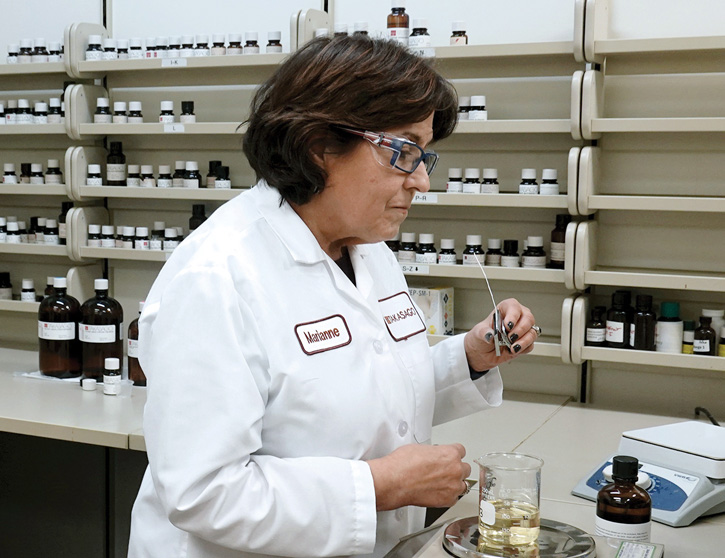
Photo courtesy of Takasago
FDA explained that it had based its decision “as a matter of law” on the “extraordinarily rigid” Delaney Clause of the Federal Food, Drug, and Cosmetic Act. The Delaney Clause prohibits the agency from approving a “food additive if it is found … to induce cancer in man or animal.” FDA further explained: “We have evaluated the data and information submitted by the petitioners, as well as other relevant carcinogenicity data and information, and have determined the remaining six synthetic flavoring substances (i.e., other than styrene) that are the subject of FAP 5A4810 are unlikely to pose a potential or significant carcinogenic risk for humans at the levels that these synthetic flavoring substances are used in foods, and that the use of these food additives is safe for human consumption. In other words, FDA has a reasonable certainty that the substances do no harm under the intended conditions of use (the standard for approving food additives)” (see 83 Fed. Reg. 50490. 9 October 2018). The Expert Panel reviewed the FDA’s final rule and determined that no change is necessary in the FEMA GRAS status of benzophenone, ethyl acrylate, beta-myrcene, pulegone, and pyridine. Previous to FDA’s action on the petition, the Expert Panel concluded that two of the seven (eugenyl methyl ether and styrene) were no longer GRAS—eugenyl methyl ether because the available scientific information was not adequate to maintain GRAS status and styrene because it was no longer in use as a flavoring substance (Cohen et al. 2015; Cohen et al. 2018b). The FDA decision is applicable to the synthetic versions of the five flavoring substances. Thus, the synthetic versions of these five flavoring substances are no longer permitted for addition to food with a compliance date of October 9, 2020 (see 83 Fed. Reg. 50490. 9 October 2018).
FEMA GRAS Applications
Photo courtesy Synergy Flavors
The Expert Panel reviews both chemically defined substances and complex mixtures and considers safety under conditions of their intended use as flavoring substances (Smith et al. 2005a; Smith et al. 2005b; Cohen et al. 2018a). Recently, the Panel has seen an increase in complex mixtures or natural flavoring complex applications and has reviewed its criteria regarding botanical species verification. Due to the potential for the inaccurate identification of botanical sources of complex mixtures or natural flavor complexes, the Expert Panel requires species verification to ensure the name of the botanical is reflective of the species in commerce. This can be most easily achieved by DNA genetic testing/DNA species identification approaches. Such verification services are available from a number of contract research facilities.
Use of In Silico Data
The Expert Panel notes the increasing use and availability of a wide array of in silico tools available to provide insights into toxicological potential and to predict metabolic outcomes for small molecules. Such tools may be useful to FEMA GRAS applicant companies in their internal assessments of the potential need for toxicity or genotoxicity studies to support their application for FEMA GRAS status. While the Expert Panel considers these data possibly supportive, the Panel has concluded that the information produced from currently available in silico tools cannot be used as a substitute for in vitro and in vivo metabolic and toxicological information within the context of FEMA GRAS applications.
Benchmark Dose Modeling
In the course of conducting safety evaluations on flavoring ingredients under their conditions of intended use, the FEMA Expert Panel reviews toxicity studies on the candidate flavoring and related substances (Cohen et al. 2018a; Smith et al. 2005a; Smith et al. 2005b). In the Panel’s evaluation of a study, the study observations, their relevance of the observed effects on human health are evaluated and the dose at which no-adverse-effects (NOAEL) are observed is determined. NOAEL values are often used as reference points in the calculation of margins of safety (MoS) by taking the ratio of the NOAEL to the estimated intake for the flavoring ingredient being considered. NOAEL values have commonly been used as a point of reference for the calculation of MoS, acceptable daily intake (ADI), and similar values by regulatory bodies (Haber et al. 2018; Kroes et al. 2000).
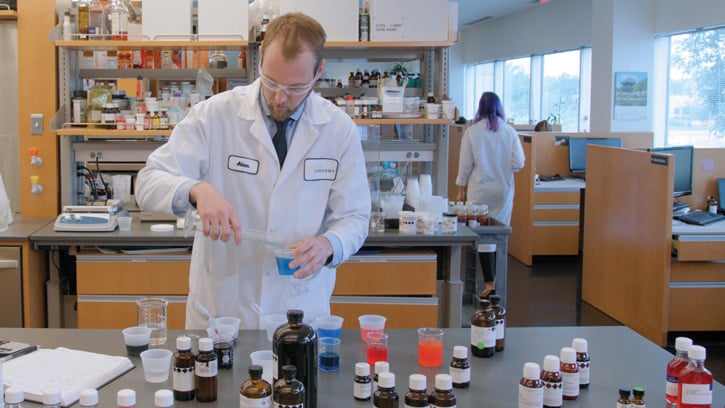
Photo courtesy of Sensient Flavors
Because NOAEL values are limited to the dose levels tested in a study and do not describe the dose-response relationship, mathematical modeling of the dose-response data of a study, where the estimate of the benchmark dose (BMD) corresponding to a specific change in response (BMR) compared to the background is calculated, is of increasing relevance in safety evaluations (Haber et al. 2018). The Expert Panel has begun to use BMD approaches when the available data is adequate for robust modeling. The application of the BMD approach is summarized in the recent publication on the FEMA GRAS assessment of Cinnamomum and Myroxylon-derived flavoring ingredients (Rietjens et al. 2020).

Photo courtesy of Givaudan
Samuel M. Cohen, MD, PhD, is Havlik-Wall Professor of Oncology in the Dept. of Pathology and Microbiology, University of Nebraska Medical Center. Gerhard Eisenbrand, PhD, is retired from the University of Kaiserslautern, Dept. of Chemistry, Food Chemistry and Toxicology, Germany. Shoji Fukushima, MD, PhD, is Research Advisor of the Japan Bioassay Research Center, Japan. Nigel J. Gooderham, PhD, is Professor of Molecular Toxicology and the Assistant Provost in the Dept. of Metabolism, Digestion and Reproduction, Imperial College London. F. P. Guengerich, PhD, is Tadashi Inagami Chair in Biochemistry and Director of Guengerich Research Laboratory, Vanderbilt University School of Medicine. Stephen S. Hecht, PhD, is the Wallin Land Grant Professor of Cancer Prevention, Masonic Cancer Center, and Dept. of Laboratory Medicine and Pathology, University of Minnesota. Ivonne M. C. M. Rietjens, PhD, is Full Professor in Toxicology at the Division of Toxicology, Wageningen University, Wageningen, The Netherlands. Thomas J. Rosol, DVM, PhD, MBA, is a Professor of Veterinary and Toxicological Pathology and Chair of the Dept. of Biomedical Sciences, Heritage College of Osteopathic Medicine, Ohio University, Athens, Ohio. Christie L. Harman, is Senior Science and Policy Advisor to the FEMA Expert Panel, Washington, D.C. Sean V. Taylor, PhD, is the Scientific Secretary to the FEMA Expert Panel, Washington, D.C.
NOTE
1FDA removed styrene from 21 CFR 172.515 to no longer provide for the use of styrene as a synthetic flavoring substance and adjuvant in food in response to a food additive petition (FAP 6A4817) as the use was permanently and completely abandoned.
FEMA GRAS Publications (3–28)
Hall, R. L. and B. L. Oser. 1965. 3. GRAS Substances. Food Technol. 19(2): Supp., 151.
Hall, R. L. and B. L. Oser. 1970. 4. GRAS Substances. Food Technol. 24(5): 25.
Oser, B. L. and R. L. Hall. 1972. 5. GRAS Substances. Food Technol. 26(11): 35.
Oser, B. L. and R. A. Ford. 1973a. 6. GRAS Substances. Food Technol. 27(1): 64.
Oser, B. L. and R. A. Ford. 1973b. 7. GRAS Substances. Food Technol. 27(11): 56.
Oser, B. L. and R. A. Ford. 1974. 8. GRAS Substances. Food Technol. 28(9): 76.
Oser, B. L. and R. A. Ford. 1975. 9. GRAS Substances. Food Technol. 29(8): 70.
Oser, B. L. and R. A. Ford. 1977. 10. GRAS Substances. Food Technol. 31(1): 65.
Oser, B. L. and R. A. Ford. 1978. 11. GRAS Substances. Food Technol. 32(2): 60.
Oser, B. L. and R. A. Ford. 1979. 12. GRAS Substances. Food Technol. 33(7): 65.
Oser, B. L., R. A. Ford, and B. K. Bernard. 1984. 13. GRAS Substances. Food Technol. 38(10): 66.
Oser, B. L., C. S. Weil, L. A. Woods, and B. K. Bernard. 1985. 14. GRAS Substances. Food Technol. 39(11): 108.
Burdock, G. A., B. M. Wagner, R. L. Smith, I. C. Munro, and P. M. Newberne. 1990. 15. GRAS Substances. Food Technol. 44(2): 78.
Smith, R. L. and R. A. Ford. 1993. GRAS Flavoring Substances 16. Food Technol. 47(6): 104.
Smith, R. L., P. M. Newberne, T. B. Adams, R. A. Ford, and J. B. Hallagan. 1996. GRAS Flavoring Substances 17. Food Technol. 50(10): 72.
Newberne, P. M., R. L. Smith, J. Doull, J. I. Goodman, I. C. Munro, P. S. Portoghese, B. M. Wagner, C. S. Weil, L. A. Woods, T. B. Adams, J. B. Hallagan, and R. A. Ford. 1998. GRAS Flavoring Substances 18. Food Technol. 52(9): 58.
Newberne, P. M., R. L. Smith, J. Doull, V. J. Feron, J. I. Goodman, I. C. Munro, P. S. Portoghese, W. J. Waddell, B. M. Wagner, C. S. Weil, T. B. Adams, and J. B. Hallagan. 2000. GRAS Flavoring Substances 19. Food Technol. 54(6): 66.
Smith, R. L., J. Doull, V. J. Feron, J. I. Goodman, I. C. Munro, P. M. Newberne, P. S. Portoghese, W. J. Waddell, B. M. Wagner, T. B. Adams, and M. M. McGowen. 2001. GRAS Flavoring Substances 20. Food Technol. 55(12): 34.
Smith, R. L., S. M. Cohen, J. Doull, V. J. Feron, J. I. Goodman, L. J. Marnett, P. S. Portoghese, W. J. Waddell, B. M. Wagner, and T. B. Adams. 2003. GRAS Flavoring Substances 21. Food Technol. 57(5): 46.
Smith, R. L., S. M. Cohen, J. Doull, V. J. Feron, J. I. Goodman, L. J. Marnett, P. S. Portoghese, W. J. Waddell, B. M. Wagner, and T. B. Adams. 2005. GRAS Flavoring Substances 22. Food Technol. 59(8): 24.
Waddell, W. J., S. M. Cohen, V. J. Feron, J. I. Goodman, L. J. Marnett, P. S. Portoghese, I. M. C. M. Rietjens, R. L. Smith, T. B. Adams, C. L. Gavin, M. M. McGowen, and M. C. Williams. 2007. GRAS Flavoring Substances 23. Food Technol. 61(8): 22.
Smith, R. L., W. J. Waddell, S. M. Cohen, V. J. Feron, L. J. Marnett, P. S. Portoghese, I. M. C. M. Rietjens, T. B. Adams, C. L. Gavin, M. M. McGowen, S. V. Taylor, and M. C. Williams. 2009. GRAS Flavoring Substances 24. Food Technol. 63(6): 46.
Smith, R. L., W. J. Waddell, S. M. Cohen, S. Fukushima, N. J. Gooderham, S. S. Hecht, L. J. Marnett, P. S. Portoghese, I. M. C. M. Rietjens, T. B. Adams, C. L. Gavin, M. M. McGowen, and S. V. Taylor. 2011. GRAS Flavoring Substances 25. Food Technol. 65(7): 44.
Marnett, L. J., S. M. Cohen, S. Fukushima, N. J. Gooderham, S. S. Hecht, I. M. C. M. Rietjens, R. L. Smith, T. B. Adams, J. B. Hallagan, C. Harman, M. M. McGowen, and S. V. Taylor. 2013. GRAS Flavoring Substances 26. Food Technol. 67(8): 38.
Cohen, S. M., S. Fukushima, N. J. Gooderham, S. S. Hecht, L. J. Marnett, I. M. C. M. Rietjens, R. L. Smith, M. Bastaki, M. M. McGowen, C. Harman, and S. V. Taylor. 2015. GRAS Flavoring Substances 27. Food Technol. 69(8): 40.
Cohen, S. M., G. Eisenbrand, S. Fukushima, N. J. Gooderham, F. P. Guengerich, S. S. Hecht, I. M. C. M. Rietjens, C. Harman, and S. V. Taylor. 2018b. GRAS Flavoring Substances 28. Food Technol. 72(7): 62.
Change in GRAS Status of Ethyl Nitrite
The FEMA GRAS status of ethyl nitrite (FEMA 2446) under the conditions of intended use as a flavor ingredient was reviewed by the FEMA Expert Panel as part of the continual reevaluation of FEMA GRAS status. The Expert Panel concluded that additional data, including further examination of the vascular effects observed in available toxicity studies as well as OECD- and GLP-compliant in vitro and in vivo genotoxicity testing, were required for the continuation of its GRAS status. Until such studies become available and further evaluated, the flavor ingredient ethyl nitrite has been removed from the FEMA GRAS list.
Basis for Safety Evaluation Decisions for GRAS 29
Key findings of the FEMA Expert Panel GRAS determinations are available on femaflavor.org for each new substance listed in Table 1.
Expert Panel Member Change
In January 2018, Dr. Thomas Rosol of Ohio University, Athens, Ohio, joined the FEMA Expert Panel.
In Memoriam
The FEMA Expert Panel notes with sadness the passing of Dr. Richard Hall on Aug. 15, 2019. Dick Hall spent his long career as a chemist, executive vice president, and board member for McCormick & Co., and he served as the Flavor and Extract Manufacturers Association senior science advisor in his retirement. He helped to establish the FEMA GRAS program in 1960 and significantly advanced the science of flavor safety, including contributions on topics such as assessing the dietary intake of flavor ingredients and the risk assessment of complex mixtures. Dick’s eloquence, knowledge, and generosity to others will continue to inspire the scientific community far beyond the date of his passing.
REFERENCES
Cohen, S. M., S. Fukushima, N. J. Gooderham, S. S. Hecht, L. J. Marnett, I. M. C. M. Rietjens, R. L. Smith, M. Bastaki, M. M. McGowen, C. Harman, and S. V. Taylor. 2015. GRAS Flavoring Substances 27. Food Technol. 69(8): 40.
Cohen, S. M., G. Eisenbrand, S. Fukushima, N. J. Gooderham, F. P. Guengerich, S. S. Hecht, I. M. C. M. Rietjens, J. M. Davidsen, C. L. Harman, and S. V. Taylor. 2018a. “Updated procedure for the safety evaluation of natural flavor complexes used as ingredients in food.” Food Chem. Toxicol. 113: 171.
Cohen, S. M., G. Eisenbrand, S. Fukushima, N. J. Gooderham, F. P. Guengerich, S. S. Hecht, I. M. C. M. Rietjens, C. Harman, and S. V. Taylor. 2018b. GRAS Flavoring Substances 28. Food Technol. 72(7): 62.
Cohen, S. M., G. Eisenbrand, S. Fukushima, N. J. Gooderham, F. P. Guengerich, S. S. Hecht, I. M. C. M. Rietjens, M. Bastaki, J. M. Davidsen, C. L. Harman, M. M. McGowen, and S. V. Taylor. 2019. “FEMA GRAS assessment of natural flavor complexes: Citrus-derived flavoring ingredients.” Food Chem. Toxicol. 124: 192.
Cohen, S. M., G. Eisenbrand, S. Fukushima, N. J. Gooderham, F. P. Guengerich, S. S. Hecht, I. M. C. M. Rietjens, M. Bastaki, J. M. Davidsen, C. L. Harman, M. M. McGowen, and S. V. Taylor. 2020. “FEMA GRAS assessment of natural flavor complexes: Mint, buchu, dill and caraway derived flavoring ingredients.” Food Chem. Toxicol. 135. https://doi.org/10.1016/j.fct.2019.110870.
Gooderham, N.J., S. M. Cohen., G. Eisenbrand, S. Fukushima, F. P. Guengerich, S. S. Hecht, I. M. C. M. Rietjens, T. J. Rosol, M. Bastaki, M. J. Linman, and S. V. Taylor. 2020. “The safety evaluation of food flavoring substances: the role of genotoxicity studies.” Crit. Rev. Toxicol. https://doi.org/10.1080/10408444.2020.1712589.
Haber, L. T., M. L. Dourson, B. C. Allen, R. C. Hertzberg, A. Parker, M. J. Vincent, A. Maier, and A. R. Boobis. 2018. “Benchmark dose (BMD) modeling: current practice, issues, and challenges.” Crit. Rev. Toxicol. 48: 387.
Kroes, R., C. Galli, I. Münro, B. Schilter, L. Tran, R. Walker, and G. Wurtzen. 2000. “Threshold of toxicological concern for chemical substances present in the diet: A practical tool for assessing the need for toxicity testing.” Food Chem. Toxicol. 38: 255.
Rietjens, I. M. C. M, S. M. Cohen, G. Eisenbrand, S. Fukushima, N. J. Gooderham, F. P. Guengerich, S. S. Hecht, T. J. Rosol, J. M. Davidsen, C. L. Harman, I. J. Murray, and S. V. Taylor. 2020. “FEMA GRAS assessment of natural flavor complexes: Cinnamomum and Myroxylon-derived flavoring ingredients.” Food Chem. Toxicol. 135.
Smith, R. L., S. M. Cohen, J. Doull, V. J. Feron, J. I. Goodman, L. J. Marnett, P. S. Portoghese, W. J. Waddell, B. M. Wagner, R. L. Hall, N. A. Higley, C. Lucas-Gavin, and T. B. Adams. 2005a. “A procedure for the safety evaluation of natural flavor complexes used as ingredients in food: essential oils.” Food Chem. Toxicol. 43: 345.
Smith, R. L., S. M. Cohen, J. Doull, V. J. Feron, J. I. Goodman, L. J. Marnett, I. C. Munro, P. S. Portoghese, W. J. Waddell, B. M. Wagner, and T. B. Adams. 2005b. “Criteria for the safety evaluation of flavoring substances – The Expert Panel of the Flavor and Extract Manufacturers Association.” Food Chem. Toxicol. 43: 1141.
Smith, R. L., S. M. Cohen, S. Fukushima, N. J. Gooderham, S. S. Hecht, F. P. Guengerich, I. M. C. M. Rietjens, M. Bastaki, C. L. Harman, M. M. McGowen, and S. V. Taylor. 2018. “The safety evaluation of food flavouring substances: the role of metabolic studies.” Toxicol. Res. 7: 618.
Authors
-
S. M. Cohen
-
S. M. Cohen, G. Eisenbrand, S. Fukushima, N. J. Gooderham, F. P. Guengerich, S. S. Hecht, I. M. C. M. Rietjens, T.J. Rosol, C. Harman, J.M. Davidsen, D. Ramanan, and S. V. Taylor
Categories
-
Flavors
-
Food Ingredients and Additives
-
Food Policy
-
Food Laws and Regulations
-
Food Technology Magazine


