
Living Longer—and Better—Through Science

 Kayt Sukel
Food Technology Magazine
Mehmood Khan, MD, appreciates the quality of intellectual nomadism in the people with whom he collaborates.
“Most of us don’t behave as nomads in our work, with the courage to explore new areas when we are trying to break new ground,” he says. “But that’s where the opportunity is. And finding the nexus between disciplines and the ideas to explore using new tools and new knowledge, as opposed to just new permutations of the same things you’ve always been doing, is the key to innovation.”
Certainly, he has spent his own prolific career exploring vital questions, both inside and outside of the food industry. And his own intellectual nomadism has provided a one-of-a-kind career path, giving him unique insights into how to best promote public health. After training as a classic physician in internal medicine and endocrinology, a prestigious postdoctoral fellowship at the University of Minnesota’s College of Food, Agricultural, and Natural Resource Sciences changed the way he thought about nutrition. And after stints as the director of the Diabetes, Endocrine and Nutritional Trials Unit at the Mayo Clinic and president of the Global Research & Development (R&D) Center at Takeda Pharmaceutical Co., Khan joined PepsiCo as chief scientific officer, ultimately ascending to the position of vice chairman.
Today, he is the chief executive officer at Hevolution Foundation, a global nonprofit organization with the goal of advancing aging science to prolong the human health span. Food Technology recently spoke with Khan about how a food science fellowship led him to a senior executive position with one of the largest food and beverage companies in the world, why innovation comes down to recruiting the right people to your R&D team, and Hevolution’s revolutionary approach to helping people live longer, higher quality lives.
Most people aren’t aware that you took part in a W.K. Kellogg Fellowship in Nutrition Metabolism during your medical training. Do you think that influenced your decision to specialize in endocrinology?
It did. This was the late 1980s. At the time, physicians weren’t formally entering training into food science. After medical school, I had a very good mentor, Dr. Frank Nuttall, who was a pioneer in thinking about nutrition as an endocrinologist. My other mentor and postdoctoral advisor, Allen Levine, is a food scientist. Having these great teachers influenced how I thought about endocrinology—and nutrition.
When I was in medical school, I received two lectures on nutrition. That’s it. So, if you are going to be in a medical field where nutrition is relevant—and we are learning now that it is relevant in every field—you need extra exposure training. Unfortunately, most of that after medical school is hospital nutrition instead of ambulatory and population-level nutritional information. That deficiency in my education helped push me to get more deeply immersed in food science.
Physicians typically do not end up in leadership roles at one of the largest global food and beverage companies.
I think that I’m the only one that ever has. It’s not typical.
But, given my academic background, I had the opportunity to work for a very large Japanese pharmaceutical company, Takeda, after working in endocrinology at the Mayo Clinic. There, I learned—once again from great mentors—about business and the regulatory environment. That helped bridge the gap from academia to industry. It was then that I was recruited to join PepsiCo.
It might not seem like an obvious thing to do. Personally, when Indra Nooyi, who was then the new chief executive officer of PepsiCo, reached out, I was skeptical myself. I didn’t appreciate any of the complexities of the food industry at the time. I had never worked within it. My only exposure to nutrition and food science was academic, and I knew nothing about food technology. But Indra had a vision. She wanted to bring in a head of R&D and potentially the future vice chairman of the company from outside the industry. She wanted to change the whole innovation environment of PepsiCo from within. Spending time with her and learning more about her vision was key to me joining the company.
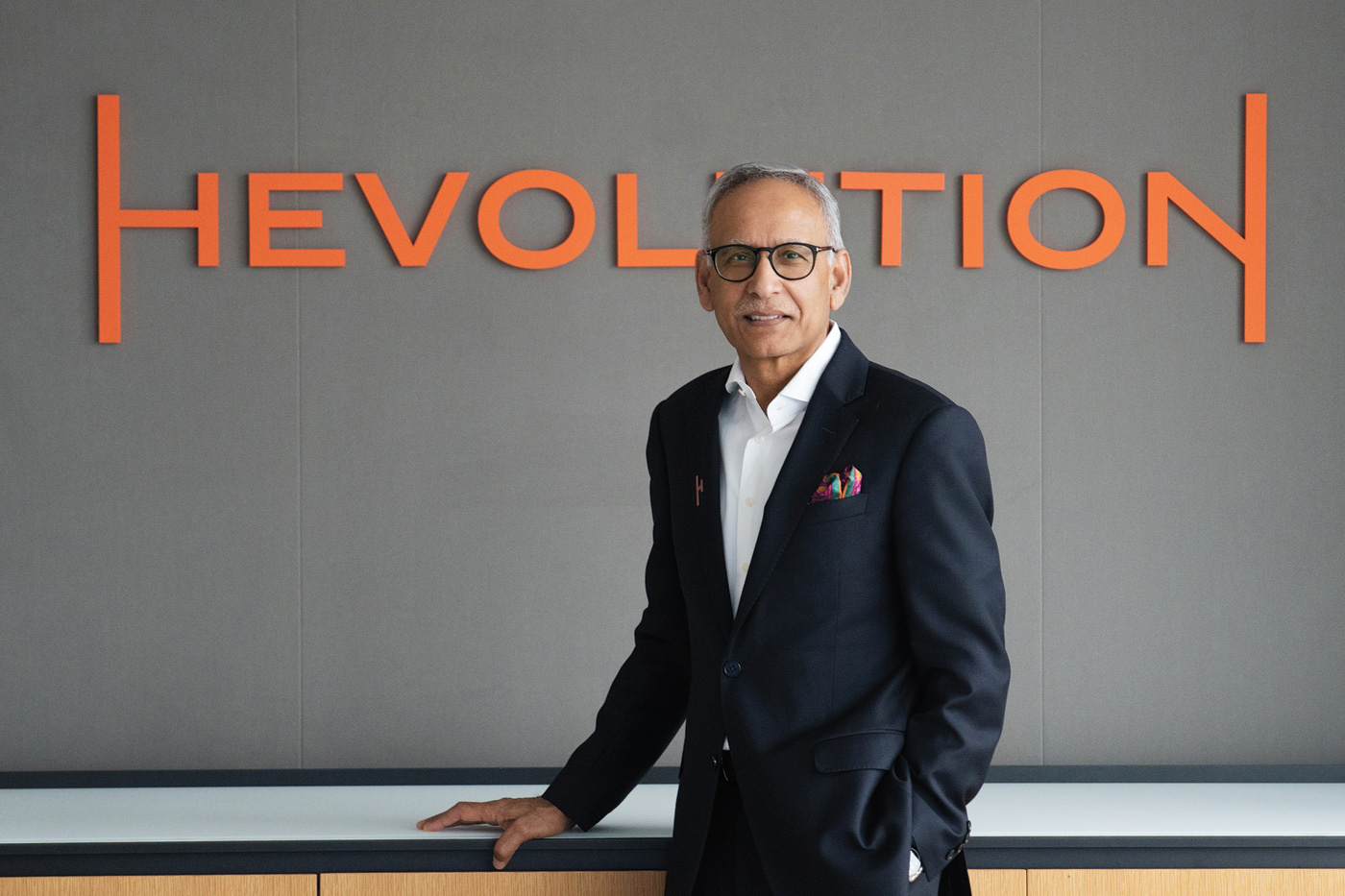
photo by nicole loeb
What do you consider to be your greatest accomplishments at PepsiCo?
The people I recruited to the company. When you are a leader in the C-suite, what you accomplish is based on the people you are able to bring into the company. From day one, I worked to bring people in who were already in the industry, as well as even more people outside it to complement the talent we already had. Whether those people were coming from the pharma and life sciences industry, the energy sector, or different parts of agriculture, the goal was to enrich our human capital.
I believe that every discipline grows by idea exchange between disciplines. Bringing in great people and providing them with the resources to work together helped us innovate. And the impact of that was great enough that much of the industry started following suit and diversifying their own R&D teams. There’s been a lot of transformation regarding how the food industry approaches innovation. Everyone’s used the word for a long time, of course. But, historically, most R&D in the food industry was a lot of development and only a little bit of research. They called it R&D, but they focused on the year’s new flavor, color, or packaging. But the core product generally remained the same. … Many of the products sold in the industry have been staples for decades. And if you are going to create an S curve for the next wave of growth, you need to enable the pipeline for true innovation. That takes the right people.
Historically, most R&D in the food industry was a lot of development and only a little bit of research.
How did your background in medicine help you choose the right people to enable innovation?
I’m a firm believer in three key attributes. One, I’ve always looked for people that have a high degree of curiosity. I like to say, “Don’t ask the ‘what’ question. Ask the ‘why.’” The what question often gives you only an observation. You know what’s happening and it’s an easier question to answer. But once you start asking the why, pursuing your curiosity, you start to bend the curve.
Two, I look for people with the humility to go and seek answers from others. That cultural shift is important because, especially in large corporations where you are sort of the big player in the space, it is easy to get complacent. You have defined who you are and what you do—and think you are good enough at what you do that you don’t need to look outside the organization for anything. It’s important to have people who will seek counselors from within but will also seek those “whys” from people who may be outside the organization.
Finally, I appreciate people who can make problems exciting challenges that others want to take on. That’s where young talent comes in. They come looking for guidance on what to work on and how to frame the research question correctly. When you can provide that and unleash them, they will go out and find your answers for you.
I should add, when I started at PepsiCo, every single business unit head in R&D was an engineer. That’s not unusual in the food industry. Strong engineering backgrounds are important for processing. But when every single leader has an engineering background, you create a culture that focuses on efficiency and operations. But if you then put a biologist in the mix, the questions brought to the table start to change. It’s not that one type of focus or problem-solving is better than the other. But bringing these different approaches together helps to ensure you are asking different questions. Questions that might take you in a new direction.
These leaders were also all men. Seventy percent of the products we made were purchased by women. It really struck me that the people in charge not only didn’t represent the population, but they also didn’t represent the decision-makers. Their disciplines were limited to one facet of the value chain that needed to be addressed. That needed to change.
And then there’s the matter of adding physical sciences to the team. There was a big focus on food technology, yet our products were being consumed by biological organisms. We needed to shift our questions away from the product and ask more about the impact of those products on the people consuming them.
Bringing in the right people was what was behind the company’s transformation. Once we had these different people seated at the table, the conversations changed. And our products improved because of it.
You are now chief executive officer of Hevolution Foundation. Tell me about the organization’s mission.
We are working to expand a healthy lifespan for the benefit of all humanity. Let me unpeel that.
We’re not interested in people just living longer for the sake of living longer. We want to extend the healthy period of people’s lives so they can be as functional and independent for as long as possible. Our goal is to understand how the aging process changes our ability to function and what we can do about it.
To that end, we are funding and investing in technologies that can be democratized in ways to impact as many people on the planet as possible. We are set up as a nonprofit organization and we fund science by providing research grants around the world. Right now, we are funding approximately 200 scientists in 150 laboratories. We are the second-largest funder of aging, biology, and geroscience in the world, providing grants for as little as $1 million and as much as $30 million to move the science forward.
We also have a venture capital team, which takes science from the academic environment and makes it investable by the private sector. One hundred percent of those venture capital profits go back into the foundation because we are mission driven. This allows us to take longer and riskier bets, which traditional venture capital organizations usually won’t touch. Then, we are also in the process of designing an intramural research institute which focuses on the translation of geroscience into potential diagnostics and therapeutics.
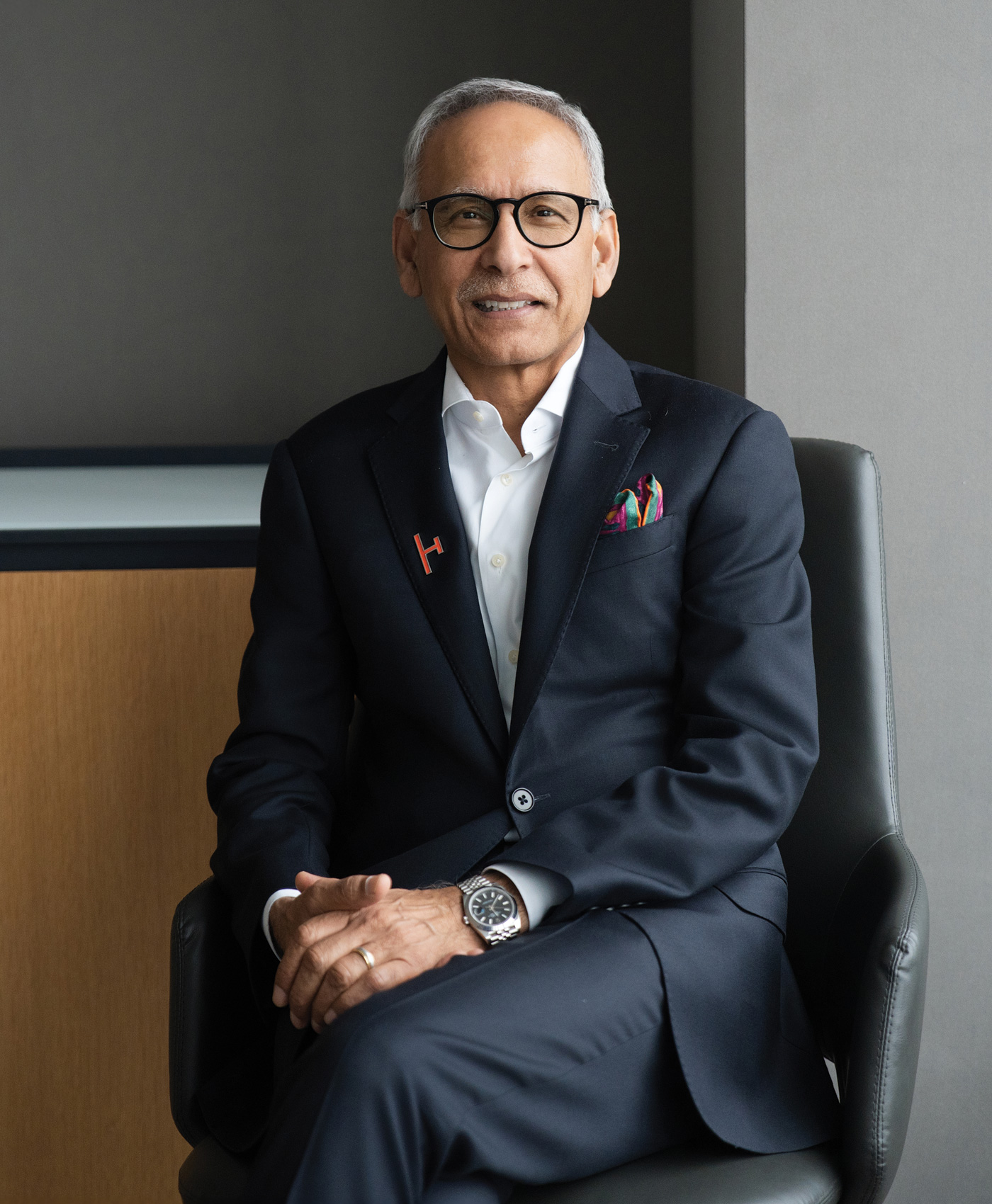
photo by nicole loeb
Can you talk about the role diet and nutrition play in extending the health span?
Nutrition is a very important piece. Unlike the food industry, our emphasis is research to understand nutrient signaling, nutrient pathways, and the interaction between nutrients and genes around the biology of aging. Whether it’s energy balance, energy uncoupling, autophagy, or epigenetic programming—because nutrients regulate not only the gene but the epigenetics—[nutrition] is a critical part of the work we’re funding. For example, one program we are funding at Albert Einstein College of Medicine looks at cellular autophagy and how that is regulated. We are also funding a project at Northwestern University around the mitochondria and energy balance.
What are some of the most promising areas of health and nutrition science that you believe might have the greatest potential impact on public health?
We’re starting to get to the next level of understanding the microbiome and the way food composition, the microbiome, and the environment all interact—and how it shapes organ physiology. We used to think the microbiome was all about gut health, then it got a little into brain health, but we are now starting to understand the microbiome also impacts the liver, kidney, and other organs. That’s exciting, and we now have the experimental tools as well as the computational capability to handle massive amounts of data to explore new research questions.
Another example is understanding energy balance and the interaction between energy balance and behavior. We used to think that obesity was 100% a choice. But the GLP-1 agonists have made us rethink that argument. I’m not an advocate that says everyone should be taking these drugs. I’m an endocrinologist, so there are all sorts of questions that remain about the long-term effects of these drugs, especially at the population levels. But one thing is clear: Peptides clearly regulate behavior not only around appetite but craving.
I’d also say another potentially exciting avenue of research is whether there are compounds within foods and plants that might mimic the GLP-1 agonist signal. I gave a TED talk about 10 years ago on food processing, proposing that taste receptors in the mouth could have evolved more as regulatory receptors, as opposed to sensory receptors. I suggested they might have a primary regulatory function. After all, you can find taste receptors all over the body. Why else would they be there, and not just in the mouth, if they weren’t there to regulate and signal—if they were just there to help us experience something that we enjoy? People thought it sounded cuckoo at the time. It doesn’t sound so outrageous now. And the implication for food technology is that people could identify ligands that bind to these receptors in ways that might change the way you process food.
One thing is clear: Peptides clearly regulate behavior not only around appetite but craving.
You’ve worked for several different industries that are often siloed off from one another. What can they learn from one another—and how should they be working together to better promote public health?
Let me give you a real example of where these industries did come together from a few years ago. One of my former team members started to work for a charity foundation that funded the development of tuberculosis (TB) drugs. Most pharma companies don’t develop drugs for TB because it’s not a first world problem. But a couple hundred thousand children die each year from this disease in Africa, not because they don’t have the drug, but because the drug is very bitter. It’s so bitter that the child will throw it up when the mother tries to crush the medication, mix it with water, and feed it to the baby or child. So, the child is not getting the dose of that drug they need.
In the food science world, we know that children are very sensitive to bitterness. We get more tolerant of it as we get older. So, my former colleague called me and said, “Look, you guys know a lot about taste. We are having this problem.” We used a variety of bitter blockers in our products. We decided to donate that technology from PepsiCo to the foundation. As long as they didn’t commercialize, we offered to license the blockers to them for free. Now, more children can tolerate the TB drugs.
This is just one example. But it demonstrates that, if we talk, we can transform the way we think about different problems. The pharma industry knows a lot about how the body metabolizes drugs and other compounds. That’s knowledge that the food industry could benefit from. We should be working together more.
The pharma industry knows a lot about how the body metabolizes drugs and other compounds. That’s knowledge that the food industry could benefit from.
What do you think the food industry should be most focused on addressing at present?
At the macro level, one of the biggest structural issues is having your profit and loss based on large volume. That means you need to continue to grow that volume, and you are incentivized to sell as much of your brand as possible to as many people as possible. There is very little differentiation between products within the industry. They produce good quality and safe products, but there isn’t much differentiation.
Of course, the industry does not get the credit it should for the amazing progress it’s made since the turn of the last century. The number one cause of hospitalization at that time was foodborne illness. People could not trust their food. And, going into World War II, the number one reason a recruit might be turned down for military service was malnutrition. The lack of food coming out of World War II was a threat to recruit enough soldiers. The U.S. government demanded a food program to provide cheap, accessible, and safe food. And the food industry provided just that.
We often forget that we ended up here because that’s what society and the government asked the food industry to do. And food technologists don’t get anywhere near the credit they deserve for what they have accomplished.
Now, with that problem solved, how do we move on to the next problem? It’s the innovator’s dilemma. When you’ve been so successful at one problem, how do you carry on doing what you’ve been doing yet create a new frontier? It’s not an either/or situation—it’s a this and that one, and it’s difficult. But I firmly believe the food industry has the people, the skills, the capacity, the scale, and the reach to do it. The question is how it will give itself enough room to transform itself based on what we know today—and what is being asked of us today in terms of producing healthy foods—versus what was known and asked of us 50 years ago?
It’s a challenge, but it is also a massive opportunity. Because every single human being needs to eat food and drink water. Ninety-some percent of the world’s food supply comes from the private sector. Food may be regulated by the public sector, but down to the individual sharecropper farmer, it remains a private sector enterprise.ft
Vital Statistics
Current Role: CEO, Hevolution Foundation
Senior Corporate Roles: CEO, Life Biosciences; vice chairman and chief scientific officer, PepsiCo; president, Global Research & Development Center, Takeda Pharmaceutical Co.
Recognition: Fellow of the Royal College of Physicians; Fellow of the American College of Endocrinology; Elected Fellow, Department of Pharmacology, University of Oxford; IFT Public Health Award in Honor of Babcock-Hart & Gilbert A. Leveille
Words to Live By: “Be curious [and] humble—always with a learning mindset.”
LinkedIn: Meet Mehmood Khan
Hero Image: © 2024 Nicole Loeb, all rights reserved.
Authors
-
Kayt Sukel Author
Kayt Sukel is a book author, magazine writer, and public speaker who frequently covers scientific topics.
Categories
-
Food Health Nutrition
-
Food Product Development
-
R and D
-
Novel Technologies
-
Issues & Insights
-
Food Technology Magazine


