
News Roundup
Nanoplastics, Food Fortification, AI, Supply Chains, and Community News
AI-enabled cold chains, gut–brain microbiome research, food system resilience insights, and a tribute to a leading pectin scientist highlight emerging science, supply chain innovation, and industry leadership shaping the future of food.

RESEARCH
Nanoplastics alter Salmonella behavior
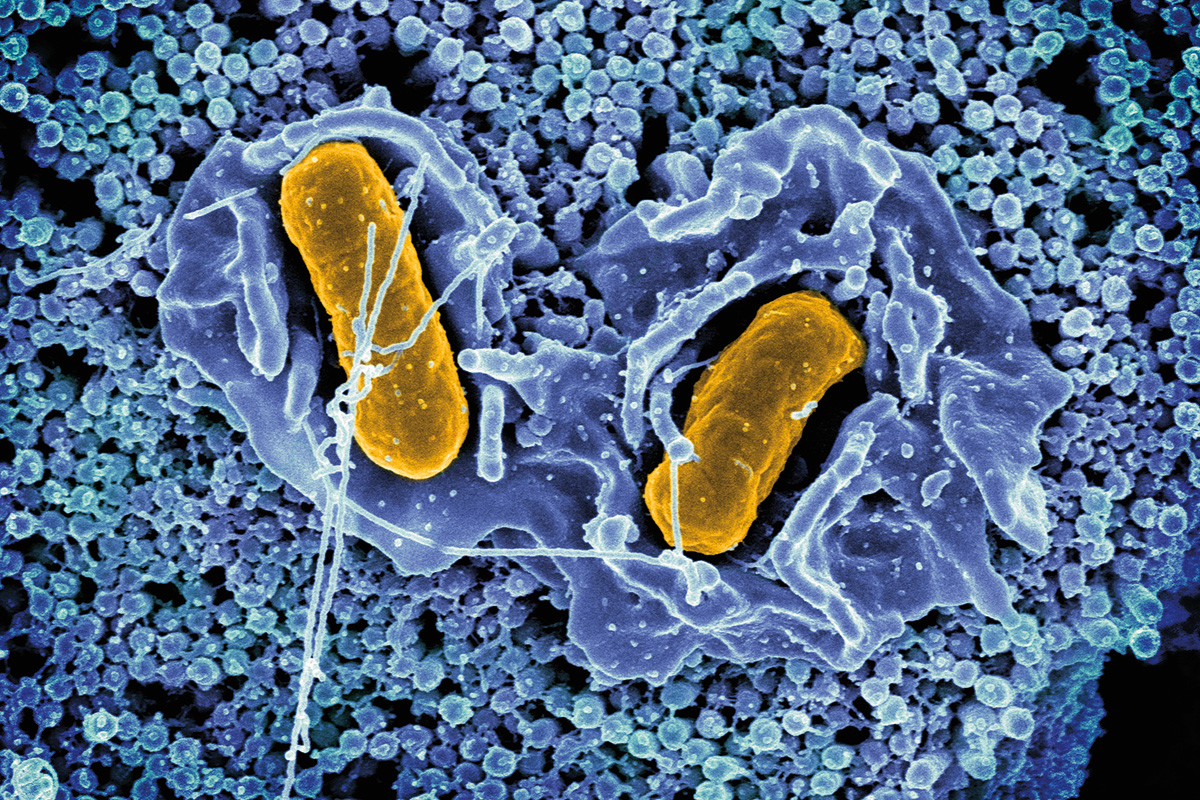
Plastic packaging plays a central role in protecting food from spoilage and contamination. But new research suggests that the smallest plastic particles may also influence how pathogens behave.
In a study published in the Journal of Hazardous Materials, researchers at the University of Illinois Urbana-Champaign report that polystyrene nanoplastics can alter the physiology and virulence of Salmonella enterica, a leading cause of foodborne illness.
Microplastics—plastic fragments smaller than 5 mm—degrade into nanoplastics measuring less than 1 µm, which can penetrate cells and interact with biological molecules more readily. The University of Illinois team examined how Salmonella responds when exposed to polystyrene nanoplastics commonly associated with food packaging.
“Salmonella enterica is a major foodborne pathogen that is often found in meat, poultry, and ready-to-eat food,” senior author Pratik Banerjee, associate professor in the Department of Food Science and Human Nutrition, said in a press release. “Ground turkey is often packaged in plastic, and we wanted to explore how Salmonella react when they come into contact with plastic polymers.”
The researchers observed that initial exposure to nanoplastics increased expression of virulence-related genes. The bacteria also formed thicker biofilms, and at higher nanoplastic concentrations, virulence markers increased again, suggesting what the researchers describe as a trade-off between offense and defense.
“When the bacteria first encounter nanoplastic particles, they go into offensive mode and become more virulent,” Banerjee said. “But after a while, they start losing their resources and energy, so they switch to defensive mode, which allows them to persist in the environment for a longer time.”
Banerjee also noted potential antimicrobial resistance implications. “Any compound that puts physiological stress on the bacteria can trigger antimicrobial resistance,” he said. “Nanoplastics are not antimicrobials, but mere exposure to them could convert bacteria that previously were not resistant to a particular antibiotic in a process called cross-resistance.”
The authors caution against alarm. “We don’t want to sound the alarm and advocate that people stop using plastics,” Banerjee said, noting the role of packaging in reducing spoilage and waste. Still, the findings highlight a growing research frontier at the intersection of plastics and food safety.
SAFETY & QUALITY
AI and IoT improve cold chain safety
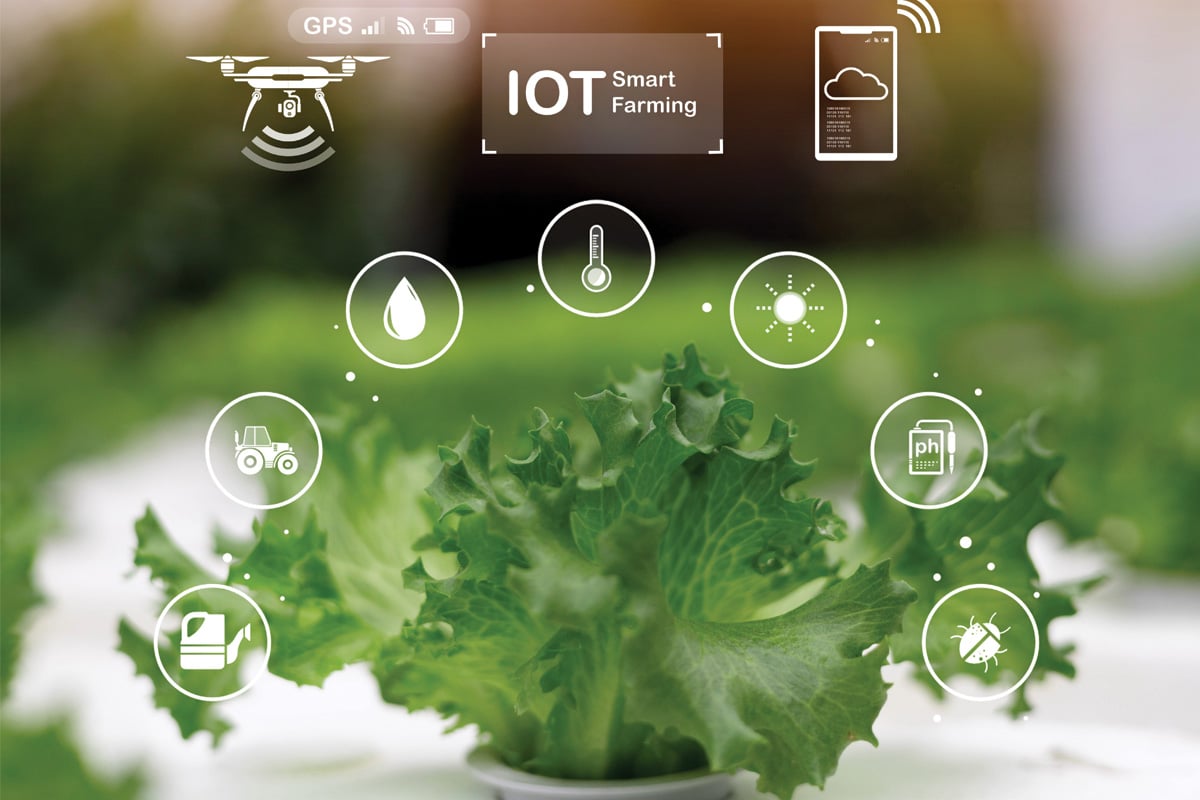
Artificial intelligence (AI) and Internet of Things (IoT) technologies are helping improve food safety and efficiency in the cold supply chain, according to a February 2026 study published in the Journal of Food Science (JFS).
The paper—one of the first articles released in the JFS special issue, Artificial Intelligence in Food Science and Nutrition, planned for Summer/Fall 2026—reviews how Industry 4.0 technologies are reshaping temperature-controlled food logistics. Researchers analyzed 97 peer-reviewed studies published between 2010 and 2025 examining IoT sensors, AI analytics, and their combined use in monitoring perishable foods.
The review found growing adoption of sensor-enabled monitoring systems that collect real-time data on conditions such as temperature, humidity, and handling during transport and storage. Together, IoT and AI can shift cold chain management from reactive monitoring to predictive decision-making, the researchers say.
The analysis also highlights key barriers to wider adoption, including limited real-world datasets for training AI models, cybersecurity concerns associated with connected devices, and fragmented standards across supply chains.
DIET & NUTRITION
Fortification proves cost-effective

Large-scale food fortification is a highly cost-effective strategy for reducing global malnutrition, according to a comprehensive new systematic review published in The Journal of Nutrition.
Researchers analyzed 56 studies containing more than 200 economic evaluations of fortification programs across 63 countries, including more than 40 low- and middle-income economies. The findings show that adding essential vitamins and minerals to staple foods consistently delivers substantial health benefits relative to program costs.
The review focused on interventions addressing “hidden hunger,” a form of malnutrition caused by insufficient intake of micronutrients such as vitamin A, iron, iodine, and folate. Globally, hidden hunger affects an estimated 56% of children aged 6–59 months and 69% of nonpregnant women aged 15–49 years.
Across 232 cost-effectiveness analyses, 58% reported incremental cost-effectiveness ratios of less than $150 per disability-adjusted life year (DALY) averted, while 84% fell below $1,000 per DALY averted. All 47 benefit-cost analyses reviewed found that the economic benefits of fortification programs exceeded their costs.
“This research provides the most up-to-date data about the cost-effectiveness of food fortification on a global scale,” said lead author Elise Cogo, an epidemiologist with the Cochrane Collaboration, in a press release. The findings underscore the “economic feasibility and tremendous potential” of fortification programs to reduce micronutrient deficiencies and related illnesses, she added.
The researchers say the results reinforce the role of food fortification as a cost-effective public health strategy, particularly as global funding for nutrition programs faces increasing pressure.
SUPPLY CHAIN
3 Questions for Lauren Bresnahan
 A new global benchmarking effort from Economist Impact highlights both the strengths and structural vulnerabilities of today’s food systems. Its inaugural Resilient Food Systems Index, spanning 60 countries, finds that while affordability remains relatively strong, it does not ensure equitable access to nutritious food—particularly for lower-income populations. Nearly half of the countries included in the research fall into a “middle zone” of resilience, suggesting meaningful gains are within reach if persistent gaps—especially in infrastructure, access, and climate responsiveness—are addressed.
The findings also underscore how interconnected and interdependent global food systems have become. Trade and cross-border supply chains play a critical stabilizing role, enabling regions to offset localized disruptions. Yet the Index points to foundational constraints—transportation, storage, and digital connectivity—that limit the ability to translate production into reliable access. Climate resilience remains the weakest-performing pillar, reinforcing the need to move beyond research advances toward scalable, system-wide implementation of adaptive practices.
To explore what these dynamics mean in practice, Food Technology posed three questions to Lauren Bresnahan, head economist with Cargill, which supported the research but did not influence its outcomes.
1) How do connected supply chains and trade act as shock absorbers, and why are infrastructure and financing the real bottlenecks?
The global food system is remarkably adaptive. When one region faces a deficit, another can often step in if trade flows freely. Nearly a quarter of the world’s food crosses borders. That’s what makes connected supply chains such powerful shock absorbers: They help smooth disruptions before they become global crises, helping to ensure food gets to where it’s needed.
The Resilient Food Systems Index shows that the bigger bottlenecks are often infrastructure and financing. It’s not just about whether food can be grown, but whether it can be financed, stored, transported, and sold efficiently. Without enough cold storage, reliable transport, and access to credit, food can be lost, farmers can’t invest and plan, and shocks can hit harder. Resilience depends on connecting farmers to markets and building systems that move and support food production throughout the supply chain.
2) You say the next phase of resilience requires scaling what already works. Can you elaborate?
What the Index shows very clearly is that the building blocks of resilience already exist; we’re not short on ideas or innovation. The challenge is that too often those solutions are fragmented, stuck in pilots, or not reaching the full system. Scaling what already works means we don’t need to reinvent solutions. For example, embedded financing and pay-as-you-go models for farmers remain a major unlock. Practices like better storage, crop innovation, extending shelf life, and improving production efficiency can also increase productivity and reduce food loss.
In the next phase, we must expand these proven solutions to reach more people. That means investing in the foundational systems that support them, aligning policies, and directing funding toward implementation at scale.
3) How are Cargill teams working to strengthen resilience?
We move more than 60 million tons of commodities each year, enough for 300 billion meals, a feat that requires efficiency and flexibility to get food where it’s needed. To do that, we invest across the supply chain, from supporting farmers with tools and training to improve yields to advancing shipping innovations that strengthen ocean transport. Resilience isn’t built in one place or by one company. It comes from connecting farmers, supply chains, and markets so the system can continue to deliver when disruptions occur.
COMMUNITY
Remembering Louise Wicker

Longtime IFT member and volunteer Louise Wicker passed away on March 20 in Athens, Ga. Her career included roles as professor of food science and nutrition at Louisiana State University, professor of food science and technology at the University of Georgia at Athens, and assistant professor at the University of Florida at Lake Alfred. Over the course of her career, she trained and mentored more than 60 graduate students and postdocs.
She was an internationally recognized expert in pectin chemistry and functionality. Much of her work focused on the interactions between blueberry pectins and anthocyanins and the nutritional impact of these interactions. She was deeply concerned about the effect of food choices and availability on the health of the U.S. population and worked with teams to develop shelf-stable foods that were delicious, convenient, inexpensive, and nutritious.
She was a Fellow of the Institute of Food Technologists, the International Academy of Food Science and Technology, and the Institute of Food Science and Technology (United Kingdom) as well as the 2017 recipient of IFT’s Elizabeth Fleming Stier Award.
She earned BS and MS degrees in food science from Clemson University and a PhD in food science from North Carolina State University.
In Memoriam
IFT notes the passing of the following member: B. Onuma Okezie.
Hero Image: Scanning electron micrograph of Salmonella Typhimurium invading a human epithelial cell. © NIAID CC BY-NC-SA 2.0
Categories
-
Food Categories
-
Food Safety
-
Pathogens
-
Diet and Health
-
Microbiome
-
Nanotechnology
-
Food Technology Magazine
-
Omnivore


