
Positive Trends for Science of Food Salaries

Food science remains a career in high demand, with rising salaries and substantial job satisfaction, according to the results of the latest Institute of Food Technologists’ Employment and Salary Survey.
The findings show ongoing progress on the compensation side, with median salary up 3.2% between 2017 and 2019. They also show impacts by gender, generation, company size, region, and other factors.
The survey was conducted in January of this year and was based on year-end 2019 data. As a result, the information covers a period before the coronavirus crisis upended global business. The findings reflect the strength of the economy over the past couple of years.
Industry experts say the results underscore the resiliency of the food science profession at a time when it is adapting to a shifting landscape of new product trends, changing needs of employees, and emergence of new roles in high demand.
“The last couple of years have been the busiest ever for us,” says Tim Oliver, recruiter/senior partner, OSI. “The economy has been cooking. A lot of baby boomers are starting to retire, and there aren’t enough technical professionals to fill positions.”
Moira McGrath, president, OPUS International, says food scientist demand has been fueled by the realities of the new candidate pipeline. “There’s always a real shortage of food science students coming out of universities,” she says.
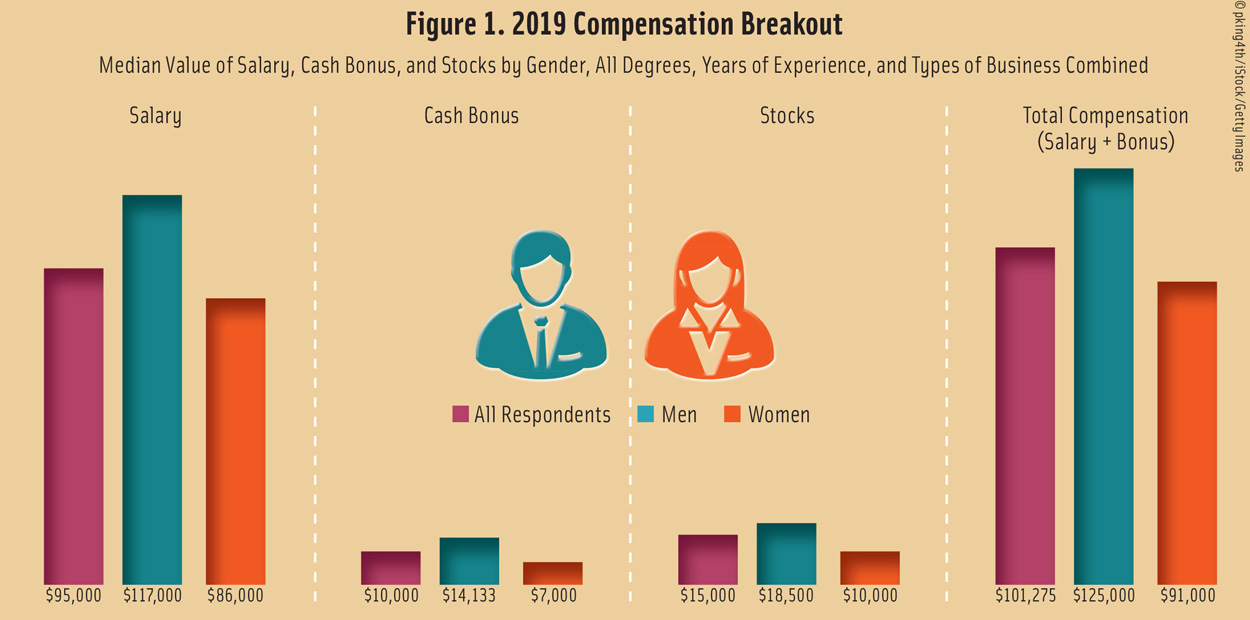
The findings show a rise in median salary from $92,000 in 2017 to $95,000 (Figure 1). Median total compensation (salary + bonus) increased based on size of company, reaching $112,000 for the largest organizations, those with 1,000 or more employees. It also grew by experience level, starting at $69,340 for those with one to five years of experience, and reaching $141,000 for those with more than 15 years of experience.
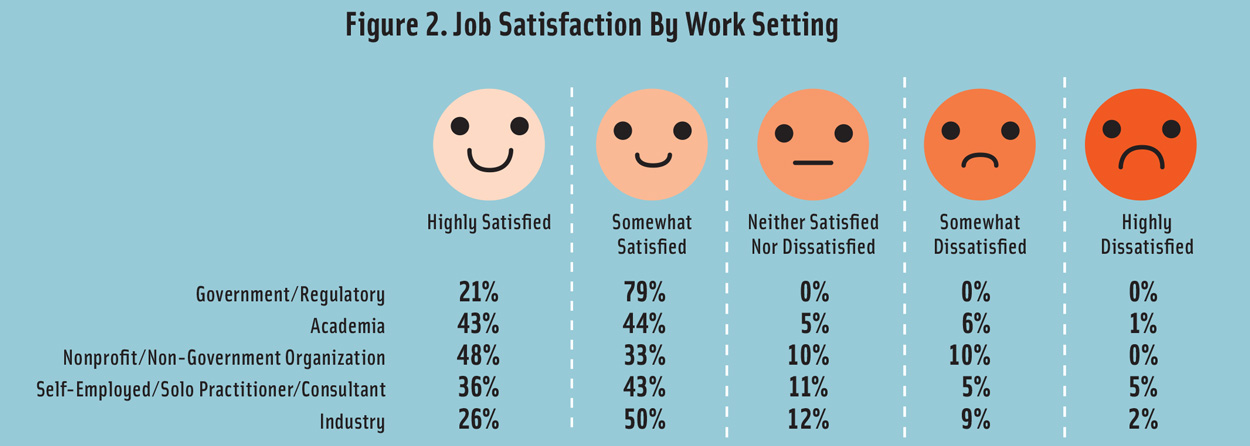
The survey found that job satisfaction is driven by a range of factors. One of these is type of work setting. Nearly 48% of employees working in nonprofit/non-government organizations and 43% of those in academia report being highly satisfied, versus only 21% of those working in government/regulatory roles (Figure 2).
Digging Deeper Into Compensation
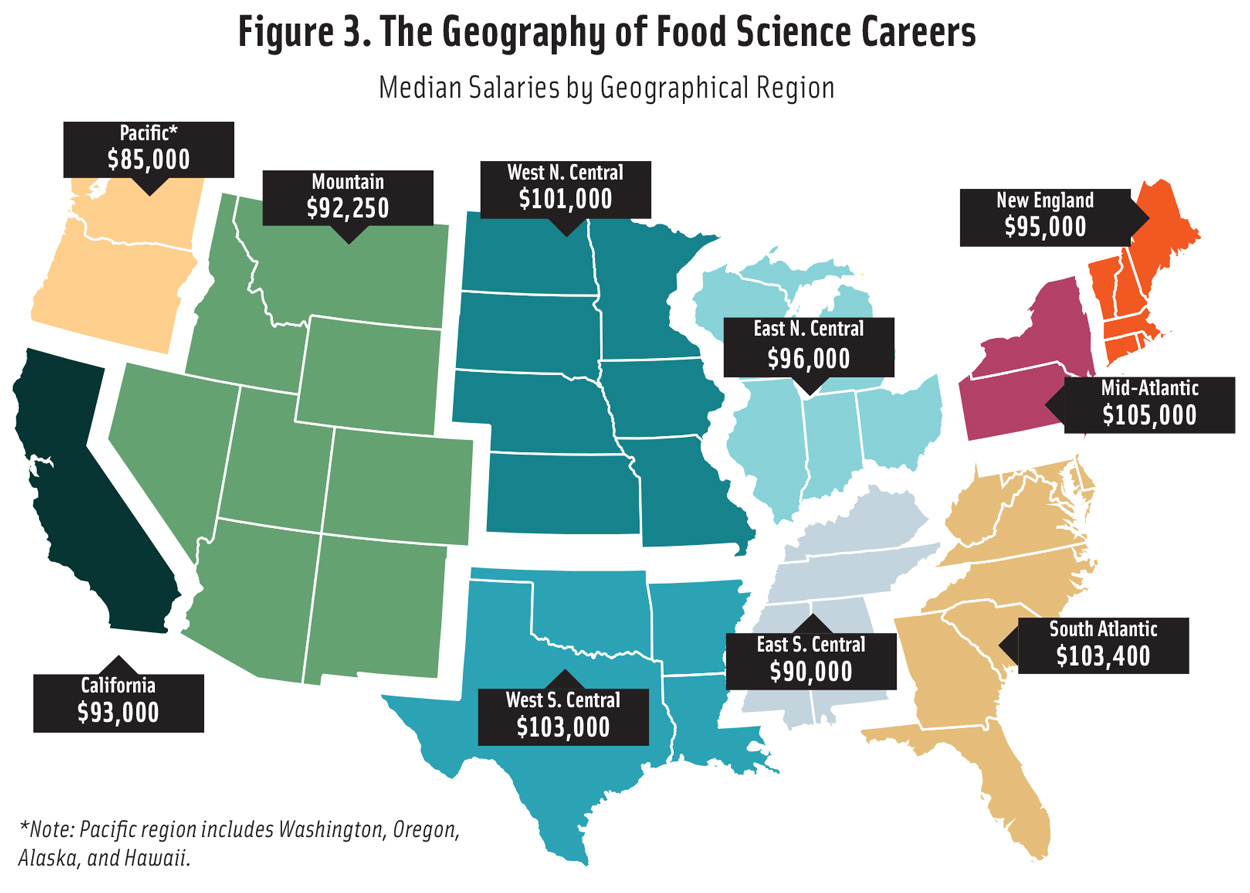
While salaries rose, the picture changed somewhat when adjusting for inflation. The median income actually decreased over the two-year period when reflecting salaries in 2017 dollars. This indicates that median increases may not necessarily be large enough to overcome impacts of inflation. Experts point to some factors that could be at play. (See Figure 3 for a breakout of median salaries by geographic location.)
Laurie Hyllberg, vice president, Kinsa Group, says the level of increases indicates employees are tending to stay with current employers rather than making switches that might lead to bigger salary bumps.
Scott Wellington, president, Wellington Executive Search, notes that candidates may be avoiding moves to higher-demand areas of the country that offer increased compensation.
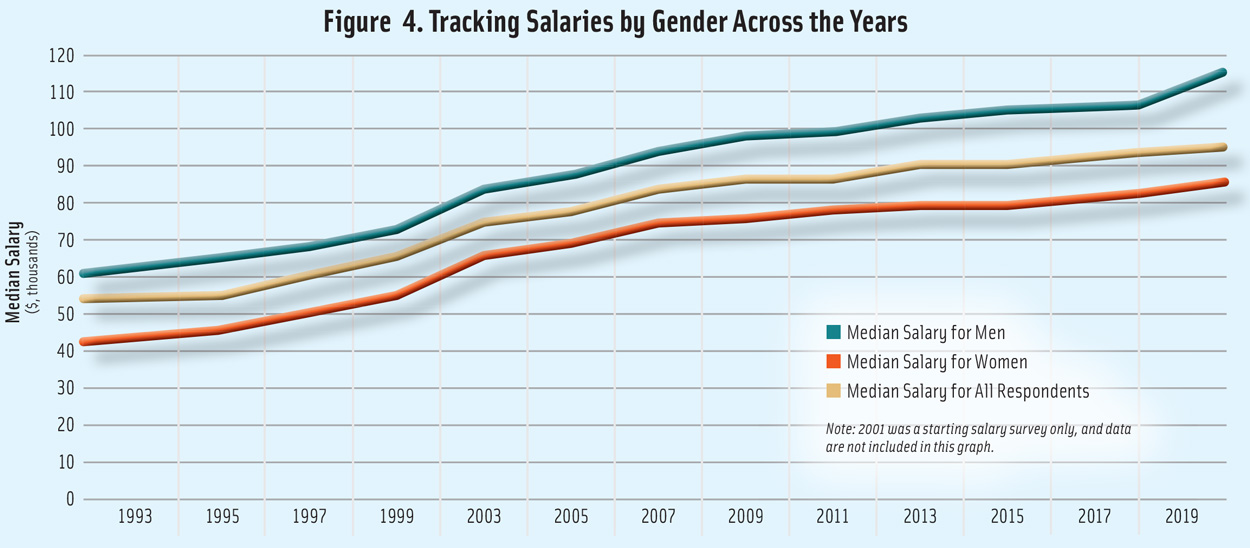
Women accounted for 59% of survey respondents, up from 57% two years ago, but while their presence in the profession is growing, their salaries still significantly lag behind those of male counterparts. At $86,000, the median salary for female survey respondents was just 73.5% of men’s median salary of $117,000. (For a comparison of men’s and women’s salaries over the course of the years the salary survey has been conducted, see Figure 4. Figure 5 tracks 2019 compensation by gender and experience.)
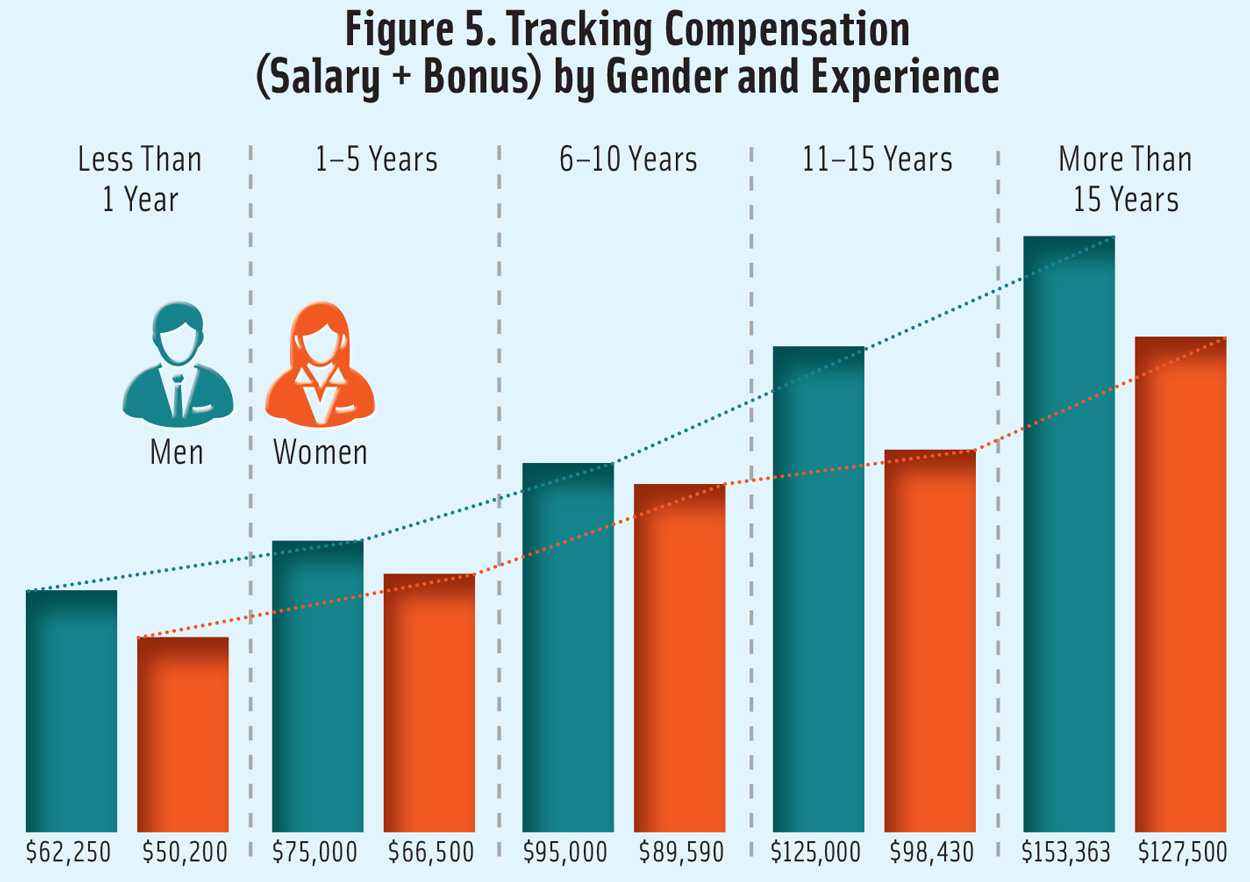
Some experts say women could help their cause through more job switching and career risk-taking, which could boost advancement and salaries.
“Women in leadership positions need to continue to advocate for other women in leadership positions to receive comparable pay with men,” Hyllberg says. “And women need to raise their hands for the next job and have their information out there to be found by recruiters. They need to take risks, either internally with cross-functional roles, or to change jobs externally to increase salaries a bit faster.”
Examining the Latest Benefit Trends
While compensation is a crucial factor, it’s by no means the only consideration for job candidates. Benefits are among the important drivers in choice of jobs.
The survey found, however, that benefits have little impact on job satisfaction, which may reflect the uniformity in company offerings.
“It’s pretty universal across companies,” Wellington says. “All companies tend to offer some kind of retirement, whether 401(k) or pension.”
McGrath says benefits are fairly consistent across the board, and “medical benefits and relocation expenses are among those my candidates are very interested in.”
Candidates need to be realistic about vacation benefits expectations, basing this on years of experience, the experts say. “Candidates need to be somewhat flexible,” Wellington observes. “If you want six weeks’ vacation, it may be better to stay where you are.”
Understanding Culture and Flexibility
Beyond traditional offerings, “the more employers can add other benefits, such as flexible work schedules, the better,” says Oliver.
However, there are limits to flexibility, especially when it comes to working off site.
“Food scientists have to be on site,” says Wellington. “They are working in a lab and being around other people. They are trying out and testing products. You can’t do that from home.”
However, there may be creative ways to adjust for the difficulty in working from home. “Because the work-from-home model is not possible for traditional food scientists, other things become more important,” says Hyllberg. “These are things like company culture, paid time off, and the teams you’re working with. If a company has a way to offer flexibility, it should do this. Maybe it’s working four 10-hour days or Friday afternoons off.”
Eyeing Food Science Roles in Demand
Demand for food scientists is fueled partly by new food trends, the experts say.
“Hot areas now include vegetable-based proteins,” according to Wellington. “If you have experience with that, you can go anywhere.”
Hyllberg cites growing demand in the beverage category, especially for new product introductions. Other growth areas she mentions are clean label and natural products. “Overall regulatory knowledge also is important in today’s environment,” she notes.
The IFT data showed that flavorist is one of the most highly compensated specialties, a fact that Hyllberg says likely ties into consumer trends.
“Certified flavorists are in high demand,” she says. “There aren’t enough of them. Given all the interesting products in beverage, natural ingredients, and clean label, if you have knowledge of flavor in those areas, it’s an exciting time to be you.”
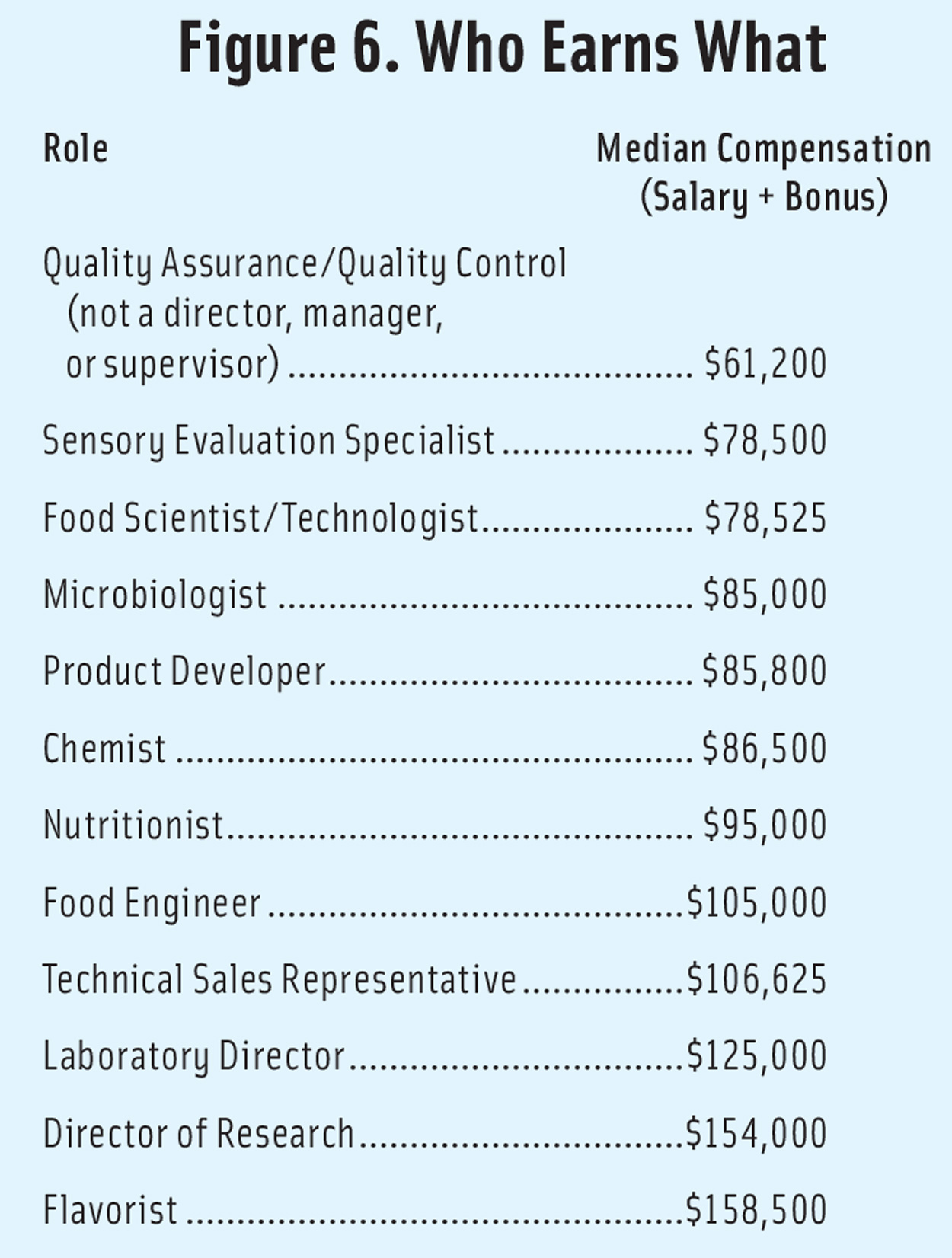
Meanwhile, over the past two or three years, “quality assurance and food safety professionals are more in demand than ever,” says Oliver. “This coincides with a time of more recalls and sanitation issues.”
Specialization is a plus for any job candidate, emphasizes Wellington. “You get a higher salary if you’re specialized in anything,” he points out. (For a look at median compensation for some specific roles within the science of food, see Figure 6.)
About the Survey
The 2019 IFT Employment and Salary Survey, conducted via email in January 2020, asked about 11,000 IFT members to report compensation data as of Dec. 31, 2019. All data reported here are for U.S. respondents and are based on a total of 1,372 responses from U.S. science of food professionals. The survey also drew 150 international responses.
Different Generations, Similar Perspectives
Is there a generation gap impacting today’s food science workplaces?
The ranks of employees are marked by a mix of generations—from Gen Z (18–24 years old) to baby boomers (over age 55), and beyond. Do the generations differ widely in their workplace expectations and satisfaction levels? It turns out the differences are fewer than some might think.
Overall job satisfaction is high in the industry, and it changes only slightly by generation, according to the IFT survey. About 76% of Gen Z is satisfied with their jobs, versus 82% of baby boomers, the survey found (Figure 7).
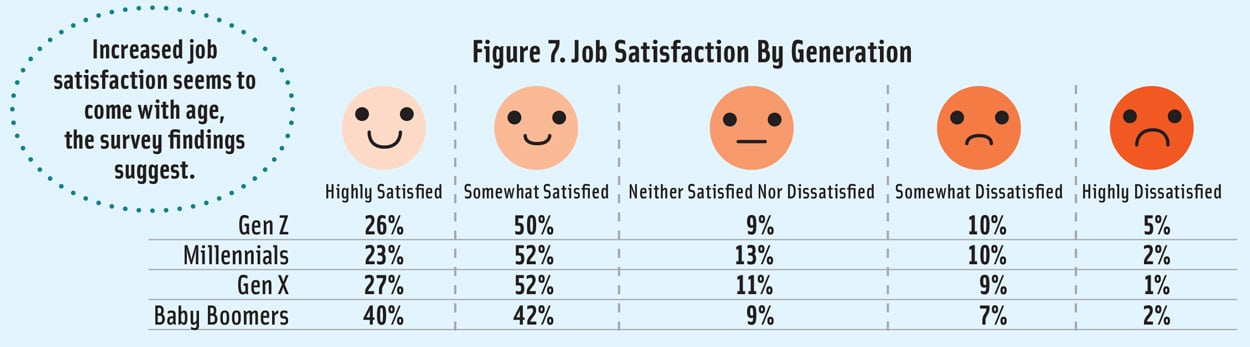
Greater differences arise when measuring those who are “highly” satisfied. Satisfaction goes up sharply with age, from the low- to mid-20% range for Gen Z and millennials, to 40% for baby boomers. Increased satisfaction with age is largely attributable to growth in salary, according to the findings. Meanwhile, older employees tend to value “intellectual stimulation” a bit more, while younger ones give more weight to career advancement (Figure 8).
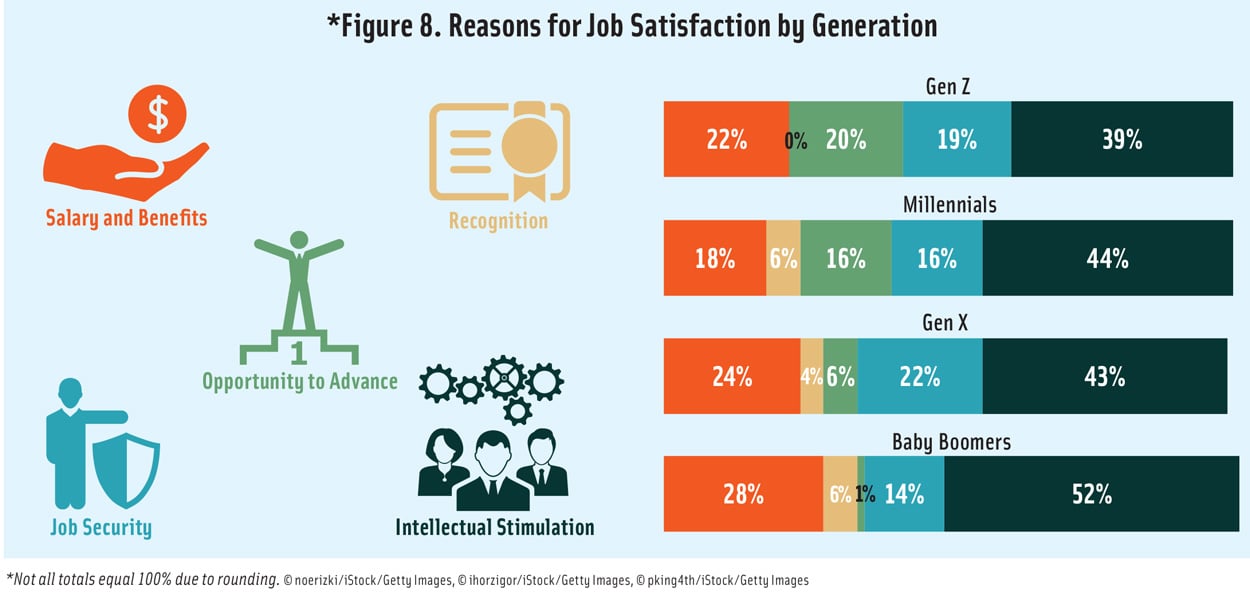
Despite differences, the findings paint a picture of food science workforces that are largely satisfied with their roles, regardless of generation. That fact doesn’t surprise one well-known national expert on workforces and generations.
“It’s not surprising to me,” says Jennifer Deal, an author and senior research scientist at the Center for Creative Leadership in San Diego. “Most people are satisfied with their jobs, and this tends to increase with age. It’s partly attributable to increases in salary. Also, people are more satisfied as they age because they spend more time in the workforce, change jobs, and end up in jobs that are more intrinsically interesting. They understand what they enjoy and move their careers in that direction.”
Deal says it’s more important to focus on life stages of employees, rather than on generations. Life stage indicates, for example, whether someone is a parent or has other caregiving responsibilities.
“Life stage has a bigger impact than generation,” says Deal. “Another important factor is someone’s level in an organization. A person managing a department has more in common with another manager, regardless of which generations they are from.”
Overall, Deal says, employees across generations tend to prioritize similar things.
“They want to feel valued, have interesting work, be paid well, and to feel their jobs are stable and viable,” she said.
Opportunities Born of Entrepreneurship
Entrepreneurs drive food industry change, but they have trouble getting too far without food scientists.
Food scientists are the ones who translate entrepreneurial ideas into products that work in the real world. This is especially important as new consumer-driven trends impact the food industry.
“There’s a lot of entrepreneurialism, and it’s exciting,” says Tim Oliver, recruiter/senior partner, OSI. “Entrepreneurs have seen new niches, like gluten-free or energy drinks in the past few years.” Some of today’s hottest trends, from clean label to plant-based products, are being driven by entrepreneurs.
In the latest IFT survey, only 19% of respondents said their preferred food science work environment is a small, entrepreneurial company (with 99 or fewer employees). This compares with 43% of respondents preferring mid-size companies, 20% who prefer larger organizations, and 19% who didn’t have an opinion or were unsure.
Nevertheless, in many cases, smaller companies drive entrepreneurial trends and offer food scientists a wide range of roles. This is one of the reasons food scientists shouldn’t overlook smaller companies in mapping out their careers, according to experts. “Smaller companies may not offer all the bells and whistles, but there may be more opportunity there,” says Oliver.
Changing trends in the entrepreneurial landscape may lead to structural shifts in career opportunities for food scientists. Laurie Hyllberg, vice president, Kinsa Group, says new product–focused entrepreneurship in the food industry appears to be increasingly driven by consumers or other individuals, rather than traditional companies. Individuals will identify a product need and advance it without a traditional company structure in place. They might work with accelerators to drive growth. They may outsource functions to other professionals, including food scientists working at third-party labs.
“Food scientists don’t have to have their own new ideas or be the entrepreneurs,” says Hyllberg. “Entrepreneurs will need support staffs to help get their products to market. If you’ve trained at a large food company or university with a good food technology program and can creatively support entrepreneurs with real knowledge, that’s a great skill set to offer.”
Expert Advice: 10 Tips
Food scientists are in demand, but they need to advocate for their careers and keep up job skills. Here are 10 top tips from recruiters quoted elsewhere in this report.
1) Don’t limit yourself. Be open to a wide range of food science opportunities, unless you’re absolutely not comfortable with a certain role.
2) Rethink resumes. Make sure resumes are software-friendly to accommodate today’s applicant tracking systems.
3) Be flexible. Stay adaptable about factors such as job location, compensation, and titles.
4) Keep up job skills. Stay up to date because you never know if a company will be sold or if workforces will be downsized.
5) Examine culture. Every food science company has a different culture. Try to figure this out before accepting a new position because it’s more important than many people realize.
6) Don’t change jobs too often. Frequent job switching raises red flags. Three jobs in five years may be too much.
7) Get cross-functional experience. Don’t become too siloed, because a wide knowledge base is important for food scientists.
8) Be realistic about paid time off. The amount of vacation offered will most likely line up with years of experience in the food science industry.
9) Embrace specialties. As a rule, candidates with specialties command higher salaries than generalists.
10) Weigh big versus small. Many large companies pay more, but smaller companies tend to offer more experiences and advancement opportunities.
More Salary Statistics
Looking for even more detailed facts and figures about science of food compensation? Check out the 2019 IFT Employment and Salary Survey Report. It is available free of charge to IFT Premier members. For Networking & Engagement and International members, the fee is $49.50, and nonmembers may purchase the report for $99. For the full report, visit ift.org/salarysurvey.
Authors
-
David Orgel
Categories
-
Diversity and Inclusion
-
Career Development
-
Professional Development
-
Career Resource
-
Salary Survey
-
Food Technology Magazine


