

Pressure, Purpose, & Possibility
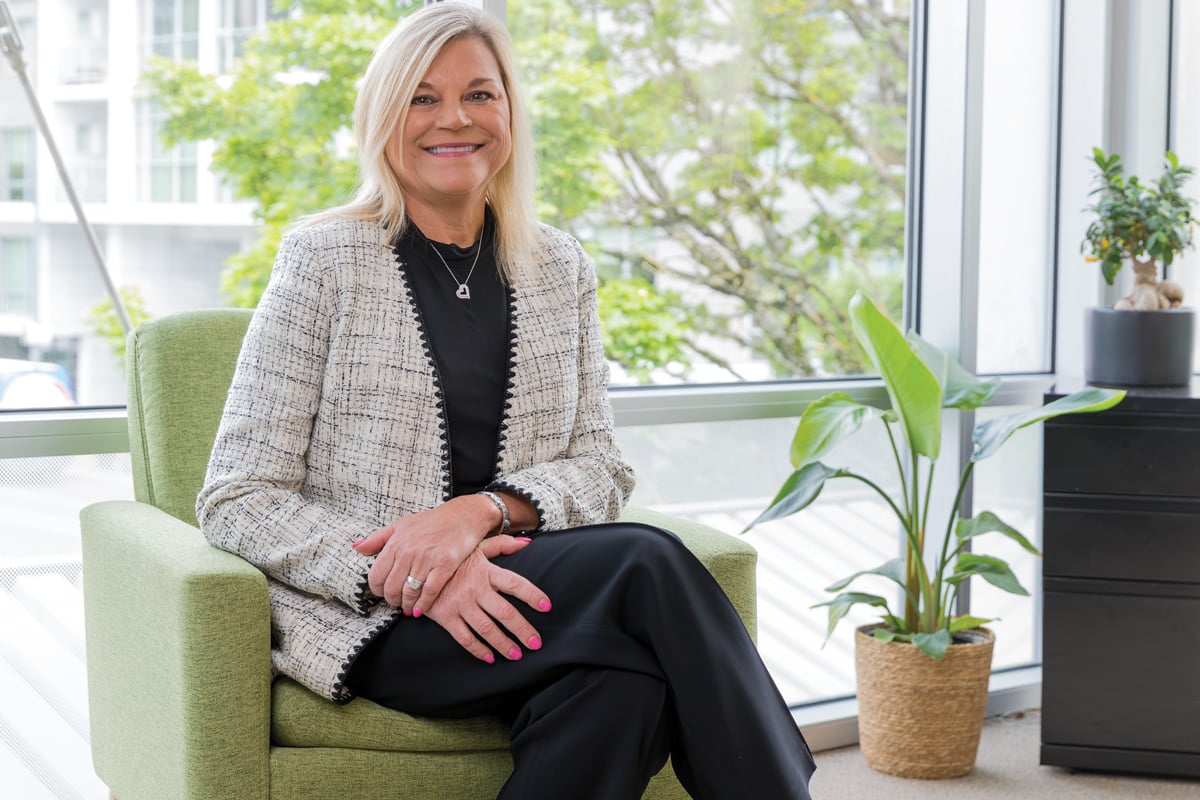
From pioneering high pressure processing to building Oregon State University’s Food Innovation Center into a modern engine of science, entrepreneurship, and economic development, Marcia Walker is helping shape how food innovation moves from breakthrough idea to real-world impact.
 Julie Larson Bricher
Food Technology Magazine
Key Takeaways
-
Breakthrough food innovations succeed when scientific rigor, cross-sector collaboration, and public trust advance together.
-
Transforming a promising technology into commercial success requires strategic focus, disciplined execution, and a clear understanding of consumer needs.
-
Food innovation can serve as a powerful catalyst for entrepreneurship, economic development, and stronger regional food systems.
On any given day at Oregon State University’s Food Innovation Center (OSU FIC), Marcia Walker is orchestrating a dynamic space where the spark of innovation meets the discipline of science and the realities of business. One day, Oregon Governor Tina Kotek and a group of state legislators tour the Portland facility ahead of an agriculture trade gala focused on statewide economic development and international trade. The next, a class of second graders from a local elementary school arrive to learn about food safety, handwashing, and product development, complete with bubble machines and pizza making. On another day, an entrepreneur walks through the doors hoping to transform an idea for a high-protein dairy beverage—or a culturally rooted sauce, snack, or social-impact food concept—into something scalable, safe, and commercially viable.
For Walker, director since 2023 of the nationally recognized research hub and business incubator located in downtown Portland, Ore., these moments represent far more than the daily rhythm of a university food innovation center. They embody the full-circle mission of a career spent translating science into solutions.
She has spent more than three decades moving fluidly between industry, academia, and commercialization, from early work at Oregon Freeze Dry, where processing technology first revealed its transformative potential, to helping pioneer high pressure processing (HPP) through foundational university research, to commercializing one of America’s first major HPP success stories with Avomex’s Wholly Guacamole brand. Along the way, leadership roles at PepsiCo, Starbucks/Evolution Fresh, Tofurky, and Greenleaf Foods sharpened her understanding that innovation is rarely just invention. It is the disciplined alignment of science, timing, branding, regulation, and consumer trust.
Now, Walker is channeling that hard-earned perspective into a broader public mission, positioning OSU’s urban experiment station as a bridge between research and real-world application where entrepreneurs, established brands, students, and communities can access the tools to build better products and stronger food systems. At a time when land-grant institutions face resource pressures and misinformation clouds public understanding, Walker sees centers like FIC not simply as academic assets, but as essential engines for translating discovery into economic vitality, public trust, and the next generation of food innovation.
In this Food Technology interview, Walker shares her insights on the evolution of food innovation, the commercialization lessons learned from pioneering high pressure processing, and why the future of food science depends as much on collaboration, communication, and public trust as it does on technology itself.
When did food science become your path?
I didn’t always know food science was even a career, and that’s part of why I’m so passionate now about helping people understand that it exists. Growing up, my mom was a nurse, and she always told me I could be anything, so I thought maybe I’d be a doctor. Then I went to college and briefly became an art major, which was probably not my calling because I was a terrible artist!
I switched to biology, then nutrition, and eventually discovered food science almost by accident. What really clicked for me was realizing I could combine creativity with science. Food science let me use both my heart and my brain. Looking back, that was huge. I always tell young people that choosing a career is about finding something that lets you embrace both.

What first surprised you about a career in food science?
My first job at Oregon Freeze Dry was eye-opening. I was drawn to R&D and innovation, but I had no idea how much technology shapes food—or how complex it is to bring a product from idea to market. Freeze-drying felt magical. Suddenly I saw how processing, packaging, nutrition, engineering, and product development all intersected. That experience taught me that food innovation is never just one discipline. It takes an ecosystem of expertise to make something successful.
How did you become one of the pioneers of HPP?
I really got lucky, and I tell young people all the time to embrace the journey because I almost resisted it. I ended up meeting Dan Farkas [professor and department chair] at Oregon State, and he said, “I just got this big grant from the Department of Defense, and I need a product developer. Do you want to come over?” At the time, I thought, sure, maybe I’ll do this until I figure out what’s next. I had no idea it would completely change my life.
That grant was really the beginning of HPP for me. We were looking for better ways to improve military rations after people coming back from Desert Storm were complaining about traditional overprocessed foods. Patrick Dunne from the U.S. Army Natick Soldier Systems Center became involved because there was real interest in finding alternatives to retorting and other methods that sacrificed quality. So, the Department of Defense put money into HPP and pulsed electric field, and suddenly we were working on something that felt incredibly early stage. The equipment we had wasn’t even really built for food yet.
What was amazing was that I was suddenly in this position where I had to figure out everything—microbiology, sensory, packaging, formulation, engineering. It was this huge playground for learning, but it also showed me how innovation really happens. Through that grant, I got connected to Dallas Hoover, Cindy Stewart, and others at the University of Delaware, and I was working with people I absolutely idolized. Cindy was doing microbiological validation, Dallas brought incredible expertise, and we were all approaching this from different angles.
How did this experience shape your thinking?
What really shaped me was that it wasn’t just Oregon State or Delaware or Natick doing this independently. It became this consortium of industry, academia, government, and global collaborators all working together because people had learned from the mistakes around irradiation. We knew if HPP was going to succeed, we needed regulators involved early, we needed FDA (the U.S. Food and Drug Administration) learning alongside us, we needed equipment manufacturers, and we needed consumer trust. We brought regulators, global researchers, and industry leaders together from the start because we knew public trust and commercialization would matter as much as the science itself.
That was probably one of the biggest lessons of my career: Great science alone isn’t enough. To truly commercialize innovation, you need collaboration, validation, and a shared commitment to doing it right. HPP shaped how I think because it showed me that when science, public trust, and multidisciplinary partnerships align, you can help build an entirely new industry. The entire experience really shaped how I still think today: Innovation succeeds when it’s scientifically sound, commercially practical, and trusted.
What did your work at Wholly Guacamole teach you?
Wholly Guacamole was where I really saw the leap from promising science to market reality. At Avomex, I had the opportunity to help commercialize HPP in a real consumer product, and that meant translating a powerful preservation technology into something consumers would actually trust, buy, and recognize on shelf. We weren’t just proving HPP could work scientifically, we were proving it could work commercially at scale.
One of the biggest lessons was learning that success required much more than the technology itself. We had incredible opportunities in front of us because HPP could be applied to so many different products, and there was a lot of excitement around where else the science could go. But that also created distractions. At a certain point, we realized we had to stay disciplined. We weren’t an HPP company, we were a guacamole company. Our real job was to make the best possible guacamole, build consumer trust in that product, and stay focused on our brand rather than chasing every adjacent innovation opportunity.
A breakthrough technology can absolutely change an industry, but only if it’s paired with a clear business strategy.
That experience taught me that innovation isn’t always about doing more, it’s often about knowing what to do exceptionally well. HPP gave us a competitive edge because it preserved freshness and quality in a way that aligned with consumer needs and ensured food safety, but packaging, branding, operational consistency, and strategic clarity were just as important. We had to understand how to position the product, how to communicate why it was different, and how to scale responsibly without losing sight of our core strength.
It also reinforced for me that commercialization is where science meets discipline. A breakthrough technology can absolutely change an industry, but only if it’s paired with a clear business strategy, strong execution, and the ability to remain focused on what creates lasting value. That balance between innovation and strategic restraint has stayed with me throughout my career.
How has your definition of innovation evolved?
Early in my career, innovation often meant breakthrough technology. Now, I see it much more broadly. Innovation can absolutely mean something transformational like HPP, but it can also mean solving the right problem better than anyone else. It might be creating a new protein solution, designing better sustainable packaging, helping a startup understand shelf life, or finding a value-added use for agricultural waste streams.
The biggest shift for me is that innovation has to align science with purpose. Just because something is possible doesn’t mean it’s valuable. The real question is: Does it solve a meaningful problem?
What is your mission at the Food Innovation Center now?
Approachability is a huge part of it. We’re a university, and that can feel intimidating. A lot of entrepreneurs come into FIC unsure, embarrassed, or afraid they don’t know enough. I’ve lived enough of that journey to meet them where they are.
Our mission is to help people at every level, from someone with an idea for a new beverage to established companies needing advanced R&D support. Product development, food safety, sensory, process engineering, commercialization, it’s all here. What excites me most is making this place feel like a true bridge between research and application, between academia and industry, between ideas and execution.
To Learn More
Hear more insights from Marcia Walker on Episode 86 of the Omnivore podcast.

Why are land grant institutions still so important?
Because science-based innovation changes industries. HPP is a perfect example. It grew from university research into a multibillion-dollar industry. That doesn’t happen without funding, research infrastructure, and translational capacity.
Land grant universities are uniquely positioned because they can combine discovery, education, outreach, and application. In today’s world where misinformation is rampant and food systems are increasingly complex, that role is more important than ever. People may come to us wanting to make salsa or a beverage, but often they don’t even know the scientific questions they need answered yet. That’s where institutions like this matter. As part of the College of Agricultural Science, our commitment to research excellence, student success, and statewide engagement is how we tie into the larger institutional mission.
Food is deeply emotional, cultural, and entrepreneurial.
How do food innovation and economic development connect?
Food is deeply emotional, cultural, and entrepreneurial. People don’t just create food products, they often build businesses around personal passion, lived experience, or a desire to solve a real problem. When those businesses succeed, the impact extends far beyond a single product to agriculture, supply chains, local economies, and entire communities.
I’ve seen that firsthand here at the OSU FIC in very different ways. One entrepreneur came in making salsa and was so committed to quality and authenticity that she was growing her own peppers to support the product she envisioned. What began as a food idea had implications for farming, sourcing, and regional agricultural value. Another aspiring entrepreneur wanted to develop a nutrient-dense beverage for people experiencing houselessness—an idea rooted not just in commerce, but in social purpose. In both cases, food innovation became a vehicle for something larger: economic opportunity, mission-driven problem-solving, and community impact.
Food innovation centers can play a major role not just in launching products, but in helping regions retain value-added growth.
That’s what makes food so powerful. A single product can start with one ingredient or one deeply personal idea, but as it scales, it can create demand for farmers, co-manufacturers, packaging suppliers, logistics providers, and retailers. I’ve watched clients move from a concept on paper to businesses that support entire networks of jobs and partnerships. That’s economic ecosystem building.
Food innovation centers have a unique role in that process because they help bridge the gap between idea and execution. They’re not just helping someone formulate a better salsa or beverage, they’re helping entrepreneurs navigate commercialization in ways that can retain value-added growth within a region. When you support food entrepreneurs effectively, you’re often strengthening broader systems of agriculture, manufacturing, and economic development at the same time.
What gives you optimism about the future?
I think we’re entering a period where science, responsibility, and innovation have to work together more closely than ever. Food safety, sustainability, protein, circular economies—these aren’t isolated challenges anymore.
What gives me optimism is that we have more tools, more interdisciplinary thinking, and more awareness than ever before. If we stay grounded in science and keep translating research into practical solutions, the opportunities are enormous. I’ve spent my career watching big ideas become reality. That makes it hard not to believe the next big breakthroughs are already taking shape.
Vital Statistics
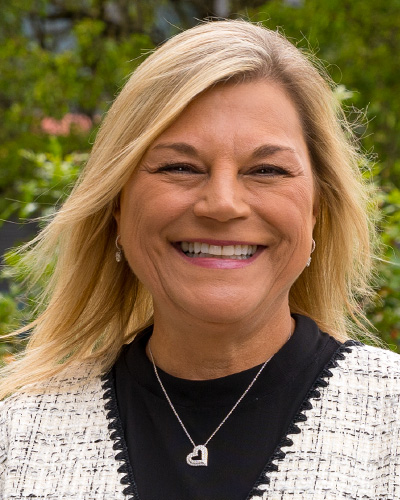
Experience: Director, Food Innovation Center, Oregon State University; Vice President, R&D/Food Safety, Schlotterbeck & Foss; Research Development and Technology, Greenleaf Foods; Vice President, R&D, Tofurky; Technical Scout, Nutrition, PepsiCo; Global Food Safety & Quality, Starbucks/Evolution Fresh; Vice President, R&D, Wholly Guacamole
Education: BS, biology (pre-medicine/pre-medical studies), Gonzaga University; MS, food science and nutrition, Washington State University; PhD, food science and technology, Oregon State University
Expertise: High pressure processing, research and development, food safety
Leadership: Founding member, officer, and global workshop organizer, IFT Nonthermal Processing Division; chair, IFT Leadership Development Committee; board member/advisor, Avomex, Fort Worth Food Bank, Wheat Marketing Advisory Board, and Oregon Food & Beverage Export Alliance Advisory Board
Noteworthy: Led pioneering high pressure processing development effort at Oregon State University that translated into commercial success at Avomex, Starbucks/Evolution Fresh, PepsiCo/Naked Juice, and across multiple startups and product portfolios; led the development and commercialization of the first HPP food products in the United States, including Wholly Guacamole refrigerated guacamole, dips, and spreads
Fun Fact: Coined the term “cold pressed juice” to explain to marketers the difference between nonthermal HPP and thermal processing
Hero Image: Photography by Susan Seubert
Authors
-
Julie Larson Bricher Editor
Julie Larson Bricher is Food Technology’s science and technology editor and IFT manager, creative content–multimedia (jbricher@ift.org).
Categories
-
Food Product Development
-
Nonthermal Processing
-
R and D
-
Novel Technologies
-
Marketing
-
Food Technology Magazine
-
Food Processing and Technologies
-
Issues and Insights


