
Small Splurges on Sweets Buoy Up Bliss

-
Key Takeaway 1
Candy dollar sales increased last year, but unit sales were down slightly.
-
Key Takeaway 2
Consumers continue to opt for confectionery treats as affordable indulgences.
-
Key Takeaway 3
Trends driving the confectionery category include a focus on fun mash-ups and consumer interest in better-for-you products.
In times of inflation and economic uncertainty, even with rising sugar and cocoa prices, confectionery products stand out as an affordable indulgence compared to, say, dining out, purchasing a bouquet of roses, or buying an expensive new outfit. In the United States, confectionery sales reached $54.2 billion in 2024, up from $48.8 billion in 2023, according to the past two National Confectioners Association (NCA) State of Treating reports. In 2024, 98.3% of U.S. households purchased confectionery items at least once.
However, as the latest NCA report indicates, the confectionery category’s overall sales gains can be attributed entirely to price increases. Unit sales for chocolate declined by 3.3% in 2025 versus a year earlier, while unit sales for nonchocolate candy and gums and mints decreased by 0.3% and 2.2%, respectively. Thus, while spending more money on candy, consumers are becoming more selective about what they buy.
Confectionery companies large and small have responded with creative innovations to differentiate themselves in a highly competitive marketplace—one increasingly dominated by millennial and Gen Z consumers. This demographic craves comfort food but seeks new adventures that can be shared on social media; demands a medley of choices to further their self-expression; and prioritizes wellness, sustainability, and ethically sourced ingredients while still expecting great taste.
“Desire for variety and experience trumps loyalty,” observes food and drink analyst Julia Mills in the executive summary of Mintel’s Non-Chocolate Confections–U.S.–2024 report. Consumers today favor “a range of formats, textures, and flavors over adherence to a single type,” she says.
Wacky Mash-Ups
Quirky food category mash-ups can be found in almost every aisle of the supermarket, but some of the oddest examples have been in the confectionery realm, especially in seasonal limited-time offerings (LTOs). For instance, every September since 2020, Ferrara–owned Brach’s Candy has released its Turkey Dinner Candy Corn in six flavors, each corresponding to a traditional Thanksgiving dish (roast turkey, cranberry, green bean, stuffing, apple pie, and coffee in 2023 and 2024). The product’s fan base keeps expanding, with new social media influencers discovering and sharing their reactions to the flavors each year.
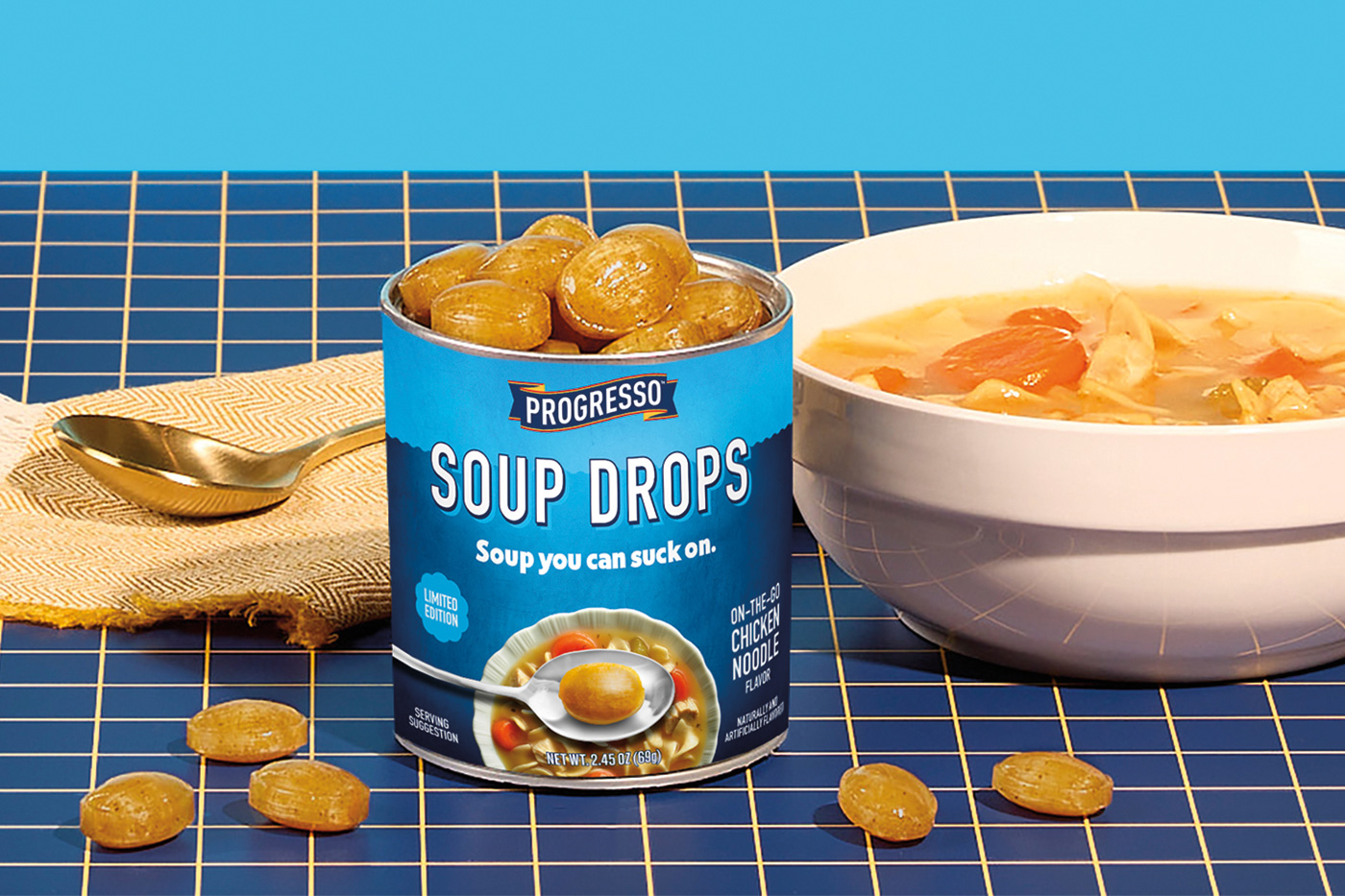
In January 2025, General Mills’ Progresso Soup brand launched its first-ever Soup Drops, a limited-edition chicken soup–flavored hard candy, promoted as “soup you can suck on” during the height of the cold and flu season. Distributed via a special website, ProgressoSoupDrops.com, the savory candy went viral and rapidly sold out.
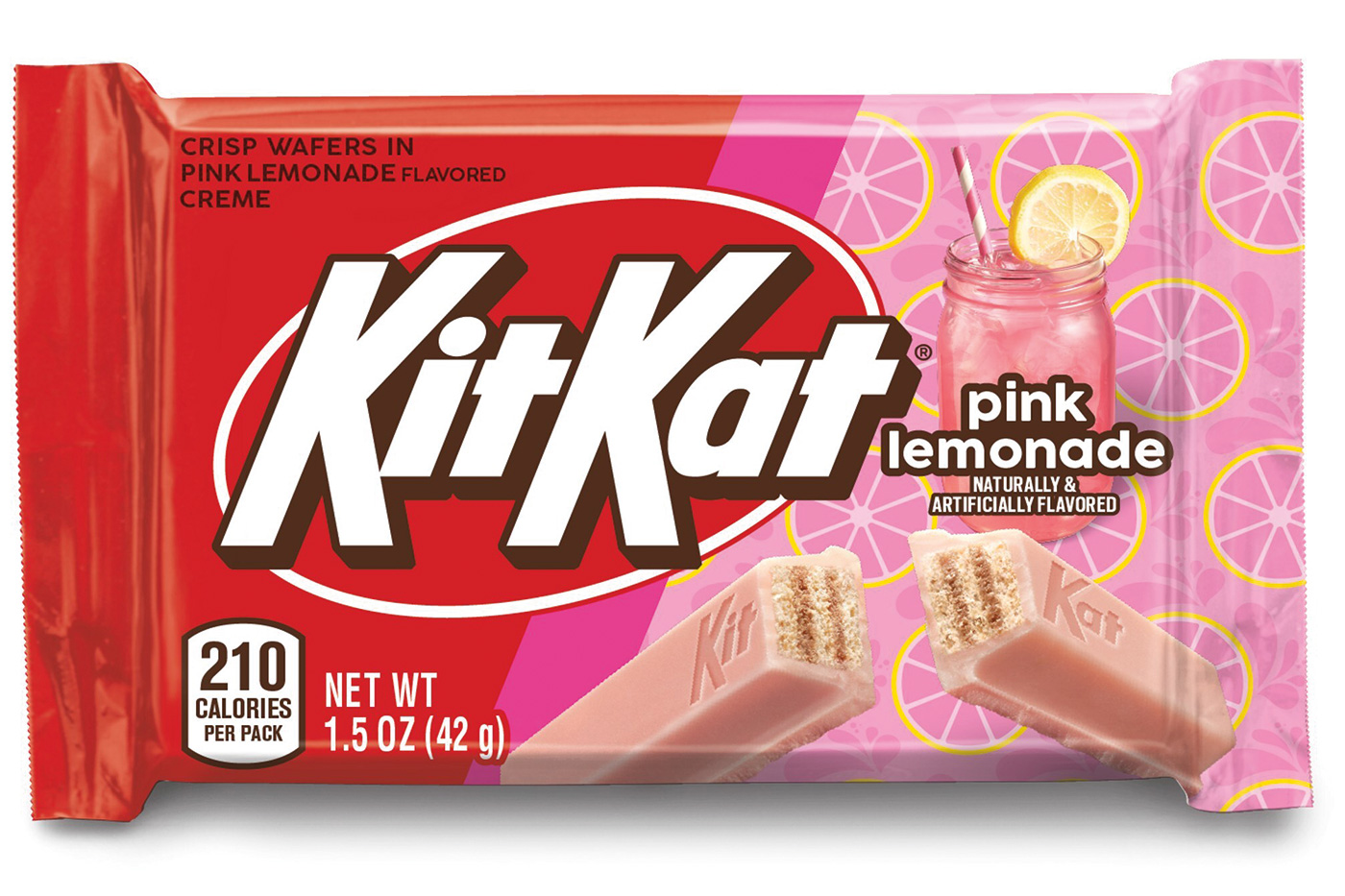
The Hershey Co. has also embraced whimsical LTOs, particularly in its KIT KAT brand, which saw the launch of a Pink Lemonade flavor in summer 2024 and cinnamon-flavored Ghost Toast for Halloween. This year, the company has posted teasers on Instagram hinting at two prospective new KIT KAT flavors: Pepperoni Pizza and Watermelon. Novel flavors help spur excitement and build consumer engagement with a legacy confectionery brand.
Of course, weird mash-ups and surprising shapes and combinations are a hallmark of the novelty candy segment, which is having a moment as a relatively inexpensive source of fun for the young and old alike. “Newstalgic” has become a key trend in this segment, with familiar items such as Bazooka Candy Brands’ Ring Pops now released in several sour flavors such as Sour Cherry Berry and Sour Raspberry Lemonade. Bazooka’s newest products include Juicy Drop Gummy Dipperz, fruity gummy sticks with a sour dipping gel.
That’s Sweet!, a division of Classic Confections, has rolled out some of the most outlandish creations, including Scrambled Gummy Sizzlers, which consists of a mini plastic pan to which fizzy candy and gummy eggs are added. Interactive experiences enhance candy’s entertainment value, according to the players in this space.
Better-for-You Buzz
Much of the innovation in confectionery, however, is less about over-the-top zaniness and more about pairing joy with purpose, with startups founded by mission-driven entrepreneurs aiming to disrupt the candy category.
Mika Shino, who launched Issei Mochi Gummies in September 2022, sought to create a cleaner label, better-for-you alternative to the gummy candies her two boys craved. She was particularly concerned about the artificial colors and flavors and gelatin used in many popular brands. So, Shino started baking mochi sheet cakes at home and experimented with cutting them into small pieces and adding natural ingredients, ultimately creating a confection with a texture that is “a cross between a marshmallow and a gummy bear,” as she describes it. “It’s a very soft, long chew.” Besides rice flour, the product contains tapioca syrup, tapioca starch, cane sugar, natural flavors, and a small number of other ingredients, depending on the SKU.
The product’s original lineup of three flavors rapidly grew into nine or 10 offerings (based on the current number of LTOs)—from Peach to Tangerine to Yuzu (an East Asian citrus fruit) to Dark Chocolate Covered Strawberry (a limited edition for Valentine’s Day).
“We love to experiment, and what’s great about our website is that you can try different things without really committing to them—it’s not like a retail launch,” Shino explains. “It’s a great way to engage with our community and see what our people really love.” If she receives a lot of positive feedback on an item, she will then seek to sell it through her retail partners.
Although the product was originally developed for children and their parents, Shino points out that her biggest fan base consists of teenage girls and young women. The Mochi Gummies are often ordered for bridal showers, wedding receptions, and other festive occasions, she says.
While Shino’s worry is with artificial ingredients, many companies are targeting the sugar level in conventional confectionery products. Although sugarless gum has been around since the 1950s, sugar-free hard candy, gummies, and chocolate bars have become increasingly popular in recent years. Valued at nearly $2.5 billion in 2024, the global sugar-free confectionery market is projected to grow to about $4.1 billion by 2034, reflecting a compound annual growth rate of 5.4%, according to the market research firm Fact.MR.
Dr. John’s Healthy Sweets makes a wide assortment of sugar-free confections, most of which are sweetened with xylitol, including lollipops and other hard candy, caramels, taffy, gummies, and chocolates. The company’s new Dream brand—which consists of zero-sugar vanilla, chocolate, and butterscotch lollipops and hard candies, as well as peppermint hard candy—claims to be “the first Dento-Protective Candy in the World.”
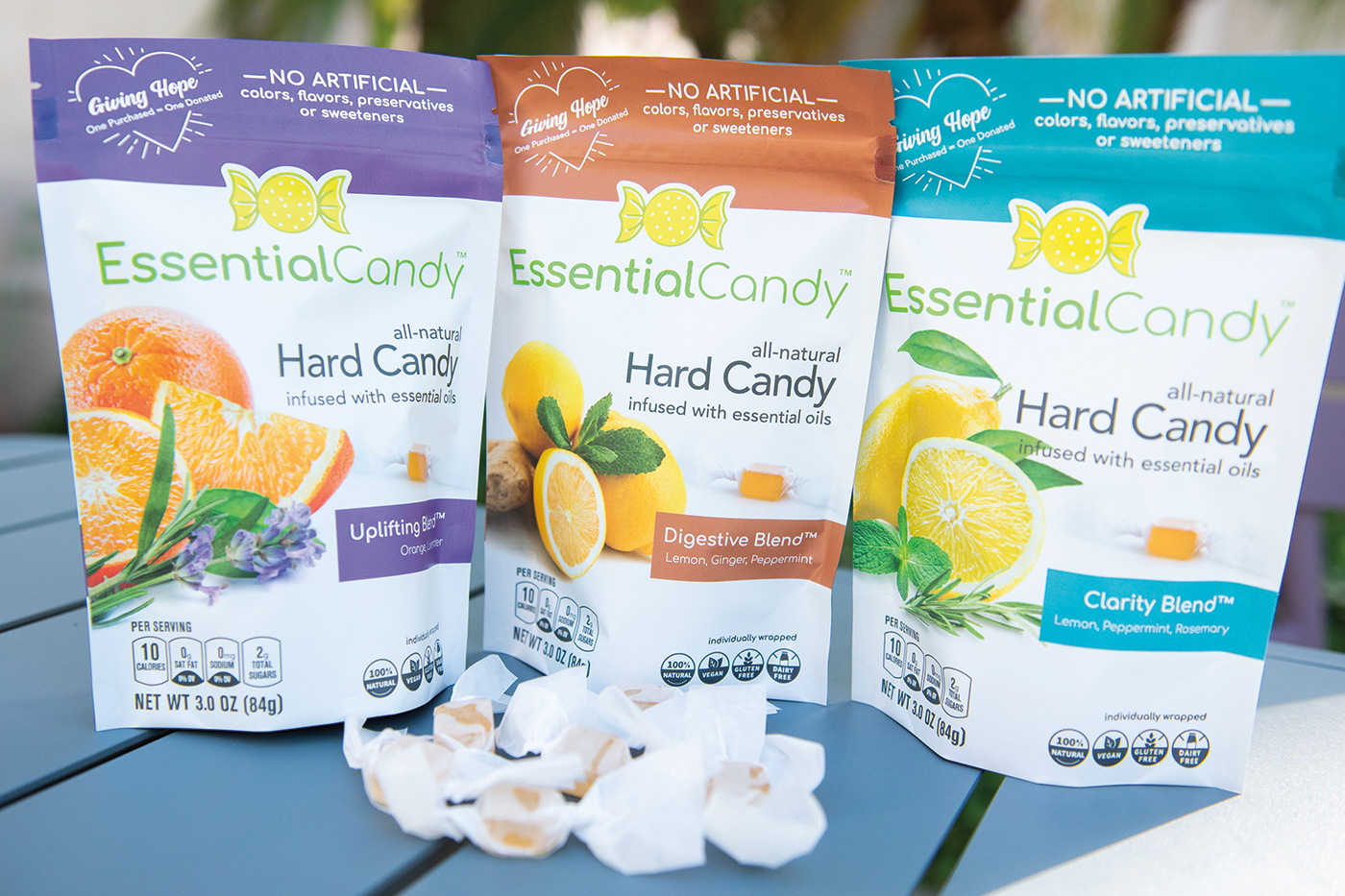
Another firm, Essential Candy, infuses functional botanicals (to aid digestion, boost energy, evoke calmness, induce sleep, and so on) into many hard candy SKUs. The company’s latest pair of offerings are the Curb AM and Curb PM blends, which are said to reduce unhealthful cravings. Curb AM candies feature a fusion of dandelion root, schisandra berry, dill, black pepper, and peppermint “to enrich morning routines,” while Curb PM consists of dandelion root, celery, black pepper, and cayenne, a combination that the company says aids unwinding at the end of the day.
Katie Lefkowitz, the founder of Harken Sweets, had always been a candy fiend, but a colon cancer diagnosis caused her to question everything she was putting into her body. This led her to develop high-fiber, lower-calorie candy bars that are sweetened naturally with dates (without any added sugar). The 150-calorie bars contain 13 grams of prebiotic fiber and come in four flavors: The Nutty One (peanut and date caramel), The Crunchy One (pretzel and date caramel), The Gooey One (salted date caramel), and The Coconutty One (coconut, almond, and date caramel). The company’s newest SKUs are bags of snack-sized bars in the same four flavors.
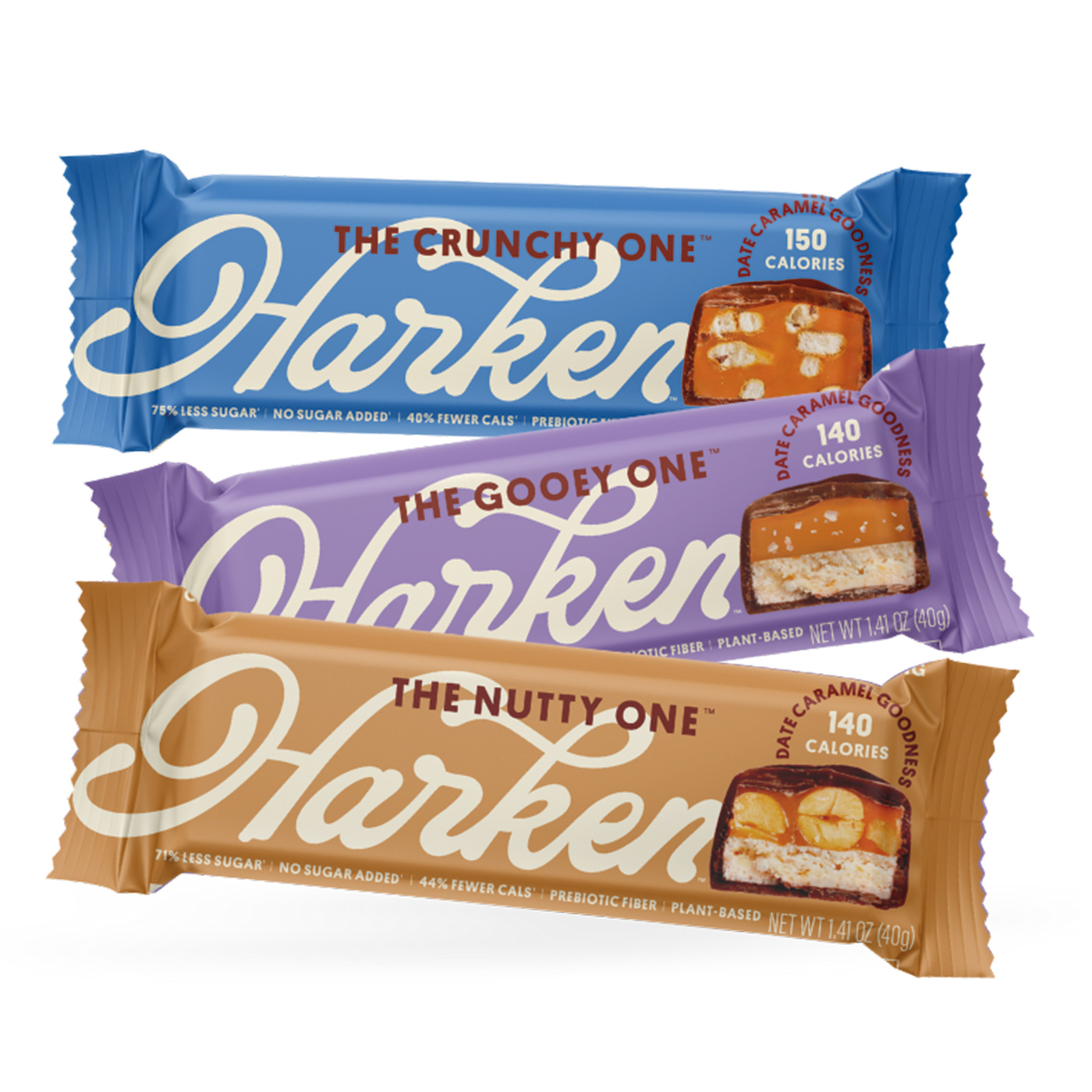
The fiber in the candy bars comes from tapioca fiber, dates, and sunchokes, says Lefkowitz, who also prioritizes producing a clean label product. The ingredient deck for The Gooey One, for example, lists dates, prebiotic tapioca, sunchokes, palm nut oil, vegetable glycerin, pea protein, oats, fair trade cocoa, sea salt, sunflower lecithin, natural flavors, and monk fruit.
Lefkowitz emphasizes that her aim isn’t to produce a nutrition bar, though she acknowledges that the distinction between candy bars and nutrition bars is blurring somewhat. “I wanted to deliver on that indulgent taste profile, which I find lacking within the nutrition bar space, and give people a reason to love candy again,” she explains. “I want people to stop avoiding the candy aisle, which they so often have to do, and enjoy walking down it and picking up products, knowing that what they’re buying is made of real ingredients that they can feel good about feeding to themselves and their families.”
Vegan Variegation
Many confectionery products happen to be vegan, sometimes referred to as “accidentally vegan,” but are not labeled or promoted as such: Consider Jolly Ranchers, PEZ, and most Skittles flavors, for example. However, there is a growing market for candy bars and chocolates that are certified as vegan—products that are standing in for SKUs that normally include animal-derived ingredients.
Started more than 15 years ago, Go Max Go Foods was a pioneer at the vegan chocolate frontier, says the company’s owner and general manager, Scott Ostrander. He and his wife had been vegans since the 1990s and decided to found their own company because of their inability to find a delicious vegan chocolate bar. Launching with four flavors, Go Max Go now offers 10 SKUs, the latest of which is Major, a crisp English toffee bar in a chocolatey coating named after one of the Ostranders’ dogs. In fact, the company and most of its SKUs are named after the family’s dogs, both deceased and living, reflecting the company’s commitment to animal rights.
The dark chocolate bars are sweetened with cane sugar and organic rice syrup, organic agave syrup, or tapioca syrup; contain cocoa powder and salt; and have various inclusions such as peanuts or almonds. The candy bar ingredients are certified vegan, including the cane sugar, which ensures that it isn’t processed with bone char, notes Ostrander. In addition, none of the ingredients are animal-tested. What’s more, the palm oil used in Go Max Go products is ethically sourced from Brazil because the company is committed to preserving the natural habitat of orangutans. The cocoa, cane sugar, and vanilla used in the products are Fair Trade Certified as well.
Ostrander is quick to point out that his product is intended to be a treat, not primarily a health food. “Just because you’re a vegan and like natural foods doesn’t mean that you don’t also eat sweets,” he says. “It just means that we have better ingredients and try to source them ethically. If we couldn’t make a candy bar that tastes as good or better than the original ones, then there would be no point in doing so.”
The United States is the main market for 7th Heaven Chocolate, an Israeli company that makes vegan milk chocolate bars and peanut butter cups using oat milk. “Our goal was to create the full milk chocolate experience without using milk,” says Daniel Bareket, who cofounded the company with his wife. “If you search for vegan chocolate in the United States, most of what you’ll find is dark chocolate. Nothing is wrong with dark chocolate, but it’s very different from milk chocolate. Most consumers in the United States prefer the flavor [and] the taste profile of milk chocolate,” he says.
7th Heaven Chocolate switched from soy milk to oat milk a couple of years ago. “We can achieve a cleaner label with the oat milk,” says Bareket. “But for us, taste is the number one factor, apart from being vegan. We did a taste test with the new formula versus the old one, and the new one won significantly. It checks all the boxes, and for us, it’s tastier.” 7th Heaven’s newest offerings include Oat Milk Peanut Butter Cups, Oat Milk Caramelized Coconut Cups, and two other SKUs.
International Indulgence
When it comes to indulgent, non-vegan chocolate, international flavors and inclusions are the rage. Thanks to social media, Dubai chocolate bars have become particularly popular. In 2021, Fix Dessert Chocolatier launched the original bar, Can’t Get Knafeh of It, which became a hit on TikTok last year in the United States. The bar consists of crispy knafeh with pistachio and tahini encased in milk chocolate.
“Consumers crave products that surprise and delight, breaking the monotony and creating memorable, shareable experiences,” states Luker Chocolate’s 2025 Chocolate Top Trends report. “Bold flavor pairings like chili with dark chocolate or lavender with milk chocolate cater to this demand, while limited editions and visually striking packaging amplify excitement.” Consumers are also seeking “playful texture combinations” that include creamy, crispy, and crunchy additions, the report adds.
Whether a box of premium chocolates, the silliest novelty confection, or a bar that exemplifies one’s values, candy lifts the spirits in periods of unease.ft
Hero Image: © tylim/iStock/Getty Images Plus
Authors
-
Carolyn Schierhorn
Categories
-
Food Business Trends
-
Consumer and Marketplace Trends
-
Food Categories
-
Market Trends
-
Food Retailing
-
Confectionery
-
Food Technology Magazine


