
Weathering the Impact of Climate Change

 Dale Buss
Food Technology Magazine
Rick Clark has been farming his family’s 7,000- acre spread in West Central Indiana with regenerative methods for 15 years. The fifth generation farmer grows soybeans and corn but also plants cover crops such as cereal rye, oats, and tillage radish in the fall, which helps maintain the soil during the winter, preserves nutrients, and relieves compaction in preparation for spring planting.
“This is where regeneration comes from,” Clark says. “We’re pulling nutrients from three- to five-feet deep into the [soil] profile and bringing them back to the surface through cover crops. Then we lay down or mow or terminate the cover crop and mulch it back into the soil. So I can go 100% no-till.
In the process, Clark’s cover crops also “are going to squeeze more carbon dioxide out of the air than any other method I know of. The farmer has the greatest ability of anyone to create the greatest amount of change in climate change,” he maintains.
For such reasons, Danone has reached all the way from its headquarters in Paris to help farmers like Clark in flyover country in America. By purchasing silage from Clark to supply feed to its local dairy farmers, Danone gives the farmer a crucial 10-day head start on his annual fall cover-cropping.
That’s part of a corporate initiative in which the company is working with two American universities to help farmers of a total of more than 50,000 acres— most of which is already being farmed organically—to focus on soil health and other specifically regenerative practices. They improve yields, cut requirements for irrigation and field work, and, according to research, can pull significant amounts of carbon dioxide from the air. Doing his part for the climate also saves Clark hundreds of thousands of dollars a year, he figures.
“In farming, you have political divides about whether climate change actually exists,” says Christina Owens, senior director of agriculture for Danone North America. “But if you can talk to farmers about profitability, you don’t need to convince them for other reasons. We meet people where they’re at.”
“We need the food industry to get on board with climate solutions.”

Food Companies Take a Stand
As with Danone, the effects of agricultural and industrial production of foods and beverages on climate change—and vice versa—are beginning to move front and center for the consumer packaged goods (CPG) industry in at least three important ways. Companies are having to cope with the actual impact of climate adversity on their supply chains. Public clamor is growing for corporations to do what they can to mitigate greenhouse gas emissions in any way possible. And some in the industry are attempting to change a narrative in which major components such as livestock production are targeted as some of the biggest villains in climate change.
“Our food system as a whole is the biggest contributor to climate change,” asserts Mark Hyman, head of strategy and innovation at the Cleveland Clinic Center for Functional Medicine. “The changes that are happening, like global warming and extreme weather events like droughts and floods, are threatening the future of food production. It’s a dangerous cycle and we need the food industry to get on board with climate solutions.”
Some estimates are that the food system is responsible for about one-third of all greenhouse gas emissions. “Reimagining how we grow, produce, consume, and waste food is the number one solution to reversing climate change,” concludes Hyman, author of the new book Food Fix: How to Save Our Health, Our Economy, Our Environment, and Our Communities—One Bite at a Time.
Others share this basic point of view. “There is no longer the option to continue the status quo of industrial agriculture and [still] combat climate change,” Matthew Wadiak, founder and former chief operating officer of home food delivery pioneer Blue Apron, said in early 2019 as he launched Cooks Venture, a “next-generation food company rooted in regenerative agriculture and transparency” that is selling poultry raised in a newfangled supply chain.
Consumers are buying in, led by the most environmentally conscious but increasingly joined by mainstream American shoppers of all generations. Nearly half of U.S. consumers say they want to change their shopping habits to reduce their environmental impact, says Nielsen research. Meanwhile, sales of consumer goods marketed as sustainable, simple, or organic grew to about $130 billion in the United States last year, up 12% from 2015.
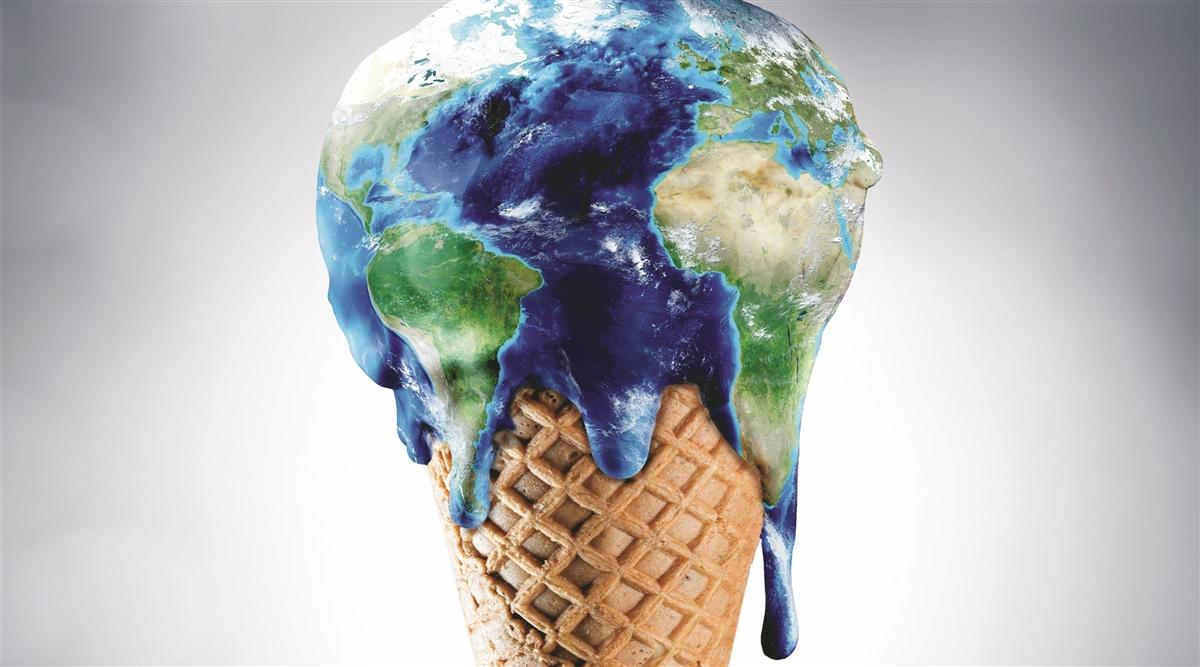
Yet it still isn’t clear what CPG companies should do in the face of Malthusian thinking that posits climate change as an existential threat to humanity and positions the food industry as a major player in how it will all turn out.
“There is hardly a consensus on how [climate-change] mitigation can take place,” says Garret Broad, a sustainability expert at Fordham University. “Some advocate for the merits of technological efficiency through innovation and scale, others that we need to fundamentally reshape our systems through relocalization and an embrace of more traditional methods of farming and eating.”
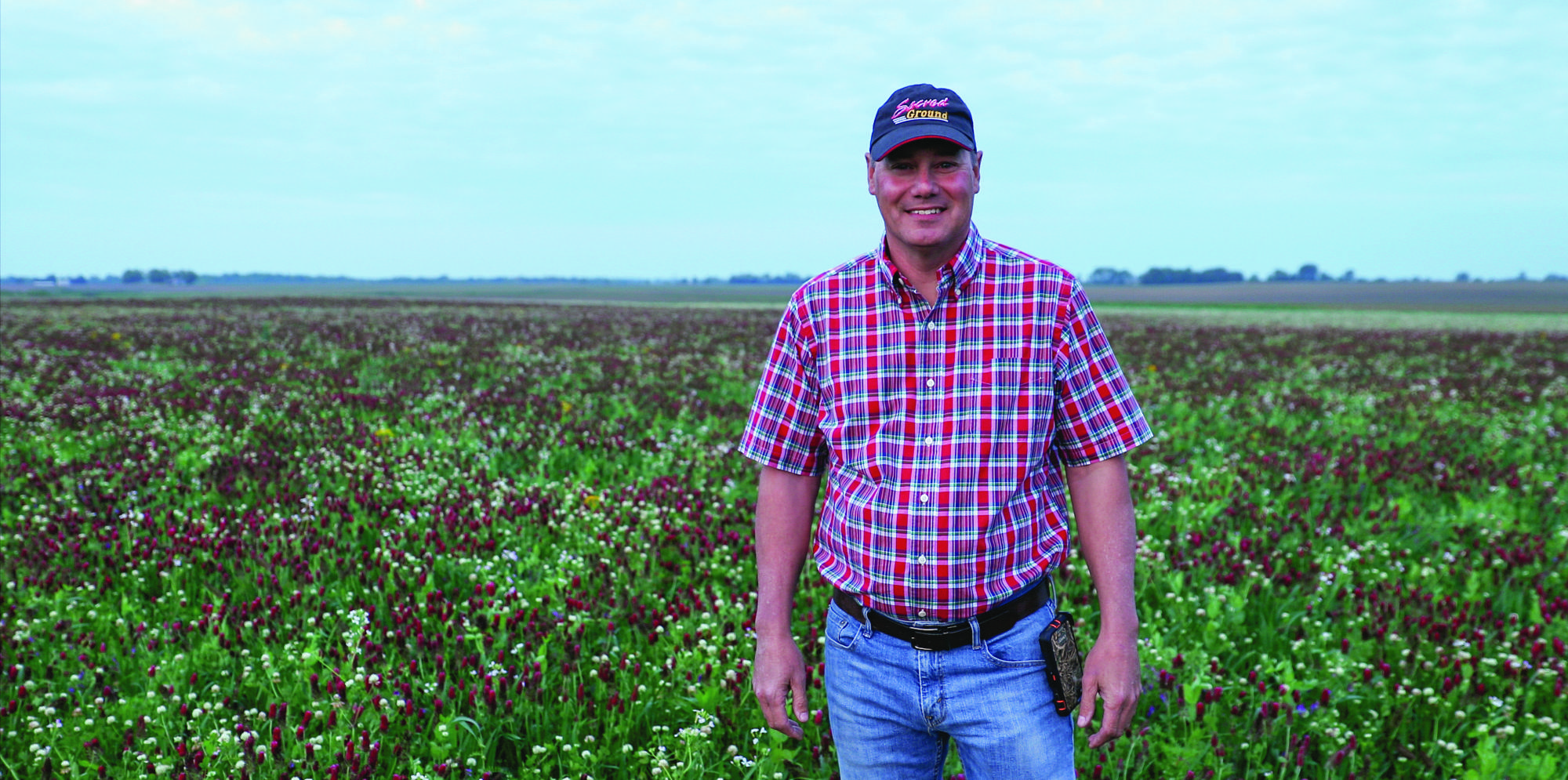
Indiana farmer Rick Clark is committed to regenerative agriculture and supplies silage to Danone in a win-win arrangement. Photo courtesy of Danone
Practical Realities
Ken Harris, a managing director of the Cadent consulting firm, agrees that “the ‘good for you, good for the environment, good for the company’ scenario will continue. But there are practical realities of the business that preclude wholesale shifts in short time frames to new ways of doing things. And that’s something that really has to be considered.”
Companies in the “very short term probably won’t see significant dislocation,” says Edward Carr, a Clark University geographer and anthropologist who co-wrote the U.S. Department of Agriculture report Climate Change, Global Food Security, and the U.S. Food System. “But by the medium term, five to 10 years out, they’ll feel increasing pressure.”
"Industry could be a remarkable force for good in this area."

Overall, Carr believes, addressing climate change actually could present new opportunities for the food business, if producers and processors handle things smartly.
“At some point, the industry needs to sit down and look forward five to 10 years and figure out how to get in front of this in a way,” Carr says. “That should include marketing and promoting the kinds of crops that will be here in the future and make sense in the new world emerging around us, crops that are effectively more sustainable for their business case and also that could have a great environmental impact. Industry could be a remarkable force for good in this area.”
Multiple components comprise the puzzle of the food industry’s relationship with climate change. They start with a conviction to cut waste, which is the ultimate disposition of about 40% of America’s food supply, by some estimates—and reduction of which could vastly curtail the industry’s greenhouse gas emissions because less food would have to be produced.
Food Waste’s Underestimated Impact
“Most consumers have no awareness about food waste being a major contributor to climate change,” says Barbara Bronstein, founder and president of Second Servings of Houston, a “food rescue” organization, who also spent several years working for major CPG companies, including Unilever, Mars, and Coca-Cola. “We’re trying to educate people about preventing food waste at home. It’s a big educational process, and as people become more aware of the evils of food waste, they’ll try to change some of their habits.”
For the industry, she urges steps such as keeping ingredients in the supply chain that previously were considered only waste and working with governments to standardize date labels on packaging. “That can go a long way toward reducing food waste and keeping the environment cleaner,” Bronstein says.
Yet, as in nearly all cases where the food business tries to meet the fast-changing demands of a new generation of consumers, even “upcycled” products must perform in the marketplace. Tyson, for instance, recently—and quickly— yanked Yappah, a new brand of “chicken crisps” made from trimmings from its production operation and tested in a Chicago supermarket and online at Amazon.
Further down the supply chain, the manufacturing and distribution of food can be affected by climate change in ways that aren’t always apparent. These include the simple reality of more ships not being able to make it into ports because of weather events, resulting in food loss and waste. “Anecdotally, things are much less predictable than they have been,” says Jonathan Deutsch, head of the food lab at Drexel University. “Things that were buttoned down are less buttoned down.”
Descend further down the supply chain to how food is grown, harvested, and gathered, on land or in the sea. There, a big part of what the industry is dealing with is changes in long-term weather patterns, which could be climatic, that are beginning to dictate major transitions in ideal growing areas for some crops.
Consider wheat, the world’s largest rain-fed crop in terms of harvest area and the supplier of about 20% of all calories that people consume. Climate change could bring warmer temperatures that accelerate crop development and lead to earlier maturity, which creates higher water demand. At the same time, global warming is expected to increase the frequency and intensity of severe water-scarcity events.
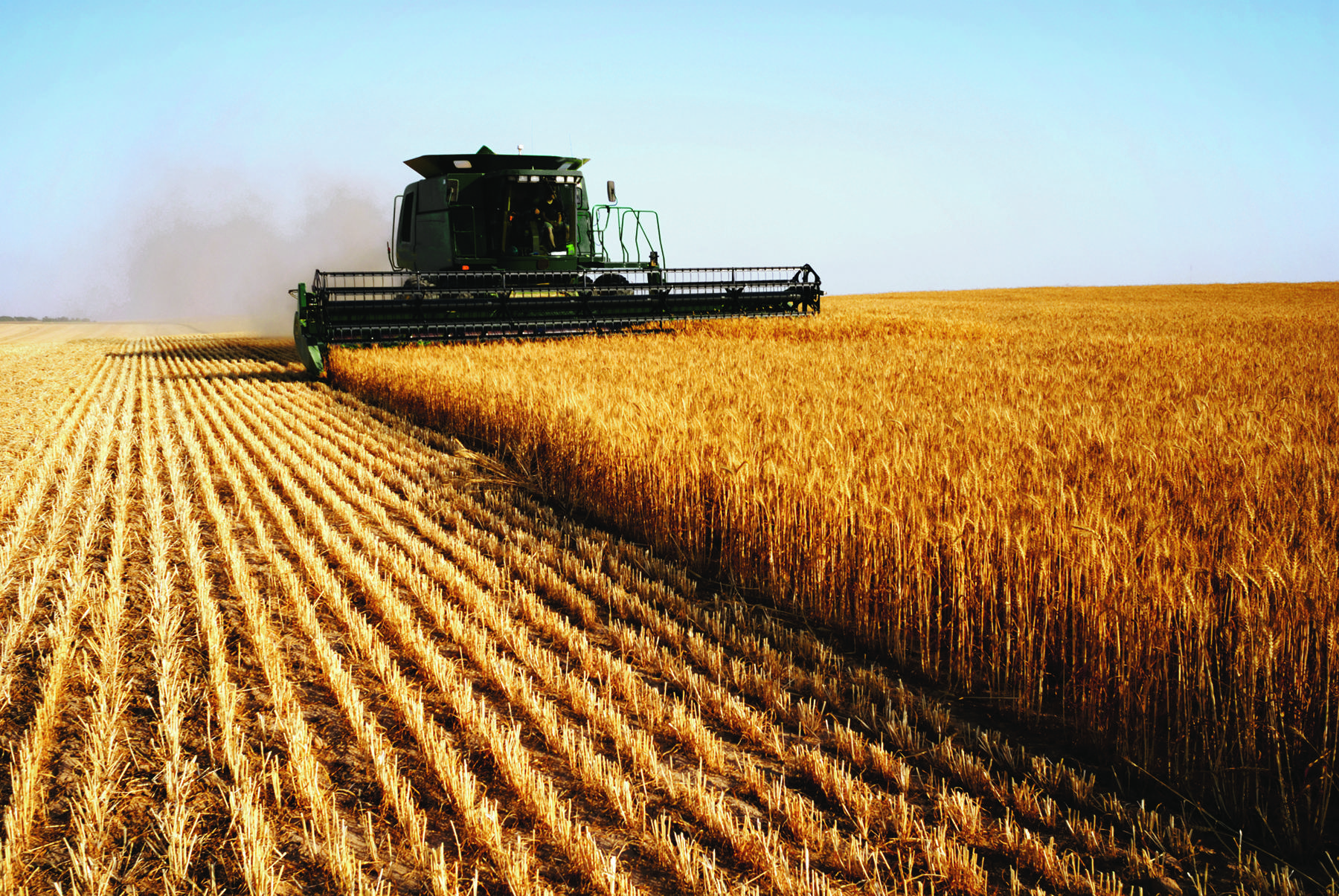
Without action taken to mitigate the impact of climate change, up to 60% of wheat-growing areas could be affected by drought conditions, says one study. © Orientaly/iStock/Getty Images Plus
Thus, up to 60% of current wheat-growing areas in the world could experience simultaneous, prolonged drought by the end of the century unless steps are taken to mitigate climate change, according to a new study in Science Advances. Even present-day weather patterns can bring severe drought that could simultaneously affect up to 15% of wheat-growing areas, said the study, by researchers from the University of Arkansas and others.
Agricultural Adjustments
Meanwhile, farming of another of the world’s most important crops, coffee, also is being increasingly affected by warming. The traditional so-called “bean belt” stretches from Asia to Africa to Central America. But rising temperatures are making parts of these legacy bean-growing lands too hot for coffee. By 2050, areas in the tropics suitable for growing coffee could shrink by as much as half, according to the Climate Institute, a Washington, D.C.–based not-forprofit advocacy organization.
Inevitably, agriculturists are adjusting. Wheat farmers and researchers are implementing more irrigation, increasing water-use efficiency, and using wheat varieties with enhanced drought and heat tolerance. And coffee farmers within the bean belt are moving higher in their mountainous growing regions for cooler conditions, while researchers are breeding new varieties that can better tolerate a warming climate where beans are grown now.
“Something needs to change, and we need to be part of that change.”

Meanwhile, how food companies are performing in another important area for climate change—deforestation— is taking on a higher profile. Forests cover about 30% of the land mass, but rising global demand for agricultural commodities has led to a 3% decline in forested land globally between 1990 and 2015, according to the World Bank. Burning or cutting down trees reverses the effects of carbon sequestration by trees and releases carbon dioxide and other greenhouse gases into the atmosphere. Scientists say deforestation also changes the landscape and reflectivity of the Earth’s surface, cutting the planet’s albedo, which is the amount of solar energy that gets reflected off the Earth and lands back in space.
For years, CPG companies have been moving to reduce their dependence on commodities grown on deforested land, but now there’s more attention than ever to how well they’re doing individually—the kind of transparency that spurs action in the era of the woke consumer. Nestlé, Unilever, and Mars top a list of the best performers in this area compiled by not-for-profit Global Canopy, for example.
A Company With a Cause
Maple Leaf Foods is one major company that has elevated the climate change cause to a top priority. The Mississauga, Ontario–based producer of meat and poultry products calls itself “the first major company in the world to be carbon neutral.”
One of the continent’s major animal protein producers, with 20 plants across Canada, Maple Leaf Foods plans to “aggressively reduce emissions” by meeting the widely respected Science Based Targets, which align global greenhouse gas emissions with the goals of the Paris Agreement on Climate Change. Only two other animal protein companies have set such targets.
“This is something that we’ve taken on with a lot of thought and due diligence,” says Randy Huffman, Maple Leaf’s chief food safety and sustainability officer. “It’s not something we just walked into and announced a few weeks ago.” Maple Leaf’s actions stem from its conviction that “something needs to change, and we need to be part of that change,” says Huffman.
Maple Leaf already has made significant progress toward its goal of cutting its environmental footprint in half by 2025, including reducing energy usage and boosting water conservation. Its new initiative will extend such efforts to include using solar energy, batterystorage systems, and “microgrids” at its facilities.
“We’re also venturing into renewable natural gas that we can produce from the manure from our animals,” says Tim Faveri, vice president of sustainability and shared value for Maple Leaf. “By closelooping that, we can capture methane using biodigestion, and we burn that as renewable fuel to heat our barns and provide electricity to them.”
Now Maple Leaf also will invest in what the company calls “credible and independently verified, highimpact environmental projects” throughout the continent to bring its net carbon footprint to zero, including projects for wind energy and recovering methane gas from landfills.
The company already tacked toward climate change concerns in 2017 with the purchase of Greenleaf Foods, the Elmhurst, Ill.-based parent of leading plant-based brands Lightlife and Field Grain. Maple Leaf has committed $310 million to construct what it is billing as the largest plant-based manufacturing facility in North America, a 230,000-acre facility in Shelbyville, Ind.
“We believe greenhouse gas emissions are lower from the lifecycle assessment of plants” than animal proteins, Huffman says. “It’s just a fact. There may be arguments out there, but we’ve looked at the data and feel confident that a plantbased supply chain is an improvement from an animal-based supply chain.”
The Animal Impact Debate
Huffman’s remark, of course, reflects the fateful scenario that is being played out in animal husbandry at large, which has become the food industry’s single biggest bogeyman for climate change so far.
Conventional animal-feeding operations are “one of the worst climate offenders,” Hyman maintains, “responsible for 14.5% of ‘human’-derived greenhouse gas emissions, mostly via methane from livestock for food.
“It’s not just the actual animals— it’s the process of feeding them, too,” he says. “The feed required for these operations is often grown with the worst agricultural practices, including intensive fertilizer use, pesticides, herbicides, and monoculture. They destroy soil, use excessive fresh-water resources, and [cut] biodiversity.”
So it’s little surprise that climate change dynamics have moved to the center of a growing donnybrook between this pillar of the traditional food business and newfangled, plant-based meat analogues, including Beyond Meat products and the Impossible Burger. Even McDonald’s and Burger King are experimenting with them at retail, while media and consumers seem to be gobbling up the sustainability narrative behind these products. The new burgers present alternatives said to be much kinder to climate preservation because they cut out animals altogether.
Livestock production takes the heat for being a major contributor to climate change, but the National Cattlemen’s Beef Association says the impact of cattle production on climate change is overstated.
© dhughes9/E+/Getty Images
But not so fast, says the meat industry. Methane from cattle’s digestive system—the biggest public whipping boy for agriculture’s impact on climate change—accounts for only 2% of America’s greenhouse gas emissions, says Scott Yager, environmental counsel for the National Cattlemen’s Beef Association. “Add feed inputs and it only goes up to the 3% range,” he said. “So why is agriculture getting hammered?”
Yager offers his own answer in noting that a United Nations report asserted agriculture accounts for as much as 18% of global greenhouse gas emissions. His association’s smaller numbers “account for our very efficient agricultural system in the United States that allows us to have a very small carbon footprint versus the rest of the world,” he says.
Some new spokespeople for beef also are asserting that livestock can be raised and processed to pose less danger to the climate than does the manufacture of Impossible Foods and Beyond Meat products. “Those companies paid some third-party agency to document inputs and came up with their lifecycle assessments” of carbon footprints by meat analogues compared with meat, says Taylor Collins, co-founder of the Roam Ranch in Texas.
“But we have shown that regeneratively managed beef can recapture 3.5 pounds of carbon from the atmosphere for the same amount of [meat analogues] that emit three to four pounds of carbon into the atmosphere” through their manufacturing processes.
Indeed, some outsiders believe the climate change narrative behind “fake meat” already has gone too far. “Concentrating on vegetable protein is a necessary and worthwhile cause,” says consultant Harris. “But I also believe that people haven’t looked closely enough at the total supply chain in beef production to understand what’s sustainable and what’s not— for example, that grass-fed beef in the ecosystem is more sustainable for the environment than vegetable-protein products.
“But people aren’t talking about that yet because the bright, shiny object is vegetable protein,” Harris continues. “So for now, you won’t be able to out shout the vegetableprotein dynamic. No one is listening today. Yet meat producers need to understand and have an answer to sustainability for the future if the tide passes or turns on vegetable protein. And that future looks like grass-fed beef and ranching.”
Jeffrey Simmons, CEO of Elanco, which provides products and services for livestock health, adds, “You can’t say, ‘Stop eating hamburgers’ and end all cattle on earth—that’s not going to happen. But we can use more sophisticated technologies, more collaboration with academia, and more talking about it—sitting on a stage and saying, ‘This farm has done it; we can do it again’—rather than avoiding the issue.”
It still isn’t clear what CPG companies should do in the face of Malthusian thinking that posits climate change as an existential threat to humanity.
Regardless of how the battle between imitation and real meat goes, livestock interests are continuing to work on their game, in large part to improve and reposition themselves for the broader climate change debate.
Dairy companies, for example, point out that the U.S. milking herd peaked in 1945 at 27.8 million animals but produces nearly four times more milk today with just 9.3 million animals, thanks to genetic selection and nutritional management. They’re also promoting new research that shows producing a unit of milk required about 25% fewer cows in 2017 than a decade earlier, 21% less land, and 31% less water, amounting to a 19% cut in overall greenhouse gas emissions over that period.
There also are roles for retailers, beginning with efforts to mitigate food waste and extending to cutting energy consumption. Aldi, for example, announced a plan to add hydrofluorocarbon-free refrigeration systems within its stores to cut the potential impact on climate change. Other retailers, including Weis Markets and Ahold Delhaize, have implemented special refrigeration and freezer systems with motion-sensor lighting to make their energy usage more efficient, hoping marginally at least to cut power plant emissions.
For the food industry, the cutting edge of the climate change issue continues to be honed by new areas of concern, possibility, and inquiry. For example, says Carr, “while there’s not a lot of research on it yet, an area that is emerging is utilization: How well does the human body use food under new environmental conditions? And how will climate change impact the nutrient content of the food being produced?”
Some research indicates that warming could reduce the nutrient content of some fruits over time, for example. “So for producers,” Carr says, “they need to consider: Even if you can get a particular fruit or vegetable from a certain place like you used to, would that be something consumers would still want?”
Building an Eco-Friendly Bison Brand
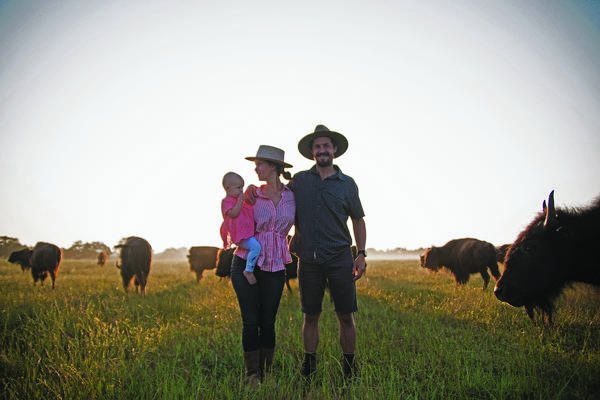
After founding meat snack startup Epic Provisions, Katie Forrest and Taylor Collins are bringing their environmental sensibilities to a new project: meat snacks from regeneratively raised bison. Photo courtesy of Roam Ranch.
First time around as a food entrepreneur, Taylor Collins and Katie Forrest created a sensation with a meat snack startup, Epic Provisions, a $20-million brand that General Mills acquired in 2016. Now the couple is hoping to strike a similar commercial chord with a regenerative agriculture play and a new meat brand that brings their environmental sensibilities to retail coolers.
Roam Ranch, set in the Texas Hill Country near Austin, is a 450-acre parcel of earth that Collins describes as agriculturally spent. He and Forrest began its intended reclamation a couple of years ago by introducing bison—which he says had been absent from the area for about 130 years—as well as 200 chickens, 15 ducks, and other assorted critters. They have begun working in concert to restore biodiversity to the soil and a start to creating a positive carbon footprint, he says.
“We’ve been sitting by and watching the uprising of vegan meat alternatives, and meat has been under attack—and rightfully so,” Collins says. “For a long time, we lost our way based on industrialized agriculture. So our new company is standing up and defending the legacy of meat and honoring animals and using ways that restore and heal and create a net positive return for the planet.”
As with premium-priced Epic bars, Collins is hoping to create consumer appreciation for regeneratively raised bison meat, which he and Forrest have begun selling at the Central Market mid-Texas supermarket chain under the Force of Nature brand. “Ideally, we’re trying to keep all items under $10 a unit,” he says.
But more than that, Collins wants Roam Ranch to serve as a foothold for what eventually would become a vast new supply chain of meat that is produced with climate-blessing methods. “People already doing it need to expand and grow, and people not doing it— but who have a heart for it—need to have the opportunity,” Collins says. “So we’re trying to scale what exists by creating this brand.”
Clearly, Collins already has favorably influenced General Mills, which is investing in regenerative agriculture operations around the country to grow ingredients for many of its other brands, including Annie’s, Cascadian Farm, Nature Valley, and even Cheerios.
Collins, Forrest, and fellow Roam Ranch cofounder Robert Sansom are hoping that Force of Nature can go beyond, based on their experience with Epic.
“When we started Epic,” Sansom recalls, “only 2% of the bison in North America were grass-fed. But through consumer demand, we were able to grow that number to 18%. That’s the power a CPG brand can have in driving change.”
Sustainability Ratings for Brands
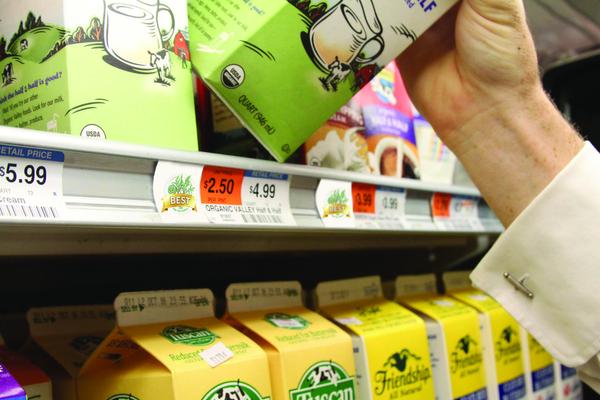
A rating system from HowGood uses hundreds of data points to evaluate food and personal care products to measure their sustainability. Photo courtesy of HowGood
HowGood is helping consumer packaged goods brands tilting toward climate change concerns persuade shoppers of their virtue.
Consumers will “continue to push for food with a story through all economic times,” and data-driven technology will provide companies with the “food story transparency that is needed to capture higher costs” in premium prices for foods that tell attractive narratives, says David Maloni, executive vice president of analytics for ArrowStream, a provider of supply-chain technology for the food industry.
New York City–based HowGood is a research outfit with what it calls the largest database on food and personal care product sustainability. It assesses products according to 127 different indicators of sustainability by pulling from 356 data sources, according to Ethan Soloviev, chief innovation officer.
By rating more than one million products, it helps brands and retailers “improve their environmental and social impact,” as HowGood’s website says—and also communicate their benefits to consumers. Partner retailers such as Giant Foods are beginning to slap HowGood’s “good,” “great,” and “best” ratings on shelves right next to price tags.
“So consumers going into their stores can make decisions about what’s ‘good,’ ‘great’ or ‘best’ for the world,” Soloviev says. “If you put a ‘best’ rated sticker on a product, sales jump 200% and [CPGs] and retailers often have higher margins.”
A similar push is behind the Soil Carbon Initiative, a Los Angeles–based company backed by Danone and Unilever that has created a standard for soil health for certifying farmers. In turn, brands could brag that their supply chains are helping sequester carbon in the earth and thus fighting climate change.
“This means we, as consumers, could have labels front and center on our products that provide transparency of how our food affects soil health and its impact,” says Mark Hyman, a functional medicine pioneer. “It’s a whole new level beyond Certified Organic.”
Grains Feel the Heat
Edward Carr has assessed the impact of weather and climate on grain-growing around the world, but he specializes in sub-Saharan Africa. The competition there between the blazing heat and encroachment of the white sands, and farm belts such as the corn-growing belt of Tanzania, are where the Clark University professor learned the most about the challenges that climate change is likely to pose to agriculture.
“You can irrigate grains, but temperature is becoming a big problem for a lot of grains,” says Carr, who conducted more than 20 years of research on agrarian change and adaptation in the region. “You can start substituting varieties, but at a certain point even that doesn’t work. And even GMOs aren’t really a pathway out [because] the vast majority of work on GMOs is defensive in nature—trying to fight off the impact of things like climate change, not to increase yields.”
Carr advises that food companies branch out from dependence on wheat and maize because those crops “don’t like it hot and dry.” He suggests more attention to alternatives such as millet. “It grows in sub- Saharan Africa in water-restricted areas and without much infrastructure or genetic modification,” Carr explains. “And there are hundreds and hundreds of varieties [of millet] because farmers have been cross-breeding it forever.”
But even if food companies move on to new grains, he says, they’ll have to deal with the fact that these varieties also might be viable only for a few years if temperatures keep rising. “A lot of crops are fairly sensitive in terms of germination, and a four- to fivedegree rise could push them out of germination range,” Carr says. “That [amount of change] isn’t unthinkable in a lot of parts of the world right now.”
Shifting the Seafood Supply Chain
Any effects of climate change on land so far may be dwarfed by what’s been going on in the oceans. And Giles Cadman is among the entrepreneurs who are helping the food system cope with nautical effects as well as find ways to profit from what he sees as a required shift to aquaculture.
Cadman is chairman of Cadman Capital Group, a private equity concern that mainly invests in companies related to production and sourcing of sustainable seafood, including a lobster farming venture in the British Virgin Islands, a shellfish hatchery in the United Kingdom, and a provider of commercial crustacean hatchery systems.
He describes an oceanic chain of life that’s increasingly being broken down by climatic changes already underway—as well as by other scourges, such as pollution and over-fishing— choking out many fish populations or at least forcing species to make dramatic adjustments in geography that some aren’t up to.
The decline of reef systems, for instance, reduces the number of herring available for wild salmon to eat, so fewer return to the Pacific waters off Western Canada, dwindling the catch. Similarly, catches of sockeye salmon, which only eat shrimp, are down by 88%.
Meanwhile, deforestation in North and South America allows rivers to expand because fewer trees are around to absorb rainwater. When rising freshwater volumes flush out into oceans, the extra nutrients create algae and absorb more oxygen from the sea. “That kills surface plankton and all the other first-stage life, which is fomenting a catastrophic decline in the food chain,” Cadman says. “These statistics are terrifying, and they should be talked about,” he says. “[It’s] not just to do with fisheries management but with the fact that the things that these fish eat are dying in the ocean.”
Cadman’s aquaculture thrust involves establishing operations closer to where food is consumed—such as lobster farming in England instead of lobster harvesting in the Caribbean. That in itself shows a way to cut greenhouse gas emissions significantly in the seafood supply chain.
His companies also are using renewable energy resources such as solar and wind to power such innovative outposts. “We developed a system for an ‘Aquahive’ for lobsters and created an upwelling of [simulated] ocean current in a three-foot deep pool,” Cadman says.
The potential for such aquaculture to supply seafood, as climate change continues to reduce natural supplies, excites him. Cadman even sees big potential for aquaculture in landlocked regions such as the U.S. Midwest, with the Great Lakes and growing wind power.
“There’s a simple formula for making saltwater, so if you have access to freshwater, you can grow any saltwater species,” he says. “It’s about moving water with energy resources; otherwise you end up with a static, toxic environment. Tides and ocean currents are all about moving things from one place to another.”
Hero Image: 2018
Authors
-
Dale Buss Writer
Dale Buss is an award-winning journalist and book author whose career has included reporting for The Wall Street Journal, where he was nominated for a Pulitzer Prize (daledbuss@aol.com).
Categories
-
Food Waste
-
Sustainability
-
Environmental Life Cycle Analysis
-
Food Technology Magazine


