

How Pairwise Is Using Gene Editing to Build a Better Food System
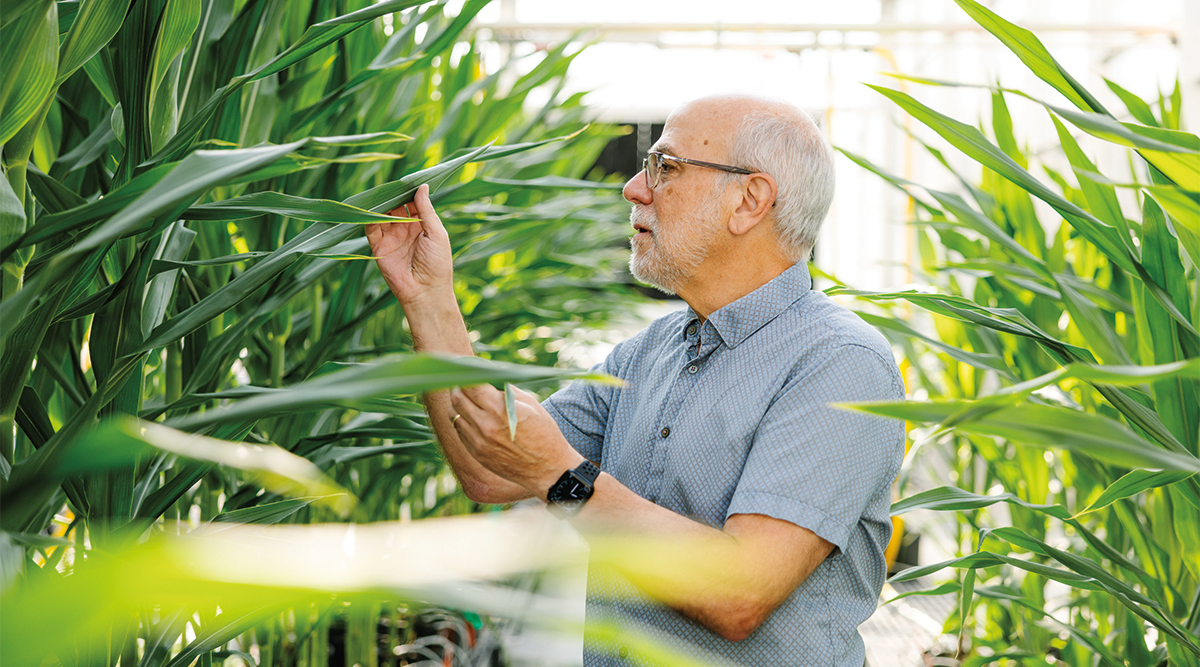
Pairwise CEO Tom Adams studies corn plants in the company’s research greenhouse. Photo by Anna Routh Barzin, courtesy of Pairwise
When startup Pairwise launched Conscious Greens, a line of CRISPR-edited mustard greens, consumers got to experience something new. By reducing the greens’ natural wasabi-like bite, the team created a salad that was milder, more versatile, and easier to enjoy. It was the first gene-edited produce to reach the North American market.
The launch also shaped the company’s philosophy on innovation and trust. Below, CEO Tom Adams reflects on the lessons learned as Pairwise works to make food easier to grow and easier to eat.
1. Focus on your scientific strengths
“I learned how hard it is to be a marketer and a technology company, and that you end up putting all of your resources into marketing, and that takes you away from developing more products,” Adams says. “Salads is a pretty tough field. So, we’ve made the hard decision to say, ‘You know what? Somebody else would be better off selling these seeds.’”
That experience convinced Pairwise to concentrate on its core capabilities. “We decided let’s focus on our core strengths,” he explains. “In the blackberry, we’ve done that—we’ve developed it ourselves, but we’re going to license that. We’re working on licensing it right now through growers and packer-shippers, and they can sell it under their own brand.”
This approach, Adams adds, connects back to the company’s mission. “We see partnering as the way to make the biggest impact.”
Today, Pairwise collaborates with Bayer on high-performance crops, Mars, Inc. on climate-resilient cacao, and Sun World International on pitless cherries. These partnerships allow the company to stay focused on science while its partners manage scale and distribution.
2. Lead with benefits and transparency
Adams says education starts with the product itself. “Try to keep the conversation about the product benefits because I think that’s really what the education needs to be about—why is this something that I would like?”
He notes that consumers respond to tangible improvements rather than technology itself. “Consumers buy products, they don’t buy technology,” he says. “If you really want to make technology be acceptable, you need to create products that people can identify and see the benefits.”
When Pairwise launched Conscious Greens, the company opted for an open but simple message. “[The message] on our salad greens said, ‘Better flavor through CRISPR,’” Adams explains. And a barcode on the package led consumers to a webpage to learn about how the greens were made.
The team found that honesty up front resonated with consumers. “Somebody made the comment to me, ‘You can only be transparent before people ask you.’ We’ve decided to live that, and we’re trying to be right upfront about, yes, technology was used in doing this, but here are the benefits of it.”
“We’re at the very beginning of what CRISPR can do, but it’s already helping us reimagine productivity, shelf life, and taste.”

3. Use science to drive sustainability
Pairwise’s scientific focus is also driving new approaches to sustainability. Its compact blackberry plants can be planted three times as densely as traditional varieties, increasing yield while using fewer resources.
“We’re doing our first field trials,” says Adams. “These are really exciting because we’re able to plant them three times as dense as normal blackberries would be planted. They produce probably not three times as much, but maybe two times as much per acre. Our early indications—there’s still a lot of work to do—but they’re not using more resources and probably less to make that same productivity.”
Pairwise is also developing seedless blackberries and pitless cherries to make fruit easier to eat and less wasteful. “We’ve made these blackberries that are a couple of years away from the market,” Adams says. “It’s quite remarkable, actually. It’s a bigger difference than I expected because there’s a flavor burst that gets covered up by the seed that’s very different—much more like eating a seedless grape when you eat a seedless blackberry.”
Adams believes these innovations demonstrate the broader potential of gene editing. “We’re at the very beginning of what CRISPR can do,” he says, “but it’s already helping us reimagine productivity, shelf life, and taste—all of which contribute to a stronger, more sustainable food system.”
Pairwise’s inclusion on MIT Technology Review’s “10 Climate Tech Companies to Watch” list highlights its growing influence. By focusing on science and scaling through partnerships, the company is helping move gene editing from the lab into everyday life, where innovation meets real-world impact.
Stay tuned for the full Q&A with Tom Adams in the November issue of Food Technology magazine, arriving online later this month, and for our Omnivore podcast interview with Adams, releasing November 3.
Hero Image: Photo by Anna Routh Barzin, courtesy of Pairwise
Categories
-
Sustainability
-
Food Categories
-
Emerging Science and Technologies
-
Food Product Development
-
Omics and Genomics
-
Fruits and Vegetables
-
Brain Food Blog


