
NEWS
Flexitarianism on the Rise; Transparency Tops 2021 Trends
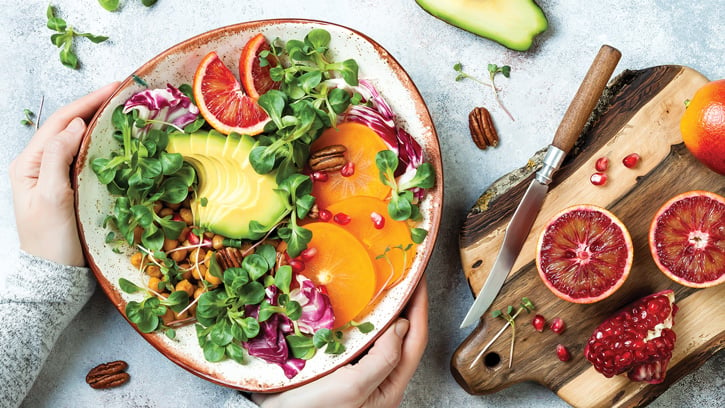
The uptick in plant-based food consumption hints at wider acceptance of flexitarianism, which considers a well-balanced diet to contain more vegetables and fruits and less meat or dairy. ©sveta_zarzamora/iStock/Getty Images Plus
Flexitarianism on the rise
U.S. consumers are eating more plant-based foods, especially younger adults and those actively following a specific diet, an indication that flexitarianism is enjoying growing acceptance, according to a survey report published by Packaged Facts.
Of those participating in the consumer survey, 3% follow a vegan diet, 3% are pescatarian, and 5% are vegetarian. The majority (53%) of consumers are primarily omnivorous, while 36% of consumers identify themselves as flexitarian, consuming meat or poultry as well as vegan or vegetarian meals.
“Despite use of plant-based meat-alternative or dairy-alternative products being highest among those following vegan, vegetarian, or pescatarian diets, omnivores and flexitarians make up the lion’s share of consumers who eat these products due to their sheer numbers. This reveals that both the current and addressable market for plant-based products depends on omnivores and flexitarians using more of these products,” said Jennifer Mapes-Christ, Packaged Facts’ food and beverage publisher, in a press release.
Although omnivores may eat meat with most meals, flexitarians tend to consume fresh produce at relatively high rates and consider a well-balanced diet to contain more vegetables and fruits and less meat or dairy in either portion sizes or presence in meals.
Transparency tops trends for 2021
In their quest for foods and ingredients that support personal health, consumers are increasingly interested in supply chain transparency, according to Innova Market Insights, which named “Transparency Triumphs” the top trend for 2021.
“Transparency throughout the supply chain will dominate in 2021, with consumers searching for brands that can build trust, provide authentic and credible products, and create shopper confidence in the current and post-COVID climate,” remarked Lu Ann Williams, director of insights and innovation at Innova Market Insights, in a press release.
With six in 10 global consumers interested in learning more about where their food comes from, Innova believes transparency will be critical to meeting evolving ethical, environmental, and clean label demands. Looking back to 2020’s top trend, “Storytelling: Winning with Words,” Innova notes that manufacturers who are adopting new packaging technologies, such as invisible barcodes, and pairing them with near-field communication technology and meaningful storytelling are likely to be successful.
The following trends round out the top five list:
• Plant-Forward. The rising appeal of plant-based eating will expand to different regions and categories in 2021, which will drive demand for new formats, plant proteins, and more sophisticated alternatives that respond to consumers’ concerns about health, diet variety, sustainability, and taste.
• Tailored to Fit. With 64% of global consumers finding ways to tailor their life and products to their individual style, beliefs, and needs, look for technological breakthroughs, constant new launches, and exciting sensorial experiences in food and beverage consumption.
• New Omnichannel Eating. Foodservice and retail domains are increasingly overlapping, allowing consumers wider choice in what, when, and where they eat. In addition to restaurant delivery, consumers are able to purchase many specialty products previously only available via foodservice. Forty-six percent find these items a convenient way to enjoy restaurant flavors at home.
• In Tune With Immune. As a result of the pandemic, consumers will continue to prioritize immune health, with immunity-boosting ingredients playing a significant role. Research and interest in the microbiome and personalized nutrition will also accelerate.
Grocery spending increases 17%
Among the areas impacted by the pandemic, grocery shopping is one of the most visible, with changes taking place in the products consumers buy, the frequency of shopping trips, and the amount spent.
In a survey of more than 1,000 consumers in the United States, LendingTree found that average weekly grocery spending increased by 17%, from $163 pre-pandemic to $190 currently. Overspending has been on the rise as well, with 31% of respondents saying they “almost always” overspend at the grocery store.
Men (44%) were twice as likely as women (20%) to say they exceeded their food budget; they also made more shopping trips than women. Parents were overspenders as well, shopping more frequently due to the pandemic than non-parents.
More than half (53%) of respondents indicated they visit multiple grocery stores each trip, including 60% of parents in search of items on sale. The trips include wholesale stores for bulk items and supermarkets for everyday needs. To cut down on trips, 63% of consumers have been using food delivery services at least once a week, including 86% of Generation X consumers.
There’s no question the pandemic has spurred increased grocery shopping, whether because of a rise in the number of family members at home or because of the tendency to stock up in times of uncertainty. The increase in grocery spending, says Lending-Tree, is costing households about $100 more each month, a fact reflected in another LendingTree study, which found a rise in grocery store spending in 49 states.

Rapeseed is a rich source of plant-based protein, and byproducts from the production of rapeseed oil show promise as ingredients for new food products. ©Maya23K/iStock/Getty Images Plus
Rapeseed protein offers alternative to soy
Rapeseed has the potential to become the preferred source of plant-based protein for humans, according to a study published in Nutrients by nutrition scientists at the Martin Luther University Halle-Wittenberg (MLU).
Protein is a vital part of the human diet, as it contains essential amino acids that cannot be synthesized in the body. Researcher Gabriele Stangl from the Institute of Agricultural and Nutritional Sciences at MLU and her colleagues were interested in investigating whether rapeseed, which has a comparably beneficial composition of amino acids, could be an alternative to soy. Since rapeseed is already being cultivated in Europe, its protein-rich byproducts could be used as ingredients for new food products.
During the study, participants ate specific meals on three separate days. One meal contained no additional protein, and the others were enriched with either soy protein or rapeseed protein. Following the meal, blood was drawn from the participants over a six-hour period to assess acute metabolic response. Results indicated comparable beneficial effects on human metabolism for rapeseed and soy protein, with glucose metabolism and satiety better for rapeseed. Rapeseed also showed promise from a sustainability perspective, as the proteins can be obtained from byproducts of rapeseed oil production.
“The rapeseed protein induced comparable effects on metabolic parameters and cardiovascular risk factors as soy protein. Rapeseed even produced a slightly more beneficial insulin response in the body,” explained nutritionist Christin Volk in a press release. “To conclude, rapeseed appears to be a valuable alternative to soy in the human diet.”
News Bites
• AIDP has acquired the core technology and related intellectual property of Olygose SAS (France), developer and producer of prebiotic ingredients sourced from sustainable plant-based raw materials.
• Chipotle Mexican Grill announced the debut of Real Foodprint, a sustainability impact tracker that compares average values for Chipotle’s 53 real ingredients to their conventional counterparts against five key sustainability metrics.
• Firmenich has signed a partnership agreement with Authentic Products, a leading producer in Madagascar, to further strengthen responsible sourcing of vanilla. The agreement includes a digital traceability program and the joint construction of an agricultural training facility.
• Impossible Foods announced plans to double the size of its R&D team in the next 12 months, as well as expand its multifaceted technology platform and accelerate product development.
• Ingredion has signed an agreement with James Cameron and Suzy Amis Cameron to acquire the remaining portion of ownership in Verdient Foods that it does not already own.
• The J. M. Smucker Co. has entered into a definitive agreement to sell its Crisco oils and shortening business to B&G Foods in a cash transaction valued at approximately $550 million. The divestiture aligns with the company’s intent to exit the U.S. baking category and focus on its core growth platforms of pet food, coffee, and snacking.
• Keurig Dr Pepper announced that its Snapple and CORE brands are transitioning to bottles made of 100% recycled (rPET) plastic, eliminating approximately 46.3 million pounds of virgin plastic used annually.
• Kraft Heinz has partnered with APC Microbiome Ireland to develop new natural cultures for food fermentations.
• Nestlé announced the acquisition of Freshly, a leading fresh-prepared meal delivery service in the United States.
• Nutricia, part of Danone’s Specialized Nutrition business, announced the acquisition of Real Food Blends.
• Roquette announced plans to open the world’s largest pea protein plant in Portage la Prairie, Manitoba, Canada, by the end of 2020.
• Yasso Frozen Greek Yogurt announced a new direct-to-consumer option that allows shoppers to have delivery made straight to their doors.
Online stores lack product discoverability
E-commerce retailers are not keeping pace with consumers’ demands for products that meet their health and dietary needs, according to a recent study from Label Insight. Although grocery e-commerce is booming, shoppers searching for products consistent with specific attributes, such as keto, gluten-free, no added sugar, fair trade, and sustainably grown, often have trouble locating items that meet the criteria.
Of the top 25 attributes consumers searched for when buying groceries online, only 14 showed up within the top 25 search filters. © bsd555/iStock/Getty Images Plus
According to the study, inaccessible and empty digital stores present an opportunity for retailers to improve how they serve various consumer groups. The results showed that retailer websites failed to return 92% of qualifying products based on common search terms. What’s more, websites that did return qualifying search results provided significantly fewer products than qualified for a given filter. In fact, of the 30 top retailers audited, only 21 had any form of search filtering capability.
Of the 21 retailers that offered attribute-related search filters, 80% of consumer preferences were overlooked. For retailers with search filters, on average fewer than 14% of products that qualified based on label information were returned in a filtered search. In other words, more than 86% of the qualifying products that should have been visible to a consumer on the digital shelf were not.
An ingredient analysis found even poorer results, with only 8% of the average retailer’s qualifying products returned in a filtered search, an indication that 92% of products that should have been made available on the digital shelf were not, leaving shoppers with a severely limited product selection.
Other results showed that of the top 25 product attributes consumers searched for online, only 14 showed up within the top 25 search filters. On average, across the top 25 most prevalent attributes, qualifying products failed to show up in the search 53% of the time. For the 25 attributes with the most search volume, a filter was available only 23% of the time.
The study concluded that “retailers need to adapt to how the modern consumer searches for products. Specifically, they must change how they’re handling search, taxonomy, and product detail page content. They must provide the attribute-based search filter functionality that consumers expect and return quality results for any given search.”
Authors
-
Margaret Malochleb
Categories
-
Food Business Trends
-
Food Health Nutrition
-
Mergers and Acquisitions
-
Global Markets and Trade
-
Food Technology Magazine


