
The Power of Dialogue

Collaborative learning theory is certainly not a new idea. It’s been nearly a century since Swiss psychologist Jean Piaget argued that knowledge is more effectively learned through interaction and collective problem-solving.
Programming at this year’s IFT FIRST Event and Expo, July 10–13 at Chicago’s McCormick Place, aims to take Piaget’s idea a step further, though, basing the core of the program squarely on dialogue, debate, and discovery around critical issues and questions facing the global food system. The event will culminate in a collaborative Innovation Lab in which participants work to solve novel product development challenges.
On the heels of last year’s focus on zero-hunger initiatives, this year’s program theme, “Hacking the Food Supply: Can We Synthesize a More Sustainable Future?” focuses on real-world scientific and business solutions to promote sustainability across the food system, from ingredient substitutions and upcycling to resource conservation, supply chain efficiency, and consumer education.

Veteran news professional John Donvan will moderate a keynote session debate on the provocative theme of “Should We Eat More Processed Food?” Photo courtesy of John Donvan
The interactive program will kick off with an Oxford-style debate, “Should We Eat More Processed Food?” moderated by ABC News correspondent John Donvan, which explores the impact of processed food on local economies, supply chains, and the environment.
In a session titled “The Role of Food Science in Global Food & Nutrition Security,” Rachel Cheatham, a nutritional biochemist and nutrition strategist, will lead a discussion about ways that food science can help solve global issues around hunger, health, and food insecurity.
A featured session focused on sustainability and climate issues moderated by Pam Coleman, managing director, Biofortis, will examine the relevant research and education priorities of the National Institute of Food and Agriculture.
In the “Recalls, Outbreak Response: The Current Food Safety Landscape, Trends and Future” featured session, voices from the legal, retail, and food manufacturing sectors will weigh in on the role that recalls and outbreak response play in the current food safety environment.
In a featured session with William Hallman, chair of the Department of Human Ecology at Rutgers University, and Andy Zynga, CEO of EIT (European Institute of Technology) Food, the panelists will discuss consumer acceptance as both a barrier and an opportunity for adoption of novel food technologies.
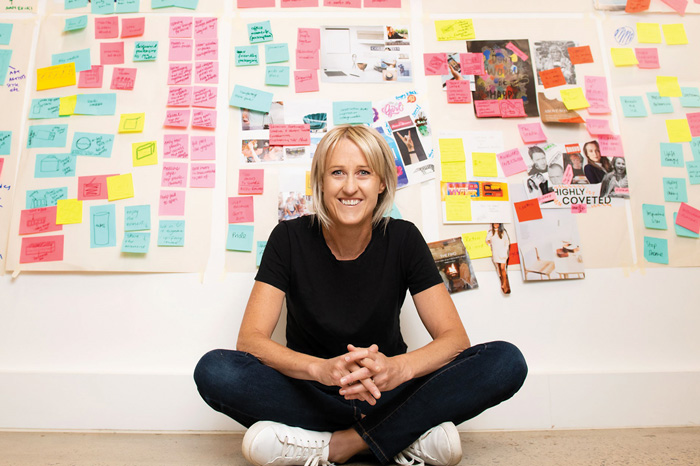
Innovation expert Evette Cordy will conduct a fun, interactive FIRST workshop, demonstrating how to use the power of curiosity to solve complex problems. Photo courtesy of Agents of Spring
An interactive workshop led by innovation expert and psychologist Evette Cordy promises to deliver actionable strategies for solving thorny product development challenges by tapping into the power of curiosity.
Codex Alimentarius, a comprehensive collection of standards, guidelines, and codes of practice related to food safety and quality, will be in the spotlight in a session that features two top Codex leaders, Mary Frances Lowe, U.S. head of Codex, and Nick Gardner, a member of the Food Industry Codex Coalition.
Hybrid Experience
Acknowledging that business, social dynamics, and information sharing have fundamentally changed since the last live event in 2019, IFT FIRST (Food Improved by Research, Science and Technology) will adopt a fully hybrid format this year, with a blend of pre-recorded, on-demand presentations and live-streamed events from McCormick Place that supplement and support the live, interactive program.
As IFT began crafting its first in-person experience in three years, it provided an opportunity to canvass past attendees about what makes for a compelling experience.
“It’s been fascinating to hear the stories that stick in people’s minds,” says Jay Gilbert, IFT director, scientific programs & career pathways. “The moments that matter most can be clustered into a few themes: meeting someone who will impact your future; connecting with someone from your past; experiencing something you’ll never get anywhere else; and confirming that what you’re doing matters.
“Our takeaway,” Gilbert adds, “is that memorable conference experiences are less about what and more about who.”
Scientific Conversations
The 2022 scientific program embraces that interactive posture. In lieu of traditional lectures or presentations, participatory discussions will build on a foundation of pre-recorded presentations. Each discussion reflects a slate of guiding questions tied to five topics: novel technology and innovation, sustainability and climate, health and nutrition, food safety, and consumer insights and education.
“Multi-session conversations will transition the learning from one-to-many to a more interconnected learning experience where attendees are also learning from each other,” Gilbert says. “Each session speaker will have their individual presentation pre-recorded and available on-demand for attendees to view before, during, or after IFT FIRST, ensuring that the scientific rigor of IFT’s event is maintained, but opening space and time for active dialogue.”
“The speaker is not the only expert,” adds Nitin Joshi, senior principal, R&D at PepsiCo and chair of IFT’s Annual Meeting Scientific Program Advisory Panel. “The audience is also an expert, so there will be more give and take.
“For those who just want to observe, it will be easy,” Joshi says. “They’ll just sit and listen either to the speaker or from the audience. But it will also be good for the people who are into more of a quest: They want to know more. They want to share their own experience. They want to ask the questions.”
What follows is the slate of this year’s guiding questions, each of which will be associated with a series of on-demand scientific program sessions.
Novel Technology and Innovation
What processing technologies or innovations are paving the way for synthesized ingredients, flavors, or components to come to market?
What new technologies are available to refine and improve the functionality of ingredients such as plant proteins?
How is data technology being used more effectively to produce new products or ingredients?
What major steps could lead to earning consumers’ trust of novel food-related technologies, and how do we address it for a way forward?
How is our fundamental understanding of molecules such as proteins, lipids, or enzymes leading to innovations in food or beverages?
Sustainability and Climate
How can the global food system reduce its dependency on the world’s dwindling supply of fresh water?
How can localization help global supply chains become more sustainable?
How can companies and consumers drive accountability when it comes to adopting sustainable manufacturing practices?
What is the future of sustainable packaging?
Are cellular agriculture or synthesized ingredients more sustainable than their animal or plant-based counterparts?
Health and Nutrition
How is food processing being used to innovate in the health and wellness space?
How are digital technologies being used to increase the accessibility of nutritional foods and beverages?
How is our increased understanding of nutrient bioavailability and biotransformation leading to new innovations?
Is the future of nutraceutical and functional foods natural?
Are foods and/or beverages containing synthesized ingredients or components elitist?
Food Safety
How are food regulations keeping up with novel food ingredients and processes?
How are data standards and data interoperability impacting food safety?
What are emerging areas of food fraud?
Consumer Insights and Education
How do consumer biases and misinformation affect innovation initiatives?
What role does labeling play in educating consumers?
What are recent advancements in sensory science that will lead to new products or methodologies?
How do we leverage knowledge and consumer understanding for product success, and is “clean label” the future of food and beverage labeling or marketing buzz?
©Riverview Photography
IFT FIRST Innovation Lab
The scientific program culminates with a slate of interactive, problem-solving workshops built on the guiding question themes.
“We are leaning into what IFT does best: connecting experienced and curious professionals to collaboratively imagine the future of food and beverage. This experience will focus on real-world product development scenarios, challenging even the most experienced food professionals to think bigger and bolder,” Gilbert says.
Joshi adds that the intersection of interests will make the exercise unique. “It’s not only fundamental science, and not only application. It’s the combination of both,” Joshi adds. “That’s the value IFT brings here—bringing these two sides together.”
Business FIRST Is Back
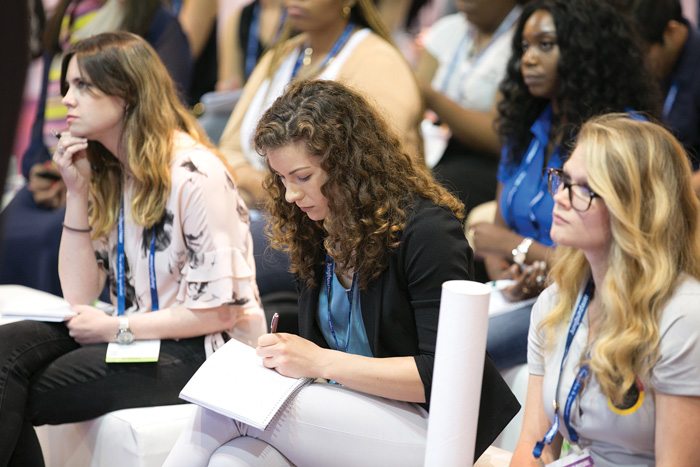
Science is always center stage at the IFT annual event, but the business of food will also play a starring role in a series of seven sessions that compose the Business FIRST track, which is back by popular demand after its debut last year. The sessions, each of which brings together a group of experts for a multifaceted discussion, will take place on the Business FIRST stage located on the food expo floor. Here’s a preview of some of what’s in store for Business FIRST session attendees.
©Riverview Photography
- Careers. Salaries. Equity. Inclusion. These are the topics that will shape the conversations in two panel discussions, “Recruiting, Compensating, and Retaining Tomorrow’s Food Leaders” and “Unlocking Excellence Through Inclusion in a Diverse Team.”
- Innovation. “Innovators on the Edge: Pushing the Boundaries of Science to Feed a Hungry Planet” will put the spotlight on four entrepreneurs who will come to the stage ready to share their brightest ideas as well as their missteps on the path to success.
- Sustainability. Experts from industry, academia, and nonprofits will offer insights and propose solutions in the “Tackling Food Waste: Defining the Problem, Innovating Solutions” panel discussion.
- Consumers. Four of the food industry’s most noted trend trackers will exchange ideas in “The New (un)Normal: Navigating Shifting and Conflicting Consumer Demands in Food.”
- Supply Chain. It’s the topic that’s kept many food professionals up at night over the past two years, so Business FIRST organizers have brought together some savvy strategists for a session titled “Rearranging the Dominos: How Food Development Is Responding to Inflation and Supply Chain Challenges.”
- Investment. Anyone who wants a peek at what’s on the food industry horizon will want to check out “Follow the Money: Where Are Investors Placing Bets on Food Innovation?”
Experience the Expo
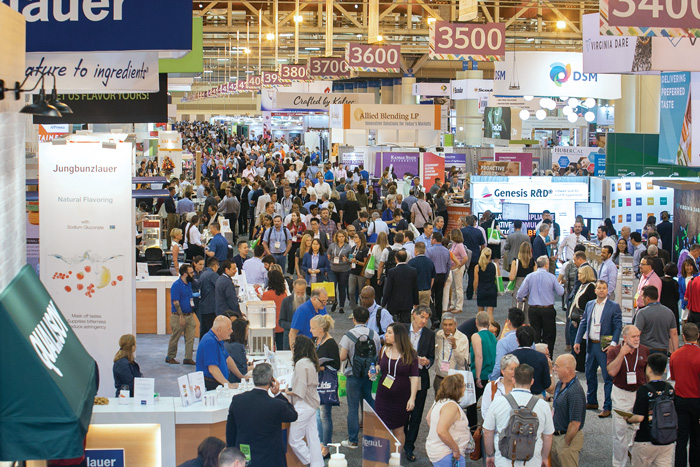
For a taste of food innovation, it’s hard to imagine a better destination than the IFT FIRST Food Expo, where more than 700 exhibitors in nearly 1,800 booths will display the latest ingredients, equipment, and technologies. (Often, it’s a literal taste of innovation: Think product sampling!)

©Riverview Photography
Food industry trend and data providers Innova Market Insights, Mintel, and Spoonshot will all be on hand at the expo, dispensing market intelligence in one-on-one conversations as well as a series of crowd-pleasing presentations.
For many, the IFT annual event experience isn’t complete without a stop at the IFT Central booth, where attendees can mix and mingle and learn about IFT programs and services from staff members who will be standing by to answer questions and share information. IFT Central, along with the Business FIRST stage, will be housed within the Destination IFT area of the expo.
Destination IFT will also be home to the Cooking Up Science stage, where chefs will present 30-minute cooking demonstrations; the Fireside Chats area for informal but meaningful conversations about current trends; and the Recharge Lounge for taking a break while charging up devices.
Those who seek a dose of entrepreneurial inspiration, as well as a look at the future of food, will want to include a visit to the Startup Pavilion in Destination IFT on their expo agendas. On the final day of the expo, representatives of participating startups will share their stories in The Pitch, where a crowd-sourced vote will determine the winner.
©Riverview Photography
Specifically for Students
For students, the FIRST schedule includes options for learning, socializing, and networking along with numerous opportunities to get a bit competitive. The IFT Student Association (IFTSA) & Mars Wrigley Product Development Competition, the Smart Snacks for Kids Product Development Competition, and the Developing Solutions for Developing Countries Competition all will hold their final rounds during FIRST. And winning teams from IFTSA’s eight geographical areas will vie for top honors in the annual College Bowl Competition. The events for students will wrap up with a celebratory Closing Ceremony and Networking Party.
Get the Details
For a full schedule of events, presentations, interactive discussions, and registration information, visit iftevent.org.
Breaking Earthly Food Boundaries: Three Questions for Scott Parazynski
Astronaut, physician, inventor, and all-round adventurer Dr. Scott Parazynski will be a featured speaker during a FIRST panel discussion titled “R&D at the Edges of Human Experience.” In this session, R&D teams from NASA and the Translational Research Institute for Space Health will share how they are leveraging technology to better understand food from societal, cultural, and physiological perspectives.

Scott Parazynski will be among the NASA panelists in a session designed to test the limits of attendees’ imaginations. Photo courtesy of NASA
Parazynski, a veteran of five space shuttle missions, is the only person to have both flown in space and summited Mount Everest. In advance of FIRST, he spoke with Food Technology about the ways in which his experiences, which also include a stint overseeing health care for the U.S. Antarctic Program, have shaped his perspectives on the food system.
Q: Do you think the work of creating food for extreme environments has the potential to influence product development for the earthbound?
Parazynski: I think one of the main reasons we go to challenging environments like space or to the high mountains or to Antarctica is to press the boundaries of what’s possible. And every time we send human explorers and scientists there, we have to invent new technologies to sustain life, to extract better science, to expand human frontiers. Every time we do that, we come back with new technologies that almost invariably have a home back here on Earth.
And so it’s almost certain that the food technologies that are being developed now for long-duration space flight are going to be not only nutritious and cost-effective and less damaging to the environment, but they’ll find a home here on our dinner tables as well. I don’t know what the full scope of them will be, but it’s going to be exciting to watch.
Q: And how about food production in space? How will that affect the food system?
Parazynski: I think, ultimately, we’ll be growing foods in the regolith of the moon and Mars. And just like the terroir of a vineyard imparts different flavors to grapes that end up in a wine bottle, soil [on the moon or Mars] could really generate some different aspects to taste that no one has ever experienced.
Q: Was there a food that you missed the most while you were in space?
Parazynski: Yeah, strangely I really missed Mexican food and pizza. I think perhaps because those are a little bit more difficult to prepare and eat. You can’t really make a taco in space or a real pizza.
Fan Favorites
- Although many aspects to the program have evolved, the in-person event will mark the return of several cornerstone features, including the following:
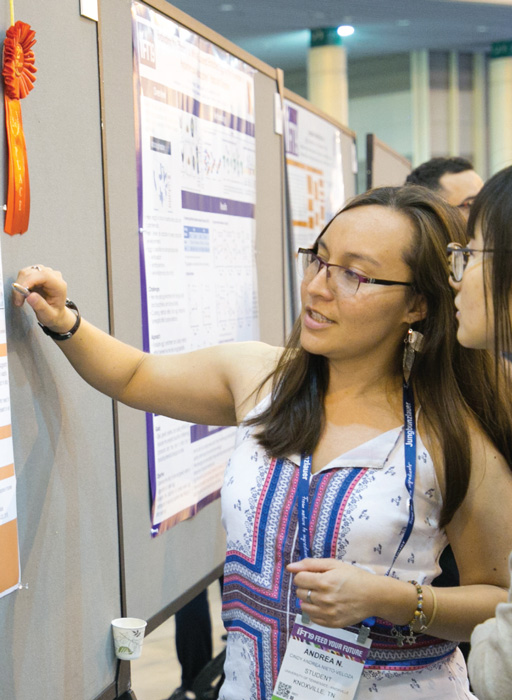
- Poster sessions, more than 500 pre-recorded presentations, representing 24 IFT Divisions, plus posters on display throughout the event at Destination IFT
- Annual Fun Run & Fitness Fundraiser supporting Feeding Tomorrow
- Division and Section socials, plus receptions to honor scholarship recipients and 2022 award winners
For a full slate of events, visit iftevent.org.
Hero Image: ©MicroStockHub/iStock/Getty Images Plus
Authors
-
Food Technology Staff
Categories
-
Food Business Trends
-
Startups and New Ventures
-
Supply Chain Management
-
Professional Development
-
Networking
-
Food Technology Magazine


