

Steve Young on Investing in Health and Nutrition Pioneers
 Dale Buss
Food Technology Magazine
There are equity investors in the food business, and then there are equity investors. Steve Young believes Manna Tree is the latter.
Here’s what that means. Many dozens of companies, from venture capitalists to private equity firms, have sprung up over the past 20 years to help transform the Western food, beverage, and ingredients industry from its long-time emphasis on taste, convenience, and process to a “better-for-you” focus that elevated nutritional functionality, healthfulness, and whole foods over traditional CPG attributes.
“We’re a growth equity investor putting capital and talent behind companies in the food and beverage space that have proof of concept, good unit economics, and demonstrated customer loyalty,” says Young, who is managing partner of Vail, Colo.-based Manna Tree. “We provide capital and expertise to thoughtfully expand and scale those businesses. Unlike a VC (venture capital) firm, it’s when an entrepreneur needs help building and scaling a mission, and our common thesis is the idea of helping companies improve human health through nutrition.”
But Young believes only a few investment firms in the space, starting with Manna Tree, can truly differentiate themselves with expertise gained from helping run their own companies, raising the chances of success of the startups they invest in. Manna Tree also is able to leverage unusually deep connections to the financial community on which entrepreneurs depend for support—and for exits.
That background includes 20 years Young spent as a manager and executive at General Mills, concluding with seven years as an officer of the CPG giant and a role as vice president of emerging brands and natural and organic businesses, a billion-dollar portfolio that includes stellar marques such as Annie’s Homegrown, Cascadian Farm, and Larabar.
At General Mills, “we probably looked at a hundred selling decks for companies trying to get bought or sold,” says Young, who still lives in the Twin Cities where his old employer is headquartered. “We know how to build companies.”
Manna Tree’s cofounder is Ellie Rubenstein, daughter of David Rubenstein, founder of private equity giant Carlyle Group. “She learned the art of PE (private equity) investing from dad when she was flying around the world with him at the age of eight-years-old,” Young says.
All of which means Young’s insights and opinions matter greatly in the world of food equity investing. He shared some of those insights in an interview with Food Technology.
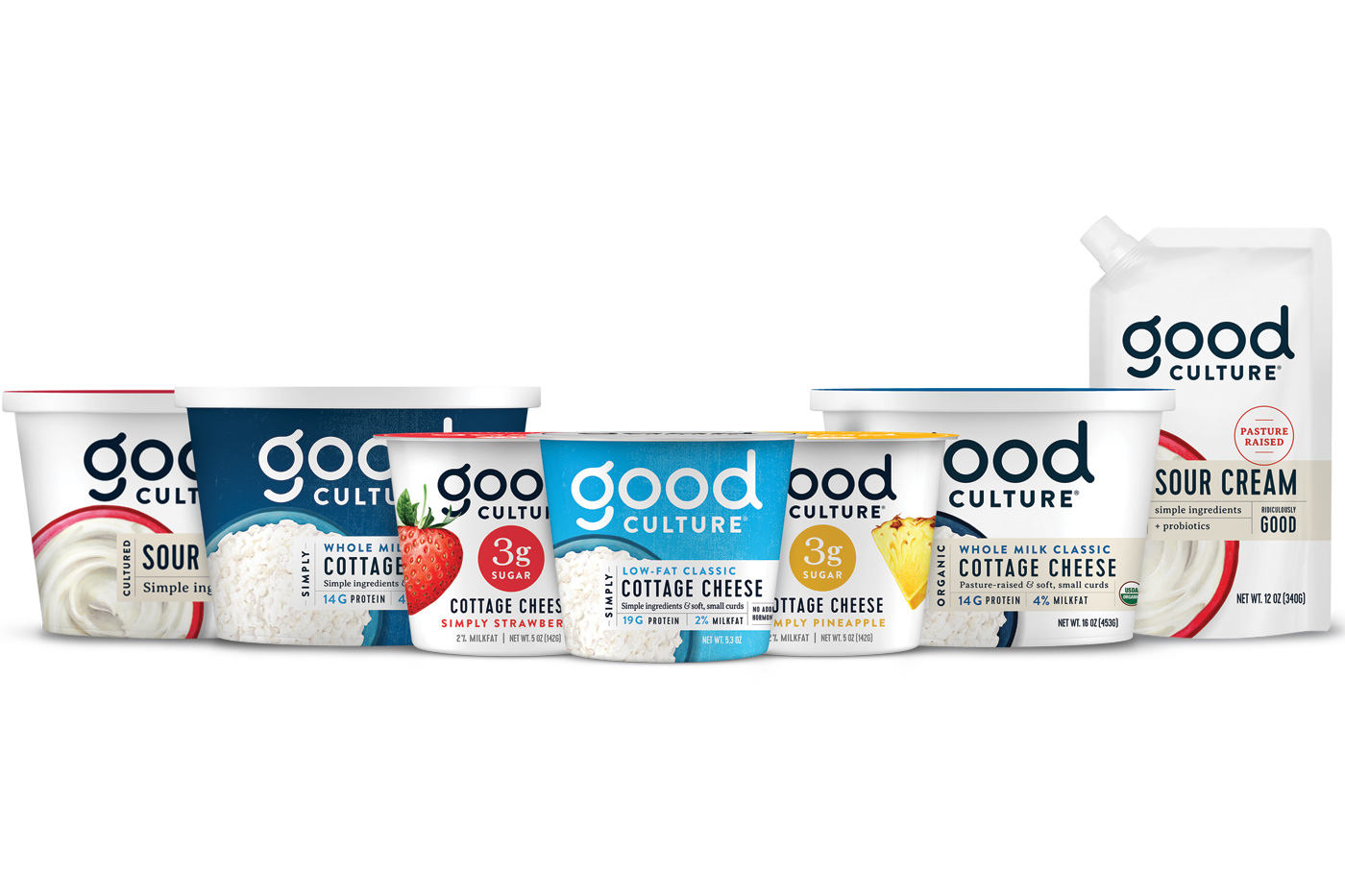
Investing in Good Culture fits with Manna Tree’s focus on promoting human health by investing in companies that offer innovative, nutritious products. Photo courtesy of Good Culture
What is the hottest play for Manna Tree right now?
Our most recent investment was putting capital into the largest North American manufacturer of protein bars and baked goods, called TruFood. We’re investing in an entire ecosystem around that.
What are major industry investment themes these days, in your view? What about alt-meats? Are they coming up short of their promise, sort of like electric vehicles?
There are a lot of things going on there, including the broader macro environment that was present when [the boom in alt-meat investments] took place. When you were in a zero-interest-rate environment and capital was basically free, it was fueled not just by consumer-oriented funds and investors but also by tech investors. Everyone put so much money into that space with such enormous expectations on valuations.
I was always skeptical of these massive bets. I was intrigued with the potential of these things, but just do the math on what needed to happen for Beyond Meat or Meati to truly pencil out. The implied market share [they had to reach] was just enormous.
Part of what happened is when rates reached a more rational environment, reality hit those valuation expectations and had an impact. If you are a company that overbuilt your infrastructure because you thought you were worth ‘X’ billion but then find out you’re only worth ‘.5X’ billion, you’ll see a lot of bloodletting. That’s the financial reality. That’s one thing that happened.
I’m intrigued by mushroom-based stuff like Meati, where the ingredient deck is really clean and it doesn’t look engineered.
But consumer uptake has disappointed this sector, too, right?
There is no doubt a place for plant-based meat alternatives for sure. For instance, I’m intrigued by mushroom-based stuff like Meati, where the ingredient deck is really clean and it doesn’t look engineered [to consumers]. There will be a more measured adoption curve, but I think there is a place for those things.
The issue we had with Beyond [Meat] and Impossible [Foods] is that their burgers were very lab-engineered, with complex ingredient decks. There became a disconnect for the consumer because many consumers who are avoiding meat also are avoiding processed foods. The future is a smaller addressable market that is interested in those types of foods.
We look at plant-based things, but we’re bigger fans of how you do real meat in the cleanest possible way, such as Verity Meats [which raises grass-fed beef] and Good Culture [a startup that makes cottage cheese with high levels of probiotic bacteria because it stays away from high-temperature pasteurization].
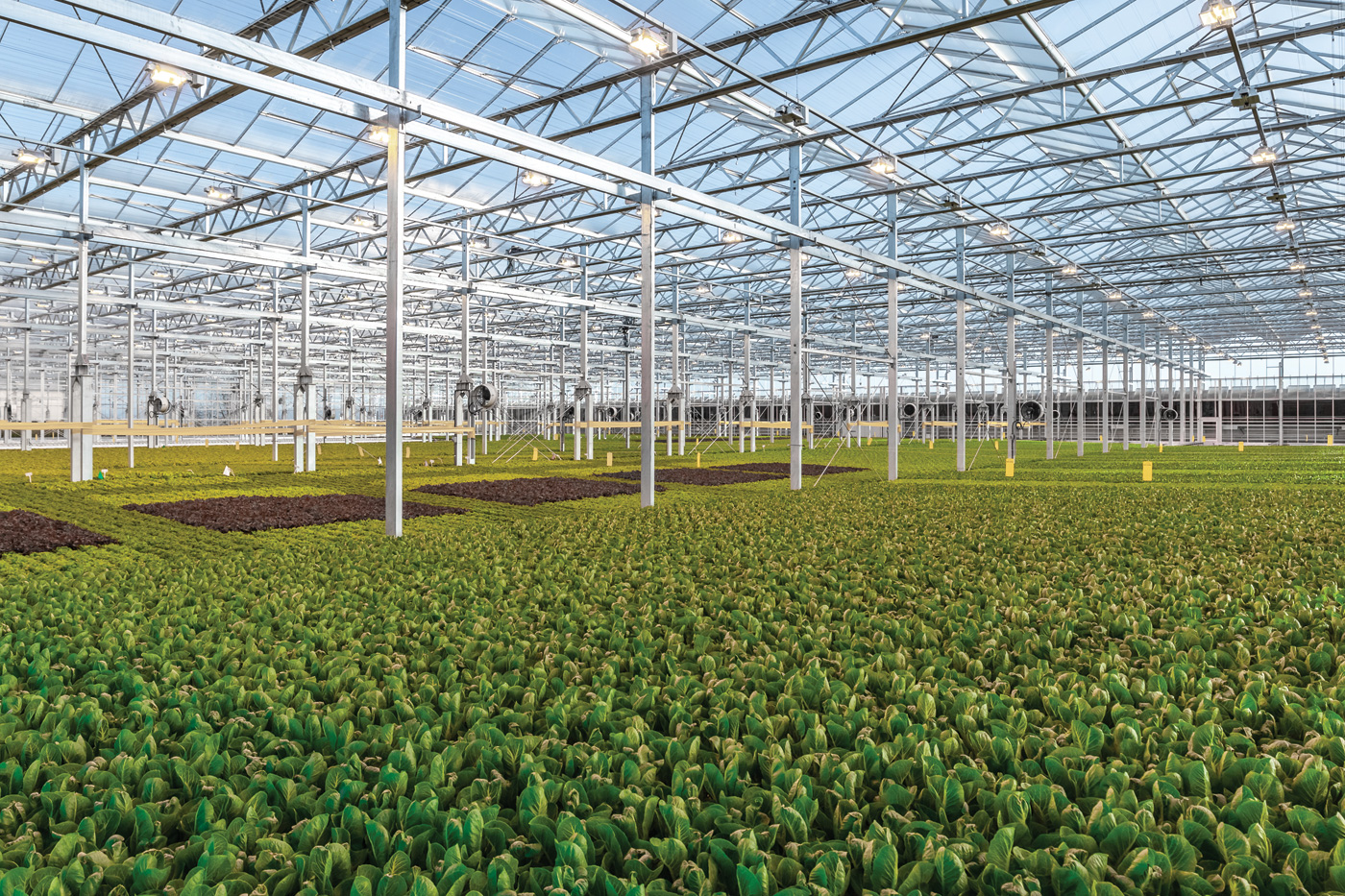
Indoor grower Gotham Greens is among the companies in Manna Tree’s portfolio. Photo courtesy of Gotham Greens
Another startup category that seemed to have so much promise was indoor agriculture, but a number of players have faltered there.
Yes, it’s been a repeat of what happened to plant-based on the capital side. There was a ton of capital flowing in and going to build greenhouses—too many for what the consumer market is. If you weren’t run by a skilled operator and didn’t price and distribute appropriately, it got tough fast because of the debt burden alone for building out those greenhouses. It became a downward spiral if you didn’t have enough cash coming in.
We love the fact that, as we think about the future, there are fewer of these companies that are scaling. We’ve invested in one of them, Gotham Greens, which operates greenhouses around the country now for leafy greens, and they’ve added dips, pestos, sauces, and dressings.
There’s still the reduced environmental impact of vertical farming, not using as much soil or water. In reality, most of our produce in the United States is sourced out of California or New Mexico, and when you think about the miles and days it spends on the road, it’s just not good.
What other major market drivers are you investing in?
We’re big believers in the protein space, and we think reducing added sugar will be strong too. We’re in the second inning of nine-inning games in those areas, where there’s lots of innovation. Gut health and the microbiome is another important area, such as with Olipop and poppi. I like our investment in Health-Ade [which makes kombuchas].
Manna Tree is focused on improving human health through nutrition, so what if that involved deploying capital in different ways to help consumers try to live better, longer lives—so people don’t spend the last 10 years of their life in some sort of health decline? Our belief is 75% of that is foods and beverages; you can’t out-exercise a bad diet.
Could that include investing in weight-loss drugs?
Anyone writing that space off and saying this isn’t going to be anything, and that consumers just regain the weight anyway, or it’s too expensive at $1,000 a month—I’d preach to take it a little more seriously than [most] large food companies seem to be.
Look, the societal cost of obesity-related issues is immense, and the reality is that insurance companies will look at it and [try to help] people’s body weights get to a better spot. What if instead of being injectable, it becomes a pill that the masses could take? It will have a massive impact on our food system.
Protein will become super important. If you’re on a GLP-1 [weight-loss drug], lean muscle mass can really get eroded. So what can we do to make more protein-rich offerings? The craving for processed snacks goes way down. So how do we make healthier snacks? We’re really bullish about that as an investment opportunity.ft
Vital Statistics
Credentials: BS, business administration, University of Montana; MBA, UCLA
Career Highlights: Twenty years at General Mills, including five years abroad, and concluding as vice president of emerging brands and natural and organic businesses. Later served as CEO of Bellisio Foods, a large frozen meal manufacturer. Was on the board of Vital Farms, in which Manna Tree invested. Joined Manna Tree in 2022.
Where He Lives: Investors in cutting-edge startups tend to live on the West Coast, but the Montana native likes helming Colorado-based Manna Tree from his home in Minneapolis. “Like many people who come to Minnesota, you think you’ll be here for a few years and get some experience at a big company like General Mills,” Young says. “But in my case, you blink and 20 years have passed.”
LinkedIn: Meet Steve Young
Hero Image: Photo courtesy of Steve Young
Authors
-
Dale Buss Writer
Dale Buss, contributing editor of Food Technology, is an award-winning journalist and book author whose career has included reporting for The Wall Street Journal, where he was nominated for a Pulitzer Prize (daledbuss@aol.com).
Categories
-
Food Business Trends
-
Food Health Nutrition
-
Startups and New Ventures
-
Innovation
-
Diet and Health
-
Food Technology Magazine


