
Delivering on Benefits

 Mary Ellen Kuhn
Food Technology Magazine
Benefits matter. In fact, securing better benefits is the number two reason for a job change, second only to a salary increase, according to data from management consulting firm McKinsey & Company.
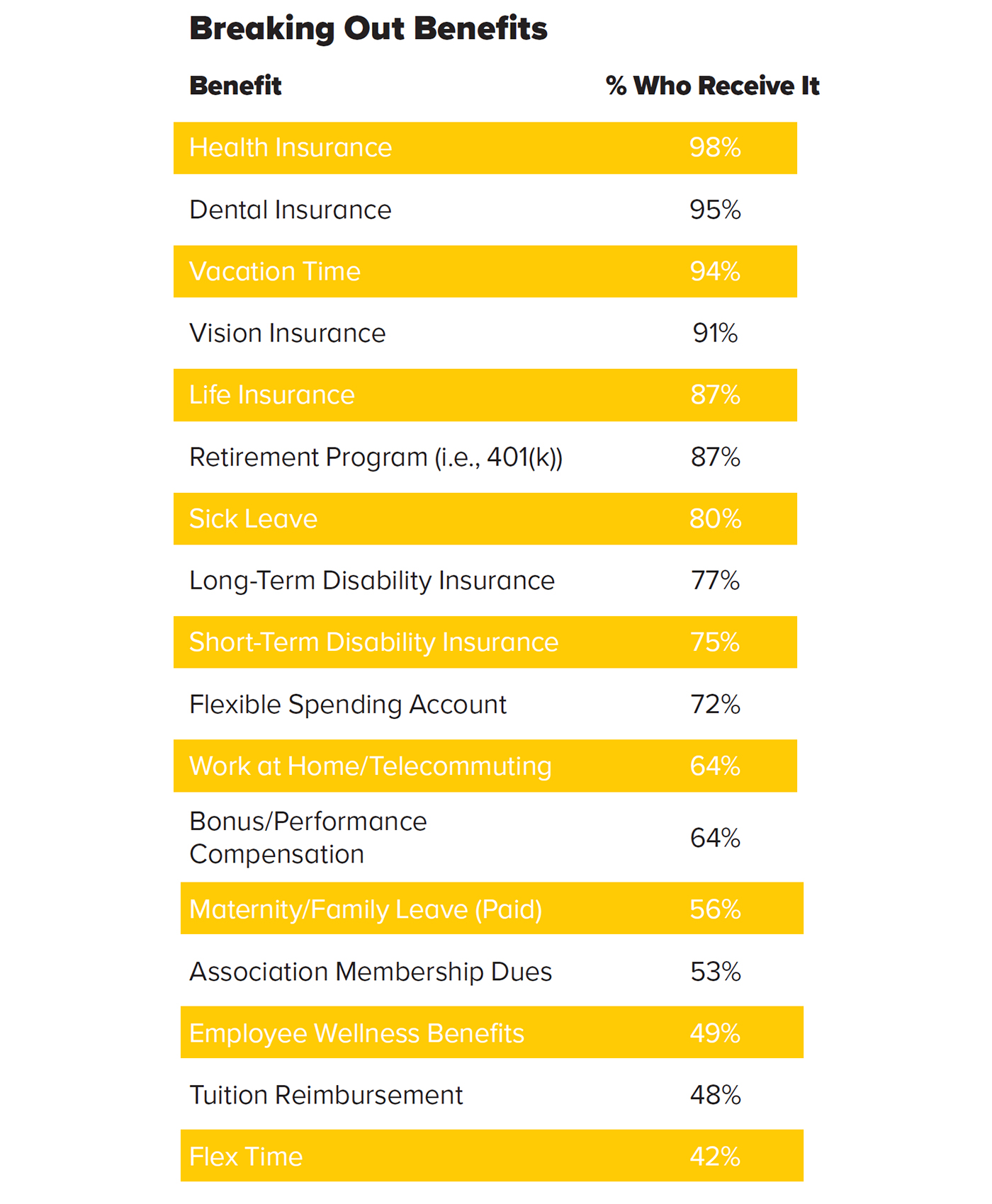
The most available (and arguably the highest priority) benefits—received by more than nine out of 10 employees IFT surveyed—are health insurance, dental insurance, vacation time, and vision insurance. In addition, nearly that many, 87%, reported having a retirement program such as a 401(k).
Younger employees are more interested than their older colleagues in nontraditional benefits, according to a report from professional services company Marsh McLennan. The company reported, for example, that 62% of Gen Z employees characterized mental health benefits as very/extremely important compared with just 38% of baby boomers who prioritized them. IFT’s survey didn’t specifically break out mental health benefits, but about half (49%) of respondents reported having access to employee wellness offerings.
Benefits related to flexibility, mental health, and personalization are trending, according to Alicia Scott-Wears, content manager with WorldatWork, an association for human resources professionals.
“Varying life situations within a diverse workforce are driving efforts for personalized benefits,” Scott-Wears says. “Customizable solutions like lifestyle spending accounts, nutrition coaching, stress management, and life-stage benefits are some examples of ways employers can ensure their benefit offerings address the needs of their employees no matter their generation.”
Time Off Trends
Paid time off (PTO) is increasingly important to job search candidates and “much more of a negotiating piece,” according to Joel Oliver, partner in food industry–focused executive search firm OSI.
IFT’s survey shows a nearly even split between those whose benefits include PTO, which lumps vacation and sick time together, and those who have separate sick time and vacation time. Forty-nine percent work for an employer with a PTO system and 51% have a separate vacation and sick time option.
The employees IFT surveyed have an average of 23.4 days of leave each year and report using 16.5 days of it over the past 12 months on average. Among those who didn’t use all their leave, the most common reasons, each cited by 40% of respondents, were being too busy or being able to carry it over. In addition, 29% attributed it to lacking sufficient backup. (Respondents could choose multiple reasons.)
It’s well known that vacation time yields valuable mental and physical health benefits, but research shows it can also boost productivity. A study by consultancy EY found that each 10 hours of vacation taken translated to an 8% improvement in year-end performance ratings.
An unfortunate 7% of IFT survey respondents said their company culture discourages using all their vacation time.
“I have worked for an employer where the expectation is that I will be available on email and messaging platforms during my PTO,” says one survey respondent working in a director-level position for a midsize organization. “This heavily affects my ability and desire to take meaningful PTO days. What is the point of taking PTO, after all, if I am still expected to be engaged with work activities?
“Companies in the United States need to seriously reevaluate their expectations around worker productivity and PTO,” she continues. “If employers want to understand quiet quitting and employee burnout, then they need to understand what proper PTO looks like and how to ensure their employees have access to it.”ft
Learn More at IFT FIRST
Read more insights from the 2024 IFT Compensation and Career Path Report in July's "Salary Slowdown" cover story.
Also, don't miss the IFT Business FIRST panel "Seizing Career Opportunities in an Evolving Workplace" taking place July 16 at IFT FIRST. Food Technology Executive Editor Mary Ellen Kuhn will talk to a panel of experts, including a recruiter, a human resources executive, and an academic, shares insights on how to prepare for and adapt to an evolving world of work. Topics will range from compensation trends to must-have skill sets.
If you haven't yet registered to attend IFT FIRST—taking place July 14–17, 2024—it's not too late. Register today!
Hero Image: © Relif/iStock/Getty Images Plus
Authors
-
Mary Ellen Kuhn Executive Editor
Mary Ellen Kuhn, executive editor and assistant director of publications, oversees the editorial content of Food Technology magazine.
Categories
-
Food Business Trends
-
Career Development
-
Professional Development
-
Career Resource
-
Issues & Insights
-
Food Technology Magazine


