
Upcycled Foods Break New Ground

-
Key Takeaway 1
After years of development, upcycled foods and beverages are rapidly gaining market share worldwide to help combat food waste.
-
Key Takeaway 2
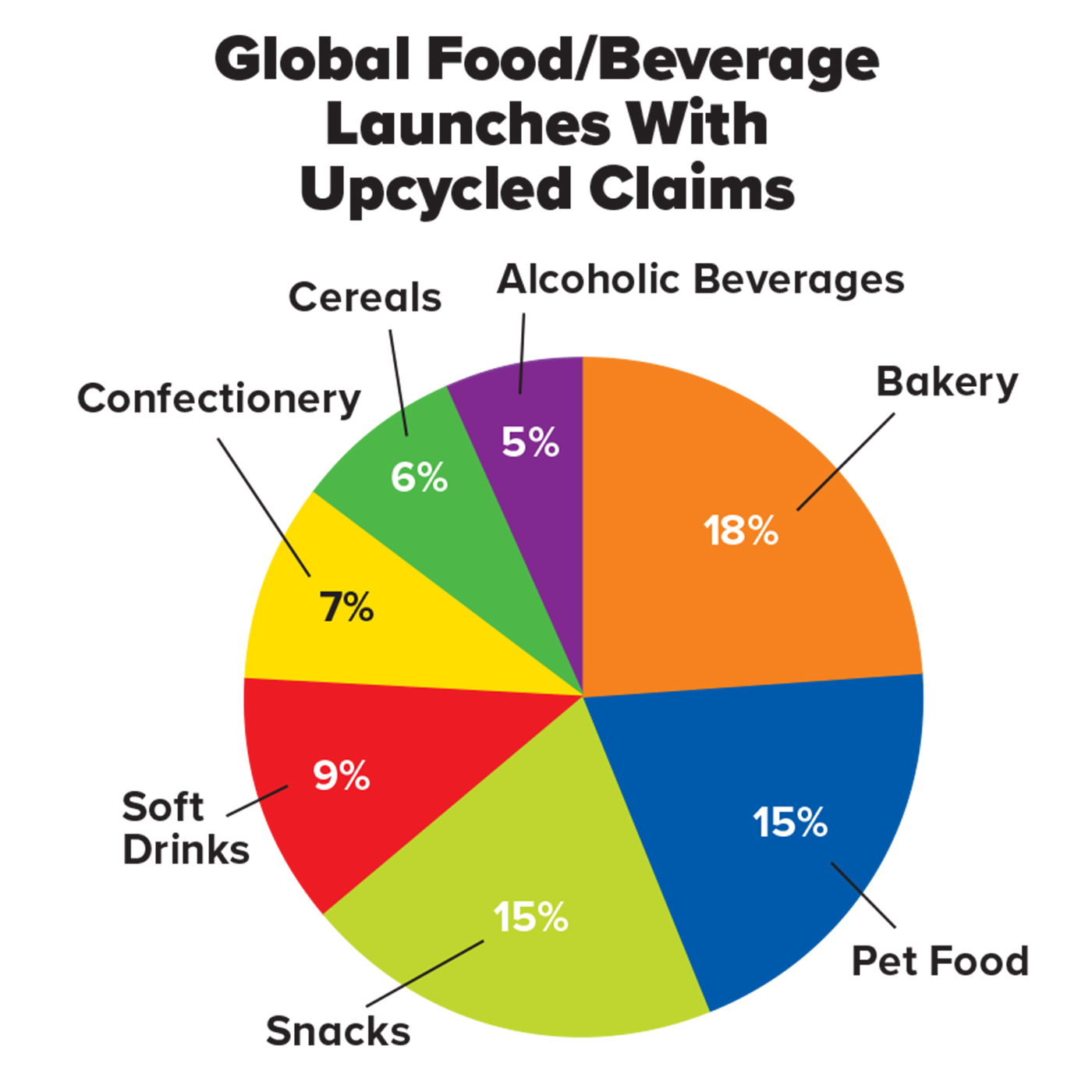
Snacks, bakery products, and pet foods are three of the top segments innovating with upcycled offerings.
-
Key Takeaway 3
Food manufacturers are using a wide variety of upcycled ingredients as they focus on those that meet their pricing and supply chain needs.
Savvy restaurateurs have long put every scrap of food to good use. The global retail food industry, however, is in the beginning stages of commercializing food waste to help reduce the amount of food lost annually—pegged at $1 trillion-plus by the United Nations’ Food Waste Index Report 2024—and to cater to consumers’ growing interest in a circular economy.
Globally, “new food and beverage launches with an upcycling claim are showing high growth, with a compound average annual growth rate of 77% from 2019 to 2023,” says Lu Ann Williams, global insights director at Innova Market Insights. “We’re seeing that bakery and pet food remain the top categories for upcycled innovation, but supplements and soft drinks are also showing growth,” she says. Looking at the U.S. market, “snacks and pet food remain the top categories, but bakery is showing growth,” adds Williams.
Snack foods, pet foods, and beverages were the top three Upcycled Certified product categories in the United States and Canada in 2023, according to Where Food Comes From Inc., which acquired the 3.5-year-old certification program in December 2023 from the Upcycled Food Association (UFA). As of June 2024, 101 companies with 543 products had been certified, compared with about 484 products a few months earlier, according to Kathryn Britton, director of innovation for Where Food Comes From.
Upcycled foods use ingredients that otherwise would not have gone to human consumption, are procured and produced using verifiable supply chains, and have a positive impact on the environment.
The $54 billion global upcycled food products industry is projected to see a 6.2% compound annual growth rate (CAGR) from 2022–2031, according to Allied Market Research, driven in part by consumers’ growing familiarity with the upcycling concept. According to proprietary research from Mattson, a food and beverage insights, strategy, innovation, and development firm, half of all consumers say they are familiar with the food waste prevention movement, and 54% are familiar with the term “upcycling.” The percentage of consumers who aim to buy more food and beverage products that use upcycled ingredients (43%) is increasing, and slightly more than half (51%) say upcycled certification makes them more likely to buy a product. In addition, 62% of consumers are willing to pay more for a product that fights food waste, according to an Innova Market Insights survey.
Upcycled Snacks Soar
U.S. snack products that are Upcycled Certified have skyrocketed with 566.3% growth in units sold from 2021–2023, according to SPINS, based on Circana data for the 52-week periods ending June 18, 2023, June 19, 2022, and June 20, 2021, for natural enhanced channel and conventional multi-outlet. Dollar sales jumped from $1.7 million in 2021 to $11.6 million in 2023 for the same time periods.
“We think that upcycled salty snacks will continue to see strong growth, as the category as a whole has tailwinds and a lot of flavor innovation to draw people in,” says Emily Auerbach, innovation manager at Mattson. “We’re also seeing increased interest in dried fruit and trail mix that feature upcycled ingredients—it’s a great way to showcase ‘ugly’ produce.”
Although smaller companies are fueling much of the upcycled category action, both Dole and Del Monte are making inroads with upcycled fruit snacks. Del Monte Foods’ Gut Love Pineapple in Pineapple Ginger Flavored Juice and Boost Me Mangos & Pineapple in Mango & Dragon Fruit Flavored Juice, which are both Upcycled Certified, are responsible for redirecting approximately 130,000 pounds of pineapple juice each year, according to a company press release. In 2020, Dole became the first global consumer packaged food brand to join UFA, and last year Dole rolled out Good Crunch Banana Bites, a dried fruit product made with a variety of bananas, including “imperfect” ones.
Hershey-backed Blue Stripes offers upcycled trail mixes and granolas made with cacao shells, fruit, and beans, while upcycling pioneer Barnana last year announced the national retail launch of Organic Plantain Scoops—which use rescued plantains and their peels—at select Whole Foods Market stores. Pulp Pantry plays up the upcycling angle with its line of Trashy veggie chips made from vegetable fiber waste.
Pet Food Favorites
Pet food makers have long made discreet use of food byproducts, and now some are finding that it pays to tout their usage. “There seems to be an obvious market for pet food made from upcycled ingredients, which is already a common practice in the industry but has not usually been marketed to pet parents as such,” says Barb Stuckey, chief innovation and marketing officer at Mattson.
“Pet products have important potential market growth … using [ingredients] that can come from upcycled sources,” agrees Amanda Oenbring, CEO of UFA.
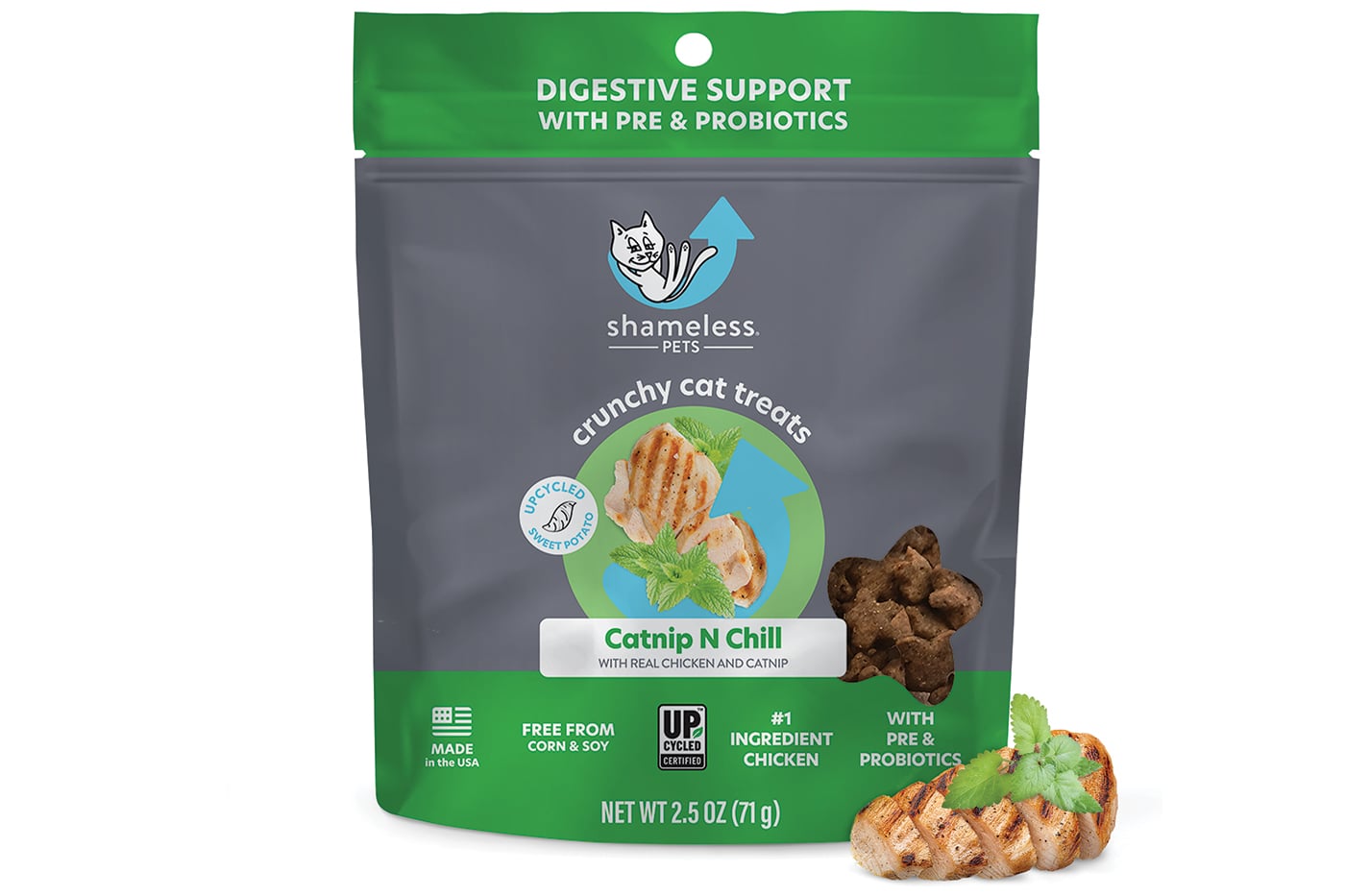
Using upcycled ingredients that can also contribute to health claims is a recipe for success, says Allison Sparks, head of marketing for Shameless Pets, the first pet brand to have all of its products certified by UFA. “Upcycled pet products that also have a health benefit are poised for growth,” she says. “It’s about using the highest-quality ingredients that taste good and are good for pets’ health too.”
Shameless Pets, which recently launched a two-pound bag of its top-selling banana, bacon, and peanut butter dog biscuit at Costco in Texas, says at least 20% of its ingredients are upcycled, including waste from production of liquid eggs, lobster tails and claws, fruit juices, and cheese. At Leashless Lab, dog treat products contain more than 40% brewers’ spent grain (BSG) from barley, while private label manufacturer Phelps Pet Products sources waste ingredients from fruit and vegetable processing as well as upcycled flaxseed, pea protein, and several flours for its jerky products.
Baking in Sustainability
BSG, which traditionally has been repurposed for compost or animal feed, has also played an important role in the current crop of upcycled bakery products. Food companies are tapping into the $1.6 billion global BSG market as a source for sustainable, functional ingredients, reports Grand View Research, and BSG ingredients are projected to grow at a 9.6% CAGR from 2022–2030 as new technologies are developed for upcycling spent grain.
The 9,000-plus U.S. breweries use a pound of grain for each six-pack of beer, generating 20 billion pounds of BSG each year, says Daniel Kurzrock, founder and CEO of Upcycled Foods Inc., which developed ReGrained SuperGrain+ made from BSG.
“In our business, we found the quickest fit in bakery and snacks [for ReGrained SuperGrain+] since we were using barley-based ingredients,” says Kurzrock, whose company recently partnered with Delorio Foods to launch an upcycled foodservice pizza dough ball using ReGrained SuperGrain+. “It was relatively straightforward to incorporate upcycled ingredients into otherwise conventional foods,” Kurzrock says.
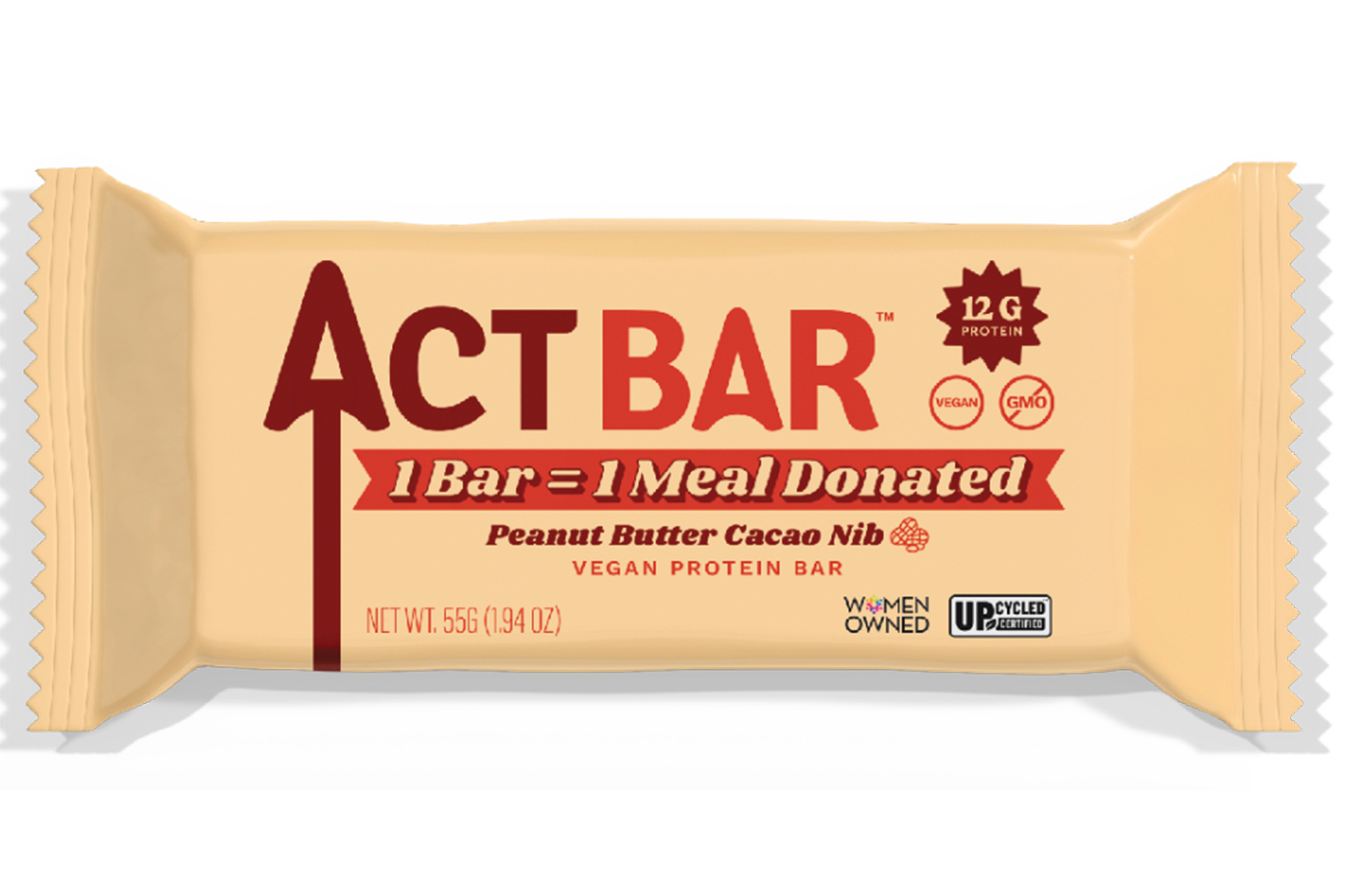
ReGrained SuperGrained+ is also used in a brownie dough product from edible cookie dough maker Doughp as well as a new line of premium snack bars rolled out this summer by mission-driven company Act Bar.
One of the first foodservice products certified by UFA was US Foods’ Hilltop Hearth Pub Grain Hamburger Bun, which uses BSG flours including barley, wheat, and rye. Stone & Skillet last year unveiled its Super Grains English Muffin made with ReGrained SuperGrain+ with 6 grams of fiber and 6 grams of protein per serving.
Upcycled flours made from a variety of sources can serve both as ingredients in finished products and as stand-alone upcycled baking products. Renewal Mill, which works with upcycled green bananas and pulp left over from soy, oat, and almond milk production, corn grit milling, and pineapple juicing, offers upcycled baking mixes for sugar cookies, chocolate chip cookies, and brownies. Bake Me Healthy relaunched last year with four allergy-free, plant-based baking mixes including Dark Chocolate Fudgy Brownie with upcycled coffee cherry flour and Oatmeal Pancake & Waffle with upcycled sunflower protein flour.

Branching Out
Superstar upcycled ingredients have yet to emerge, say industry observers, but a wide variety of upcycled products are finding favor with food manufacturers by meeting price and supply chain needs as the category expands. “Upcycling is a relatively new approach, and establishing newer supply chains is always going to take some time and money,” says Auerbach. “Manufacturers are seeking ingredients with great functionality, a stable supply chain, and competitive price.”
Upcycled whey, for example, is finding new uses in sparkling beverages that can then promote their environmental bona fides, such as Spare Tonic from The Spare Food Co. Superfrau, a sparkling functional beverage that utilizes upcycled whey sourced from yogurt production in five flavors, including Hibiscus Orange and Cucumber Lime, recently was named one of two winners of a startup challenge initiative by Nestlé Health Science and Tufts University.
Plant-based brands are broadening their sustainability appeal with upcycling certification, taking advantage of new upcycled ingredients made possible by technological advances. Last fall, Austria-based Kern Tec received nearly $13 million in funding to continue its work commercializing upcycled stone fruit pits for plant-based applications, including its own Wunderkern line of milk alternatives, spreads, gourmet oils, plant-based cheese, and cocoa drinks. Planetarians, a foodservice vegan meat company, uses spent yeast from commercial fermentation facilities along with native plant proteins left over from vegetable oil extraction, such as soy flakes, to produce whole cuts of protein. Singapore startup Mottainai Food Tech is developing fermentation technology to upcycle okara—a byproduct of soy milk and tofu production—into a meat alternative that it hopes to launch late this year.
The higher cost of some upcycled ingredients can be problematic, however, says Jonathan Deutsch, chef and professor in the Departments of Food and Hospitality Management and Nutrition Sciences and director of Drexel Food Lab at Drexel University, who formerly served on the UFA board of directors. “Even though it seems that it should be more affordable than conventional options, some upcycled ingredients cost more,” says Deutsch, due to the need to stabilize and/or transport the waste product to the site of its usage as an ingredient.
“One of the challenges is in marketing upcycled products to consumers, who often believe they should cost less,” says Stuckey. “As such, we believe that ingredient cost is going to be critical to success in the future.”
But after years of development, the upcycled category appears to be well-positioned for a long run as consumers continue to demand sustainability attributes in food and beverage products. “My concern is the speed of growth [in upcycling] not the growth potential, since I would prefer it to happen as quickly as possible for my company, the industry, and the planet!” says Kurzrock. “It’s an inevitability of the food system.”ft
Hero Image: © WRS Photos/iStock/Getty Images Plus
Authors
-
Elizabeth Brewster Writer
Elizabeth Brewster is a freelance writer based in Evanston, Ill. (lib500@comcast.net).
Categories
-
Food Waste
-
Pet Food
-
Bakery
-
Snacks
-
Market Trends
-
Food Technology Magazine


