
Milking It: Dairy-Derived Ingredients

The stars are aligned for dairy-derived ingredients like milk powders and whey protein to shine. Fired up by greater awareness of dairy’s nutritional advantages and consumer demand for protein and functional ingredients, the $63.5 billion global dairy ingredients market will see a compound annual growth rate (CAGR) topping 6.3% from 2025 to 2034, projects Global Market Insights.
“The potential applications for … dairy derivatives continue to expand,” says Greg Hecksher, senior director, sales, for Taste & Flavors at Dairy Farmers of America, citing a jump in demand for ingredients delivering on claims for hydration, protein, and authentic labels.
The $23.7 billion milk powder segment continued to lead in 2024, according to Global Market Insights, with wide usage in confectionery, baked products, and dairy-centric beverages.
“Nearly half of the innovation launches with whole milk powders tracked globally in the last five years were in the confectionery space, but other categories are showing growth,” says Lu Ann Williams, global insights director at Innova Market Insights. “While soft drinks and sports nutrition still hold a relatively small market share, we are seeing noticeable growth in these areas.”
Hot drinks and spreads made with skim milk powder grew in the past five years, Williams says, while milk protein concentrate shows high growth in sports nutrition, hot drinks, ready meals, and side dishes.
On the whey side, Grand View Research projects a 10.5% CAGR for the $5.3 billion whey protein segment from 2022 to 2030, with whey protein concentrate (WPC) dominating the segment. Global new food and beverage launches containing WPC are relatively stable, showing a small decline of 1% during the past five years, according to Innova Market Insights. Williams suggests this may be due to the rising popularity of other proteins in the sports nutrition sector, which accounts for nearly half of launches with WPC ingredients.
Dairy-Derived Ingredients Glossary
Casein—family of related phosphoproteins in milk
Caseinate—acid or rennet casein treated with alkali to make it soluble in water
Dairy minerals—concentrated calcium phosphate with other minerals found in whey and permeate, made from either whey or permeate; also whey mineral concentrate, milk mineral concentrate, milk calcium
Dairy permeate—high-lactose product made by using physical separation techniques to remove protein and other solids from milk or whey; also milk permeate, whey permeate, dairy product solids
Dry buttermilk (DBM)—liquid buttermilk dried to contain at least 30% protein
Dry buttermilk product (DBMP)—liquid buttermilk dried to contain less than 30% protein
Dry whole milk (DWM)—whole milk dried to contain not less than 26% but not more than 40% milk fat and not more than 5% moisture by weight
Glycomacropeptide (GMP)—glycosylated peptide formed during renneting as a fragment of sweet whey
Hydrolyzed whey protein (HWP)—whey protein treated with acid conditions and high heat to isolate the protein, creating small peptides
Immunoglobulins (IgG)—group of proteins that protect against bacteria and viruses
Lactoferrin—iron-binding protein that can inhibit the growth of certain bacteria
Lactose—white crystalline product with a sweet taste, made from whey or permeate
Lactose hydrolyzed whey—whey with a portion of its lactose broken down to glucose and galactose
Milk fat globule membrane (MFGM)—thin film made up primarily of lipids and proteins surrounding milk fat globules
Milk protein concentrate (MPC)—encapsulated, high calcium concentration milk extract with 40% or more protein by weight
Milk protein isolate (MPI)—milk processed to reduce fat and lactose content, with a minimum 89.5% protein content
Protein hydrolyzed whey—whey with part of the whey protein cut up into smaller fragments
Skim milk powder (SMP)—skim milk dried to contain no more than 5% milk fat and no more than 5% moisture by weight; also nonfat dry milk
Whey protein—protein in milk that stays in water phase after casein precipitates
Whey protein concentrate (WPC)—whey with a portion of water removed and other constituents in same relative proportions
Whey protein isolate (WPI)—whey processed to at least 90% protein on a dry matter basis
Whey protein phospholipid concentrate (WPPC)—co-product from whey microfiltration with 50% to 69% protein, 12% to 38% fat, and 6% to 12% lactose.
Sources: American Dairy Products Institute, Britannica.com, Wikipedia

© YanaVasileva/iStock/Getty Images Plus
Ingredients of Immunity
- Research continues to suggest that some dairy-derived ingredients can play a role in boosting immunity, a desirable function in foods and beverages for one in four consumers worldwide, according to Innova Market Insights.
- “One of the side benefits of some of the dairy proteins, such as glycomacropeptide, lactoferrin, whey protein phospholipid concentrate, and dairy-derived ingredients such as galacto-oligosaccharides, are the benefits to the gut microbiome,” says Kimberlee J. Burrington, vice president of technical development at American Dairy Products Institute.
- Lactoferrin is the most widely used of these ingredients, reports Glanbia Nutritionals, primarily in sports nutrition and infant nutrition, such as Mead Johnson’s recently launched Enfamil Enspire Optimum infant formula with lactoferrin.
© MurzikNata/iStock/Getty Images Plus
Powered by Protein
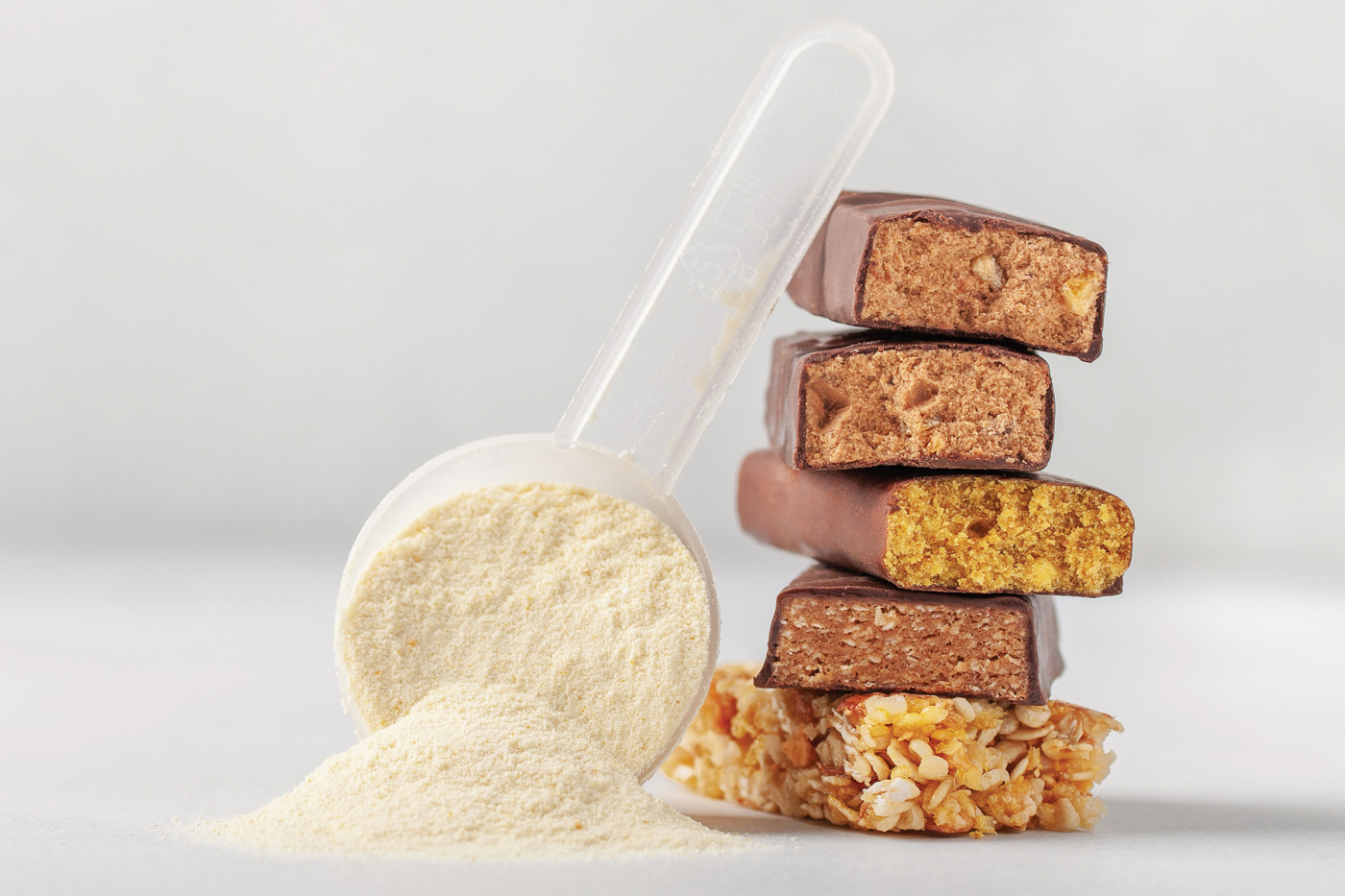
- “The dominance of dairy protein [ingredients] is set to stay for the rest of the decade…particularly in the protein bar category,” says Morten Kaas Hansen, director, functional nutrition at Arla Foods Ingredients.
- Among consumers interested in protein, 36% cite a complete protein source as the most significant factor when choosing between products, according to HealthFocus International.
- More than one-third of consumers taking GLP-1 anti-obesity drugs—7% of the population by 2035, projects Morgan Stanley—say they drink more protein beverages and are seeking higher-protein products to combat loss of lean muscle mass, reports product innovation firm Mattson.ft
To Learn More
To view the full article with infographics , please download the pdf or view in the May 2025 Food Technology Digital Edition.
Learn More at IFT FIRST
Looking to get the most out of dairy innovation? These IFT FIRST sessions—happening at Chicago's McCormick Place—spotlight sustainability, hybrid products, and dairy matrix science:
- Chemometric AI: Revolutionizing Sustainable Dairy Processing Efficiency — Mon., July 14 | 11:45–12:05 p.m. CT
- Clean Packaging Dairy With Dairy — Mon., July 14 | 12:15–12:35 p.m. CT
- Understanding Structure-Function in Dairy Matrices — Tues., July 15 | 11:45–12:05 p.m. CT
- Hybrid Dairy-Plant Products: The Best of Both Worlds — Tues., July 15 | 4:00–4:20 p.m. CT
Register today to connect with experts pushing dairy science forward—and explore exhibiting companies bringing next-gen dairy solutions to market.
Hero Image: © Clara Bastian/iStock/Getty Images Plus
Authors
-
Elizabeth Brewster Writer
Elizabeth Brewster is a freelance writer based in Evanston, Ill. (lib500@comcast.net).
Categories
-
Food Business Trends
-
Consumer and Marketplace Trends
-
Food Categories
-
Culinary and Ingredient Trends
-
Food Product Development
-
Food Ingredients and Additives
-
Dairy
-
Applied Science
-
Food Technology Magazine


