
Nourishing Food System Transformation

 Mary Ellen Kuhn
Food Technology Magazine
Alyson Greenhalgh-Ball’s life’s work has been about making connections. Between human health and planetary health. Between climate and nature. Between individuals and organizations striving to build a food ecosystem that’s both healthful and sustainable.
After a spending nearly two decades at Kellogg Company in senior-level health, nutrition, and scientific affairs roles, Greenhalgh-Ball founded a United Kingdom–based advisory company called Conscious Impact where she works to advance food system change focused on both people and planet. Her volunteer activities include serving on the IFT Food & Nutrition Security Steering Committee, which provides thought leadership on the role that food science and technology can play in elevating solutions to global food security challenges.
A lifelong learner who earlier in her career worked as a nutritional epidemiologist, she’s also currently pursuing a doctoral degree in systems leadership at the University of Birmingham.
She spoke with Food Technology about her passion for advancing food system change—change that takes nature, climate, and people into consideration.
“If you don't include one of the three, then we are not going to both meet our global Sustainable Development Goals, which are rapidly approaching in 2030, but also businesses are not going to get ahead and be competitive,” Greenhalgh-Ball reflects.
I just want to make sure that with anything that I spend my time doing now, I'm making a real kind of conscious impact.
Tell us about your company, Conscious Impact, including how you decided on its name.
I just want to make sure that with anything that I spend my time doing now, I'm making a real kind of conscious impact to make sure it's choiceful and I partner with the right organizations and do what I can to help drive system transformation. So it is really as simple as that. It is just an umbrella for all the activity that I do—whether it's sitting on an advisory board versus the work I do for the World Business Council for Sustainable Development, whether it’s the work that I do for the British Nutrition Foundation, whether it’s the work that I do for an organization in India—that it’s an umbrella to make sure that we're all having a conscious impact.
IFT’s Food & Nutrition Security Steering Committee, of which you are a member, has a white paper that will be released in the coming months. What will it address?
So the round table [which provided the starting point for the white paper] brought together perspectives from different sectors and different organizations on the broader topic of climate— whether it be packaging, whether it be climate resilience, or understanding some of the ingredients that we choose, for example—what’s their carbon footprint, what's the water footprint? Some of the choices that we make that might seem very, very simple, but actually have real ramifications for our planet moving forward. So the key messages are making sure that we are all vigilant and understanding [the impact of choices]. We all have a unique role to play in ensuring that the food that we have is really thoughtful and is curated with both the health of people but also the health of the planet in mind.
What’s the key to effecting change in this area?
It’s a very complex system of small solutions, actually. So there’s not one kind of silver bullet here. There are many, many, many solutions that we can bring within this kind of system of innovation that can really help us making sure that we are nourishing the world with delicious and appealing foods that are desirable for people to consume, but are also, as I say, thoughtful for respecting our planetary boundaries and our precious resources.
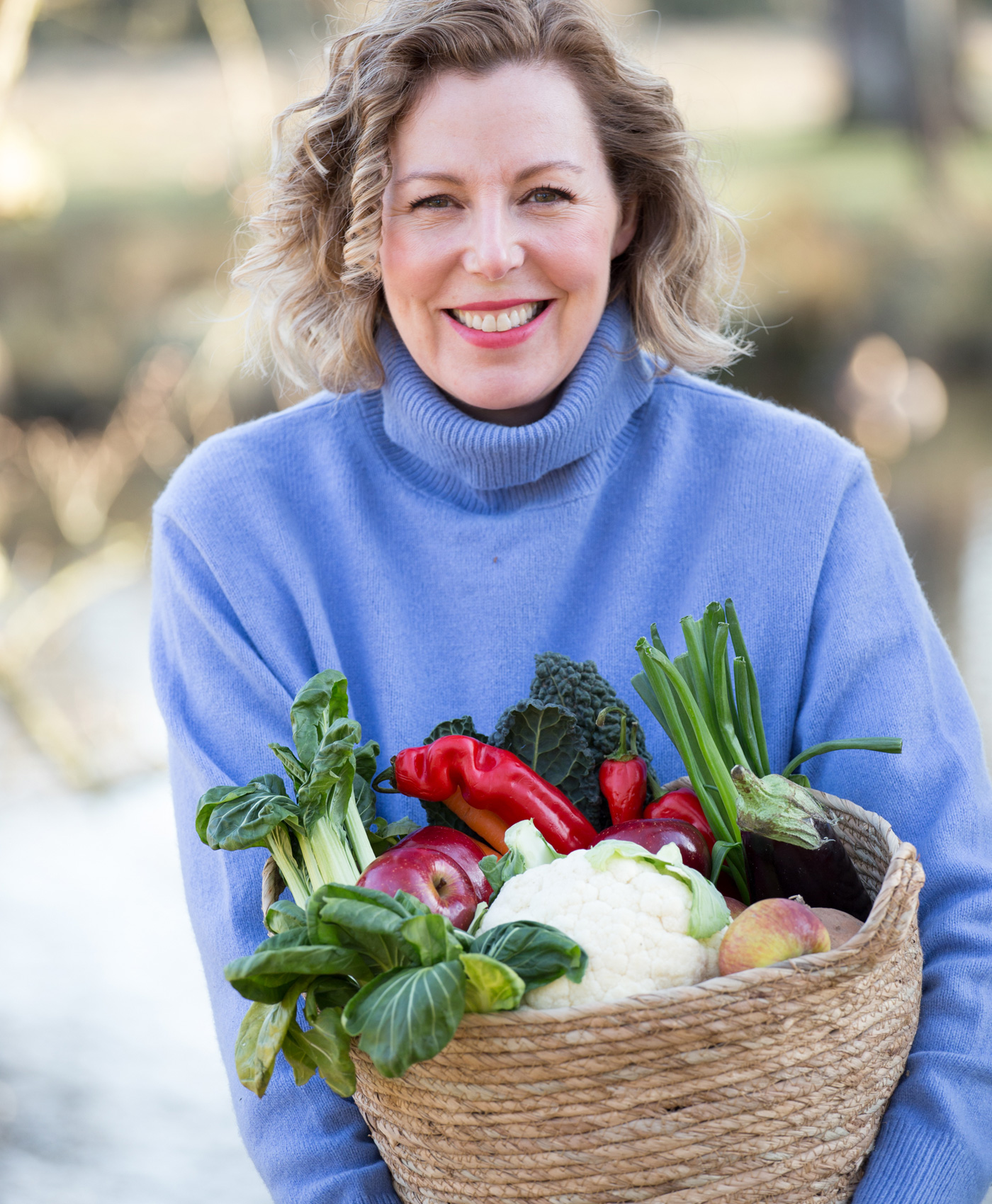
Photo by Katie Lucas Photography, courtesy of Alyson Greenhalgh-Ball
How well do you think the global food industry is doing in terms of advancing both human nutrition and sustainability?
We have some front-runners within the food industry who, I think, are doing this really, really well, and they're leading on providing great, nutritious foods that are accessible and affordable and really innovating and renovating and making those foods desirable. They’re in the right location at the right price point, and we've got to really celebrate that. So they're thinking about not only are those foods so delicious and nourishing, but we're going to do this in a climate- and nature-positive kind of way. And so we're investing heavily in regenerative agriculture, for example. And so those are the front-runners and doing so well and leading the pack.
However, we have many organizations that are not moving quickly enough, are not making the changes that we potentially need. We look at some of the statistics on food security and our health inequalities around the world, and it’s absolutely shocking and there’s a lot more work to be done, and we all have a role to play there in that systemic change.
So I would say we’ve got front-runners who are really leading by example, we’ve got many who are doing a great job, and we’ve got others who are behind and need to kind of catch up and think beyond just their own interests to think about how their foods fit into the state of consumers’ health and understand their relative interplay with the planet as well.
We look at some of the statistics on food security and our health inequalities around the world, and it’s absolutely shocking and there’s a lot more work to be done.
How much is the consumer driving food system change?
I think it depends on the category, the product. I think consumers are always going to think about price and taste first. We know that. And then I believe health comes through and then planetary [concerns] and sustainability.
And we always assume that people make decisions in a rational way. Well, they use emotions to make those decisions. And so where you can lead with maybe taste, but then you've also got those planetary and health benefits coming through, then the likelihood for success is probably greater.
I worked on claims for many, many, many years, so claims can be a useful validation of some of their choices and something that they perhaps rationalize and something that might bring them to the category in the first place.
We all have a unique role to play in ensuring that the food that we have is really thoughtful and is curated with both the health of people but also the health of the planet in mind.
You are a part of the World Business Council for Sustainable Development. How is that organization working to create a more sustainable food system?
The World Business Council for Sustainable Development works with many of the world’s leading organizations. I think it works with 25% of the world's GDP (gross domestic product), for example. So it’s quite an important networking [organization] to ensure that we are moving the business community to a world where we are going to net zero and a nature positive [environment] with people at the heart of that.
You spend about half your time working with the World Business Council for Sustainable Development. It sounds like a labor of love for you.
It is incredible. I am very lucky to work across the food system. I work with small startups, I work in academia, and I work with the C-suite and CEOs of many big organizations. And for me, that is so important to understand all the different perspectives that come to the party, so to speak, in order to drive change.
So I really enjoy making sure that I've got that right mix, and my experience to date kind of lends itself to that. So I'm very comfortable talking to a CEO. I'm very comfortable talking to an academic or someone in a small startup. So if we can understand their struggles or where they found a brilliant solution, the more we can cross-pollinate across the system in order to drive change. So that's really what drives me.ft
Vital Statistics
Words to Live By: Seek to understand and inspire action (both yourself and others).
What Worries You Most Right Now: World politics
Best Advice Ever Received: Be authentic, be curious, trust your judgement.
Proudest Accomplishments: My children; an incredible ecosystem of friends/colleagues; connecting the dots on human health and planetary health over 20 years ago before food systems was a "thing"; and, of late, putting systems leadership into that mix
LinkedIn: Alyson Greenhalgh-Ball
Hero Image: Photo by Katie Lucas Photography, courtesy of Alyson Greenhalgh-Ball
Authors
-
Mary Ellen Kuhn Executive Editor
Mary Ellen Kuhn, executive editor and assistant director of publications, oversees the editorial content of Food Technology magazine.
Categories
-
Food Health Nutrition
-
Sustainability
-
Career Development
-
Food Policy
-
Diet and Health
-
Leadership
-
Issues & Insights
-
Food Technology Magazine


