
Coffee Companies Brew Up New Options

-
Generational Shifts
Younger consumers relate to coffee in ways that are completely different from their parents, creating opportunities for emerging coffee category subsegments.
-
Functional Innovation
Demand for functional, nutritional, experiential, and uniquely flavored coffee products is driving a significant part of the coffee industry.
-
Sustainable Alternatives
Sustainably produced coffee alternatives appeal to environmentally aware consumers.
Coffee, one of the world’s most highly traded commodities, is America’s favorite beverage, valued for its ability to deliver energy, comfort, and indulgence. According to the National Coffee Association, 63% of Americans drink coffee daily, which is more than any other beverage, including water.
Younger generations are relating to coffee in ways that are completely different from their parents. Based on statistics published by Coffee Business Intelligence, baby boomers prefer traditional, brew-at-home coffees, while Gen Xers embrace espresso-based drinks, millennials favor specialty brews, and Gen Zers focus on coffees that are new, convenient, and flavored. As preferences diversify, a surge of innovative coffee products is redefining the daily brew with sustainable solutions and novel experiences.
According to the Keurig Dr Pepper State of Beverages 2025 Trend Report, younger consumers are changing their hot coffee rituals and leaning into cold coffee varieties. Many coffee brands, including Monster, STōK, Javvy, and VitaCup, are introducing coffee products that promote physical well-being, deliver essential nutrients (including added protein), offer low-calorie and reduced-sugar options, and promise added energy.
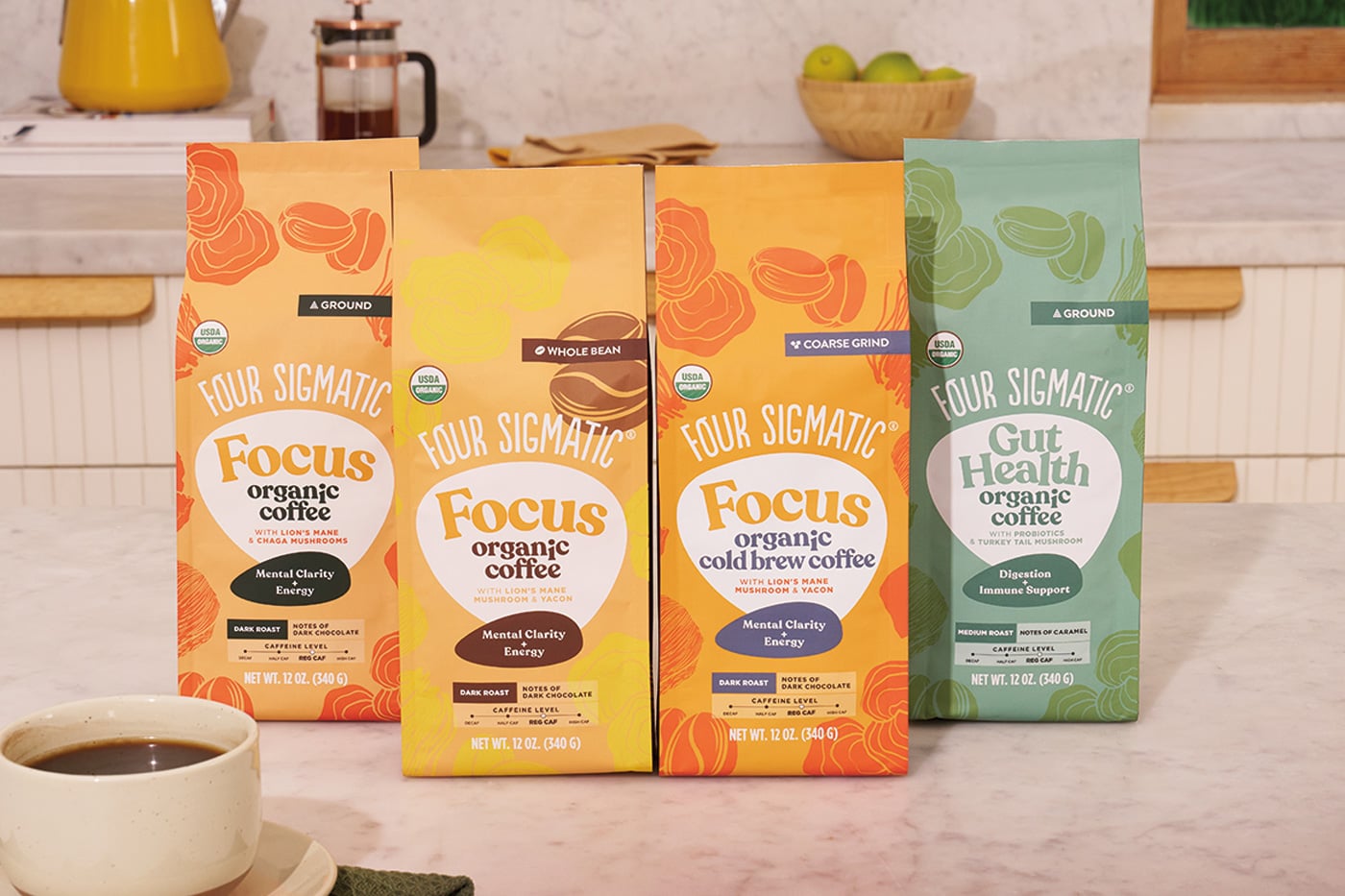
Four Sigmatic calls out its mushroom ingredients on the package. Photo courtesy of Four Sigmatic
Mushrooms With Benefits
Mushroom ingredients, as well as herbs, roots, and other plant substances, have been linked by alternative coffee makers to benefits like eliminating jitters, improving gut health, and boosting cognition and focus. Brands such as vybey, Rasa, and Atomo, formulated with ingredients such as mushroom extracts, herbal blends, dates, green tea, and carob, make little to no effort to mimic coffee. Others, including RYZE, Lucid, Atlas+, and Four Sigmatic, rely on a blend of both coffee and mushrooms (i.e. lion’s mane, Chaga, reishi, Cordyceps, turkey tail, and shitake) to deliver healthful benefits and authentic coffee flavor.
“The functional mushrooms, when harvested, prepared, and extracted properly, have an earthy, bitter taste that synergizes beautifully with the rich, bitter notes of arabica coffee,” says Danielle Ryan Dawson, senior innovation manager at Four Sigmatic. “There is no mushroom taste whatsoever. They do not have the flavor or appearance that many consumers expect.”
The global coffee substitute market was valued at $14.2 billion in 2023, with a projected jump to $21.4 billion by 2032, according to research from Global Market Insights.
Seasonal flavors and limited-time offerings help companies add excitement, demonstrate innovation, and strengthen brand loyalty. A few recent examples include Nespresso’s Sunny Almond Vanilla (one of its summer limited-edition flavors) and Starbucks’ Iced Horchata Oatmilk Shaken Espresso.
La Colombe’s Draft Latte line includes S’mores, Strawberry Mocha, Pumpkin Spice, and Peppermint Mocha varieties. Seasonal Draft Latte drinks help attract new consumers to the La Colombe brand, according to Niel Sandfort, chief innovation officer at Chobani, which acquired La Colombe in 2023. “Limited-edition flavors tend to be most popular in fall and winter when flavor profiles are more defined,” Sandfort says.
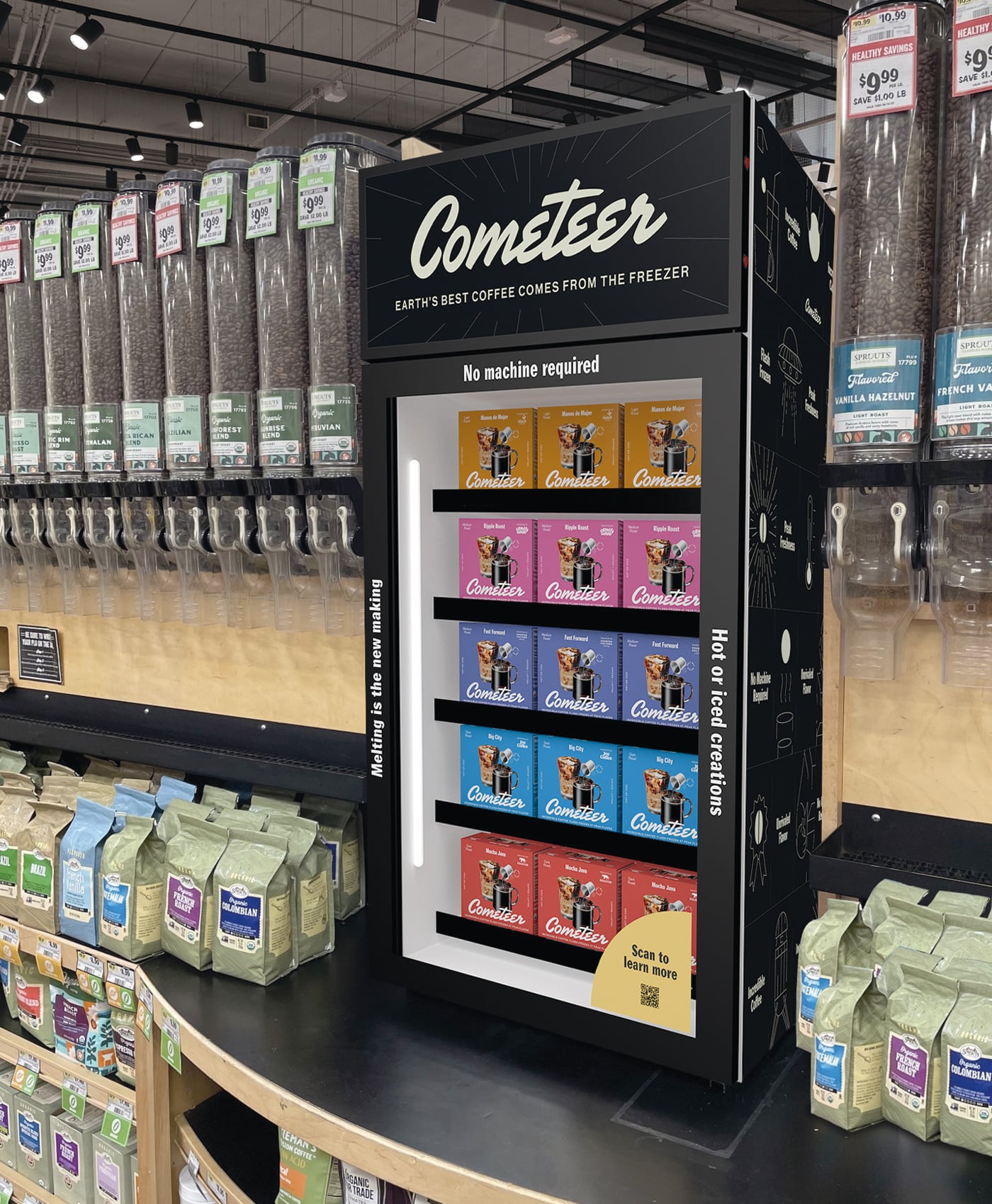
The need to incorporate freezer space into the coffee aisle has presented challenges to Cometeer, which makes a flash-frozen coffee product. Photo courtesy of Cometeer
Keeping It Convenient
For coffee lovers looking to brew up a cup of joe at home, convenient options abound. Nespresso coffee pods, introduced in 1986, followed by Keurig K-Cups in 1998, added a new dimension of convenience to coffee brewing, which continues to appeal to many. The global coffee pod market was valued at $35.3 billion in 2024 and is expected to reach $71.2 billion by 2034, according to Global Market Insights.
There’s also a substantial market niche for instant coffee. The global market size for instant coffee prepared at home was $34.9 billion in 2025, Mordor Intelligence reports.
At Laird Superfood, which offers an instant powder-to-latte mix made with a proprietary blend of plant proteins, naturally occurring medium-chain triglycerides from coconut, and mushroom extracts, the line of instant coffees has been growing rapidly, primarily thanks to Laird’s instant latte offerings, reports CEO Jason Vieth. “We believe there is an enormous future for these products and will continue to launch additional flavors and other variants,” says Vieth.
Liquid coffee concentrates provide another easy-to-prepare option for busy consumers. Nescafé, Jot, Explorer Cold Brew, Javvy, and Pop & Bottle are among the companies gaining market share with liquid coffee concentrates.
A completely different convenience option is available from Cometeer, which debuted its frozen single-serve product about a decade ago. The brand has faced significant sales and marketing challenges despite the fact that its flash-freezing technology “allows flavor and aroma compounds to be extracted with unprecedented precision,” says Matt Roberts, cofounder and executive chairman. “Being a category creator is tough.”
As with other innovative coffee offerings, education is the first step toward brand understanding and acceptance, Roberts reflects, adding that the need for freezer space in a category that’s typically shelf stable makes carving out a niche difficult. Cometeer has placed tasting stations in malls to help introduce consumers to the concept. The brand has a strong sustainability story: its packaging is recyclable and coffee grounds are composted at the factory.
A growing number of innovative products that address environmental concerns are turning up in the marketplace.
Sustainability Solutions
It’s long been reported that the amount of land well-suited to coffee production has been shrinking due to rising global temperatures, changing weather patterns, expanded cultivation, and tropical deforestation. With environmental concerns raised by consumers across all age groups, especially among millennials and Gen Z, pressure for transparency and sustainably conceived products is building, with an emphasis on eco-friendly farming and manufacturing practices.
The good news is that a growing number of innovative products that address environmental concerns are turning up in the marketplace. One novel idea is the development of non-bean alternatives that deliver a taste experience similar to traditional coffee.
Singapore-based Prefer makes ground coffee from upcycled foods, including day-old bread, soy bean pulp, and spent barley grains. The ingredients are fermented, roasted, and ground to mimic the appearance, flavor, and performance of coffee and can be used in traditional coffee-making appliances. Similarly, Northern Wonder in the Netherlands makes a coffee substitute from ingredients such as lupin, malted barley, and chicory, and Compound Foods uses date seeds, chicory, sunflower seeds, carob, and grape seeds.
“The ‘beanless’ coffee space is still in its early stages, but we are seeing momentum,” says Maricel Saenz, founder and CEO of Compound Foods. “This is especially true as supply chain volatility and price spikes continue to affect traditional coffee.” Atomo Coffee blends regular coffee with upcycled and farm-grown ingredients, including date seeds, carob, psyllium husks, and more, creating a planet-friendly product with what the company describes as a “balanced caffeine boost.”
Innovations like the preceding are still in early stages of development, and it’s difficult to predict their impact on the coffee category, but it seems likely that products that address wellness, sustainability, and coffee supply chain issues will find a market niche.ft
Hero Image: © Nathan Dumlao/unsplash
Authors
-
Jeffrey Spear Food Writer
Is a freelance food writer and cookbook author (jeff@spearwrites.com).
Categories
-
Food Business Trends
-
Consumer and Marketplace Trends
-
Food Categories
-
Culinary and Ingredient Trends
-
Food Product Development
-
New Product Development
-
Market Trends
-
Beverages
-
Food Technology Magazine


