
Cracking the Code on Research Funding

 Kayt Sukel
Food Technology Magazine
When asked about the current state of funding for food science research, scientists and advocates in the United States respond with similar adjectives. Challenging. Inadequate. Limited. Poor. Insufficient. Stagnant. Bleak.
Perhaps it is not surprising. As noted in the Institute of Food Technologists’ 2020 white paper, Food Research Call to Action on Funding and Priorities, both public and private sources were shockingly low in comparison to agriculture and food’s overall contribution to the U.S. gross domestic product—coming in at only 4.2% for agrifood, or the overall production of food and nonfood agricultural products, including storage, aggregation, processing, distribution, and consumption, and only 1% for food-specific research and development (R&D).
With the global food system facing unprecedented security and sustainability challenges, IFT used the report’s publication to issue a firm call to action, asking policymakers to “recognize and address the significant risk associated with chronically underfunded research in food.” In the years since, the U.S. Department of Agriculture (USDA), the primary public funding source for most food science researchers, has increased funding by about 25% of what was an already minute pool of monies.
This, says Steve Havlik, a retired food industry executive and IFT consultant, is a situation in dire need of remedy. And it would seem the food science community agrees. In a recent IFT survey, nearly half (46%) of food science academics rated funding as “low or very low.” Thirty-four percent of industry respondents said the same.
“Agrifood is the number three contributor to the U.S. economy, and when you go back 30 years, there was much greater investment in this area,” Havlik says. “Today, especially when compared to other countries, the funding is way below other areas that have less economic impact. It’s just not enough.”
The lack of adequate funding is even more apparent when you move away from agriculture or nutrition-specific research endeavors, says Anna Rosales, senior director of government affairs and nutrition at IFT.
“The bulk of the funding available goes to agriculture. On the other side of the spectrum, there is also a lot of research around nutrition and public health as we try to understand the many public health challenges we face and find the solutions to address them,” she says. “What’s missing is the middle piece of food science—how we transform agricultural products into the foods that impact public health. And this is a critical piece of the puzzle to finding ways to provide the food we all need for survival.”
This raises crucial questions about who will be fueling the next generation of food science research and how both fledgling and established researchers should go about getting their projects funded.
Public Funding
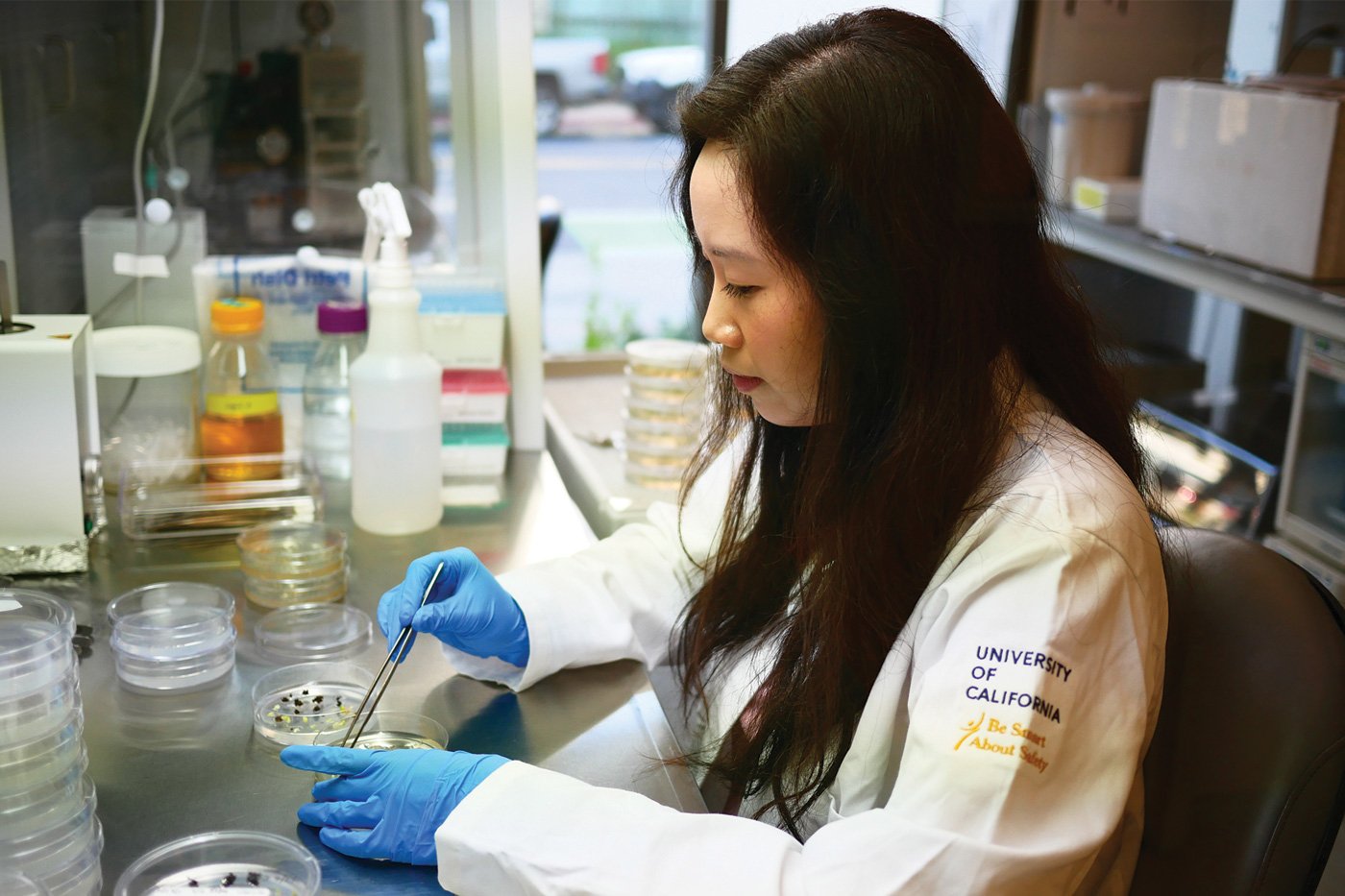
As noted earlier, the bulk of public food science funding in the United States comes through the USDA. Matthew Moore, an associate professor in the Department of Food Science at the University of Massachusetts Amherst who recently won an IFT Outstanding Young Scientist Award, says funding is “extremely competitive.” He is optimistic, however, about grant opportunities with the USDA’s National Institute of Food and Agriculture.
“I think that USDA has some really great funding programs,” he says. “And, as people continue to realize how important the food system is, and how much more research we really need to support it, I am relatively optimistic that funding will increase.”
But with the USDA spending less than 2% of its total budget on R&D–related activities, many scientists are looking at other federal agencies for financial support. Rosales says that there are some new funding mechanisms for food science, including within agencies like the National Institutes of Health (NIH), the Advanced Research Projects Agency for Health, and the National Science Foundation’s Convergence Accelerator. But, she says, projects have to fit within the specific programs that each support, and those research priorities can change from year to year. Right now, some of the most pressing research priorities include public health, food safety and quality, and food system sustainability.
“We do see some new mechanisms to fund research through government entities that were not there five or six years ago,” she says. “But it’s still not enough. NIH, for example, recently opened the Office of Nutrition Research. But, today, my understanding is that they really don’t have any funding. Hopefully, that will change.”
Brad Ringeisen, executive director of the Innovative Genomics Institute (IGI), says he and his colleagues have made the case for more funding at the USDA, appealing directly to Secretary Tom Vilsack, to help advance projects supporting next-generation crops and food systems. But there simply isn’t money in the coffers.
“We pitched him the idea of creating big centers of excellence and innovation hubs to usher in the kind of research we need for the next generation,” he says. “We explained the urgency, and why we need to do this right now. He agreed with everything we said. And it was a very sad moment for me, because it was clear that he wanted to do these things, but he just didn’t have the money to do it.”
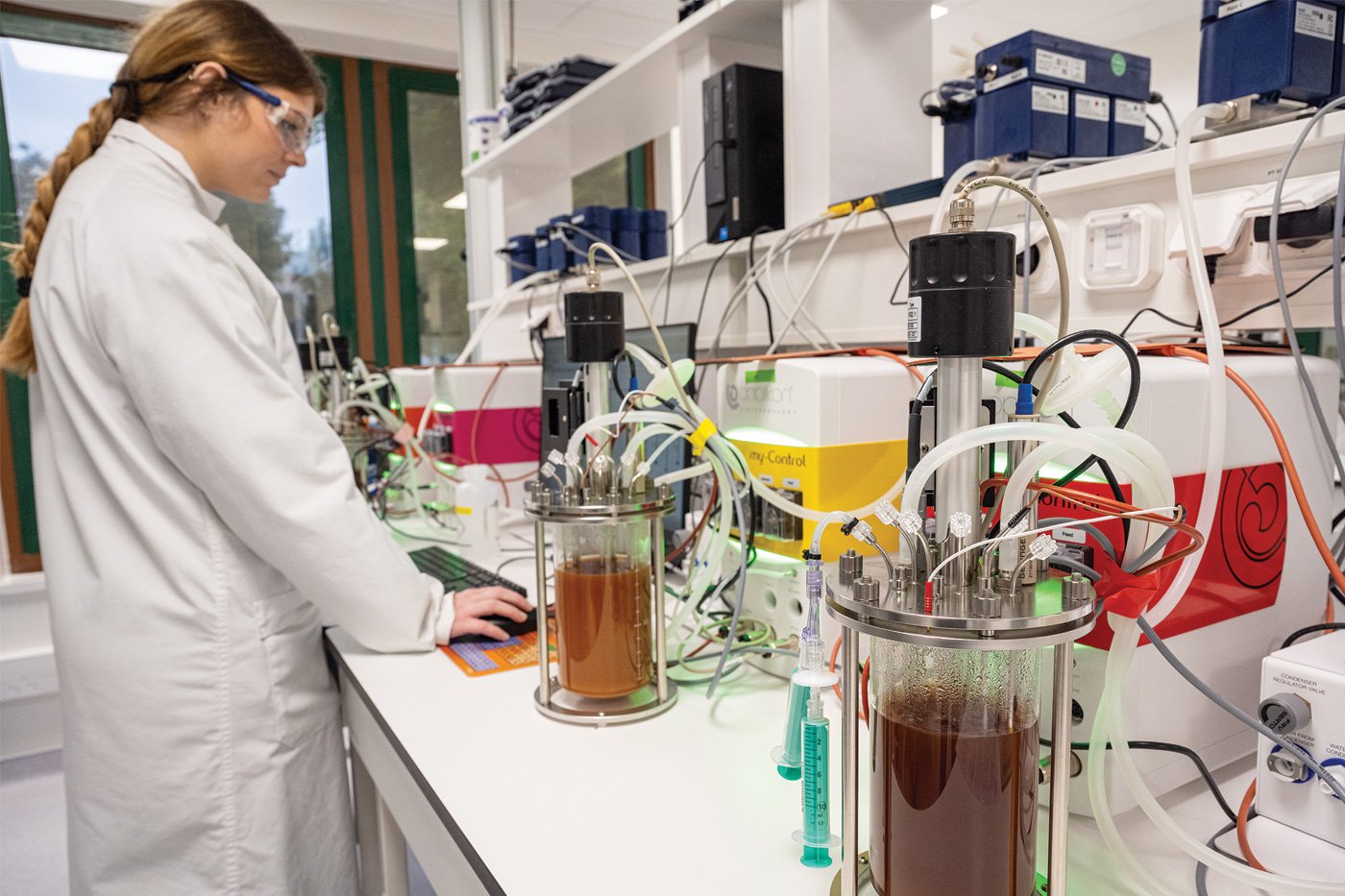
Outside the United States, public funding is more abundant, yet there too, such programs often have very specific goals in mind. Carole Caranta, deputy director general of science and innovation at Institut National de Recherche pour l’Agriculture, l’Alimentation et l’Environnement (INRAE), a public research institute in France dedicated to the study of agriculture, food, and the environment, says food science has recently received an influx of funding in Europe through programs like France 2030, a new national investment program. That has allowed INRAE to start a new program looking at the food system, microbiome, and health.
“It gives us about €58 million over seven years,” she says. “And the two objectives are to prevent and treat chronic inflammatory disease by developing precision nutrition and personalized medicines by mobilizing the microbiome and to contribute to the design and evaluation of public policies on dietary behavior.”
Industry Inputs
Given the need for more food science research, one might think that more industry partners would step in to fill the gaps. Unfortunately, Havlik says, private funds are also declining.
“We see that even companies are cutting back on funding projects,” he says. “I worked in the food industry for over 36 years, and I saw the substantial decrease in funding in basic or applied research as opposed to product development.”
B. Pam Ismail, founder and director of the Plant Protein Innovation Center at the University of Minnesota, says that even when projects are aligned with topics that industry is very interested in pursuing—like plant-based meats—it doesn’t necessarily translate to getting all the funding they need to pursue their work.
“We have some, but not nearly as much as we need to accelerate the progress of [the] basic science we need to do and also do translational research,” she observes.
Eric Zorn, global director of external innovation at Cargill, says companies like his appreciate “engaging” with partners who have unique capabilities they do not have in-house.
“By collaborating with selected partners and welcoming outside perspectives, we can all uncover innovative solutions and better navigate the fast-paced changes in technology and global markets,” he says.
Yet, while some researchers do benefit from industry dollars, Ringeisen says that doesn’t mean the results of those studies will be available to everyone in the greater food science community to help advance their work.
“Intellectual property (IP) is an inhibiting problem,” he says. “Many technologies, including genome engineering, are in the hands of the few. And, while we can do all the research we want, sometimes it stays in the vault, and there’s not necessarily freedom to operate or build on that work.”
Zorn says that Cargill makes decisions right at the outset of any project about how to best manage IP. But that decision is based on customer needs and their overarching business strategy.
“Sometimes, it’s beneficial to us to share information to help build interest and grow the market,” he says. “But there are also times when going public can spark competition that might impact us later. It’s a careful balancing act.”
When you can do research precompetitively, it is impactful for the whole community.

Precompetitive Partnerships
That careful balancing act can sometimes leave the greater food science ecosystem out of the loop and silo important data that might help to inform new science and technology advances. While Matt Teegarden, lead of research strategy and development for The Ohio State University’s Foods for Health program, says there is value in privately funded research, he is quite optimistic about new public-private partnership models for research dollars.
“When you can do research precompetitively, it is impactful for the whole community. And, because both private and public entities are involved, you can often bring advances into practice sooner than with pure public-funded basic research,” Teegarden explains.
Zorn says Cargill has been working with the U.S. Agency for International Development on the Transformational Strategies for Farm Output Risk Mitigation project, with the goal of increasing the capacity of small and large-scale farmers, governments, and agribusinesses to prevent emerging animal diseases and mitigate antimicrobial resistance. Others have applauded the Foundation for Food and Agriculture Research (FFAR), which connects funders and researchers to support “audacious” food and agricultural research.
“This organization was set up by the U.S. government as a kind of complementary nonprofit to invest in research funding using public-private partnerships,” says Rosales. “They do a great job with a matching grant program. If you are a professor working in a university and are awarded a grant that requires matching dollars, it can be a burden. But FFAR has helped bring in more than the required match so scientists can focus on doing the work, instead of chasing down funds.”
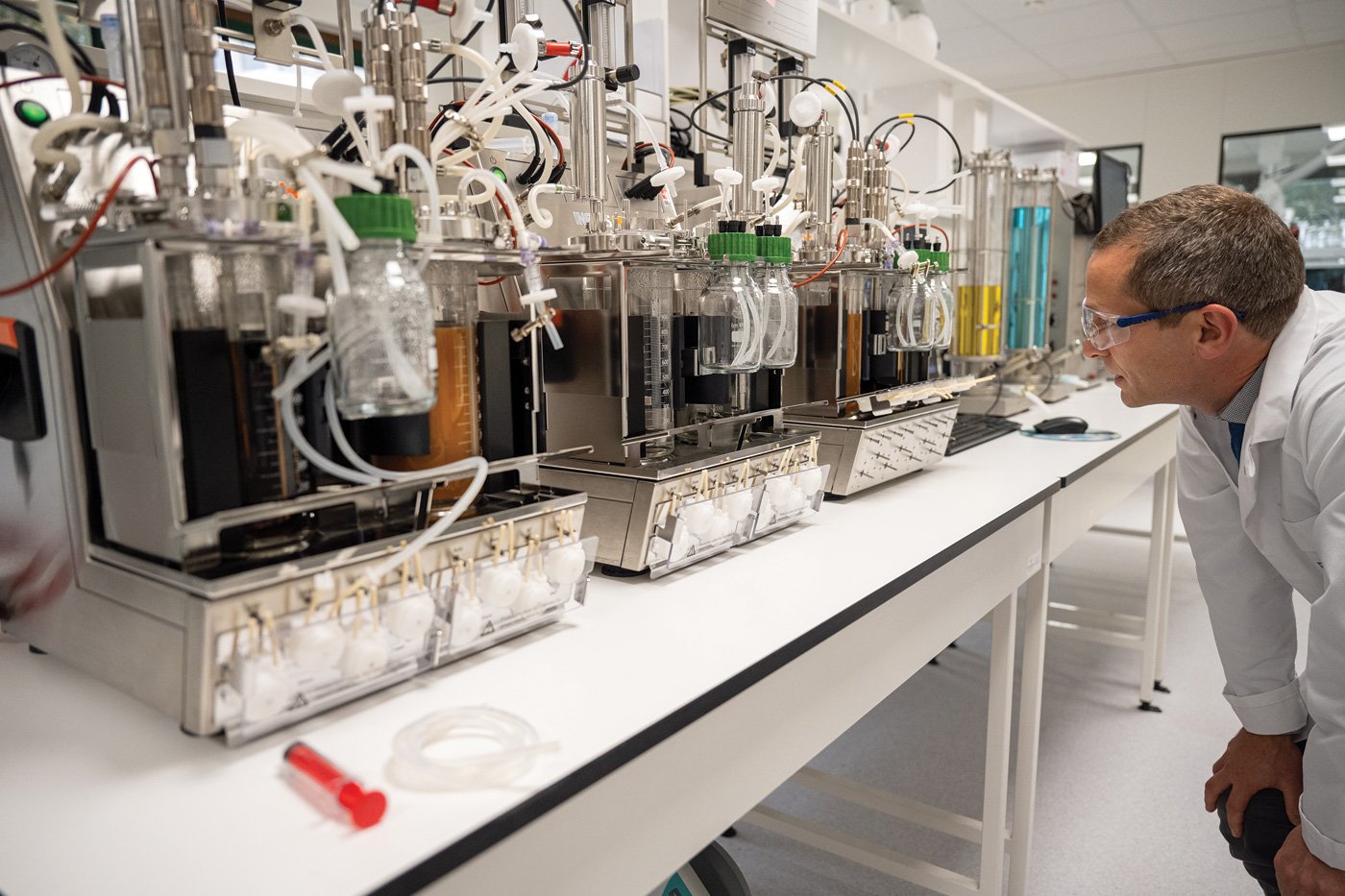
Europe, too, is benefitting from these new types of funding entities, says Nicolas Bordenave, a research director at INRAE. He and Caranta discussed the Ferments du Futur program, which is accelerating research and innovation in fermented foods with €50 million over 10 years. Bordenave says he believes more public-private models can help drive more “high risk, high reward” research in food systems in the future.
“These can give us funding for solutions-oriented research programs that can help us respond to the major challenges we are facing in food science,” he says.
Beyond Public and Private Funds
While the traditional food science funding model might involve a combination of public and private grants, many scientists are now looking to philanthropic organizations to support their projects. Teegarden says the Periodic Table of Food Initiative, funded by The Rockefeller Foundation, demonstrates how philanthropy can help move the needle. This project aims to leverage food composition data to better understand the impacts of climate change and regenerative agricultural approaches to nutrition.
“By chemically profiling all food, we can have a better understanding, at the molecular level, of how food is made up,” he says. “We could use more projects like this, but the challenge is that there is so much need across the entire food science and nutrition realm that we still need to do. There are so many immediate needs to address.”
The IGI, which supports bleeding-edge CRISPR-Cas9 agricultural projects, has had some “good wins” with philanthropic funding, Ringeisen says.
“The Chan Zuckerberg Initiative has funded us to try to enhance photosynthesis, enhance root depths of crops, and look at the soil microbiome to try to find mechanisms that will lock more carbon in the soil,” he says. “We also just won the TED Audacious [Project grant] last year to look at reducing methane emissions from cows. And that funds us over seven years, which is what you need, because biological research doesn’t happen overnight.”
Ismail also highlighted the work of The Good Food Institute, a nonprofit with the goal of improving the food system through plant-based and cultivated meats.
“Last year, there was a call facilitated by The Good Food Institute to create centers of excellence on alternative proteins, mostly alternative meat,” she says. “They ended up funding two, with about $30 million for each center. That’s a huge bucket of money, but it comes with a very specific focus.”
Ringeisen says that some projects are also benefiting from following a biomedical startup funding model—and, whenever possible, coupling those startup funds with philanthropic grants.
If we can figure out a way to couple philanthropy with the startup community, I think we can make some big discoveries.

“Sometimes, it’s easier to raise a few million dollars in the private world than to do so in the academic world,” he says. “But, that said, the IGI has started 26 startup companies over the last 10 years. And, I believe, 25 of those 26 are biomedical because that’s where private capital is. That’s where people want to invest money. But, if we can figure out a way to couple philanthropy with the startup community, I think we can make some big discoveries. It gives researchers the freedom to do really creative work that leads to those big leap-ahead technologies that make a big difference.”
Embrace Diversity and Creativity
Given the current funding landscape, Teegarden says it pays for food scientists to “be strategic” as they look for research dollars.
“Spread a wide net,” he says. “When you look at federal agencies, look closely at what is being funded. Look at foundations. Network with industry. There may even be opportunities within your university like seed granting programs, like the one I lead here at Ohio State with Foods for Health, which can at least get you the preliminary data you need to get started.”
There is also value in focusing on the basics, says Moore. Many federal agencies provide workshops to help scientists better understand their research priorities as well as how to write an effective grant.
It’s important to get proposal writing experience early on.

“It’s important to get proposal writing experience early on. Our department actually requires you to write a grant for your qualifying exam,” he said. “It’s also important to take the time to understand what opportunities are out there. UMass Amherst has a great office that congregates that information and emails us every week. If you don’t have that, you need to find a way to get that information.”
Havlik added that more food scientists should start finding ways to advocate for increased funding, not only at federal agencies but with all potential research funding partners.
“This all goes back to advocacy and education,” he says. “We need to do a better job of telling people how food goes from the farm to the grocery store. And we need to do a better job of connecting with different food stakeholders and policymakers so they can understand the big picture—and what the consequences of not doing this kind of research have on the future of food.”
What’s sad is that, because of the funding situation, many talented PhD students watch us struggle to get grants and opt for industry positions.

Ismail agrees and adds that this kind of advocacy is also essential to securing the next generation of academic food scientists.
“What’s sad is that, because of the funding situation, many talented PhD students watch us struggle to get grants and opt for industry positions,” she says. “Very few want to stay in academia, and that means we will have a lot fewer good academic scientists working on important basic research projects.”
For Ringeisen, this point is personal. His daughter is a third-year graduate student at the University of California, Berkeley, studying photosynthesis. He says she wants to stay in academia and eventually found her own research group.
“Science doesn’t get done without funding,” he says. “So, we’ll have dinner, and we’ll talk about what a different landscape there is now than when I started. You can’t just go after government grants anymore. It’s not enough. You have to really be creative and look at all these different partnerships, foundations, philanthropists, and companies. It takes a village, so you really need to look at all possible avenues for funding so you can get to work.”ft
Reverse Engineering Private Funding Opportunities
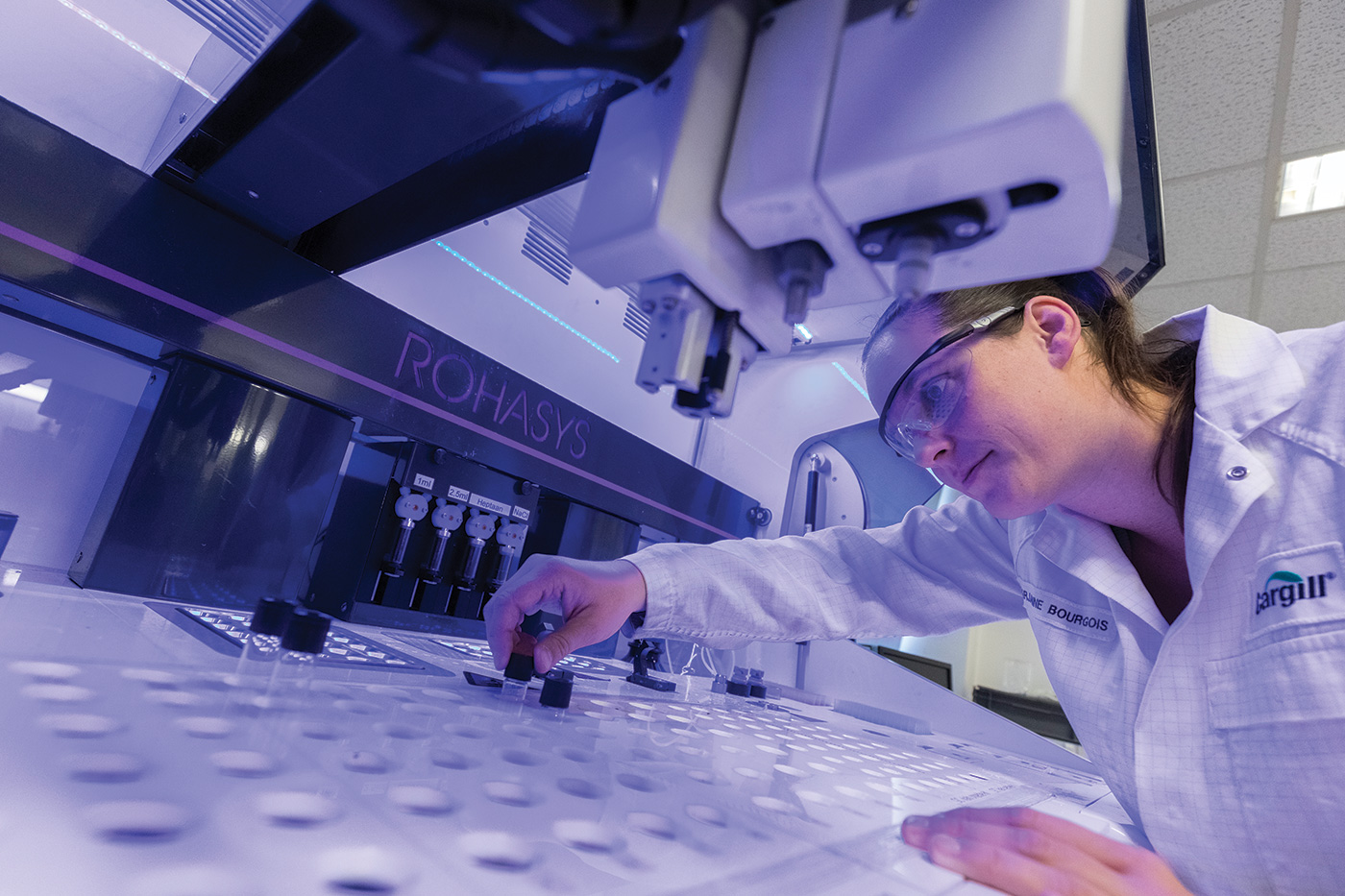
Despite the fact that private funding dollars are scarcer than what was available in decades past, industry leaders still back academic research projects. Eric Zorn, global director of external innovation at Cargill, says the company has long funded outside research but its strategy regarding what projects to support has evolved.
“In the past, ‘the lab was our world,’ and we commonly took a more research-forward approach to innovation,” he explained. “Today, the ‘world is our lab,’ and our R&D teams and investments are much more customer-driven and targeted with selected ecosystem partners, ensuring a clearer link to our customers’ needs and business strategy.”
That consumer-driven lens has Cargill looking for projects that “support a specific business case that we believe will deliver tangible results,” Zorn says. He adds that the organization actively seeks out research opportunities that support its internal strategy thanks to strong “touch points” with universities, startups, and other research institutions. But the team at Cargill also fields inquiries from academic researchers about funding opportunities.
“We make very deliberate choices about where we’re going to invest our resources,” he says. “This means we develop relationships stepwise with intention but do end up saying ‘no’ or ‘let’s keep in touch’ to great ideas frequently.”
When asked about the best ways to pitch companies like Cargill, Zorn emphasized the importance of understanding the “customer landscape and business side” of any project.
“Try to align your research goals with the interests of potential investors,” he says. “It’s important to think about how your findings can create value or contribute to solving real-world problems. Networking is also key. Build relationships with industry professionals and attend relevant events to get your work in front of the right people. And don’t hesitate to be open about your ideas. Sometimes a casual conversation can lead to unexpected opportunities.”
Hero Image: © freie-kreation/istock/getty images plus
Authors
-
Kayt Sukel Author
Kayt Sukel is a book author, magazine writer, and public speaker who frequently covers scientific topics.
Categories
-
Food Business Trends
-
Food Product Development
-
Omics and Genomics
-
Startups and New Ventures
-
Research
-
R and D
-
Novel Technologies
-
Food Technology Magazine


