
Formulating for the Evolving GLP-1 Consumer

 Kayt Sukel
Food Technology Magazine
-
Consumption Patterns
The rapid expansion of GLP-1 use is reshaping consumer eating patterns, driving demand for smaller, nutrient-dense, personalized food and beverage options.
-
Nutritional Requirements
GLP-1 users have evolving dietary needs—requiring higher protein, fiber, hydration, and targeted micronutrients—to manage side effects and maintain muscle and bone health during weight loss.
-
Market Segmentation
Because GLP-1 journeys vary widely, companies that tailor products to different user segments—and provide companion or maintenance offerings—will be best positioned in this emerging market.
The number of Americans taking anti-obesity medications continues to grow by leaps and bounds, especially the class of drugs known as glucagon-like peptide-1 (GLP-1) agonists. According to research organization RAND, nearly 12% of Americans have tried drugs like Ozempic (semaglutide) or Zepbound (tirzepatide), and notably, yet another 14% are interested in procuring their own prescription for a GLP-1 medication in the future.
These drugs work by targeting GLP-1, a satiety hormone that has been shown to support significant weight loss by quieting hunger signals in the brain while simultaneously slowing digestion. Yet, the most recent studies show these drugs can provide other astonishing health benefits, including cardiovascular protection, increased brain health, and even reduced cravings in nonfood addiction disorders. It’s likely not surprising that Samantha Des Jardins, content marketing manager for Datassential, says the market intelligence company’s recent data points suggest a whopping 38% of American consumers describe themselves as current or future users of GLP-1s. And as the prices—and the side effect profiles—of these medications continue to decrease, that percentage is only expected to rise.
Because of this substantial growth, food and beverage companies are trying to understand how they can best meet the needs of consumers in this new and evolving market. To date, market research suggests that, while taking the medication, GLP-1 users make significant changes to their food habits, eating smaller portions and spending less, overall, at the grocery store. There’s also data to suggest that these consumers shy away from processed foods and spend more time browsing the perimeter of their grocery outlet, where they will find more whole, natural foods. But that’s not the only change documented in food-related behaviors.
There’s no doubt that GLP-1 therapies are changing consumer appetites, both in those who are currently taking these life-changing medications and those who are merely considering them.
“Thirty-nine percent buy less food,” says Des Jardins. There is also an increased desire for smaller, nutrient-dense portions emerging, which, Des Jardins says, is being driven both by GLP-1 use and a more general interest in healthier eating in younger generations.
There’s no doubt that GLP-1 therapies are changing consumer appetites, both in those who are currently taking these life-changing medications and those who are merely considering them. But, as scientists and food formulators learn more about how these drugs affect both diet and consumption patterns, it’s becoming clear that such consumers should not be treated as a single, monolithic segment. These individuals are looking for food and beverage manufacturers to create new, personalized products to meet both their needs—and their preferences.
“We’re seeing a shift toward more purposeful eating,” says David Despain, weight management nutrition lead for global strategic platforms at Nestlé Health Science. “Consumers are becoming more focused on getting the most nutritional value out of every bite. It’s no longer about how much you eat, but how well the food you consume supports your health.”
It’s no longer about how much you eat, but how well the food you consume supports your health.

Changing Dietary Needs
Robert F. Kushner, a medical doctor and leading obesity expert at Northwestern University who led randomized clinical trials testing the efficacy of semaglutide, says understanding the optimal eating plan for GLP-1 users is “an evolving story.” He says he and his colleagues learned a lot, mostly through trial and error, as they worked to support patients through these landmark clinical trials.
“We quickly realized there are two aspects to dietary recommendations for the GLP-1 user,” he says. “And both are critical to patients being able to get the full benefit of these drugs.”
The first aspect is how to manage side effects of the drugs, which often include gastrointestinal problems like nausea, vomiting, diarrhea, constipation, and heartburn. Kushner says reducing fatty and greasy foods is a good way to start if you want to avoid such complaints. But he and his colleagues soon learned users could benefit even more when they took the time to plan out their meals in advance.
“You want to stop eating before you feel too full,” he says. “You want to moderate the size of the meals, decreasing portion sizes. You want to be well hydrated. And you want a lot of fiber, so a lot of fruits and vegetables. These things will all help significantly reduce the symptoms of those side effects. And managing all those things is why meal planning is so important.”
The second aspect of GLP-1-related dietary recommendations, Kushner says, is to eat in such a way to achieve optimal health. With any kind of significant weight loss, there is a risk of also losing vital muscle and bone. An increase in protein intake, coupled with robust physical activity, says Kushner, can help ensure that GLP-1 users are not losing important aspects of their overall health along with the extra pounds.
“In many ways, what we recommend for GLP-1 users isn’t all that different from what we would suggest for people with diabetes or obesity,” he says. “You want high protein, high fiber, and nutrient-dense whole foods.”
While today there is much ado about increased protein across the food industry, Despain adds that other micronutrients shouldn’t be overlooked for optimized health.
“This is where thoughtful formulation becomes essential,” he says. “Consuming fewer calories often means less of the essential vitamins and minerals the body needs. Nutrients like vitamin D, calcium, and magnesium are important for bone health. B vitamins help support energy metabolism, which can be especially important when overall intake is lower. Iron and zinc are also critical for immune function and general health. Fiber plays an important role in gastrointestinal health.”

Those taking GLP-1 medications report that their shopping patterns have changed. © igoriss/iStock/Getty Images Plus
Changing Tastes
While there is now good consensus on what GLP-1 users should be eating, Maha Tahiri, CEO and founder of Nutrition Sustainability Strategies LLC, who has taken a GLP-1 agonist herself, says it isn’t always easy for users to actually get the nutrition they need.
“These drugs are a medical breakthrough that have changed the way that millions of people interact with food,” she says. “I took one for three months last year and, despite understanding what I should eat to keep my health and my muscle while losing weight, I could still easily forget to eat for 12 hours.”
She adds that, because of the lack of food noise, or unwanted cravings or thoughts about food, GLP-1 users need to be approached in a different way by food companies. She says the industry needs to rethink the idea of “food as calories” and instead design new products that can act as “delivery systems for important nutrients.
“When you take these drugs, you don’t feel hungry. You don’t feel deprived of anything,” she says. “And that’s why you see a lot of deficiencies from the resulting calorie restriction. We need more foods to address those nutritional deficiencies in a small package. [We need] things that these consumers really want to eat.”
What that small package should look like, however, is still somewhat in question. Especially since GLP-1 agonists now have been shown to alter taste and tactile perception in some users.
“Studies have shown a shift in preferences around flavors and textures. Many people want more mild and subtle flavors,” says Vanessa Bailey, senior manager, global strategy and innovation, healthful solutions, at Ingredion. Some users also report new preferences for mouthfeel—preferring food textures that counteract dryness with hydration or have a lighter, airier feel on the tongue. But Nina Guest, senior manager, marketing insights, Americas/global, at Ingredion, cautioned that such changes, while widely discussed, are not necessarily universal.
“In our research, we see variation in what users’ tastes have changed for,” says Guest. “But, even with that variation, it shows consumers that these aspects of food are still important. People want to enjoy what they are eating, especially as they now need to get all this nutrition in a very small portion. [GLP-1 use] heightens the necessity of being able to provide a positive food experience.”

Data suggest that GLP-1 medication users spend more time browsing the grocery store perimeter, seeking out fruits and vegetables. © kupicoo/E+/Getty Images
Multiple Benefits Sought
When GLP-1 agonist medications were first approved by the U.S. Food and Drug Administration to treat type 2 diabetes and other metabolic conditions, those prescribed the medications were often told to expect to take the drug for life. Today, however, some users may cycle on and off the drugs every few months, or microdose, to get the benefits of the medication without the side effects—or to better manage the high cost of the drugs.
Bret Barhoover, senior marketing manager, specialized nutrition, at Cargill, says food and beverage companies that can formulate new products to meet the needs of both current users, as well as those who have stopped taking the medication and want to maintain their weight loss, will see a lot of success.
These consumers learn as they take these drugs what they want and what they need.

“You want food and beverages that are in smaller portions, with greater nutrient density, and can help mitigate any gastrointestinal side effects. But you also want products that will help satiety and manage calorie consumption,” he says. “That’s whether they are taking the drug or have recently come off of it.”
But, he added, as he and his colleagues have spoken with GLP-1 users, they’ve learned that how they approach eating across their GLP-1 journey is very personal. “These consumers learn as they take these drugs what they want and what they need. They start to understand what they are eating, the ingredients in their foods, the macro- and micronutrients they need, and how their body processes food. And, as a result, they become more thoughtful about what they eat,” he says.
Research that Ingredion has conducted backs up this idea. Guest says that GLP-1 users are leaning into personalized nutrition as they consider what they want and need from the food products they consume. And while one might assume that means that thoughtfulness translates into healthier eating overall, Guest says that is not always the case.
We see a range of consumers that are essentially just taking the medication, letting it do its thing, and not really embracing any sort of lifestyle change.

“We see a range of consumers that are essentially just taking the medication, letting it do its thing, and not really embracing any sort of lifestyle change. They are eating the same things they ate before, just less of them,” she says. “We also see people who are making a 180-degree change, embracing a new wellness-directed lifestyle. And then there are a lot of people who are living between those two states. That means there are differing needs for each of these segments. And finding the elements that are the same, and those that are unique for each of these groups, is going to be important to giving them the right support.”
Looking at GLP-1 use as a journey, adds Hannah Ackermann, vice president of marketing and nutrition affairs at prebiotic ingredient company COMET, will also likely require the formulation of new companion and maintenance products to support users at different points in their journey. “I think there’s a big opportunity in having products to support people as they are coming off the medications. They’ve lost a lot of weight, they are super-motivated to keep it off, and they are willing to spend money on products that work for them,” she says. “Having a product that users like that can help with satiety or with weight management while they are off the drug will be a big deal.”

Portion control is important for GLP-1 users who want to avoid negative side effects. © InspirationGP/iStock/Getty Images Plus
A New and Evolving Market
It would appear that many food and beverage manufacturers are still trying to determine how they can best support a widening spectrum of GLP-1 users—and differing food-related behaviors. While Nestlé made waves with the release of Vital Pursuit, a brand that explicitly controls portions and increases proteins with GLP-1 users in mind, other companies are taking a more tempered approach. Des Jardins says that Datassential’s research suggests that restaurant operators, for example, are currently split on how to approach this market: 42% are considering adding GLP-1 friendly items, but 43% report they aren’t yet interested. She says it suggests a “wait and see” stage.
Julie Smolyansky, CEO of Lifeway Foods, which has been making kefir, a fermented dairy beverage, for decades, says many food companies already have products that can help GLP-1 users meet their nutritional needs. It’s just a matter of educating them about what’s already out there.
As people get more comfortable taking them as a lifestyle choice, companies have to be there to support the consumer in that process.

“As these drugs become more accessible and democratized, as people get more comfortable taking them as a lifestyle choice, companies have to be there to support the consumer in that process,” she says. “And many already are. We need to let people know that everyone, whether they are taking a GLP-1 or not, benefits when they have a diet rich in good, high quality, and bioavailable protein and other nutrients that help support satiety.”
Bailey observes that quite a few food and beverage companies have launched new products, or added claims to existing ones, over the past year to position themselves as GLP-1 friendly. But, she adds, the market is not fully developed. As a result, there is still a lot of “room to play” in this space moving forward.
“There’s a place for a spectrum of different food companies, big and small,” she says. “Depending on how your brand is positioned, there is a place for you. What started out as how we support nutritional needs in a smaller volume of food is continuing to evolve. As we get to know these different types of GLP-1 consumers more, we will be able to formulate to their specific needs. Companies can find their corner, understand a specific group of GLP-1 users that aligns with their brand, and figure out how to formulate to give these individuals what they need.”ft
New Tools for the GLP-1 Journey
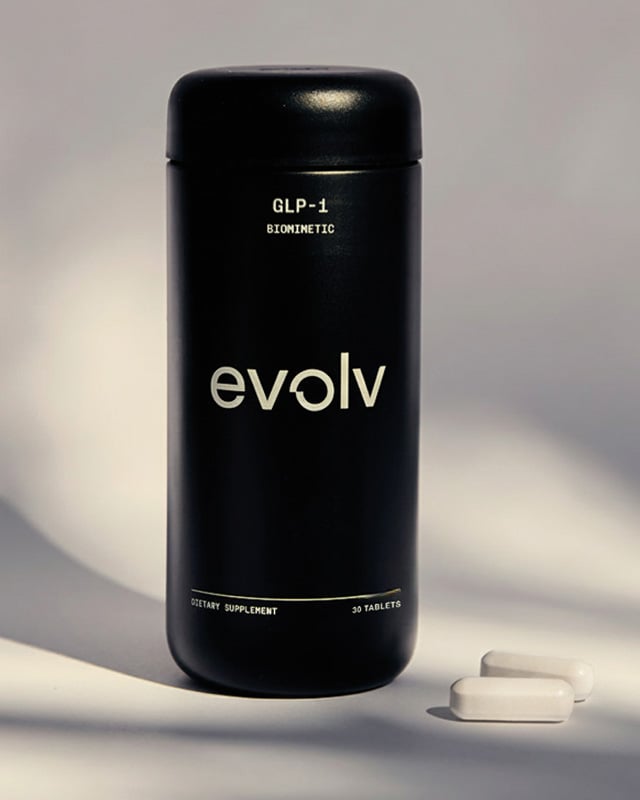
Photo courtesy of Eolv
The future of metabolic support for weight loss will continue to evolve, experts agree. One new option, recently launched by aptly named startup Evolv, is Evolv GLP-1, which the company bills as a first of its kind oral GLP-1 dietary supplement. The company’s founders designed a new molecule that mimics GLP-1 (glucagon-like peptide-1) and GIP (gastric inhibitory polypeptide) pathways to help regulate appetite and metabolism.
Becca McCarthy, president and chief operating officer of Evolv, says products like Evolv GLP-1 can serve as a “tool in your weight loss toolbox” without making any clinical claims. The tablet supplement has a one-day half-life compared with GLP-1 injections’ one-week effects and may be a good alternative for users who can’t tolerate semaglutide’s side effects.
McCarthy says she anticipates a whole new wave of bioengineered ingredients that might be added to future food products to support GLP-1 users as scientists gain a deeper understanding of how human biology works in relation to our nutritional supply.
“These ingredients could help supplement the diet … and perhaps optimize health and longevity in ways we haven’t seen before,” she says. “If you can create biomimetics and other types of peptide activity through diet, it gives food manufacturers a strong opportunity to explore this kind of innovation.”
Hannah Ackermann, vice president of marketing and nutrition affairs at ingredient company COMET, says there is a “robust opportunity” in this approach, but she cautions that supplements are not subject to the same regulations as food and will have to be pursued prudently.
“We have to be very careful, as an industry, how we position these types of ingredients and how we manage consumer expectations,” she says. “We can’t promise things we can’t deliver.”
But even with that caveat in place, Bret Barhoover, senior marketing manager, specialized nutrition at Cargill, sees potential for innovative GLP-1–supporting ingredients. That’s especially true, he says, since so many ingredient companies are currently “playing defense.
“To meet GLP-1 needs, we’re taking our existing portfolios and saying, ‘Gosh, we have strong options that help deliver here.’ It’s a defensive play,” he explains. “But playing offense in the GLP-1 space is going to be developing unique ingredients that will be specific to GLP-1. It will be coming up with things that will add those complementary benefits for GLP-1 users so we really can support them at every step of their journey.”
Hero Image: © alvarez/getty images
Authors
-
Kayt Sukel Author
Kayt Sukel is a book author, magazine writer, and public speaker who frequently covers scientific topics.
Categories
-
Food Health Nutrition
-
Food Product Development
-
Obesity and Weight Management
-
Diet and Health
-
Formulation
-
Personalized Nutrition
-
Food Technology Magazine
-
Issues and Insights


