
Morning Meal Musts: Affordable, Portable, Protein-Rich

-
Global Flavors
American consumers increasingly enjoy international flavors and dishes in the morning, with Middle Eastern and Asian influences gaining momentum on the breakfast table.
-
Snacking Preference
Most young adults, aged 18 to 34, prefer a snack rather than a full meal for breakfast.
-
Ingredient Scrutiny
The Make America Healthy Again (MAHA) movement is intensifying efforts to remove artificial dyes from cereal.
At the start of 2026, a convergence of trends continues to influence the breakfast occasion in the United States. Consumer preferences include comfort food with surprising twists; better-for-you options, with an emphasis on protein content and free-from claims; global flavors and cuisines that provide a sense of adventure; and plant-based, vegan, and/or organic choices that deliver a message of humaneness and environmental sustainability.
The financial circumstances of individual consumers and age demographics also have a tremendous impact on what Americans eat in the morning. The uncertain economy—battered by fluctuating tariffs, the prolonged government shutdown, and escalating prices in many sectors—has forced struggling Americans to make budget-conscious food choices at the breakfast table.
“While most breakfast eaters are committed to their routines, elevated egg prices are compelling some to consider changes,” states John Owen, associate director of food and retail for Mintel, in the report Consumer Approach to Breakfast—U.S.—2025. In addition, coffee prices have increased by 20% over year-earlier levels.
The propensity to prepare meals at home rather than dining at restaurants or picking up takeout is at its highest level since the COVID-19 pandemic, according to research by The Campbell’s Co., and this is certainly true of breakfast, observes food industry consultant Maeve Webster. Fast-food giants McDonald’s and Wendy’s both reported sluggish breakfast sales in their earnings calls in August 2025.
Consumers are looking for ways to stretch their food budgets rather than eating breakfast out, and packaged food manufacturers have responded with an array of new products. “Based on our own research, almost half of consumers try new foods at home first, which is a complete reversal of what we had seen pre-COVID,” when the foodservice sector rather than grocery channel drove innovation and trial, notes Webster, who is president of Menu Matters.
Consumers are looking for ways to stretch their food budgets rather than eating breakfast out, and packaged food manufacturers have responded with an array of new products.
As more and more companies require their employees to return to the office, breakfast on weekdays once again requires convenience, while weekend mornings allow for more leisurely meal preparation. As a result, food companies are building flexibility into their breakfast product assortments. For example, in September 2025, Eagle Foods’ Hamburger Helper brand debuted its Helper Breakfast line in two formats: single-serve microwaveable cups and the company’s traditional boxes. The cups come in two SKUs, each containing sausage and 10 grams of protein: Cheesy Hashbrowns and Hashbrowns & Gravy. The boxed variety includes four flavors, one of which is Southwest Style Hashbrowns with “robust Tex-Mex seasoning.”
Portable, on-the-go versions of traditional breakfast fare have become increasingly popular, points out Anouck Gotlib, CEO of Belgian Boys, which makes refrigerated and frozen Belgian waffles, pancakes, and crepes. In 2024, the company introduced a Belgian Chocolate Chips SKU to its line of refrigerated Bite-Sized Pancakes. “Minis are a big trend,” Gotlib says. “Snacking for breakfast is growing, but also moms shopping for their families are buying our bite-sized pancakes because they are easy to serve and eat.”
Comfort food products that are both convenient and healthful are highly sought after by today’s consumers, emphasizes Emily Cole Groden, founder and CEO of Eat Evergreen, which makes clean label frozen waffles. “I developed the idea for Evergreen when I had my first daughter and needed a go-to breakfast for her that could be ready in minutes but wasn’t full of artificial ingredients,” she explains. “I remember looking at the frozen waffle set and realizing there was an opportunity to make something truly better with real, nourishing ingredients that parents could feel good about.”
In 2025, Evergreen launched its Thick & Fluffy Waffle line in two flavors: Blueberry and Homestyle Recipe. The line “delivers the golden, crispy exterior and soft, fluffy center of nostalgic homestyle waffles but is reimagined the Evergreen way with 100% whole grains, 5 grams of protein, avocado oil, and real veggies,” Groden says. Without artificial flavors or preservatives, the waffles are also nut-free and individually wrapped.
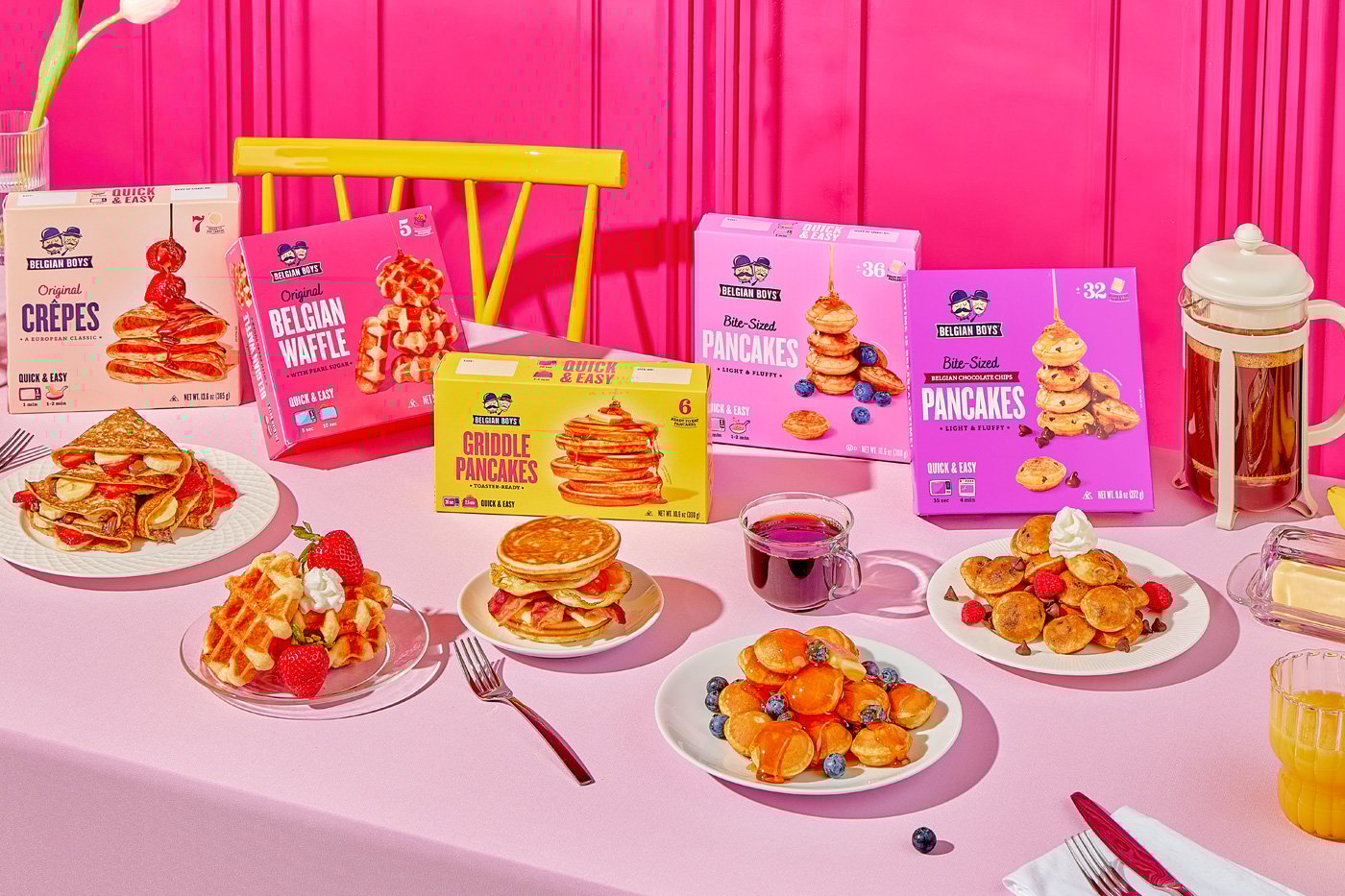
Belgian Boys pancakes, waffles, and crêpes are frequently sold in the refrigerated section of the grocery store, which is the way many baked goods are retailed in the company founders’ native Belgium. Photo courtesy of Belgian Boys
Generational Differences
Older Americans and young adults prioritize healthful eating but have different takes on what that means for breakfast. “The age-old idea that breakfast is the most important meal of the day is alive and well among adults aged 55-plus,” writes Owen in the Mintel report, which is based on a survey of 1,924 adult Internet users who eat breakfast. “Older breakfast eaters are less likely than their younger counterparts to skip breakfast or to prefer morning snacking to a full breakfast.” Among adults aged 18 to 34, 63% prefer snacking in the morning rather than having a complete breakfast meal, Mintel reports.
Millennials, aged 29 to 44, now make up the largest demographic group in the United States, according to estimates from the U.S. Census Bureau. An Innova Market Insights report prepared for Food Technology notes that “millennials increasingly turn to cereal as a flexible, affordable, and self-managed option that adapts to multiple roles: quick breakfast, convenient snack, or easy kid-friendly meal.”
Innova points to Magic Spoon as an innovator in the cereal and granola space. Known for its high-protein, grain-free, and gluten-free cereals, Magic Spoon launched its lower-sugar Protein Granola line in early 2025. The line includes four flavors: Honey Almond, Peanut Butter, Dark Chocolate Almond, and Mixed Berry. Each serving contains 13–14 grams of protein, 2 grams of sugar, and 7–8 grams of fiber.
“This product is designed for those seeking a satisfying option that aligns with their health and wellness goals, delivering the perfect balance of taste and nutrition," cofounder Gabi Lewis said in a press release announcing the new line.
Wacky mashups are also contributing to creativity in the cereal category, according to Innova. An example of this is General Mills’ Cinnamon Toast Crunch Hormel Black Label Bacon Flavor Cereal, launched in July 2025. “This mashup pushes cereal toward indulgent, cross-category exploration,” states Innova. “It reflects a strategy of leveraging contrast, sweet and savory, to stand out on shelves.”
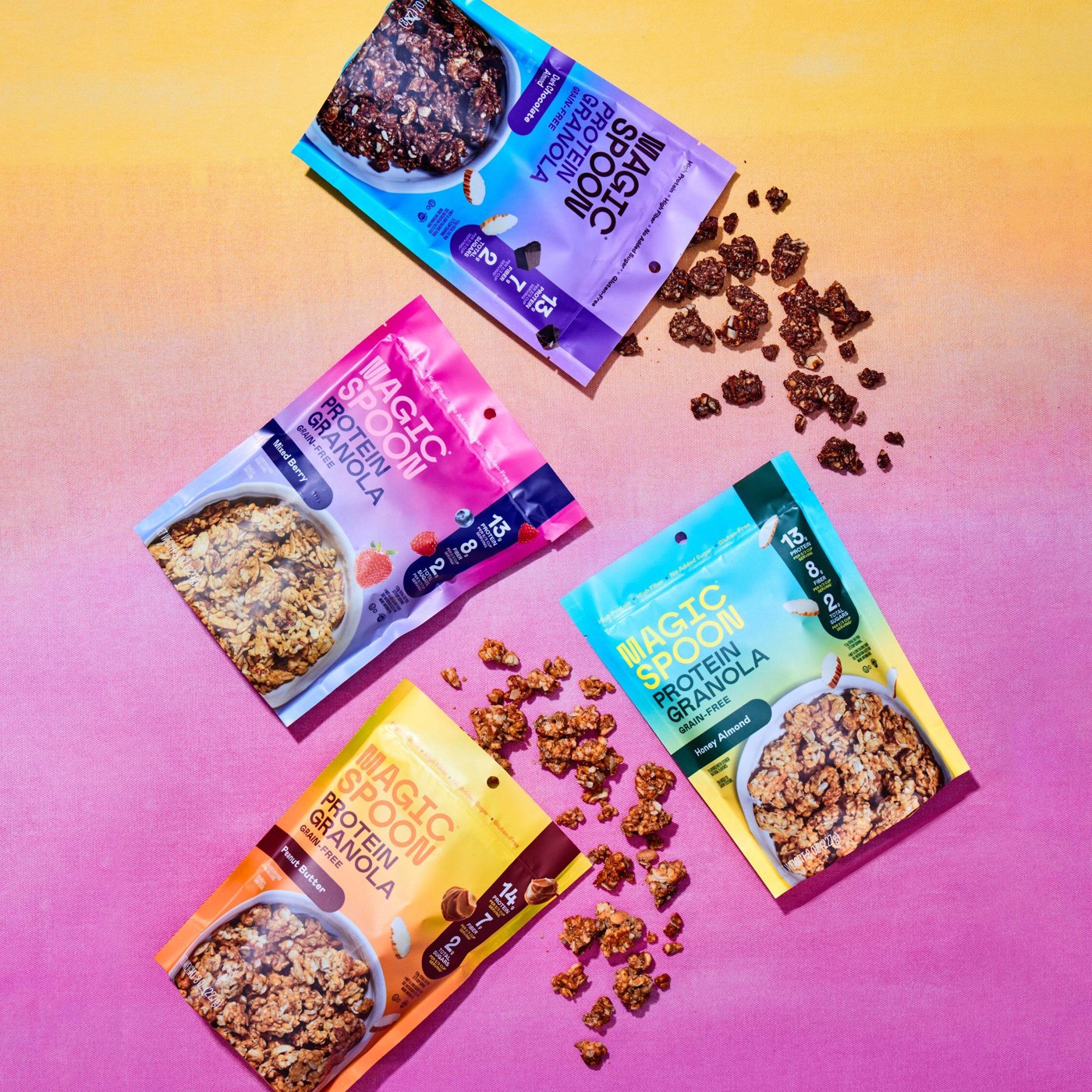
The rollout of a Protein Granola lineup allowed Magic Spoon to respond to consumers’ goal of upping their protein intake. Photo courtesy of Magic Spoon
Wellness and Sustainability
The focus on health and wellness has been a leading food trend for years, but it is gaining even more traction under the influence of U.S. Health and Human Services Secretary Robert F. Kennedy Jr., the force behind the Make America Health Again (MAHA) movement, which has taken aim at artificial food coloring in sugary cereals among other ingredients.
A manufacturer of organic cereals and granola, Nature’s Path Foods has long eschewed synthetic food dyes in its product offerings. “The rise of MAHA has drawn a lot of attention to the benefits of organic, from ‘what’s great for me’ (no toxic pesticides used in organic agriculture) to ‘what’s great for the planet,’” says Linsey Herman, associate vice president, R&D, for Nature’s Path. “Organic was once seen as a must when buying food for children, but now it’s becoming important for everyone in the family. Consumers today are more label savvy and value driven, prioritizing nutrient density, functional benefits (like protein and fiber), and sustainability.”
Nature’s Path’s most recent cereal launch was Red Panda Puffs under the EnviroKidz brand. Red Panda Puffs combine organic peanut butter, strawberry juice concentrate, organic whole grain corn meal, cane sugar, sea salt, tapioca starch, soy oil, and beet juice concentrate for color. With every purchase of EnviroKidz cereal, a portion of the proceeds are donated to one of the company’s sustainability partners.
In September 2025, Nature’s Path rolled out its newest product line, Protein Granola, in two flavors: Blueberry Cinnamon and Maple Almond Butter. Both SKUs provide 10 grams of plant-based protein per serving.
Cereals made from regeneratively farmed grains are also on the rise. Cascadian Farm's new Climate Smart Kernza Grains Cereal is one example. Kernza (the grain produced from intermediate wheatgrass) improves soil health through its extensive, deep-rooting system, which helps prevents erosion and enhances nutrient retention.
Global Influences
“Global flavors and internationally influenced breakfast dishes are growing,” says Webster of Menu Matters. Shakshuka—a North African dish consisting of eggs poached in a spicy sauce of tomatoes and other vegetables—"could be considered the pioneer dish,” she notes.
“We’re seeing a host of other international dishes—from the Middle East (falafel bowls) to Asia (congee, breakfast banh mi, kimchi egg bowls/kimchi egg fried rice)—that are gaining traction, finally expanding America’s breakfast palate after decades of being bound by habit,” adds Webster. In the United States, global flavors have become an everyday adventure rather than a rare, exotic departure from ordinary meals.ft
Hero Image: Photo courtesy of Eat Evergreen
Authors
-
Carolyn Schierhorn
Categories
-
Food Product Development
-
Food Ingredients and Additives
-
New Product Development
-
Proteins
-
Eggs and Egg Products
-
Food Technology Magazine
-
Market Trends


