
A CRISPR Future for Agriculture

 Bill McDowell
Food Technology Magazine
Key Takeaways
-
Trait Innovation
CRISPR is enabling consumer-friendly traits (seedless blackberries, pitless cherries) while also driving sustainability gains in row crops (short-stature corn, disease-resistant soy).
-
Consumer Trust
Transparency and clearly articulated consumer benefits are essential to overcoming biotech skepticism.
-
System Performance
The long-term promise of the technology lies at the intersection of product innovation and agricultural efficiency.
Although still in its early days, CRISPR has already been called the most powerful scientific tool of the century. Using programmable “scissors” that make precise edits to DNA to encourage desired biological traits and erase unwanted ones, its applications are already far-reaching. In the past year alone, CRISPR-based therapies have advanced in clinical trials aiming to excise latent HIV from human cells, and the first gene-editing treatments for sickle cell disease have moved from trial to patient care.
In agriculture, those edits promise more than just higher yields. They could reshape the quality and characteristics of what we eat, how food is grown, and how supply chains respond to rapidly changing growing conditions.
No company has leaned into that potential more visibly than Pairwise. The North Carolina startup, cofounded in 2017 by Tom Adams, a PhD microbiologist/plant scientist, introduced the first CRISPR-edited leafy greens to the U.S. market in 2023. Since then, it has pivoted from consumer branding to a licensing model, striking deals with Bayer, Corteva, and, most recently, Mars—where the target is nothing less than securing the future of a sustainable cacao supply.
Named by MIT Technology Review as one of its “Climate Tech Companies to Watch,” Pairwise is now applying its gene-editing tool kit to one of the planet’s most urgent challenges—developing climate-adapted crops like high-yield yams through a new Gates Foundation partnership aimed at strengthening food resilience in West Africa.
For Adams, who spent nearly two decades at Monsanto, this moment highlights the dual mission of CRISPR in food: making crops easier to grow and making them easier and more appealing to eat. In this conversation, he reflects on lessons from early product launches, consumer skepticism, and the regulatory landscape—and looks ahead to where the deepest impact will be felt.
Unlike GMOs, which add genes from other species, CRISPR works only with the same natural variations that already exist within that crop family.
How would you summarize Pairwise’s mission and your approach to applying this technology to improve agriculture and the food supply?
We like to think of our mission as partnering to make food easier to grow and easier to eat. Growers need help producing food, especially with all the challenges, and we all need help eating food that’s healthy. CRISPR technology allows us to do very precise changes to the genome and differs from GMOs in that we’re working within the genes that are present in the plant and making variants of those genes that probably exist within the larger population, but it’s hard to bring them all together.
Only about 10% of us eat the recommended amounts of fruits and vegetables. We’ve focused on things that would make it more convenient for people. We started off with this dream project to make a pitless cherry, which we are still working on. But what we have made is a seedless blackberry. If you eat blackberries, you know that they have a hard grainy seed that often gets stuck in your teeth. They’re annoying, and they’re actually pits. They’re botanically the same as a cherry pit. So, we thought we could work on it faster, demonstrate the ability to get rid of that pit, and then we’ll be able to transfer the technology into cherries.
So, we’ve made these blackberries that are a couple of years away from the market, but it’s quite remarkable. It’s a bigger difference than I expected because there’s a flavor burst that gets covered up by the seed that’s very different, much more like eating a seedless grape when you eat a seedless blackberry.
Meanwhile, we also care about productivity and resource use, and one of the things that’s driven productivity across every crop has been increasing the density of planting. So, in blackberries, we’ve now made a more compact plant. We’re doing our first field trials. We’re able to plant them three times as dense as normal blackberries would be planted. They produce probably twice as much per acre.
Your first commercialized product was mustard greens. What did you learn from that experience of developing and marketing abranded product?
One, it was an opportunity to do something relatively quickly that we could show that consumers like the end product. I learned how hard it is to be a marketer and a technology company and that you end up putting all of your resources into marketing and that takes you away from developing more products. Salads are a pretty tough field. So, we’ve made the hard decision to say somebody else would be better off selling these seeds. So, we licensed them through our partner, Bayer, and Bayer is now in the process of marketing those. So, we decided to focus on our core strengths.
In the blackberry example, we’ve developed it ourselves, but we’re going to license it. We’re working on licensing it right now through growers and packer-shippers, and they can sell it under their own brand. We think our impact can be much larger by working with partners.
Then in the big acre crops, we’ve created partnerships where you have existing infrastructure. I can much more quickly get a corn trade on 100 million acres by working with Bayer than I could by trying to do that myself. I think you’ll see us do similar things in the fruit crops and other areas where we’re looking at who are the premier players in those fields and then looking for opportunities to either partner early or partner midstream toward setting up the marketing play. We’re going to be innovative and reinvent the product, but we’ll let somebody else who has the distribution network sell the product.
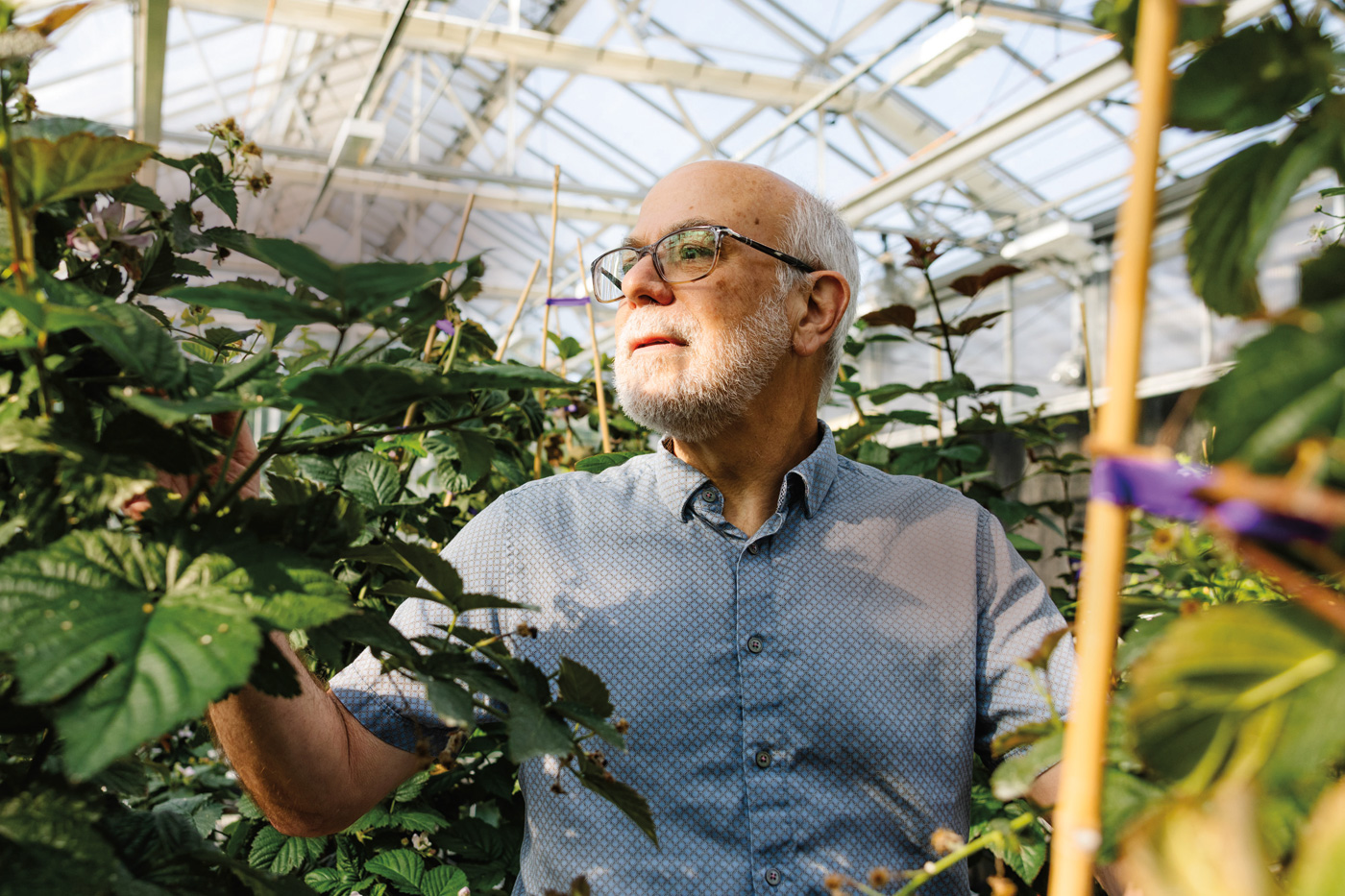
Photos by Anna Routh Barzin, courtesy of Pairwise
Wasn’t the specific innovation with mustard greens about reducing the inherent bitterness, for flavor enhancement?
It often gets referred to as bitterness, but there’s actually a spicy wasabi flavor that mustard greens have. It’s a biochemical reaction that happens when you chew the leaf. There’s a compound and an enzyme. When you break the cells, those things come together, presumably as a defense mechanism that mustards have when deer come and eat them. So, we eliminated the enzyme and the substrate for the enzyme so that it wouldn’t make that flavor.
I know you get a lot of questions about how CRISPR differs from GMOs. How do you explain this technology to someone who is wary about biotech in food?
CRISPR is a modern breeding tool. Traditional plant breeding has always worked by finding and combining the best traits in crops—like bigger fruit, better taste, or fewer seeds—but it can take decades (or even centuries) to get the results people want. CRISPR allows us to do the very same thing, just much faster.
Unlike GMOs, which add genes from other species, CRISPR works only with the same natural variations that already exist within that crop family. It’s like speeding up what breeders have always done, but without all the waiting.
Most of the world is generally moving toward treating gene editing to be basically like traditional breeding.
How have you navigated the regulatory environment in the United States and abroad? Europe, for example, has a far more cautious stance on biotech in the food supply.
Most of the world is generally moving toward treating gene editing to be basically like traditional breeding. Europe is in the process. They have three regulatory bodies. All have independently passed versions of allowing gene editing to be used and they’re in the process of reconciling that. Whether that will take three months or two years depends a lot on the politics, but they recognize that their farmers in Europe need the tools that can come from gene editing. I think there’s a recognition that some of the challenges of climate adaptation might be more readily addressed through gene editing, and if you can help create disease resistance faster in crops and eliminate some of the pesticides, that fits all along with the strong move in Europe to reduce pesticides.
Where do you see the biggest opportunities to impact sustainability?
One of the challenges about climate change is it’s not really change in one direction. One year you will have droughts and the next year floods. Our natural desire is to have one magic bullet that fixes all problems. I don’t think that’s probably the right way to think about it. But I’ve been impressed with some of the things that we’ve been able to do.
We’ve created in our relationship with Bayer a soybean that is resistant to Asian soy rust, that they’re in the process of testing. There’s a massive amount of fungicide that’s used in South America to protect against Asian soy rust. I don’t think it will eliminate fungicide use, but it could greatly reduce the amount of fungicide being used.
Our partner, Corteva, has been very vocal about what they want to do in disease control, and they’re trying to put a bunch of disease-resistant traits into corn and other crops using gene-editing type tools. So, I think that potential is really there.
Cacao is an ingredient crop that’s been on a roller coaster regarding supply, pricing, and availability. You recently announced a partnership with Mars to help address this. Do the challenges and opportunities differ from other crops you’ve worked on?
One of the differences between cacao and corn, for example, is that with corn, you’ve got a very consolidated seed industry. So, you can take technologies and deploy them rapidly, whereas with cacao breeding, there aren’t really big cacao breeding companies. Companies like Mars and Nestlé are really just receivers because all they care about is the raw material.
I really give Mars credit for stepping up and saying, ‘We’re going to be part of the solution here to make sure that we have cacao for generations to come and help to build in the traits that need to be built in.’ But you start with a tree crop and you have to develop systems for transforming them and getting the machinery in for doing the editing. Then once they have the modified versions that have more tolerance, they’ll have to figure out how to distribute those and get them in growers’ hands.
Do you see the biggest long-term potential for CRISPR in supply chain and agricultural efficiency, or in product innovation?
I think it depends on the crop. We see fruits and vegetables, especially fruit, as an area that’s been underinvested in from a breeding perspective because there are very long timelines to create products. You breed a new cherry. Cherry programs are 20- to 25-year timelines. So, it’s not like there’s a rapid innovation opportunity there. Whereas [with] corn, billions of dollars are being spent driving new varieties of corn that produce incrementally more yield every year. So, the opportunity to really create change and accelerate innovation in the fruits and to some extent in the vegetables, is really large.
Those innovations could benefit both the consumer and the grower because you don’t need to make as many trade-offs if you can use gene editing. So, maybe you have a great tasting blackberry that doesn’t have as good a ‘shippability’ as you’d like, and if we understand what to do to modify the shippability traits, we can keep the great taste and add the shippability. I think it can play both ways.
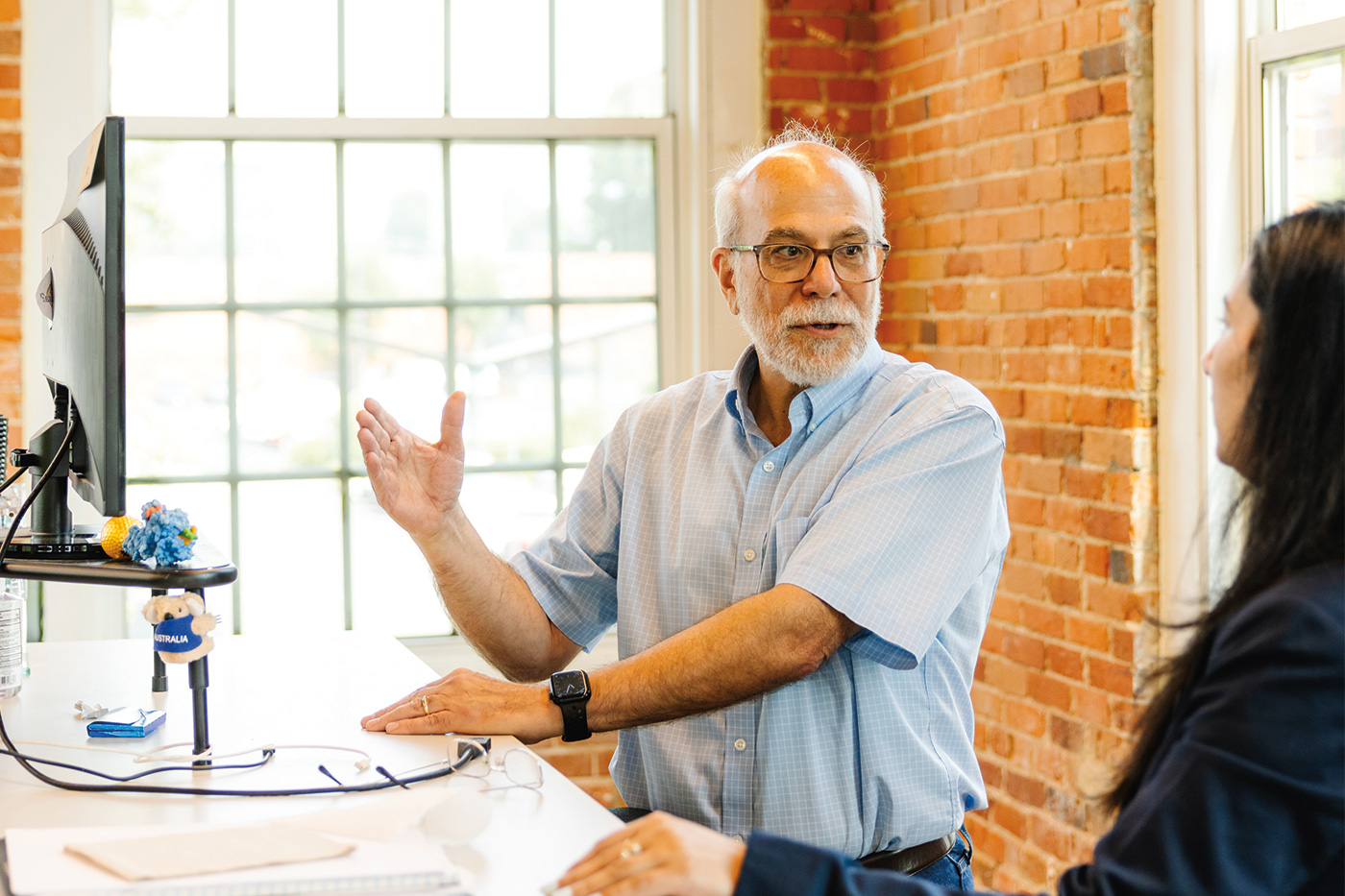
Photos by Anna Routh Barzin, courtesy of Pairwise
Are there breakthrough traits that still elude you?
Getting rid of the stones in stone fruit. We really want to see our ability to move beyond blackberries into cherries and then peaches and plums. There’s no reason that we have to have stones in our stone fruit. That’s, I think, a great consumer trait. Relative to the compact blackberry bushes, I think that’s a trait that can be driven through a lot of fruits as well, where we can drive higher yields by getting higher-density plantings, driving our flowering times to different windows and being able to make things more productive.
When we think beyond, that’s blueberries, raspberries, all the grapes, [where] we can drive productivity per acre much, much higher. We think about things like shelf life and being able to preserve the good flavors for longer periods of time, [which] plays to both the supply chain and to the consumer. I think it all boils down to taste, productivity, and shelf life.
What do you see as the benefit for food scientists? Do you foresee the range of ingredients expanding, or just improving the traits of the ones already on their bench?
When you talk about things like natural food dyes, those are all being produced in various crops. There’s definitely potential for using gene-editing technology to help to drive the production of those to a higher level, improving access to what currently are cost limiting. With some spices like saffron, you can certainly imagine ways in which you can drive production. Vanilla, some of these things that are really expensive, you could drive more production.
In terms of traits we’re working on, flavor is critical and it’s not genetically as complicated as we might think. Often the components of olfactory and things like that are simple molecules, and being able to make minor tweaks in the pathways using gene editing is certainly there. For example, blueberries don’t have very much olfactory, but they have compounds that could provide more of a scent, which could drive the flavor to another level. That would be a good combination of genetics and food science to make that happen.
What’s the role of AI in all this? How do you foresee it accelerating these improvements?
Yeah, we’re doing a lot of thinking about that. There’s opportunity anywhere you’re handling lots of data where you can make that smoother [and] take out some of the human error. As we are working with all 30,000 genes in a crop at a time, you can start sorting through that data and understand which genes are making the biggest impact.
If you look ahead a decade, what do you hope is Pairwise’s most important contribution to food and agriculture?
I’d love to see you go into every grocery store and find stoneless stone fruit. That makes an impact on people eating more fruit because it’s easier for them to eat, easier for them to transport around and not have to worry about what am I going to do with this pit after you eat it. I’d love to see an increase in the consumption of fruits and vegetables.
I think from a technology perspective, we’re still at the very early days of CRISPR. But we’re seeing rapid increases in the flexibility of the editing tools. I would love in 10 years to be in a position where you can make any change in any plant pretty facilely so that you can start exploring these opportunities just like breeders do.
Coupled with breeding, being able to create a lot more variety and then test them to figure out which ones are the ones that you really want to send forward [is a goal]. I ate something the other day that came out of a breeding program where they’re blueberries that taste like peaches. I would never think to do that today with gene editing. But I’d love to see us in a position where we can couple it with breeding and accelerate those kinds of interesting outcomes.ft
Vital Statistics
Previous Experience: Vice President, Global Biotechnology, Monsanto; former faculty, Texas A&M University, Department of Biology
Education: PhD, Microbiology/Plant Science, Michigan State University; BS, Botany and Plant Pathology, Oregon State University
Career Highlights: Directed development of major biotech traits in corn, soy, cotton, and other row crops at Monsanto; led yield and emerging technologies group advancing next-gen breeding platforms; served as key architect of Monsanto’s gene-editing and genomics strategy, including investing in Pairwise; oversaw launch of the first CRISPR-edited food in the United States
Recent Partnerships: Mars Inc. (climate-resilient cacao); Corteva (gene-editing solutions for climate resilience); Sun World International (pitless cherries)
Board Service: Plastomics (chloroplast gene editing)
LinkedIn: Meet Tom Adams
Hero Image: Photos by Anna Routh Barzin, courtesy of Pairwise
Authors
-
Bill McDowell Editor-in-Chief and Vice President of Content Strategy
Bill McDowell, Food Technology editor-in-chief and vice president of content strategy, directs integrated editorial strategy across IFT’s print, web, and emerging digital platforms.
Categories
-
Food Categories
-
Omics and Genomics
-
Biotechnology
-
Novel Technologies
-
Issues & Insights
-
Food Technology Magazine
-
Fruits
-
Vegetables


