
Andrew Bremer’s Holistic Nutrition Vision

Andrew Bremer wants to change the way nutrition research is done. He wants to upend a long history of what he calls “nutritionalism,” which focused on isolated health conditions and nutrient-focused studies.
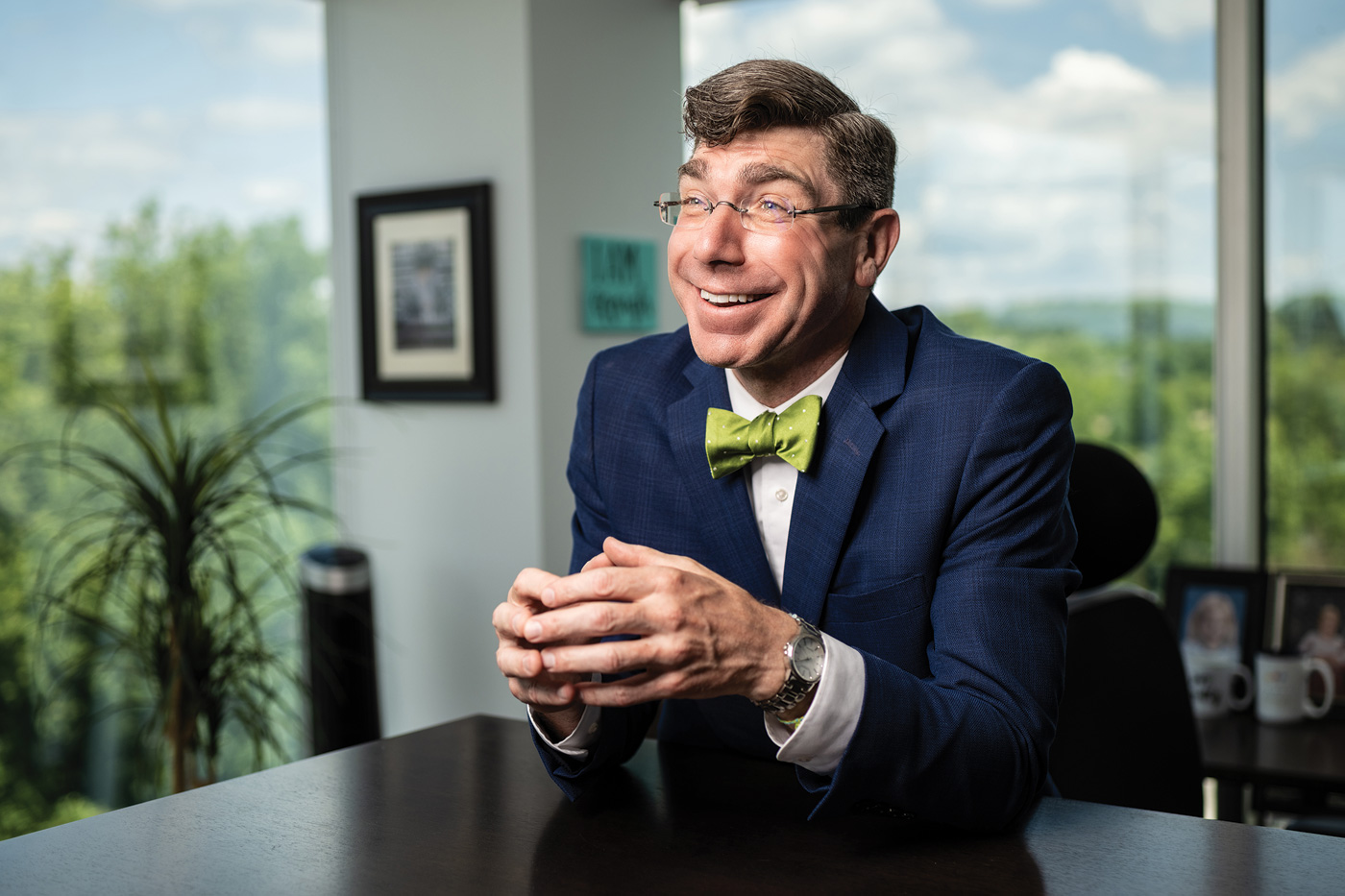
Now he’s got the platform for doing that. Bremer became director of the National Institutes of Health (NIH) Office of Nutrition Research (ONR) last September.
If he succeeds, the NIH will back studies focused on how comprehensive dietary patterns affect the whole person and how outcomes vary for different people at different life stages. That might mean less confusion stemming from ingredient-focused research—such as a “coffee is good for you” study published one month followed by a “coffee is bad for you” study the next. But, more importantly, Bremer would like to see nutrition researchers and food scientists work much more closely to solve what he sees as an urgent nutritional crisis where malnutrition is widespread even when food insufficiency isn’t. The crisis, Bremer believes, goes beyond health to undermine the U.S. economy and national security.
Bremer’s holistic “nutritional ecology” and “food-is-medicine” focus areas stem from a well-rounded medical background. He’s a board-certified internist, pediatrician, and pediatric endocrinologist who also has a PhD in pharmacology.
Food Technology interviewed Bremer to get his perspectives on a range of issues, including how he wants to change the fundamentals of nutrition research, the effect of new and popular anti-obesity drugs, and what role he sees for food scientists. He believes food processing and “ultra processing” have been a sort of “natural experiment” that played out for decades and had unintended consequences. But he also believes it’s time to break down silos between nutrition research and food science, and that food scientists can learn from that experiment to design products that are healthier for people and the planet.
What brought you to this position and made you want to take this job?
I practiced medicine for a number of years and absolutely recognized firsthand the impacts and importance of nutrition on health. I’m not a basic-science-trained nutrition scientist, but I worked closely with registered dietitians all through my clinical years. And that just reinforced to me the importance of nutrition and also thinking about nutrition holistically, not just in silos—this vitamin, that nutrient. People don’t eat that way. We eat foods.
The current way that nutrition is taught is very reductionist. We talk about micronutrients, carbohydrates, fats, proteins. We don’t talk about food. This is my tenth year at the NIH. When I came into government, it was focused on applied science and how we can think about research and science to improve health. Being an endocrinologist, a lot of my work was in the endocrine space. Nutrition is fundamental to how the body works, and that was an area [where] the field itself hasn’t moved forward in many decades.
So, long story short, when the opportunity came to be in this office, I saw that as an opportunity to really revolutionize how nutrition science is conceived and conducted, to really think about how to do nutrition science in a way that’s going to move the field forward and expand that field and leverage the current technologies and the advances in science that happened over the past 10 years. So to take away the silos if you will and really expand nutrition science to be more than just about nutrients, but how those foods, nutrients, and metabolites interact holistically with the body and impact health.
The current way that nutrition is taught is very reductionist. We talk about micronutrients, carbohydrates, fats, proteins. We don’t talk about food.
You bring a really interesting and varied background. Is that part of the holistic approach and is that going to shape the direction of NIH research?
I think appreciating an individual’s nutritional status as a fundamental biological variable is key. And that hasn’t been historically done. Individuals are super complex.
I got my medical training in internal medicine and pediatrics. I took care of folks throughout the entire lifespan. So I had an appreciation clinically just how nutrition impacted [people]. Whether it be the 28-weeker who was born premature or an infant or the 80-year-old, the impact of nutrition is relevant at every age and stage of life.
Nutrition touches every cell and every system in the body. But no one really had the cabinet of tools to really assess nutritional status. So what I’m hoping our office can bring to the table are some new methodologies—really how do we think about and incorporate those measures into the science?
I think it’s extraordinarily relevant and necessary for advances in the food-is-medicine space and the precision nutrition space to get a handle on nutritional assessment. That’s been an elephant in the room, something that hasn’t been done yet, just because it’s hard. Someone’s nutritional status goes far beyond just what they put in their mouths and eat. It’s impacted by their environments. It’s impacted by their social factors.
Nutrition touches every cell and every system in the body. But no one really had the cabinet of tools to really assess nutritional status.

This nutritional ecology you’ll hear me talk about is just appreciating that individuals are super complex, and we have our own internal biology and our own age and developmental stage and genetics and our own microbiomes and all those things internally. But we also live in a world that’s influenced by where we live, what we have access [to], equity issues, environmental issues.
What would you say are your research priorities?
One of our main priorities is to really revolutionize how nutrition science is conceived and conducted. Under that main charge is recognizing that there is a nutritional ecology and that individuals are complex and there are myriad factors that can impact someone’s overall nutritional state.
Recognizing that nutritional state is imperative in conducting research. That is a fundamental variable that is going to influence how an individual reacts to a certain intervention or a response to a therapy. It’s a fundamental aspect of a person.
Our priority for the office is really focusing the relationships between food systems, climate and environmental changes, and health outcomes. Food scientists are right there in that game. We’re also very invested in the food-is-medicine space to really optimize those types of interventions. Understanding an individual’s nutritional status is going to be paramount for their efficacy.
Then the third, a big one, is this paradigm of precision nutrition. How can nutrition optimize an individual’s health, and what is the optimal nutrition for a given individual at a given age, given their stage in life and overall health context? Those are very nuanced questions, and so we really try to provide that road map and those tools to ask those questions.
With the disciplines involved in holistic nutritional ecology, artificial intelligence, environmental science, sociology, where does food science fit in?
It’s a part of the solution to where we’re going. I think of it as systems biology. Most areas of science now are all systems mainly. We have the tools in place in order to really go through to assess large amounts of data and use that to make algorithms and other types of paradigms that can help influence things.
Where food science comes into play is that there will always be a need for food. Earth is expected to be the home of almost 10 billion people by 2050. And the goal of feeding the global population is noble and super important. Current agricultural practices are not sustainable; they use 40% of the earth’s land surface and 70% of its freshwater, contribute up to 25% of the planet’s greenhouse gas emissions, and add to air and water pollution. Where food chemists come into play is how can food be produced and/or processed and manufactured in a way that can help feed the globe, but in a way that’s healthy.
What we learned from the natural experiments of current food processing and ultra processing is that those processes have, I think, unintended consequences of adversely impacting health. So, where I see a huge opportunity for food scientists is to, from that natural experiment, not repeat things that have happened in the past but rather be super engaged in the design, implementation, and generation of food products that can be scalable and distributed at a global level that are healthy, rather than designing foods that have an unintended adverse [impact on] health.
How can food science researchers collaborate with nutrition science researchers to bring forward more comprehensive insights, and what would you say are the keys to breaking through the silos?
There’s been the traditional nutrition research, which follows, I think, this antiquated paradigm of nutritionalism, where investigators studied proteins, carbohydrates, fats, vitamins, minerals, all in silos.
I don’t want to minimize that, because, in an era of food scarcity, that was super important. Nutrition science was based on the premise of what was the minimal amount of a certain nutrient to prevent disease. But it was never asking the question of what is the requisite amount to optimize health? Those are two very different questions. A lot of great health benefits occurred in that era of nutritionalism.
Now, we’ve gone to the other side, where it’s not a matter of eating individual nutrients, but what are the dietary patterns and the health effects of those dietary patterns? Right now, unfortunately, our dietary patterns are the leading cause of malnutrition.
Food scientists are front and center with the foods that are being produced and manufactured today. I think we’re in a space now where we realize that our current Western manufactured diet is one of, if not the biggest, risk factors for death globally.
We have the issue of feeding the entire globe. We’re learning about how the current dietary patterns are causing adverse health. So now you have the researchers asking the mechanistic biological questions: What is the biology and what’s the mechanism by which our current diet is causing adverse health outcomes? Taking that information, and then joining our peers and food scientist colleagues, that’s where the answer is going to happen.
Right now, unfortunately, our dietary patterns are the leading cause of malnutrition.
The research community, their training is not how to manufacture these food products. They’re looking at the biological effects. But taking that information to the food scientists and saying, ‘How can we manufacture foods in ways that aren’t going to have these biological effects?’ and ‘How can we do this in a way that promotes human and planetary health?’ That’s where the green opportunity is, because these two communities don’t often talk.
How can the concepts of food-is-medicine and precision nutrition advance the population’s health, and what will it take for these approaches to be adopted?
One of the overall premises of precision nutrition is appreciating what are the nutritional needs for an individual given their age, stage of life, and health contexts to optimize their overall health. That can be at a sub-population level. That can be at a personal level.
What we’ve learned historically is that a one-size-fits-all dietary pattern is not going to have the same health effects for everyone. There are going to be responders and non-responders. That’s where the science becomes interesting, because then the question is why?
As we dive into that space and learn more about the nuances, particularly at a sub-population level, that’s where I think food scientists can have extraordinary impact, because they think about how to create and manufacture foods.
It’s thinking about how to create food with health as the focus as opposed to just calories. Historically, the goal was to get enough calories in the individuals across the globe so people don’t starve. Now, there’s still tremendous food insecurity, so don’t get me wrong. But our current system was built to feed the globe, not necessarily feed them a healthy diet. That’s where I think the paradigm shift can happen with food scientists.
You’ve written about nutrition as a biological variable. What does that mean?
At a fundamental level, it's the adequacy of someone's diet to impact and optimize their health. One doesn't always understand that by just measuring a waist circumference or performing anthropometry.
The legacy I would love to leave for this office is to have a scientifically and rigorously proven methodology in place so that individuals across the health-care and research spectrum have the tools to better assess someone's nutritional state. It's only by knowing that that then you can make informed decisions about interventions. That's transformative.
We as a medical community and scientific community still don't have a good handle on what defines malnutrition. By focusing on nutrition as a biological variable, we will hopefully become much more adept at assessing whether individuals have a sufficient nutritional status or not. And if not, what are the deficiencies, and then how can we fill those deficiencies?
What impact will the newly approved anti-obesity drugs have on the population’s health, and do you believe they create opportunities for food product innovation?
Absolutely. Lots of loaded questions there. I think one potential unintended consequence actually of the anti-obesity medications is worsening nutrition.
If we were to cure hunger today within our current system, we would absolutely not make a dent on malnutrition. Food insufficiency still exists, and there’s still a lot of undernourished individuals, which is heartbreaking. But that’s not the main driver of malnutrition.
The potential for food scientists in this space is for individuals who are on these medicines. These new anti-obesity medications are very potent and the weight loss is quite profound. If the thought is that I can take a medicine to lose weight, then I can eat anything I want, that may not be the most healthy option.
I think one potential unintended consequence actually of the anti-obesity medications is worsening nutrition.
We often link an unhealthy diet with obesity. But now we’re in a situation where we can have a tremendously unhealthy diet and, because of the medicines, be lean. But I would say very lean and very malnourished.
Where I see a tremendous opportunity for the food science community is how to think about food preparation and manufacturing with health in mind, not calories in mind. How can foods be produced, formulated, and generated that are culturally appropriate and acceptable, that are dense with the appropriate nutrients and aren’t going to have ingredients that potentially cause unintended consequences?
That’s where the research community comes in, and where there could be joining of ideas.
How would you say your experience as a medical doctor has shaped your perspective on nutrition?
In medical school, I quickly learned that some of the most important people on your medical team are the nurse and the dietitian, not necessarily the doctor.
I had the privilege of taking care of individuals throughout the entire lifespan. You recognize that, not just in pediatrics, but in the entire lifespan, the nutrient needs for optimal health are very dynamic, and they change throughout the entire lifespan. Even in adulthood, it's not static.
That’s why this concept of nutritional ecology is so important. It's not just after you finish growing that your nutritional needs are the same forever. They all depend on context. For example, for women during pregnancy and lactation or during menopause, and for older adults, nutritional needs are constantly changing.
We have lots of tools in our in our tool kit as physicians, but we often overlook the importance of diet and nutrition as a tool. When we talk about bringing groups that may have been traditionally siloed together again, this is where the registered dietitian community [comes in]. Dietitians know how people are going to eat, and the food scientists are going to have the technology and hopefully data and evidence base to engineer foods that have healthful consequences. Those two communities hopefully will be communicating and engaged together too.
Last year, you were involved in a workshop that addressed environmental contaminants and food and risk communication. How worried should we be thinking about these topics and what conclusions have you come to regarding risk communication?
A common theme when you think about it is [that] context matters. So, what's the potential risk of eating something, but then what's the risk of not eating something?
I use human milk as an example. Many mothers have trace amounts of arsenic in their human milk, but that doesn't mean that exposing their infant to human milk is harmful, because, putting it in the right context, the benefit may have a much higher order magnitude impact than the risk.
So that workshop was successful. I think it mitigated some of the concerns that the public may have when it when it comes to trace elements or potential contaminants in food. What’s not often communicated well is what are beneficial properties of that same food that may have a trace contaminant.
In the big picture, as you assess the state of nutrition in the United States today, are things improving?
I’m ever the optimist. We are in an urgent nutrition-related crisis. Just to put some parameters on that, about 15,000 individuals die each week from a nutrition-related illness. Each year more people die from nutrition-related diseases and conditions than died during the entire American Civil War or World War II combined.
I think now there’s been more interest scientifically in nutrition than in the past. And so I think where we are is a tremendous opportunity to use the scientific tools that we have to really think differently about diets and nutrition and health. I think we can turn the corner, and I think food scientists are an integral part of that solution.
It’s going to require all hands to address that, and lots of different sectors, by producing food that’s going to provide positive health outcomes to the globe. So I’m not doom and gloom. I think we are at a point now where we can make an inflection, and we have to do it soon.
It feels like there's more discussion, more publicity, more reporting on nutrition issues today than there used to be. But do you think that's true? And even if it is, do you think public understanding is improving?
I think it is more in the media now, maybe the unintended consequence of these new anti-obesity medications. Now, with the rates of obesity and diabetes being such that they are, and the economic and national security impact of nutrition-related diseases, I think that's reached a point that people are starting to be more engaged. And then just the profound number of people dying of malnutrition-related diseases and chronic diseases.
What does that mean to the public eye? That's where I think we've missed an opportunity in the past. I still think most of the public thinks about nutrition as a math problem: how much of each macronutrient should I eat? I’d like to change that. I’d like people to view nutrition as the connection between what they eat and their health. Right now, there's no personal connection, and people eat what they like. I think to the general public, there's no consistent guidance. There’s not a lot that's immediately impactful to them.
What’s the state of funding for nutrition research, and what’s the outlook there?
These are tight financial/fiscal times. I don’t want to be self-promoting for more funding for a certain field. But I think I do feel comfortable saying that the return on investing in nutrition research right now could be tremendous.
Historically, a lot of nutrition research has been either non-scalable or non-translatable or contradictory. You can find a research article to support eating however you want basically. Coffee is good. Coffee is bad.
We have the opportunity now to do nutrition science in a way that is going to be profoundly different than it was historically. And so I think we have the opportunity to bring the science into the 21st century with our current tools and technology that can really address a lot of these questions.
Contradictory nutrition research confuses people. Do you think there is anything that can be done about that?
I think as research is described and has been promoted, what often we don’t do as scientists is highlight the limitations of a particular study. We know that that’s not the sexy part.
I think it’s fair to say historically, a lot of the outcome metrics that nutritional sciences focused on haven’t always addressed someone’s holistic health. It’s focused on weight, it’s focused on blood pressure, it’s focused on blood sugar levels, which are isolated metrics but don’t really encompass someone’s overall health.
Now we have AI and we have machine learning. We have the technology to study a lot of different variables all at once. And so I think when it comes historically to nutrition, and especially dietary studies, it’s been a diet for typically a very homogeneous population. And the outcome metrics have been few and far between. And it doesn’t really capture overall health. Now we have the opportunity to do nutrition science in a way that incorporates this, again coming back to this whole ecological approach.ft
Vital Statistics
Previously: Prior to his appointment as the Office of Nutrition Research director, he was the chief of the Pediatric Growth and Nutrition Branch at the Eunice Kennedy Shriver National Institute of Child Health and Human Development.
Publications: Author or co-author of more than 160 peer-reviewed publications
Recognition: More than 20 National Institutes of Health and affiliated institute Director’s Awards since 2016, elected to Vanderbilt Academy for Excellence in Teaching, Western region American Federation for Medical Research Outstanding Investigator Award, Department of Health and Human Services Green Champions Award for research into climate resilience and health equity
LinkedIn: Meet Andrew Bremer
Hero Image: Photo by Jonathan Thorpe
Authors
-
Jack Neff Writer and editor.
Jack Neff is an award-winning business writer and editor (jack.neff@yahoo.com).
Categories
-
Food Health Nutrition
-
Innovation
-
Diet and Health
-
Food Technology Magazine


