

Chocolate’s Next Act
Price volatility and environmental pressures are pushing the chocolate industry toward two new paths: cocoa-free analogs and cell-cultured cocoa.
Key Takeaways
-
Climate change and price volatility are triggering alt-cocoa innovation.
-
Cell-cultured cocoa could deliver “real chocolate,” but regulations and scale-up economics are gating factors.
-
Cocoa-free analogs are a near-term solution, and multiple approaches aim to replicate the taste, mouthfeel, and performance of chocolate.
During the past five years, cocoa prices have fluctuated dramatically—from a relatively stable $2,300 to $2,500 per metric ton in 2021–2022 to a record high of more than $12,000 a ton in 2024. Averaging around $7,000–$8,000 in early 2025, cocoa prices declined sharply later that year and in early 2026.
Many factors influence cocoa’s price volatility. Approximately 70% of cocoa beans are produced in West Africa, mostly in Côte d'Ivoire and Ghana. In late 2023 and early 2024, this region experienced heavy rainfall, leading to floods and black pod disease, followed by a devastating drought. In addition, the cacao swollen shoot virus (CSSV), which slashes yields and destroys trees, ravaged cocoa production in Ghana. These events led to a tremendous shortage of cocoa while worldwide demand for chocolate surged.
Though the price has stabilized in recent months, experts expect the lull to be temporary due to environmental instability and poor land management in West Africa. Extreme weather events leading to crop disease are often attributed to climate change. And cocoa production’s own carbon footprint is huge. For example, since Côte d’Ivoire gained independence in 1960, approximately 90% of its rainforests have been decimated due to cocoa cultivation.
Climate change doesn’t allow us to grow the amount of cocoa that we want.

“Climate change doesn’t allow us to grow the amount of cocoa that we want,” notes Nadav Berger, founding general partner of PeakBridge, a food industry investment firm. While cocoa prices are much lower than they were at their peak, they are still trending upward overall, he says.
Seeking long-term solutions to the cocoa crisis, academic researchers, entrepreneurs, and chocolate confectionery manufacturers have been collaborating on two alternative approaches:
- creating cocoa-free “chocolate” by using analog ingredients
- producing cell-based cocoa by extracting cells from living cocoa beans and cultivating and multiplying them in bioreactors
As Berger observes, the analog approach to chocolate is considerably farther along on the road to mass commercialization than is cell-based cocoa—just as meat analogs gained traction long before the emergence of cell-cultivated meat. But these solutions are not necessarily antithetical.
“We are doing both approaches,” points out Christian Schaub, the CEO of Food Brewer, a biotechnology startup in Switzerland. “And the reason for that is that they are very complementary.”
Analog Initiatives
A growing list of companies, large and small, are collaborating on cocoa-free chocolate analogs. These partnerships include but are not limited to the following:
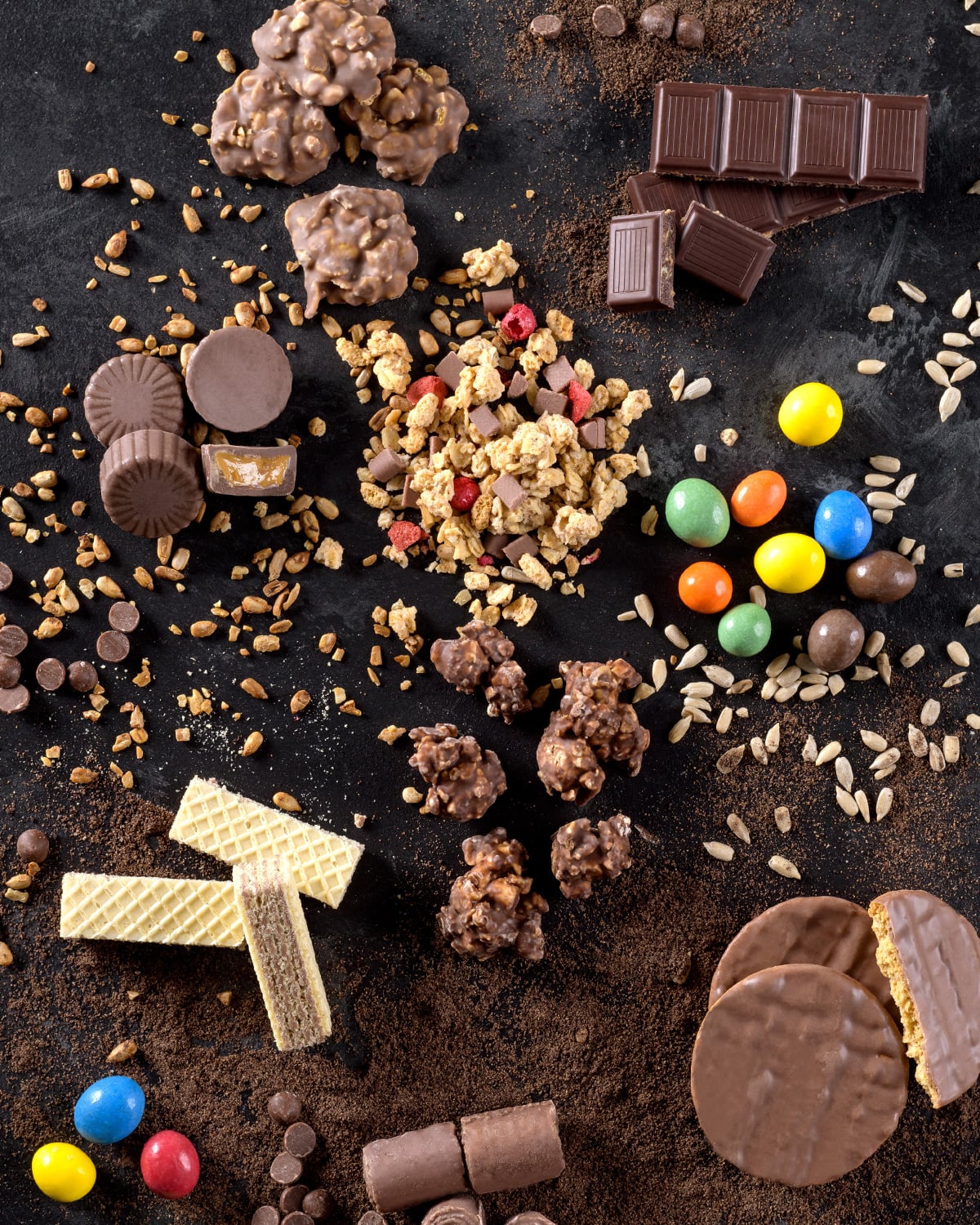
- Barry Callebaut joined forces with German food technology company Planet A Foods in November 2025 to scale up production of cocoa-free products using ChoViva, a chocolate alternative made with sunflower seeds.
- Nestlé Germany earlier this year announced the launch of Nestlé Choco Crossies Snack Vibes, a cocoa-free chocolatey snack made with ChoViva, that comes in three flavors—Classic, Hazelnut, and Salted Popcorn Caramel.
- Italian food technology company Foreverland produces Choruba, a cocoa-free chocolate analog made from carob, pumpkin seeds, and chickpeas. Choruba is being used in a variety of products by the Italian confectionery firms Dulciar, Walcor, and Maxtris, as well as by the Slovenian ice cream maker Incom Leone.
- Cargill and Voyage Foods are working together to commercialize NextCoa, an alternative to chocolate made using upcycled grape seeds as the primary ingredient.
- PeakBridge is the lead investor in Win-Win, a United Kingdom–based firm that uses a proprietary fermentation process to create cocoa-free chocolate analogs.
Although it may seem easier than growing cocoa in a lab, replicating chocolate without cocoa is a formidable undertaking.
“Chocolate delivers a unique combination of flavor, mouthfeel, and performance,” emphasizes Mia Divecha, Cargill’s senior product line specialist for cocoa and chocolate. “Adding to the challenge, chocolate behaves differently depending on the application. Coatings, inclusions, baked fillings, and ice cream ripples each require specific physical properties to work properly. Developing an alternative isn’t a simple substitution. It must provide the key attributes that allow chocolate to function in each of these applications while still offering an indulgent sensory experience. NextCoa was designed with those challenges in mind.”
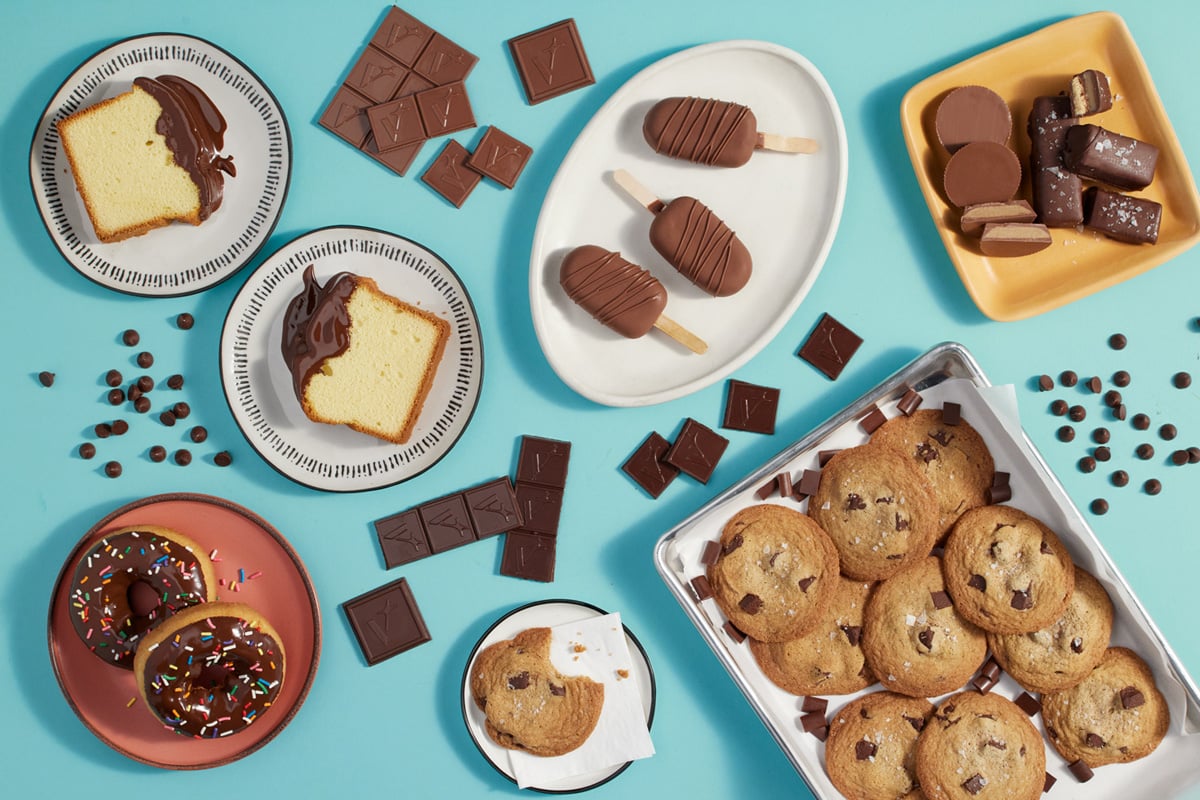
Adam Maxwell, the founder and CEO of Voyage Foods, describes the research and development process behind NextCoa. “Our process starts by creating molecular maps of the transformation of cocoa beans to chocolate, which allows us to identify other ingredients, like grape seeds, that contain similar flavor precursors,” he shares. “Using our patented technology, we apply analytical and process chemistry to transform grape seeds through roasting and thermal processing—many of the same steps used in traditional chocolate making, with a few key tweaks—to develop the same flavors, aromas, color, and texture of traditional chocolate.”
Already commercialized in Europe, NextCoa will be available in the United States and Canada this summer in flavor profiles such as Mild (similar to milk chocolate) and Dark Mild (similar to a blend of dark and milk chocolate). The product is well-suited for coatings, enrobing, inclusions, and baked applications, according to Divecha.
Our product is designed so that it can work in combination with conventional chocolate if required and desired.

Win-Win recently secured distribution deals with Germany-based Martin Braun-Gruppe and United Kingdom–based Keylink, major suppliers of chocolate and confectionery ingredients. In addition, Win-Win Choc, as the product is known, has been featured at three leading London establishments: TOAD Bakery, Lyaness (a cocktail bar), and Apricity (a Michelin Green Star sustainability-focused restaurant).
“At Win-Win, priority No. 1, 2, and 3 is the taste of our product,” says Mark Golder, the company’s CEO. “No matter what else you do to make the product attractive, whether it’s the focus on sustainability or the price, it has got to taste fantastic.” This is particularly true of chocolate, which has nuanced flavors intended to be savored.
Win-Win’s fermentation process is designed to replicate the chemical and aromatic changes that occur when fresh cocoa beans are fermented by naturally occurring yeasts and bacteria. As a result, the mostly rice-based formulation is transformed into a product that mimics the complex flavor profile, snap, and melt of conventional chocolate, according to Golder. “With our fermentation of the rice, we develop something that has all of those chocolatey aromas, and then we combine it with other ingredients,” he says. “It includes a little bit of carob, a little bit of sunflower seed, fats, sugar, some milk (if you want a milk chocolate). What comes out at the end of it looks like chocolate, tastes like chocolate, smells like chocolate, works like chocolate in a factory, but doesn’t have any cacao in it.”
The use of a cocoa-free alternative to chocolate doesn’t need to be all or nothing.
Win-Win Choc comes in milk, dark, and white chocolate analogs. Berger, who sits on Win-Win’s governing board, notes that bakeries and pastry shops are already using Win-Win. “In the second half of 2026, we’re going to have products on the shelf using the Win-Win alternative chocolate,” he adds. “We’re in negotiation with a couple of big players and a big retailer in the United States.”
No special equipment is needed to work with Win-Win Choc or NextCoa; these analogs are designed to be fully compatible with existing industrial chocolate production equipment.
What’s more, the use of a cocoa-free alternative to chocolate doesn’t need to be all or nothing. “Our product is designed so that it can work in combination with conventional chocolate if required and desired,” says Golder.
Cultivated Cocoa on the Rise
Similarly, there has been significant interest and investment in cell-cultivated cocoa:
- Mondelēz International has invested in Celleste Bio, an Israeli food company that uses proprietary technology to produce cell-cultured cocoa butter and powder.
- Through its food tech arm, Sparkalis, Belgium-based Puratos is partnering with California Cultured, which says that its cell-based cocoa powder will be available commercially in the United States by the end of this year.
- Food Brewer’s cell-cultured chocolate enterprise has also attracted investment from Sparkalis, as well as Swiss chocolate giant Lindt & Sprüngli.
- In 2025, Pluri, an Israeli biotech firm specializing in 3D cell-expansion technology, purchased Kokomodo, which has been using cellular agriculture to develop a diverse library of cacao cell lines. Emphasizing that it is helping its customers build “future-ready chocolate portfolios,” Cargill is a recent investor in Kokomodo.
One of the main challenges with cell-based cocoa, as opposed to the cocoa-free alternatives, is that it is considered a novel food product and requires specific regulatory approval before it can be sold, explains Food Brewer’s Schaub. “As a result, cell-cultured cocoa products have to be approved in every single jurisdiction,” he says. Food Brewer is “in very close interactions” with the U.S. Food & Drug Administration (FDA) and is also seeking approval in Europe and eyeing markets in Asia and Latin America, according to Schaub.
In addition, California Cultured has announced that its cell-based cocoa powder is going through regulatory review under the FDA’s Generally Recognized as Safe (GRAS) framework, and Kokomodo plans to file its FDA regulatory submission this year.
Besides the regulatory hurdles, the technology needed to scale up cultivated cocoa production is prohibitively expensive, according to PeakBridge’s Berger. “It will take time to reduce the costs because of the expensive processes,” he says.
One of the main challenges with cell-based cocoa is that it is considered a novel food product and requires specific regulatory approval before it can be sold.
But cell-cultured cocoa does have at least one major selling point: The end product is real chocolate.
“When I eat chocolate, I want it to be chocolate,” says Yaky Yanay, the CEO of Pluri, who emphasizes the healthful flavanols in chocolate as well as its great taste. “When you have a wonderful cacao plant, you should try to use it. That’s what we do. We take what nature gives, but we find a more effective way to grow cacao.” Yanay points out that he expects Kokomodo cocoa to be in products on store shelves in 2027.
A developer of cell-based therapies for regenerative medicine, Pluri is also interested in leveraging the functional benefits of Kokomodo’s many cell-cultivated cocoa lines. “We have the capacity to create different varieties, changing the conditions to make products that are safe for different populations,” says Yanay.
Some individuals involved in cell-cultivated cocoa are skeptical of its potential for mass commercialization in the near future. “I think that lab-grown chocolate will not replace natural-grown cocoa,” acknowledges food technologist Tilo Hühn, a professor at the Zurich University of Applied Sciences, who was one of the first to develop cell-based cocoa in the laboratory. “Cell cultures are not easy or cheap to produce,” he says. “But in my point of view, cell cultures could be used in special applications.”
Balancing Cost, Ethics, and the Environment
The companies that are producing or investing in cocoa analogs and cell-based cocoa all tout the improved environmental sustainability of these approaches and emphasize that conventional cocoa production in West Africa has been plagued by a reliance on child labor and slave labor.
Chocolate production’s impact on climate change has been thoroughly analyzed and is well-publicized. Cocoa “ranks among the highest carbon-emission foods in the world,” states an article in Harvard International Review. Cocoa’s land and water usage, rainforest depletion, soil degradation, and the energy needed in chocolate manufacturing and transportation all factor into the calculation of chocolate’s greenhouse gas emissions.
But a company’s commitment to sustainability and ethical practices is not enough to sell its products, insists Berger. “Of course, taste comes before anything else. But as soon as the product is decent in taste, it’s all about the price,” he says. “Who would pay a premium for chocolate just to do good in the world?
“But it’s not only about pricing; it’s also about ensuring supply,” Berger adds. “If you have a major brand—Mondelēz, Mars, Hershey, and so on—you have to have supply on the shelves; you have to have product. You can’t say, ‘This month, take me off the shelf because I don’t have cocoa.’”
Berger believes that chocolate analogs are the better immediate solution but expects that cell-cultivated cocoa will eventually become more competitive. “The cellular product will improve over time just because of scale,” he says. “If you produce more, you will become more efficient.”

Learn More
Hear Alan Perlstein share the story behind California Cultured’s cell-cultured cocoa in IFT’s Omnivore podcast.
Hero Image: © Zakharova_Natalia/iStock/Getty Images Plus
Authors
-
Carolyn Schierhorn
Categories
-
Food Product Development
-
Formulation
-
Novel Technologies
-
Confectionery
-
Food Technology Magazine
-
Ingredient Trends
-
Sustainable Food Systems
-
Market Trends
![]: Sustainable environment concept. World Environment Day, climate action, the importance of addressing biodiversity loss and plastic pollution to mitigate the effects of climate change.](/cdn-cgi/image/width=1200,height=0/siteassets/pubs/1-food-technology-magazine/2026/07/chocolates-next-act/sustainable-environment-concept-1200x900.jpg?v=639191939740000000)


