

Choosing Climate Solutions That Deliver
Jonathan Foley says meaningful climate progress in food systems requires prioritizing proven, scalable solutions over well-intentioned ideas that fall short.
 Kelly Hensel
Food Technology Magazine
Key Takeaways
-
Climate leadership means making hard portfolio choices—redirecting resources toward interventions that materially reduce emissions and away from initiatives with limited system impact.
-
There are no “free lunches.” Climate strategies must be evaluated across the full system to ensure that reducing emissions in one area does not increase them elsewhere.
-
The biggest levers lie in land use, food waste, fertilizer management, and dietary demand—areas where measurable progress could reshape the sector’s climate trajectory over the next five years.
Food systems shape the planet more than most people realize. They drive how land is used, how water is consumed, and how much carbon is released into the atmosphere. Yet they’re still often treated as a side issue in climate conversations, rather than one of the main forces shaping environmental outcomes.
Jonathan Foley has spent much of his career pushing back against that framing. Trained as a physical scientist studying the physics and chemistry of the atmosphere and the climate system, he came to realize that understanding climate alone wasn’t enough. The bigger story was playing out on the ground—through agriculture, diets, and the choices built into the global food system. After two decades in academia, Foley grew frustrated with how clearly science could identify problems—and how slowly that knowledge translated into action.
Today, as executive director of Project Drawdown, Foley is focused less on what might work and more on what actually does. With climate impacts accelerating and resources limited, he argues that the real challenge is prioritization: deciding what actually delivers measurable impact.
In a wide-ranging discussion, edited for length and clarity, Foley spoke about food systems as a planetary force, the risks of chasing climate solutions that sound promising but fall short, and what meaningful progress could look like over the next five years.
What first pulled you toward food systems as a focal point for understanding climate and sustainability challenges?
I started my career as a physical scientist, thinking about the physics and chemistry of the atmosphere and the climate system. Traditionally, when you’re trained in that area, you don’t really talk about ecosystems and life on Earth, which is really what makes this planet so unique and complex.
I became more interested in the interface between biology and climate. And once you look at ecosystems through that lens, it becomes impossible to ignore the human footprint on them.
Food systems account for most of that footprint. We use approximately 40% of land and 70% of freshwater to produce food. Agriculture drives nutrient pollution, biodiversity loss, and a significant share of greenhouse gas emissions. No matter how you measure it—land, water, chemistry, or carbon—food systems are central.
What struck me early on was how rarely food was treated as a planetary-scale force. We studied it farm by farm or field by field, but not as one of the dominant ways humans shape the planet.
Looking back on your academic work in food and agricultural systems, what felt unresolved or limiting about how those insights were being translated into real-world action—and how does Project Drawdown help address that gap?
I spent about 20 years as a professor, and I loved a lot about that work—teaching students, collaborating with colleagues, and having the freedom to pursue research questions.
But I was also frustrated. Academia is very good at diagnosing problems. We can describe what’s happening and why it’s happening with a lot of precision. What we’re much less good at is helping society figure out what to do next, especially at scale. I felt a strong sense of responsibility to give back in a more direct way.
That led me to a stint as the head of a science museum in San Francisco, where I learned a lot about making science accessible and engaging to the public. I also realized I wanted to be more hands-on around a particular issue. Climate change is probably the most urgent—though not the only—but it’s one of the most urgent environmental, social, and economic challenges of our time. I was asked to lead Project Drawdown about seven years ago. What appealed to me was the focus on solutions—not advocacy, but rigorous evaluation of what actually works, what doesn’t, and where to focus limited time and resources.
You were recently recognized with the Stephen H. Schneider Award for climate science communication. How has working in food systems shaped the way you approach communicating complex science, especially when solutions involve trade-offs?
Food systems are emotionally charged. Food is personal, cultural, and deeply tied to identity, which makes these conversations harder—not easier. One thing I’ve learned is that plain language doesn’t mean dumbing things down. If anything, it forces better science. If you can’t explain something clearly, you probably don’t understand it as well as you think you do.
Talking with people across the food system—farmers, manufacturers, retailers—also challenges assumptions that are easy to make in academia. When you engage with people working in the real world, you realize how much complexity there is beyond what shows up in models or papers.
There’s also a lot of misinformation around food and climate. You have to be willing to speak plainly, meet people acting in good faith with respect, and still push back when claims aren’t supported by evidence.
Also keep checking your own assumptions. Make sure you are in fact speaking the truth and not just what you want to believe. Do what scientists are supposed to do—interrogate your ideas against real data and continue to do so.
Trade-offs are unavoidable in food systems. There are very few solutions that are purely good or purely bad. Communicating that honestly—without oversimplifying or sensationalizing—is one of the most important roles scientists can play right now.
The biggest lever is diets—what we choose to grow and eat.

“Circular food systems” is a term that’s getting a lot of attention. From a systems perspective, what does circularity actually mean when applied to food—and where is it most misunderstood?
Honestly, I have no idea what it means anymore. It’s a term that gets thrown around without very precise definitions, just like “regenerative.” I’ve been around long enough to watch these terms cycle through the food system: organic versus conventional, agroecology, conservation agriculture, precision agriculture, regenerative, and now circular. A lot of these ideas overlap, but over time the language has actually become less precise, not more.
I’m a numbers person. When I look at the numbers behind some of these claims, they’re often sloppy or cherry-picked. There are good ideas here, but they get hijacked for greenwashing. That’s why rigor matters. If a term is supposed to mean something, it needs rigorous meaning.
With circularity, I get the sentiment: don’t extract from a system without replacing what you take out. But what does that actually mean in practice? Are we talking about water? Carbon? Nitrogen? Phosphorus? And how does that work at scale?
What worries me is that these terms can distract us from much bigger questions. It’s not just how we farm land—it’s what we farm, how much land we use, and what we demand from the system in the first place. Roughly 37% of the world’s land is used for agriculture, and about 29% of that is for beef and other animal production. That’s enormous.
The biggest lever of all is diets—what we choose to grow and eat. Then there’s food waste: roughly 40% of all food produced globally is lost or wasted along the way. If we only focus on farming practices after we’ve already decided how much land to use and for what, we’ve already lost half the battle.
A lot of these ideas start from a good place. But if we’re not willing to ask hard questions about land use, demand, and scale, then we’re not serious about fixing the food system.
You’ve pointed to diets as a powerful lever in the food system—but also one that’s deeply personal and cultural. For food scientists working in product development and manufacturing, where do you see their most realistic opportunities to influence change?
We’re not in the business of telling people what to eat. What matters more is expanding the number of good options available and making better choices easier. Diets change all the time, despite what people like to say. Food cultures evolve constantly, and small shifts, especially away from the most resource-intensive foods, can have outsized impacts. Food scientists and manufacturers play a real role there through formulation, product design, affordability, and accessibility.
But diet isn’t the only choice we make every day. Another huge one is food waste.
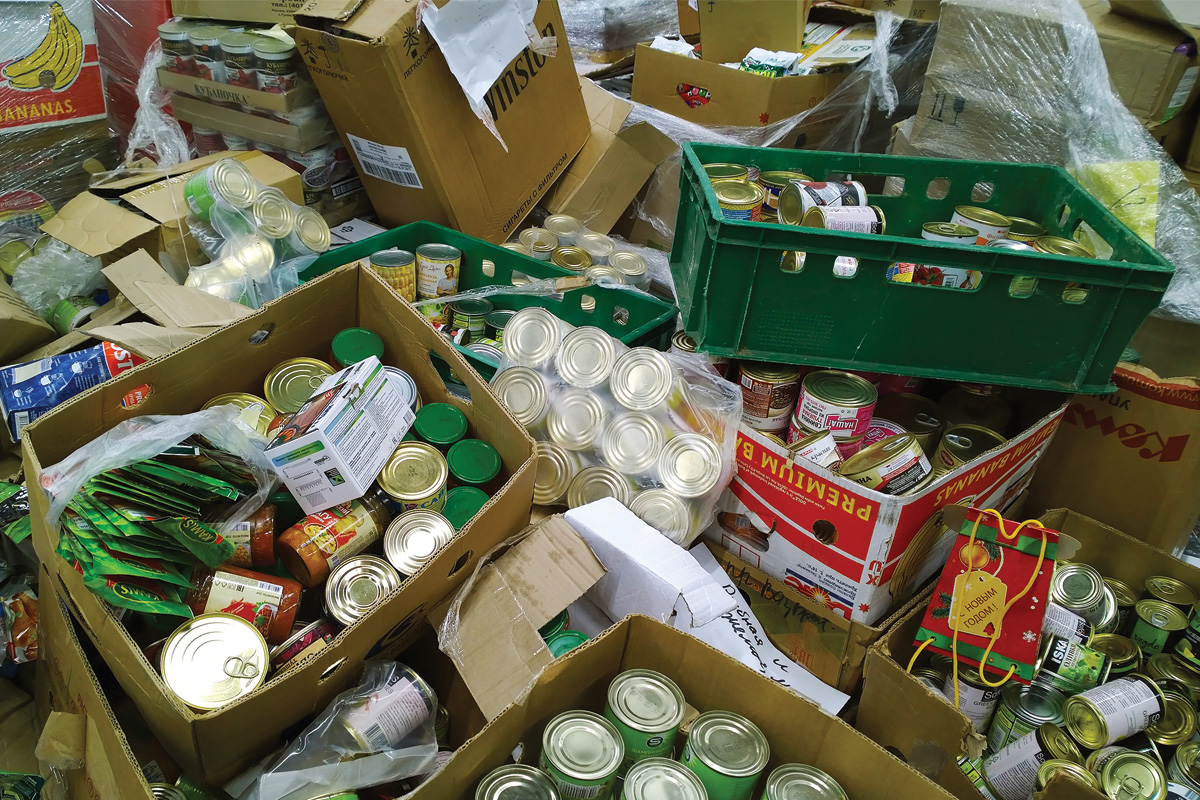
Food waste is shaped not only by consumer behavior but by system design—from production and packaging to distribution and retail. © NVS/iStock Editorial/Getty Images Plus
Roughly 40% of food is lost or wasted globally—not just in wealthy countries, but everywhere—and that’s pretty shocking when you step back and look at it. All of the land, water, fertilizer, energy, and emissions that went into producing that food were effectively unnecessary.
A lot of waste doesn’t come down to individual behavior alone. It’s shaped by how the system is designed—by processing decisions, packaging formats, shelf life, portion sizes, and how well products actually fit real consumption patterns. Food scientists understand that system better than almost anyone.
What’s frustrating is that we often pour enormous effort into small, downstream fixes while avoiding bigger questions. We work very hard on technical band-aids instead of asking whether we could waste less food in the first place or reduce demand for the most resource-
intensive products.
And the co-benefits of getting this right are enormous. Preventing food waste doesn’t just reduce emissions—it lowers food costs, improves food safety, and saves all the land, water, energy, and inputs that went into producing that food in the first place. The environmental impact of growing food that never gets eaten is far larger than what happens to it in a landfill.
That’s why food loss and waste consistently show up as one of the most powerful climate solutions. It’s one of the rare cases where economic, environmental, and social benefits all line up—but only if we’re willing to look upstream and ask the harder questions.
The key is to evaluate outcomes, not intentions.
When companies try to act on these levers—whether around diets, food waste, or efficiency gains—they often run into trade-offs. How should those trade-offs be evaluated through a climate lens?
There are no free lunches. Every intervention has trade-offs, and pretending otherwise leads to bad decisions.
The key is to evaluate outcomes, not intentions. Does a strategy reduce net emissions? Does it make the system more resilient? Does it actually scale?
It’s very easy to optimize one part of the system while making another part worse. You can reduce waste in one place and quietly increase energy use or resource demand somewhere else. If you’re not looking at the whole system, you miss that.
That’s why rigor matters. We don’t need more good-sounding ideas. We need to know what works, what doesn’t, and where limited time and resources are best spent—especially now, when we don’t have the luxury of chasing every possible solution.
The Drawdown Explorer evaluates climate solutions based on current evidence, and some high-profile food innovations fall into categories like “keep watching” or “not recommended.” How should industry leaders interpret those distinctions?
The basic question we’re trying to answer is simple: Does it actually work? And if so, at what scale, and with what trade-offs?
A lot of money, effort, and attention are flowing into climate solutions right now. Wouldn’t it be good if we knew what to do—and what not to do? That’s really what the Explorer is for. We evaluate every solution using the same criteria, the same evidence standards, and independent review, and then we’re honest about where it lands.
Some ideas are proven and ready now. Some are worth watching but aren’t delivering impact at scale yet. And some, based on the evidence, just don’t work from a climate perspective.
We don’t have the luxury of chasing ideas because they sound innovative.
Vertical farming is one example that often surprises people. How does Drawdown evaluate technologies like that?
From a climate point of view, vertical farms don’t work. They emit far more carbon than people assume.
When you look at the full system—the energy needed for lighting, heating, cooling, and pumping water, along with the carbon-intensive materials used to build them—you’re putting a lot of emissions into growing a very narrow set of crops. In practice, it’s expensive salad greens for relatively affluent consumers, produced at enormous environmental cost.
What’s especially important is that the alternatives are clearly better. Shipping greens from California in the winter has a much lower climate impact than trying to grow them in a glass and steel box in a cold climate. So it’s not solving a real problem—it’s adding cost and emissions.
We don’t have the luxury of chasing ideas because they sound innovative or attract funding. The planet is already under stress. We’re in triage now, and that means prioritizing solutions that actually work at scale, based on evidence—not hype.
Looking ahead five years, what would meaningful progress toward more climate-resilient food systems actually look like?
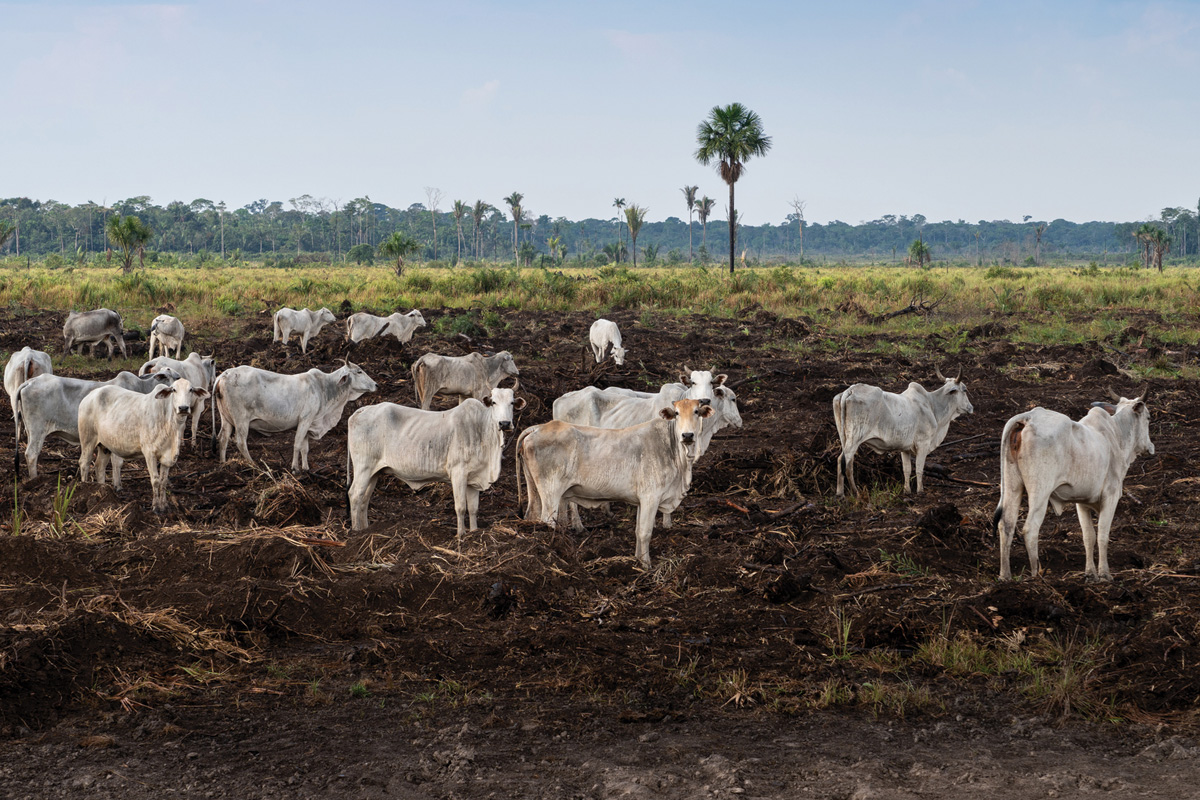
I’d like to think we could make real progress on at least a few big fronts. First and foremost, stopping deforestation for agriculture would be enormous—from both a climate and biodiversity perspective. Tearing down tropical rainforests for a few more cows or a little more palm oil is a terrible trade-off, and it’s one we already know how to avoid.
We should also be able to make much better progress on how we farm, especially by reducing excessive fertilizer use. We’re simply using too much nitrogen, and there are proven ways to cut back without sacrificing yields.
Food waste is another area where I’m cautiously optimistic. With the right mix of innovation, market forces, and system design, that’s something we could realistically reduce in the near term.
Diets are harder. In theory, they should be able to change—we change them all the time—but the direction of change right now isn’t encouraging, at least in the United States. That’s where I’m more conflicted.
My biggest concern, beyond deforestation, is methane from animal agriculture. The band-aid approaches we’re relying on now aren’t nearly as powerful as rethinking animal production itself. The real question is whether we tackle that challenge head-on—or keep nibbling around the edges for another five years.
Vital Statistics
Current Role: Executive Director, Project Drawdown
Previous Experience: Executive Director, California Academy of Sciences; Director, Institute on the Environment and Professor, University of Minnesota; Director, Center for Sustainability and the Global Environment (SAGE) and Professor, University of Wisconsin–Madison
Education: PhD, Atmospheric Sciences, University of Wisconsin–Madison; BS Meteorology, University of Wisconsin–Madison
Career Highlights: Author of more than 130 peer-reviewed scientific articles, including publications in Nature and Science; trusted advisor to governments, foundations, NGOs, and business leaders worldwide; frequent speaker at venues including the Aspen Institute, World Bank, National Geographic, and TED
Selected Honors: Stephen H. Schneider Award for Outstanding Climate Science Communication (Climate One, 2025); Heinz Award for the Environment (2014); Presidential Early Career Award for Scientists and Engineers; Sustainability Science Award, Ecological Society of America; National Science Foundation Faculty Early Career Development Award
Linked In: Meet Jonathan Foley
Hero Image: © daqian dong/iStock/Getty Images Plus
Authors
-
Kelly Hensel Deputy Managing Editor
Kelly Hensel, deputy managing editor, print and digital, leads Food Technology’s digital strategy and web-first publishing initiatives.
Categories
-
Food Waste
-
Environmental Life Cycle Analysis
-
Food Technology Magazine
-
Sustainable Food Systems
-
Issues and Insights


