

Taking a Systems Approach To Food Innovation
Food futurist Mike Lee reflects on storytelling as a science communication tool, strategies for balancing sustainability and profitability, and the impact of consumer fragmentation.
 Mary Ellen Kuhn
Food Technology Magazine
Key Takeaways
-
Futurist Mike Lee urges food companies to focus on long-arc patterns shaping the food system rather than chasing short-term product trends.
-
Most shoppers prioritize affordability, convenience, and taste, so companies should integrate sustainability into products in ways that enhance those benefits rather than lead with climate claims.
-
Legacy products often generate the profits that allow companies to invest in transformative initiatives, meaning that firms must balance maintaining core revenue streams while funding long-term sustainability and technology bets.
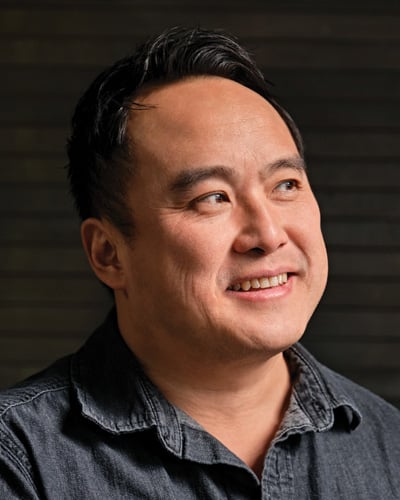
Food futurist and innovation strategist Mike Lee doesn’t much care whether fiber is the new protein or what the next Dubai chocolate will be.
What he does care deeply about is creating a future food system that is sustainable and equitable.
Achieving that goal will require focusing on long-arc patterns rather than chasing short-term trends, Lee says. That means embracing systems thinking, which recognizes that every action a company or organization takes has a ripple effect, he explains, citing the example of plastic packaging for bottled water, which delivers on consumer convenience but comes up short in terms of environmental impact. As founder and principal futurist of consultancy The Future Market, Lee advocates for sustainable innovation that considers both upstream and downstream impacts and creates food and beverage products that satisfy corporate sales goals while advancing public and planetary health.
Lee’s approach to innovation reflects a hybrid of left-brain and right-brain thinking, something he chalks up to an academic background that includes a business degree from the University of Michigan followed by a design degree from the Parsons School of Design. The Future Market uses scenario planning to help clients like Danone, Mars, and Campbell’s envision how food production and consumption may evolve over the next five to 50 years.
To communicate his vision for the future of food, Lee frequently taps into the power of storytelling. Inspiration struck at a food protein conference cocktail party where the most animated conversation in the room wasn’t about the day’s presentations but about the latest plot twist in the fantasy drama Game of Thrones.
“I went back to my hotel room that night and I thought, what if we could communicate the stuff that was communicated at that wonky protein conference, [but] in the language of storytelling that Game of Thrones used?” he recalls.
The result some years later was his 2024 book, Mise: On the Future of Food, which Lee describes as “speculative fiction.” In it, he presents four scenarios that explore how the future will play out as result of current developments in society, technology, the economy, the environment, and politics. It’s a serious exploration of the ways in which today’s actions will impact the future presented in a lively format designed to keep readers engaged.
“The book was written with the food industry in mind as the target audience,” Lee says. “And I was thinking, ‘How am I going get a CEO who has 4,000 emails unread in their inbox and 22 printed-out PowerPoint decks under their desk to read a 204-page book that I wrote?’”
In a conversation with Food Technology, edited for clarity and length, Lee shares more thoughts on storytelling as a vehicle for science communication, analyzes the challenges of consumer fragmentation, and ponders the food industry’s innovation paradox.
You don’t write material about the future for people of the future. You’re writing for people today.
Tell us more about the reasons you chose to write Mise in a speculative fiction format.
When you’re thinking about the future, especially the deep future, it’s very hard for people to imagine it. The future literally doesn’t exist. And so when I say the future of protein might be this, you might have a completely different image in your head of what it is even though you’re hearing the words that I’m saying.
And so I found that if I write it into a story and I put it into pictures, people might agree with it or they might not agree with it. They might love it or they might hate it, but they can’t argue with what I’ve actually defined it as. And I think that once you define it—even if it’s an imperfect future or a future you don’t want—once you actually define it in a specific way, you are now much better able to affect the future. And so that’s what these stories are meant to do—to really provoke you and show you what it might look like in the future if we don’t do certain things today or if we do certain things today.
What do you think it is about yourself that orients you to forward thinking?
I think doing the foresight work is just really having discipline and structure and knowledge about how to engineer your thinking about the future. And it’s not only that, but it’s learning how to translate it to people in the present. You don’t write material about the future for people of the future. You’re writing for people today. … We plan strategies for the future for the people of the present, not for the people of the future.
I don’t tend to look at things in a vacuum, like trying to figure out how to max the protein content of some dairy product. I like to zoom out and also look at what’s the context in which this thing is happening. What are people doing? What’s happening in politics? How are people shopping for food differently? What’s fashionable? How are demographics changing? How is policy changing? I think that instinct to go to business school and then art school is really what led me to how I think today because food is emotional as well as logical.
There’s a lot of logic and science that happens to create food and create a supply chain and make sure food is safe. That’s tons of science, tons of logic. But I find that because we’re selling to human beings who don’t always think consistently, all of that logic can be undone by somebody who just didn’t like the smell of your product.
The current consumer profile is much less of a monoculture. It’s more of a series of these different tribes.
Speaking of how people think and act, do you find that it is getting harder to predict consumer behavior?
I think the thing that we’ve seen in the last 10, 15, or 20 years in the food industry, the CPG industry, is that people are kind of splintering off more into food tribes. When Coca-Cola was first invented, it was designed to be this one-size-fits-all product that everyone in the world was going to love. And that whole business model was built around that. I don’t know if you could start a company like Coca-Cola with a red can of Coke from scratch today.
It’s harder and harder to get everyone to agree on the fact that the sky is blue outside, right? So how do we get people to agree that there’s one soda to rule them all? And you see this inherently in our supermarkets. There isn’t one soda or 10 sodas; there are 100 sodas in the average supermarket.
I think we’ve gotten to this place where through digital media, through people being able to connect with other like-minded people so much more easily, there’s more of a market for niche things. The current consumer profile is much less of a monoculture. It’s more of a series of these different tribes that have different ways of thinking, and, of course, businesses and brands, young and old, create products for those tribes to service them.
I think the tribalism thing is interesting because it very much mirrors how our political climate has gone.
I think the divisions and ideology around politics and society and the world obviously are out there, and I think they bleed into food a little bit. There’s a lot of evidence that I see about this splintering, and I think it changes how we, the food industry, should approach consumer insights, innovation, and marketing. It’s interesting to make that connection to the whole polarization that’s happening everywhere. Food doesn’t exist in a vacuum.
I think inherently the industry underweights the simple fact that people just pick food because they can afford it, it’s convenient, and it’s tasty.
You’re passionate about creating a more sustainable food system, but a lot of research shows that consumers aren’t willing to pay more for foods with sustainability benefits. What should food companies be thinking about in terms of delivering on sustainability?
I think inherently the industry underweights the simple fact that people just pick food because they can afford it, it’s convenient, and it’s tasty. I know that sounds so trite, but I question sometimes if people actually believe that.
I’ve seen a lot of really well-intentioned initiatives around sustainability lead off with a fact like “this food is carbon neutral” or “this food is sequestering carbon from the air.” I am a wholehearted supporter of those kinds of tactics, and I fully agree that we have to do more of that stuff in food. However, I don’t know if the mainstream consumer in America, at least, is ready for that as a lead message because it speaks to the academic nature of how people buy food, but it doesn’t speak to the visceral, inherent needs of why people buy food.
If you’re a single parent and it’s 6 o’clock on a Tuesday, you’ve got to get through the grocery store to get food. I don’t know if you’re necessarily thinking about climate change that night. That doesn’t mean you don’t care about climate change.
So what’s your recommendation in terms of promoting food created to be sustainable?
I think your best option is to go with how people already buy food and say, “Hey, this food is actually more delicious because it’s sustainable.”
We know that many consumers are thinking about the Make America Healthy Again food agenda and that many are taking issue with ultra-processed foods (UPFs). Have we reached a pivotal moment in terms of consumer concerns about the food system?
I think the leading edge has, for sure. I mean if you look at the population as a bell curve, I think the people who were talking about these health and sustainability issues 30 years ago, maybe that was the top 2%. Now it’s maybe the top 10%. I don’t know what the data is, but it does feel like that front edge of people looking at some of these issues is growing.
Some of these issues around public health and planetary health are so big that I don’t know if we can afford to have just the upper quartile of the bell curve fixated on them. I’m very interested in finding ways to couch those progressive solutions and goals in a way that everyone on that bell curve is fixated on them.
I don’t think just the Patagonia-wearing people are going to be able to solve climate change alone.
I don’t think just the Patagonia-wearing people are going to be able to solve climate change alone. We have to get everybody [on board]—even the people that maybe don’t believe that climate change exists. They have to shift their behavior.
While the front end is definitely growing in their interest, I’m very interested in [the question of] what’s a more populist way to talk about climate change? What’s a more populist way to talk about getting more fiber in your diet? Those are the kinds of things that I really try to think about.
It’s not about, “Can I explain this new product to somebody who shops at Erewhon in Santa Monica?” It’s about, “Can I explain it to my uncle?” That for me is a big litmus test of making a [product] scalable. And ironically, that also helps you to make it potentially more profitable because you’re going after a bigger addressable market. So I want that acceleration from the 2% on the front end or the 10% on the front end to get to the 40% on the front end.
How does a food company go about adopting a sustainable approach to product innovation in an environment where the majority of people aren’t focused on advancing sustainability?
The usual answer is just to invest more in those areas and start talking more about it, do more product lines, and things like that. I agree with that. I also agree with the fact that—and I’ve seen this firsthand so many times—doing innovation boldly in food requires a lot of courage, governance, and finances. Big food, especially, got to where it is today on the legacy products—a lot of which are the UPFs and the junk food that there’s a huge contingent railing against right now. So you’ve kind of got this quandary because the things that keep the lights on in the factory and the office building are also the things that people are supposedly saying they don’t want anymore.
Paradoxically, I think one of the best strategies a company can do is to shore up their regular bottom line to make sure they have enough financial padding so that one day the CEO who’s taking on an effort to switch to regenerative agriculture or something like that doesn’t get fired by the board because the project is losing money.
If you have that foundational business to keep your investors happy, you have enough time to focus on bigger things that may not have an instant return. Bold innovation is almost a luxury for some food brands today. So I think you can do both at the same time—you can make sure that you have a solid legacy foundation business that keeps your cash flow up while you’re also trying new things. It’s a tricky tightrope act. And that’s the lesson that I’ve learned over time. It’s a hard thing. It’s literally trying to build a different plane while you’re flying an older one.
What advice do you have for professionals in the food sciences?
Make sure you’re the best food scientist you can be, but also do a lot of stuff that’s not food science but related to food. In my role, I’ve interacted with tons of science teams and I’ve seen this pattern that the ones who tend to rise higher in the companies are able to do the food science but are also able to work with other departments. Having an elite head food scientist who has a really strong opinion on consumer insights—that’s really powerful.
A food scientist might think that their only job is to learn everything they have to know about fat molecules, for example. That’s true, but you’ve got to learn about all these other things—how to capture attention for your ideas, not only in a business but in the marketplace and in society in general.
But science is complicated and communicating to a broad audience is challenging, especially given all the misinformation that’s disseminated by influencers who lack science credentials.
Yeah, if I had a magic wand and could fix that, I would clone the kind of personality that exists in people like Bill Nye The Science Guy and [science communicator] Neil deGrasse Tyson—someone who could bridge the gap successfully between pop culture and real science. I’m dying to see who that person could be in food science. I think we need one.
What food system technology do you think has been overhyped?
I think the whole lab-grown meat thing is at a put-up or shut-up moment. I’ve been hearing that we’re going to have lab-grown meat in the marketplace next year for the last 10 years.
I don’t blame the scientists necessarily for it. I think lab-grown meat was overhyped from the start to the point that I don’t know if it could have ever reached the hype.
Maybe had people done it differently, maybe running most of those projects in stealth until they got to a good place could have been a better way because I think right now a lot of people have already made up their minds about their opinion of lab-grown meat and have never tasted it.
Early technologies don’t always come out of the gate as blockbusters. In fact, most of them don’t. It’s really hard to do something really bold and ambitious. That whole sector of alternative proteins, I still think it’s very interesting, and I’d like to see some of it succeed. I just think it’s been crushed under the weight of its own expectations, and it’s a really hard place to be right now.
What’s a food system innovation that you are excited about?
Getting a bioplastic to a point where it has a good price-to-performance ratio is a problem that I think needs more effort, more attention.
I think plastics get too much of a pass in food. Even the very progressive, Expo West–type, “we’re out to save the planet” brands still have their products in a plastic gusseted pouch. With food, I’m kind of shocked that the bioplastics industry feels like it’s kind of hit a wall. I don’t see much evidence of that stuff emerging in the marketplace.
And so anybody who’s working on that kind of stuff—something that encases food, keeps it safe, can survive the rigors of the supply chain from a factory to a retailer, and can also be thrown on your lawn and dissolve in 180 days—anybody working on things related to that, I’m excited about.
Short Takes
Biggest Life Lesson: “The biggest breakthroughs come from connecting disciplines that don’t obviously belong together. Business school taught me how systems work. Design school taught me how people feel. The combination is how I think about food.”
Favorite Quote About the Future: “‘We are called to be architects of the future, not its victims.’ Buckminster Fuller said it, and it’s a persistent reminder for me that the future is not a spectator sport. You can read all the trend reports and forecasts you want, but ultimately, the future is what we build and define.”
Biggest Fear for the Food System’s Future: “That the gap between what we know and what we do keeps widening. The science on diet, soil health, and climate is increasingly clear. But the incentive structures and behavioral dynamics in our world that govern what we actually eat make doing the ‘right’ thing harder than it should be.”
How He Uses AI: “Mostly research synthesis and vibe coding—finding connections I wasn’t looking for. When I’m scanning food systems, policy, and consumer behavior at once, AI processes the volume so I can focus on pattern recognition and storytelling.”
One Book Recommendation for Food System Leaders: “Thinking in Systems by Donella Meadows. Most food industry problems are system problems dressed up as product problems.”
Vital Statistics
Education: BBA, business administration and management, Ross School of Business, University of Michigan; AAS in graphic design, Parsons School of Design
Career Track: Interactive development manager, American Express; director of strategy, Bond Strategy and Influence; innovation and product design manager, Chobani; innovation director, AccelFoods; CEO and founder, Studio Industries; cofounder and co-CEO, Alpha Food Labs; founder and principal futurist, The Future Market
Creative Outlets: Podcast host, The Tomorrow Today Show; author, The Future Market Substack newsletter
Backstory: Lee’s connection to the food world started early—his grandfather opened one of the first Chinese restaurants in Detroit in the 1940s.
LinkedIn: Meet Mike Lee
Hero Image: © Chuk Nowak Photography
Authors
-
Mary Ellen Kuhn Executive Editor
Mary Ellen Kuhn is executive editor of Food Technology magazine and director of content and creative services at the Institute of Food Technologists (mkuhn@ift.org).
Categories
-
Food Product Development
-
Flavors
-
New Product Development
-
Diet and Health
-
Fiber
-
Food Technology Magazine
-
Emerging Food Technologies
-
Sustainable Food Systems
-
Issues and Insights


