
Dairy Stages a Comeback

 Kayt Sukel
Food Technology Magazine
A mere five years ago, experts estimated Americans were drinking less than half a cup of milk per day—an all-time low for dairy consumption. It was the culmination of what many saw as a decades-long downturn for the sector. And while the average consumer may no longer automatically reach for a conventional bottle of cow’s milk to lighten their coffee, fill a cereal bowl to the brim, or wash down each meal, retail dairy sales continue to grow. The dairy case may not look the same as it did even a few years ago, but rumors of dairy’s decline, as the old adage goes, were greatly exaggerated.
“There’s been plenty of press about how fluid milk sales have been on a slow decline since the 1970s, but you can’t equate that to the whole category,” says Mark Fahlin, a marketing and business development lead who specializes in dairy at Cargill. “Today, we are definitely eating more dairy than we are drinking—and dairy farmers tell me they are producing more milk year over year than they ever have.”
In fact, the U.S. Department of Agriculture (USDA) recently reported that per capita consumption of dairy products reached 661 pounds per person in 2023—a record high. John Talbot, chief executive officer of the California Milk Advisory Board, says this demonstrates dairy’s staying power despite lagging fluid milk consumption over the past few decades.
“The most recent sales data shows not only dollar growth but also a resurgence in total volume sales,” he says. “All segments are doing well.”
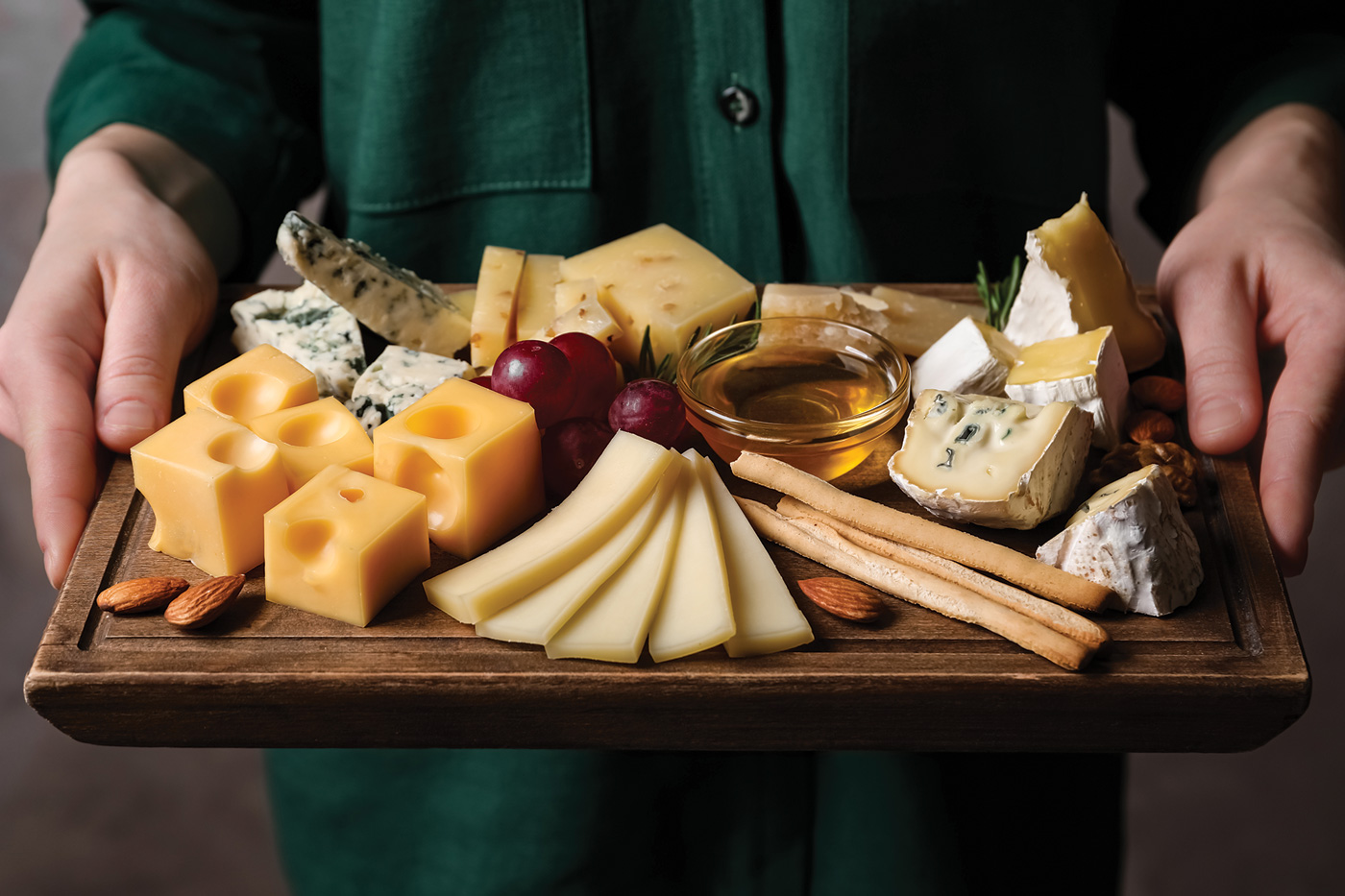
Average annual U.S. per capita cheese consumption exceeds 42 pounds. © Liudmila Chernetska/iStock/Getty Images Plus
Cheese, Please
Some segments are definitely doing better than others, however. Per the USDA report, the uptake in dairy intake was led by record-setting demand for butter and cheese. The average American purchased approximately 6.5 pounds of butter and a whopping 42.3 pounds of cheese. Madlyn Daley, senior vice president of strategic intelligence for Dairy Management Inc., says most forms of cheese are noting gains.
“This is potentially linked to the charcuterie board trend, which has become popular over recent years,” she says.
Yet, Talbot says the true “Cinderella story” of 2024 was cottage cheese, boasting a volume growth of 12.6%. Daley agrees, adding that this 1970s staple is making a substantial comeback thanks to its nutritional profile. But gone are the days where dieters were told to enjoy a quarter cup of cottage cheese with a single peach slice. Today, influencers on Instagram and TikTok are demonstrating the versatility of this protein-rich ingredient for healthier cookie dough and bagel recipes.
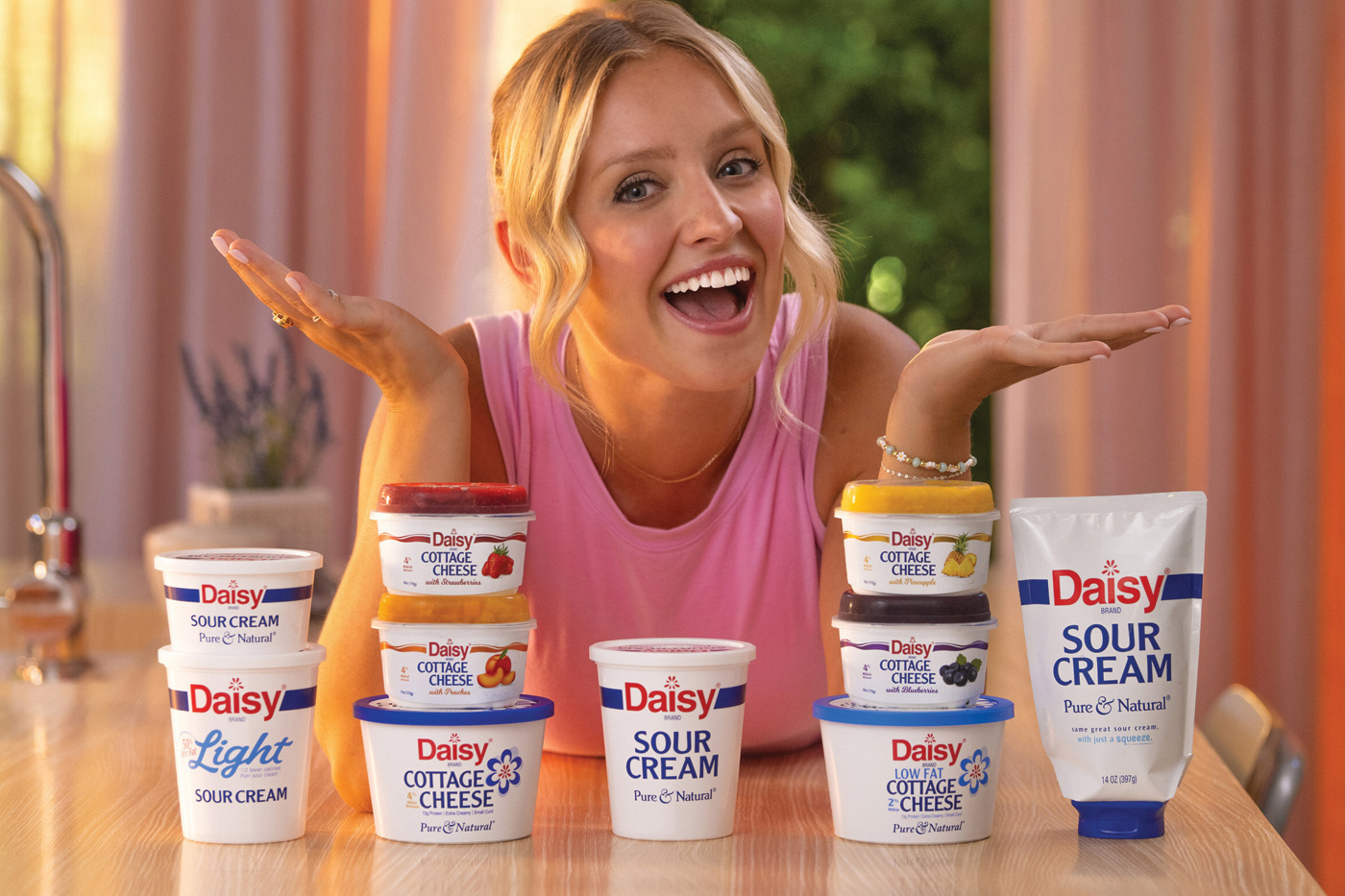
Daisy Brand partnered with reality television star Daisy Kent to promote its cottage cheese and sour cream product lineup last year. Photo courtesy of Daisy Brand
“Forty-five percent of households currently purchase cottage cheese over the course of a year,” she says. “While boomers and seniors still have the highest likelihood of purchasing it, younger households are showing the highest rates of growth. Over the past 52 weeks ending on December 1, 2024, combined Gen Z/millennials and Gen X saw volume growth per household over 18% above a year ago.”
Yogurts are also continuing to see impressive growth, with the USDA noting a 2% increase in consumption from 2022 to 2023. Daley says Greek yogurt remains a major driver of growth in that category, but yogurt drinks are also rebounding. There’s also an uptick in dairy creamer sales. Daley says this is a newer trend in the dairy case, but, more and more, consumers are looking to purchase real dairy to lighten up their coffees, teas, and smoothies.
“Sweet cream blends, caramel blends, and vanilla blends are the top flavors as consumers look to enhance their coffee experience,” according to Daley. “That desire for an enhanced at-home coffee experience has no doubt also contributed to the strong performance of liquid whipping cream, which took off during the pandemic with a 26% volume lift and has continued to increase every year since.”

Creating an enhanced coffee experience with whipping cream has been trending upward since the pandemic. © fotostorm/E+/Getty Images
And What About Fluid Milk?
Surprisingly, fluid milk sales have shown a notable improvement over the past year. Talbot says he is not ready to say that fluid milk has reversed the declines seen in the past five decades, however.
“The days of milk consumption seen in the 1960s are gone for good,” he says. “Families with kids have always been the core of our dairy target market, and the birth rate is down 23% since 2007.”
When you add in the fact that consumers are increasingly forgoing milk on cereal—which used to account for a quarter of fluid milk sales—and there are so many other alternative beverage options available, it’s unclear how to once again make milk America’s drink of choice. Yet, the industry is seeing strong growth (5.1%) in value-added milks, including high protein, lactose free, and organic varieties, says Talbot.
“In California, value-added products account for 21% of total dairy growth,” he says. “And despite the changes in consumer behavior, milk still has 90% household penetration with 15 gallons of per capita consumption, accounting for $15 billion in retail sales.”
Daley says that lactose free remains a key growth pocket, now taking up 8.7% of the milk retail category on a volume basis. Whole milk purchases are also on the rise.
“Whole milk continues to outperform the overall milk category at retail,” she says. “Volume is up 3.3% in 2024 in a relatively flat milk market. It’s approaching half of the volume at 47% of retail milk compared to just 40% back in 2019.”
Surprisingly, fluid milk sales have shown a notable improvement over the past year.
High Protein, Low Sugar
According to Innova Market Insights, protein remains a leading health claim with penetration of approximately 30% with dairy products, along with lactose-free and low-sugar claims, which strongly aligns with the growth seen in the different dairy categories.
Daniel Wilbanks, a dairy applications specialist with the University of Wisconsin’s Center for Dairy Research, says this isn’t a surprise—and notes that he and his colleagues are seeing an intense focus on sugar in dairy products. “The largest solid portion in milk is lactose, which is a sugar,” he says. “It doesn’t have the same glycemic score that you get with high fructose corn syrup, but there is still intense scrutiny with it.”
When you combine the concerns about sugar with the high proportion of people living with lactose intolerance, Wilbanks says there is ample room for new product innovations using enzyme solutions like lactase.
“Hydrolyzed lactose has about three times the sweetness of regular lactose. That allows you to come up with products where you can add less sugar, keep a good flavor, but still have a positive health impact,” he says.
But he believes real innovation will happen with enzyme solutions that can create products that break down lactose into galacto-oligosaccharides. He says baby formula makers are already looking into this. But yogurt or other dairy products could take a similar approach to create a high-protein, high-fiber product that tastes good without the addition of extra sugars.
“This would give you a natural milk-derived fiber,” he says. “Given that we sit on a gigantic reservoir of lactose generated from cheese making, we could transform it into a sweet syrup or fiber syrup that could be added to different products in the future.”
Fahlin says that he believes future innovation will also target increasing the protein levels in yogurts, cheeses, and other dairy products.
“Consumers want more protein,” he says. “And I think, as we increase protein levels from 14–15 grams per serving all the way up to 25 grams per serving, we can blur the lines between something being a dairy product and a specialized nutrition or even a post-workout recovery product.”
Adopting a Hybrid Model
Another emerging trend, reported by Innova, is an interest in hybrid dairy products—especially in Europe. Smug, a brand launched by Kerry Dairy, offers a blend of oat and dairy products, hoping to harness the taste and functionality of traditional dairy products and the sustainability claims of plant-based alternatives. Wilbanks says this idea is “interesting,” but, in many ways, not new.
“We already have a lot of dairy products that are hybrids, they just aren’t advertised that way,” he says. “Chocolate milk has plant-based flavors and stabilizers. Many butters have olive oil in them for spreadability.”
But Fahlin thinks this is a growing opportunity to bring together the “best of both worlds” to innovate new products that make use of dairy.
“As we continue to blur the lines between conventional dairy and specialized nutrition, hybrids could play a big role in the cheese or cheese snacking space,” he says. “I don’t know that you can fortify cheese products with additional dairy proteins. But plant proteins could maybe do it. There’s an opportunity to bring animal and plant-based proteins together to elevate the performance of a wide variety of products.”
When you put it all together, Talbot says, it’s all good news for dairy—and he is excited about the future. He says innovations in extended shelf-life milk, high-fiber milk, fruit milk, probiotic products, fortified protein products, and globally inspired cheeses will continue to captivate consumers. The fact that the price per volume on dairy is trending down where other food prices are still up, he adds, will only help fuel future growth.
“Dairy is alive and thriving,” he says. “Nothing can compete with the performance and functionality of real milk and dairy products.”ft
Why Is Making Tasty Plant-Based Cheese So Hard?
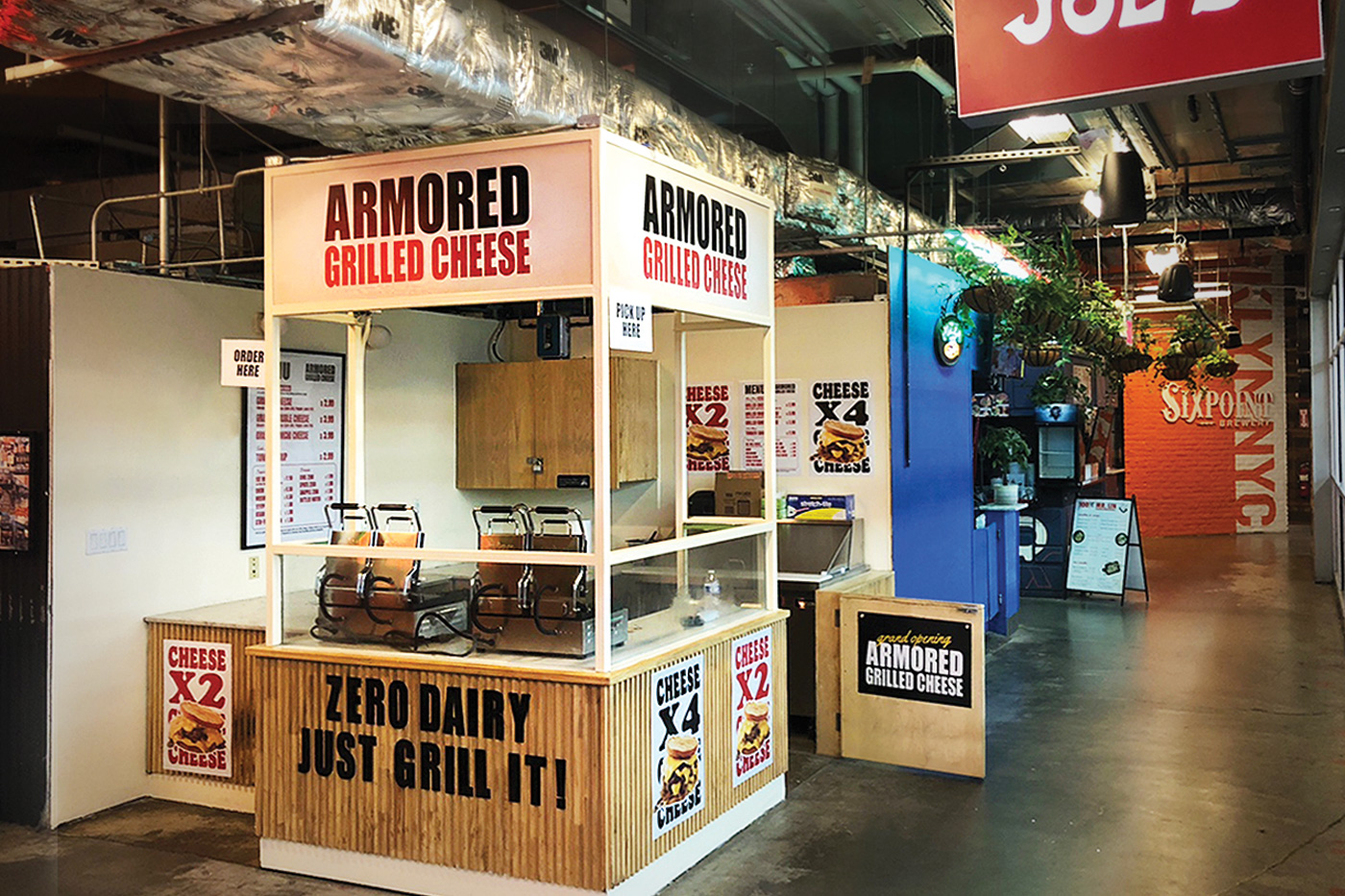
Plant-based cheese maker Armored Fresh this fall opened an Armored Grilled Cheese outlet in a Brooklyn, N.Y., market hall. Photo courtesy of Armored Fresh
There is just something about conventional cheese. It has a winning combination of flavor, richness, and meltability. And while plant-based alternatives have been around for more than half a century, few non-vegans would choose them over the real thing. Daniel Wilbanks, a dairy applications specialist with the University of Wisconsin’s Center for Dairy Research, says this is because of the protein casein, which contains all nine essential amino acids.
“Dairy is designed to be the sole nutritional source for mammals,” he says. “These proteins are designed to carry all these nutrients, and that’s what gives them their taste and functionality. You just can’t mimic that with plants.”
Yet Armored Fresh, a South Korean–based vegan cheese company, may have gotten close. The company’s new grilled cheese restaurant in Brooklyn, N.Y., is thriving—and point-of-sale data show that 70% of its patrons are not vegan. Andrew Yu, vice president, credits the company’s success with its focusing on the art of cheese making.
“Historically, vegan cheese makers have focused on the science of plant-based cheese,” he says. “But you need the art side of it to know what humidity, what temperature, what duration, what bacteria—so you can get a taste and texture that works.”
Armored Fresh brought food scientists and chefs together to innovate and come up with what he calls their “beautiful creations.” They ultimately created a proprietary key mix that adds the right flavors and textures to their products.
Inflation has hit plant-based dairy hard over the past few years, but Yu believes that it will be possible to get to price parity with regular cheese in the future. And his goal is to create more plant-based products that will be equal to or even exceed the nutritional values you can get from dairy. Yu believes this industry is “inevitable”—and the latest market research from Innova Market Insights seems to support that notion. The launch of nondairy cheeses is growing at a breakneck pace, hoping to entice consumers with clean ingredient, gluten-free, and GMO-free claims.
“Consumer demand is going to grow,” Yu says. “More companies will come in, more money will come in, and greater innovations will continue to happen in this space. It’s going to eventually push the boundaries on new plant-based flavors and products.”
Hero Image: © lisegagn/E+/Getty images
Authors
-
Kayt Sukel Author
Kayt Sukel is a book author, magazine writer, and public speaker who frequently covers scientific topics.
Categories
-
Food Business Trends
-
Consumer and Marketplace Trends
-
Food Categories
-
Food Ingredients and Additives
-
Market Trends
-
Food Retailing
-
Proteins
-
Dairy
-
Food Technology Magazine
-
Vegetarian


