
INGREDIENTS
The Changing Face of Clean Label

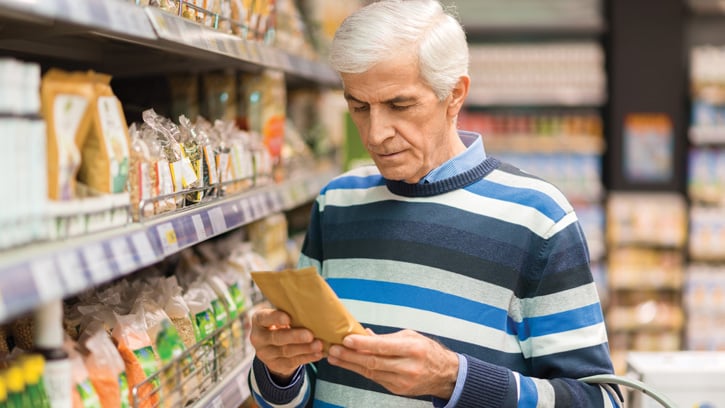
Nearly two-thirds of U.S. adults say they try to choose foods with clean ingredients. © Goran13/iStock/Getty Images Plus
Much like the famous pronouncement on obscenity, consumers know what clean label is when they see it.
The growing preference for food and beverage ingredients perceived as somehow “clean” is a global phenomenon, says Dave Lundahl, founder and CEO of the behavioral research firm InsightsNow, which has been tracking this consumer segment extensively for the past four years. “These are consumers with heightened concerns about ingredients—they will not buy products that have certain ingredients in them,” he says. “They will go right to the back of the package and look to see what’s in a product.”
Euromonitor International projected global sales of clean label food products would hit $180 billion in 2020, while worldwide sales of clean label ingredients like natural colors and flavors, starch and sweeteners, fruit and vegetable ingredients, flours, and others will jump from $38.8 billion in 2021 to $64.1 billion in 2026 at a compound annual growth rate of 6.8%, predicts Market Data Forecast.
In the United States, 63% of adults say the ingredients in a food or beverage have at least a moderate influence on what they buy, and 64% say they try to choose foods made with clean ingredients, according to the International Food Information Council’s (IFIC) June 2021 survey From “Chemical-sounding” to “Clean”: Consumer Perspectives on Food Ingredients. Twenty percent of U.S. consumers also say they regularly buy foods and beverages because they are advertised on the label as having clean ingredients, reports IFIC’s 2021 Food and Health Survey.
“Health is a top motivator for people who seek out clean ingredients. Of those who try to choose foods and beverages with clean ingredients, 25% do so to seek the health benefits from these foods and beverages,” says Megan Meyer, director of science communications at IFIC, citing IFIC’s June survey on clean food ingredients.
What’s in a Name
At the most basic level, many consumers are looking for foods and beverages with short lists of “natural” ingredients, whether they use or even know the term “clean label.” Sixty-nine percent of consumers say simple, recognizable ingredients influence their purchasing decisions, and 66% say they are looking for labels with the shortest ingredients list, according to ADM Outside Voice research.
For many consumers, “organic” and “natural” descriptors are important clean label cues. © Varijanta/iStock/Getty Images Plus
“Globally, more than half of consumers say they are actively seeking or purchasing more products with natural claims, according to insights from Ingredion’s proprietary ATLAS clean label research,” says Pat O’Brien, regional platform leader, clean and simple ingredients, U.S./Canada at Ingredion.
But the specific attributes that consumers say they want to see in clean products can cover a wide range. Respondents to IFIC’s June 2021 survey define them as “not artificial or synthetic” (22%), “organic” (16%), “fresh” (15%), “something they know is nutritious” (14%), and “natural” (14%). Among global consumers, clean eating means “free of additives and preservatives” (51%), “only natural ingredients” (46%), “organic” (33%), “sustainably sourced” (33%), “unprocessed” (31%), “ethically responsible” (27%), and “sticking to my diet principles” (17%), according to Innova Market Insights’ Innova Health & Nutrition Survey 2020.
The COVID-19 pandemic’s ongoing impact on consumer behavior is also helping to expand the definition of clean label. A 2020 New Hope Network NEXT Data and Insights survey found that consumers said they were placing more importance on both personal health (77%) and environmental or planetary health (67%) during the COVID-19 pandemic than they did in 2019.
“With 37% of U.S. consumers starting or increasing cooking during the pandemic [according to March 2021 research from The Hartman Group], many people have new opportunities to ‘eat clean,’” says Brad Schwan, vice president, category marketing at ADM. “With more people engaged in cooking at home over the past year, we anticipate that scrutiny of product labels will continue to intensify, expanding to how ingredients are sourced.”
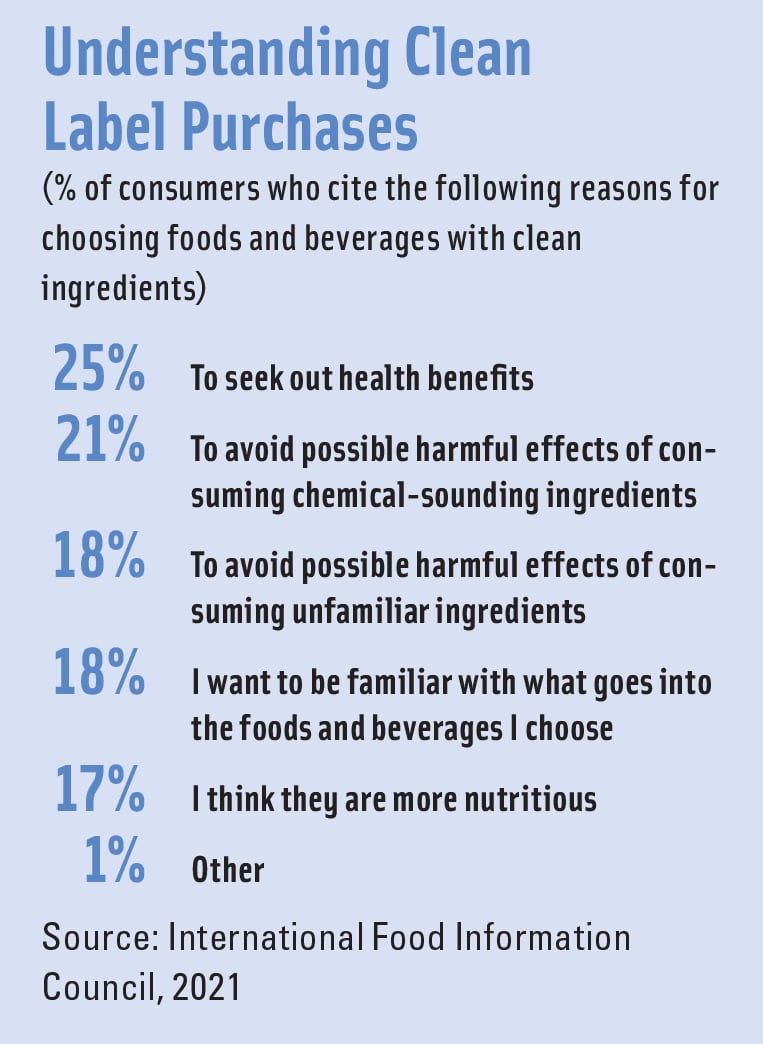
Understanding Clean Label Purchases (% of consumers who cite the following reasons for choosing foods and beverages with clean ingredients)
In fact, 2020 data from Innova Market Insights, a global market research firm, suggests there has been a jump in those who greatly identify with issues related to transparency and responsible production since the COVID-19 pandemic hit. Thirty-two percent now say they identify “a lot” with both “naturalness and transparency” and with “responsibly made,” up from 21% and 24% before the pandemic, respectively.
“Early on, clean label focused on simplicity, with an eye toward recognizable ingredients and short, easy-to-understand ingredient lists,” says Courtney LeDrew, senior marketing manager at Cargill. “Today, however, the clean label trend has morphed to encompass much more, reflecting a shift by some consumers toward a lifestyle that supports healthier eating for both people and the planet. In a post-lockdown world, I think we’ll see consumers double down on this broader definition.”
Looking for Transparency
The concept of clean eating may still be most closely associated with natural ingredients, but it is gradually evolving into “clear” labeling with more transparency about how food is made and the impact it has on the world, according to Lu Ann Williams, global insights director at Innova Market Insights.
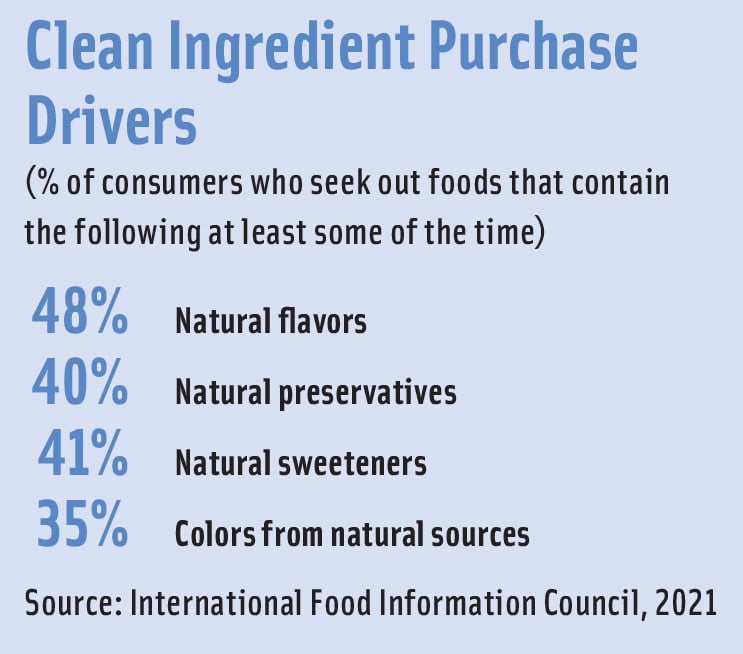
Clean Ingredient Purchase Drivers (% of consumers who seek out foods that contain the following at least some of the time)
“In periods of uncertainty, we look for safety,” says Williams. “But transparency means more than just safety. It means different things to different consumers.”
Shoppers say a brand or manufacturer is transparent if it provides a complete list of ingredients (62%), the description of ingredients is in plain English (53%), it provides certifications, such as USDA organic (48%), and it provides in-depth nutritional information (47%), according to Transparency Trends: Omnichannel Grocery Shopping from the Consumer Perspective, a 2020 research report from FMI – The Food Industry Association and Label Insight.
“Today’s conscious consumer views sustainability as a key component of clean label products, and many people want healthy foods to be more sustainable,” says ADM’s Schwan. “The pandemic has elevated consumer concerns for food safety and quality, sharpening their desire for transparency and responsible sourcing in the supply chain.”
This consumer demand for greater transparency and traceability is also pushing clean label concepts throughout the entire supply chain, adds Cargill’s LeDrew.
Clean Ingredients on the Rise
As formulators work to match ingredient selections to the latest clean label demands from consumers, they will need to strike a balance, says Courtney Schwartz, marketing director at Kemin.
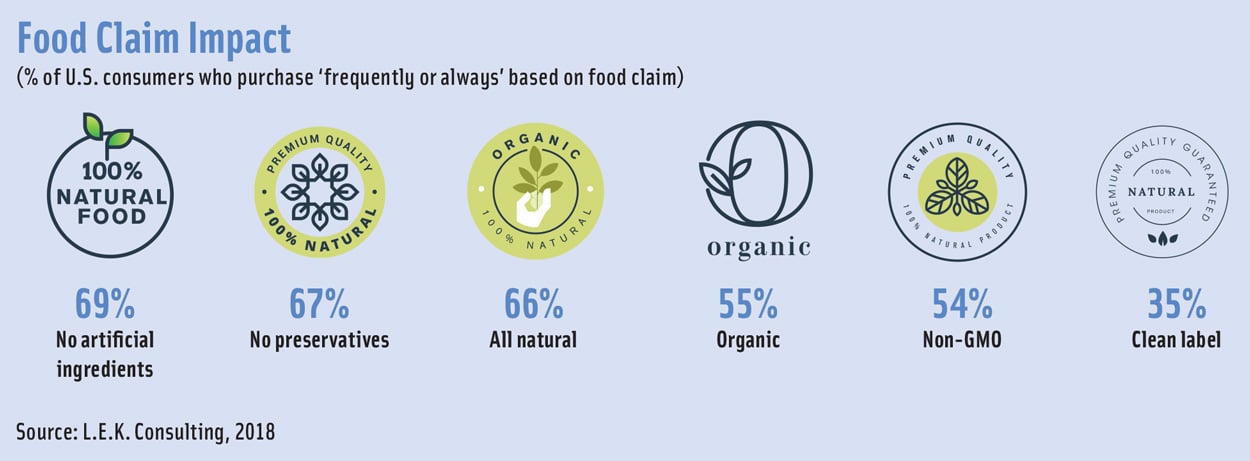
Food Impact Claim (% of U.S. consumers who purchase ‘frequently or always’ based on food claim) Source: L.E.K. Consulting, 2018
“When manufacturers look to switch to more label-friendly ingredients, this can impact the shelf life, cost, and/or sensory attributes of the product. When evaluating reformulation of a product to meet the demand for clean label, manufacturers may have to choose between these attributes,” says Schwartz. “When it comes to the consumer, they too have to make a similar decision. They may find a label-friendly product that meets their shelf-life expectations, but they may have to pay an increased price for the item or be willing to store the product in the refrigerator or freezer.”
Natural flavor is the fastest-growing clean label ingredients market segment, according to Mordor Intelligence, and 39% of U.S. consumers now say the sustainability of flavor ingredients is important to them, according to Innova Market Insights’ Innova Flavor Survey 2021. Some of the key ingredients dominating the clean label food market include hydrocolloids such as gellan, acacia, and guar gums, natural mold inhibitors such as sorbic acid, stevia, food enzymes, and fruit and vegetable pieces and powders, according to How the Clean-Label Mega-Trend Is Changing the Food Ingredients Landscape, a 2019 report from global strategy firm L.E.K. Consulting.
“A lot of progress is being made on the bakery front with natural mold inhibitors and other advancements in technology,” says Rob Wilson, managing director and partner in the Chicago office of L.E.K. Consulting.
While freshness remains a top priority for consumers, the continued reliance on processed foods will drive demand for better-for-you options with clean labels, says Karen Formanski, health and nutrition analyst at market research firm Mintel. “Moving forward, it will be important for brands to be transparent about less-familiar ingredients: why they are considered natural, how they are sourced, the reasons they are used,” she says.
Screening Clean Labels
The dramatic jump in online grocery shopping during the COVID-19 pandemic is likely to help drive consumer demand for clean label too. In a survey conducted in April 2021 by Coresight Research, a retail research and advisory firm, 59% of U.S. adults said they had bought groceries online in the past 12 months, compared with 36.8% in 2019. And about 60% of online grocery shoppers said they plan to buy groceries online more frequently than—or at the same frequency as—they did during the pandemic.

© juststock/iStock/Getty Images Plus
“The massive growth in ecommerce is going to give consumers more of an opportunity to scrutinize [food and beverage] labels,” says Rob Wilson, managing director and partner in L.E.K. Consulting’s Chicago office. “It’s a lot easier to look things up [on the label] at home on your desktop rather than at the grocery store.”
In fact, 42% of shoppers believe online grocery retailers should be responsible for providing detailed product information, compared with 35% who say the same about brick-and-mortar grocers, according to FMI’s 2020 research report Transparency Trends: Omnichannel Grocery Shopping from the Consumer Perspective.
Clean Label and Plant-Based: Can This Relationship Be Saved?
Despite everything they have in common, the marriage of plant-based products and clean labels isn’t always a happy one. Meat and dairy alternatives that meet taste and texture expectations often aren’t compatible with short lists of all-natural ingredients.
Both market segments appeal to many of the same consumers, however. Fifty-two percent of clean label consumers say they try to eat a largely plant-based diet, compared with 12% of non-clean-label consumers, according to a 2020 study by New Hope Network NEXT Data & Insights. Among plant-based consumers, 83% say they read ingredient labels and avoid buying products with complicated ingredients or ingredients they don’t recognize or can’t pronounce, compared with 39% of non-plant-based consumers. In addition, Mintel data from May 2021 suggest that 60% of adults who eat some type of plant-based protein would eat more meat alternatives if they were less processed, while 63% say they would like to see more meat alternatives made with whole food ingredients.
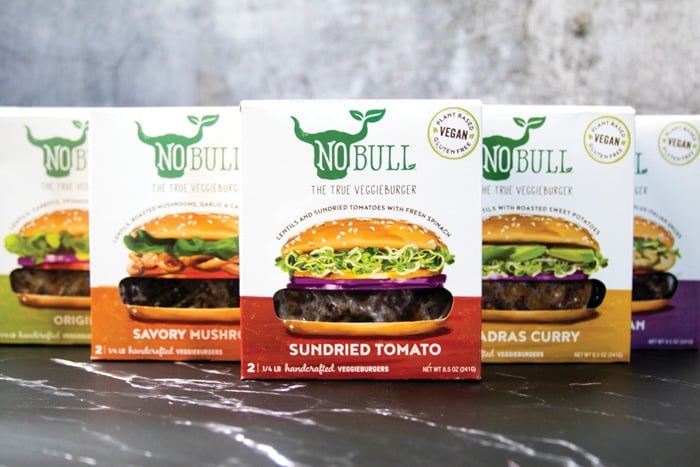
Made with lentils, grains, and roasted vegetables and without preservatives or additives, NoBull Burgers deliver on clean label values. Photo courtesy of NoBull Burger
“Forty-six percent of global plantconsumers are interested in greater transparency from companies on the sourcing of plant-based proteins, and 45% would like to see more transparency as to how plant proteins are processed and integrated into products,” says Brad Schwan, vice president, category marketing at ADM. “Each of these desires closely correlates with concepts behind the clean label trend.”
So how can these two market segments reconcile their differences? They may not always need to, suggests Mark Fahlin, business development, Cargill.
“Currently, I think many of these plant-based products still enjoy a halo, regardless of what’s on the ingredient statement,” says Fahlin. “Long ingredients lists and unfamiliar ingredients like methylcellulose have not stopped the meat alternative space from posting phenomenal category growth. That said, the industry isn’t standing still. Many [companies] would like to reduce the number of ingredients in their formulas and replace less familiar ingredients with options that consumers will recognize.”
“Consumers have different priorities and preferences when it comes to plant-based meat and dairy alternatives,” adds Karen Formanski, health and nutrition analyst at Mintel. “Some are more concerned about taste and texture, while others care more about clean/simple ingredients. The market is growing, and there is room for brands with products across the processing spectrum.”
Plant-based products will become more clean label going forward, predicts Lu Ann Williams, global insights director at Innova Market Insights. “There are many efforts underway, including solutions like base materials for whole muscle-style products that don’t require a lot of additional ingredients. There are also possibilities that cellular technologies that offer ‘animal-free’ options could leapfrog ahead,” she says.
For plant-based dairy alternatives, “the path forward will likely involve some combination of format innovation to reduce the number of ingredients used, as well as continued education to reinforce company/brand confidence in the integrity/nutritional value of all of the ingredients used,” says Formanski.
Eric J. Pierce, vice president of business insights at New Hope Network, anticipates more vegan products that can tout clean labels, such as NoBull Burger and Field Roast products. “Companies are very much looking to have cleaner [vegan] options available, and we’ll continue to see more of that,” he says. NoBull Burger, for example, proclaims on its company website that the product is “made of organic lentils and grains and various roasted veggies—that’s it.”
Carbon Footprints Make Big Strides on Food Labels
Climate change concerns are changing clean labels too, as more food and beverage companies make room for carbon certifications and data on their packaging.
Unilever announced in July 2021 that it plans to test carbon footprint labels on up to 24 products in either North America or Europe by the end of 2021, with all of its products highlighting the information by around 2026, according to The Independent newspaper. And Upfield Group, which makes Country Crock, I Can’t Believe It’s Not Butter!, and Imperial margarine, anticipates 100 million of its margarine and spreads packages will include climate footprint labels by the end of 2021.
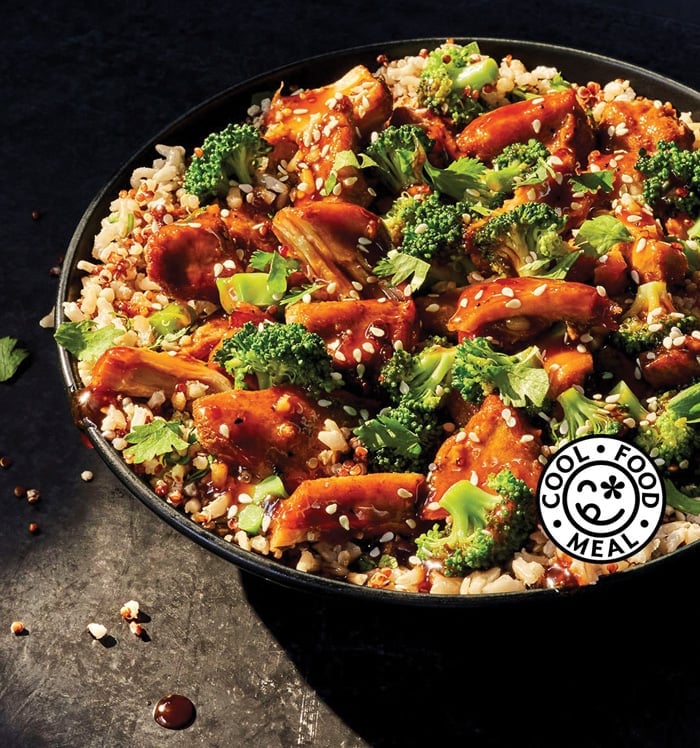
Teriyaki Chicken Broccoli Bowl is one of Panera’s newest Cool Food Meals. Photo courtesy of Panera
These products will join earlier carbon label adopters like Quorn, a leading meat alternative brand, Oatly dairy alternative products, and Mondelez International’s carbon neutral French snack cracker, NoCOé, developed by its SnackFutures innovation hub. Last fall, foodservice chain Just Salad carbon labeled all of its menu items, while Panera became the first national restaurant company to label climate-friendly “Cool Food Meals” on its menu, collaborating with World Resources Institute (WRI), a nonprofit global research organization. WRI calculated a per-meal daily carbon threshold based on the level of change its research found is needed by 2030 to help mitigate the worst impacts of climate change.
Already, 9% of consumers say they have purchased foods and beverages because they are advertised on the label as having a small carbon footprint or being carbon neutral, according to IFIC’s 2021 Food and Health Survey. In addition, a 2020 survey commissioned by the Carbon Trust, an independent company that introduced one of the first carbon footprint certification programs and product labels in 2007, found that two-thirds of consumers in the United States and Europe support carbon labeling on products.
“Carbon neutral and climate change will resonate with certain consumer segments,” says Dave Lundahl, founder and CEO of InsightsNow, a behavioral research firm.
Authors
-
Elizabeth Brewster Writer
Elizabeth Brewster is a freelance writer based in Evanston, Ill. (lib500@comcast.net).
Categories
-
Sustainability
-
Food Ingredients and Additives
-
Environmental Impact
-
Food Technology Magazine


