
Ingredients | APPLIED SCIENCE
Natural Selections: Clean Label Colors Edge Out Synthetics


©RuthBlack/iStock/Getty Images Plus
An expanding palette of natural hues is coloring palate-pleasing foods and beverages around the world.
Driven by consumer concerns about personal health and the health of the planet, the global natural food colors industry is projected to hit $17 billion in sales by 2031, according to Fact.MR, a market research firm. That’s a compound annual growth rate (CAGR) of more than 7%, compared with a 4% CAGR between 2016 and 2020. Anthocyanin, which imparts red color, tops the list for natural food color sales with a 6% CAGR.
Today, more than 80% of colored food and beverage launches annually use natural colors, says Sensient Food Colors marketing specialist Meghan Fox. That’s a shift during the past few years from a strong majority of the color market being synthetic. Jeannette O’Brien, vice president of GNT USA, notes that “FMCG Gurus research shows that 71% of Americans now consider it important or very important that coloring used in food and drink is natural.” In fact, natural flavors and ingredients are second only to product safety when it comes to the factors that shoppers say are most important in deciding which foods and beverages to purchase, reports Innova Market Insights.
“Mintel data confirms our observations that in North America, natural colors are being used across the board, especially in fresh and packaged bakery, sauces and seasonings, dairy, and snacks,” says Fox.
Research and technology advancements are aimed at producing more stable and intense natural colors from plants, minerals, and animals, such as the recent discovery of auronidin coloring pigments in liverwort plants and the development of butterfly pea flower extract, the first plant-derived natural blue color source to be approved by the U.S. Food and Drug Administration (FDA). Two of the newest natural color launches are made from turmeric and spirulina, GNT’s EXBERRY Shade Jade Green (bright bluish green) and Shade Lime Green (yellowish green), which can be used for products including dairy, confectionery, and decorative coatings for bakery and dairy.
©akinbostanci/iStock /Getty Images Plus
Blue Notes
Bright blue has long been the holy grail of natural food colors. Today, spirulina and butterfly pea flower extract are pushing vibrant hues to the forefront of natural greens, blues, and purples:
Spirulina, a microscopic freshwater blue-green alga, was approved by the FDA to color food in 2013. Since then, this heat- and pH-sensitive phycocyanin color has been used in applications such as candy, ice cream, and confectionery. Researchers are working on resolving stability issues.
“There has been a significant increase in spirulina interest in recent years,” says Jeannette O’Brien, vice president of GNT USA. “We expect blue and green to make a major impact in beverages in the near future.”
Butterfly pea flower extract received FDA approval in fall 2021 for categories including sport drinks, carbonated soft drinks, fruit drinks, fruit and vegetable juices, alcoholic beverages, dairy drinks, teas, gums, candy, coated nuts, ice creams, and yogurt. Native to equatorial Asia, it is heat, light, and acid stable.
“This is a huge advancement for the natural color industry, which previously did not have an FDA-approved acid- or heat-stable blue option,” says Meghan Fox, marketing specialist at Sensient Food Colors, which filed the petition to add butterfly pea flower extract to the list of approved color additives in the United States.
© MichellePatrickPhotographyLLC/iStock/Getty Images Plus
Where Do Natural Colors Come From?
Red
Anthocyanins
Betanin (beetroot)
Carminic acid (cochineal)
Carotenoids
Pink
Betanin (beetroot)
Orange
Carotenoids
Green
Chlorophylls/Chlorophyllins
Yellow
Carotenoids
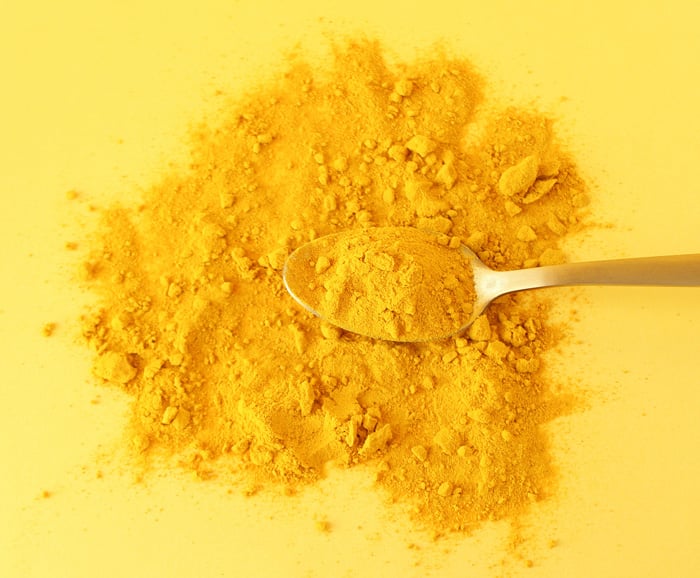
Curcumin (turmeric)
Riboflavin
Blue
Anthocyanins
Spirulina (alga)
Purple
Anthocyanins
Brown
Caramels (melanoidins)
Black
Carbon black (carbonized vegetable material)
Source: Natural Food Colours Association (NATCOL)
©efetova/iStock/Getty Images Plus
Natural Color Formulation Concerns
Cost. Synthetic colors often are less expensive to produce, making natural color options a more expensive choice in some cases.
Heat. Thermal processing may be an issue for some natural colors that are heat sensitive.
Light. Turmeric, which can fade when exposed to light, is an example of a light-sensitive natural color. This can impact packaging selection for the final product.
pH. Some natural colors, such as anthocyanins, turn into different colors when pH changes, so the final pH of the product must be factored into formulation.
Oxidation. Ingredients that will cover larger surface areas, such as dried seasonings, may be subject to oxidation that can impact natural color tones.
Artificial Food Color Concerns
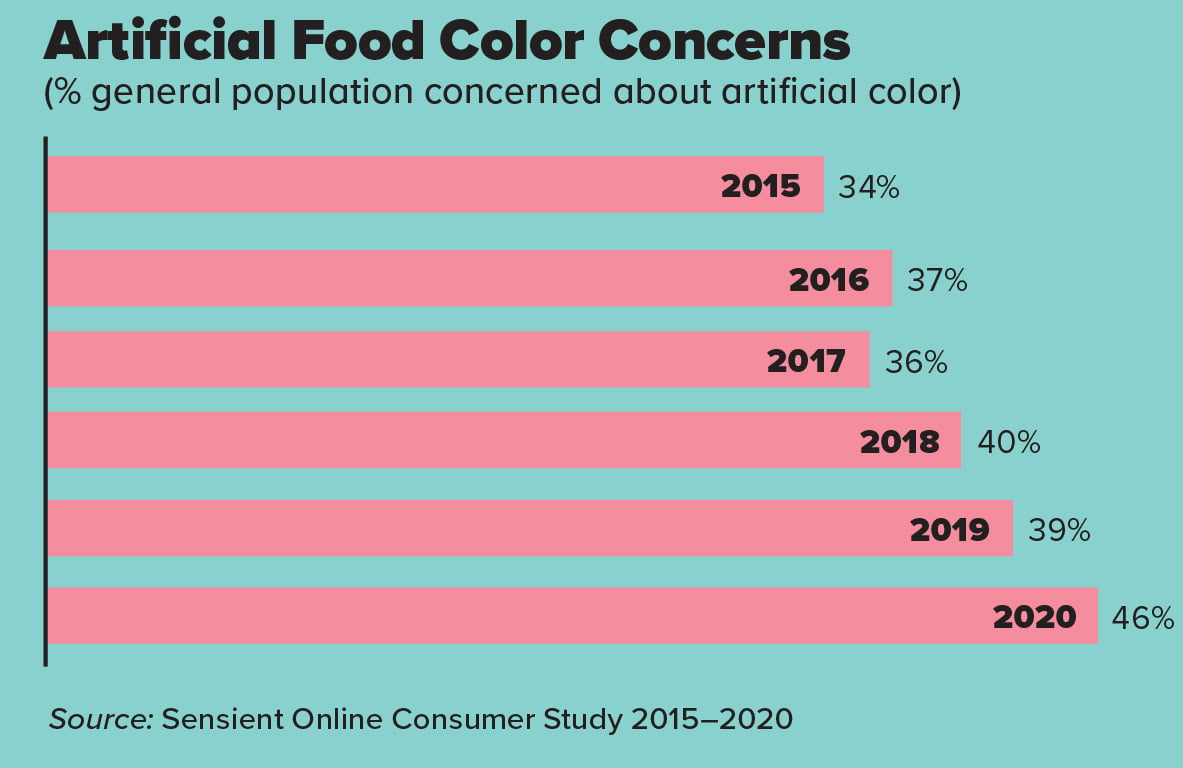
(% general population concerned about artificial color)
Source: Sensient Online Consumer Study 2015–2020
1500 BCE: Food coloring emerges, primarily from natural sources such as saffron, paprika, and turmeric.
1856: British chemist William Henry Perkin discovers the first synthetic organic dye, a mauve pigment.
1881: The U.S. Department of Agriculture (USDA) Bureau of Chemistry begins researching the use of colors in food.
1906: The U.S. Food and Drugs Act bans the use of poisonous or deleterious colors in confectionery and coloring or staining food to conceal damage or inferiority.
1907: USDA issues its first list of seven synthetic colors approved for use in food.
1938: The federal Food, Drug, and Cosmetic Act of 1938 mandates the listing of coal tar–based colors that are “harmless and suitable” for use in foods.
1950: Children are sickened after eating Halloween candy made with large amounts of Orange No. 1 dye, leading to FDA testing, and ultimately banning use of the food color.
1960: Congress passes the Color Additive Amendments to the Food, Drug, and Cosmetic Act, giving the FDA control over all color additives.
1973: Benjamin Feingold, a U.S. physician, proposes that hyperactivity and learning problems in some children are caused by certain food additives, including artificial food coloring.
1976: The FDA delists Red No. 2 dye in the wake of research suggesting that high doses of the dye cause cancer in rats.
2009: The FDA issues a final rule requiring declaration of cochineal extract and carmine on food label ingredient statements after controversy regarding use of an insect product as food coloring.
2013: The first natural blue food dye, spirulina, is approved by the FDA for use, initially in just candy and gum.
2021: Butterfly pea flower extract becomes the first plant-derived natural blue color source to be approved by the FDA.
Glossary
ACCEPTABLE DAILY INTAKE (ADI): Estimate of the amount of a substance in food or drinking water that can be ingested daily over a lifetime without appreciable risk.
CERTIFIED COLOR: See “synthetic color additive.”
COLOR ADDITIVE: FDA classification for a dye, pigment, or other substance that, when added or applied to a food, drug, or cosmetic, or to the human body or any part of it, is capable (alone or through reaction with another substance) of imparting color.
COLORING FOOD: European Union classification for food that contains coloring properties as a secondary effect.
EXEMPT COLOR: Color additive exempt from FDA certification (21 CFR 73), generally including those derived from plant or mineral sources. Exempt colors must comply with the identity and purity specifications and use limitations described in their listing regulation.
FD&C COLOR: See “synthetic color additive.”
FOOD COLOR: Classification by European Union and Joint FAO/WHO Expert Committee on Food Additives (JECFA) for an additive used to add or restore color in food.
GOOD MANUFACTURING PRACTICE (GMP): System for ensuring that products are produced according to quality standards. The use of colors at GMP levels is permitted by many countries, including the United States.
NATURAL COLOR ADDITIVE: Color derived or extracted from natural sources such as plants, minerals, and animals. Note: The FDA does not consider any color additive to be “natural,” only “certified” (FD&C) or “exempt.”
SYNTHETIC COLOR ADDITIVE: Color derived from organic chemicals in the form of a dye/pigment or a lake, classified by the FDA as “certified” or FD&C color.
Hero Image: ©RuthBlack/iStock/Getty Images Plus
Authors
-
Elizabeth Brewster Writer
Elizabeth Brewster is a freelance writer based in Evanston, Ill. (lib500@comcast.net).
Categories
-
Food Product Development
-
Food Ingredients and Additives
-
Formulation
-
Colors
-
Food Technology Magazine


