
Ingredients | APPLIED SCIENCE
Blessings in Disguise: Masking Off-Flavors

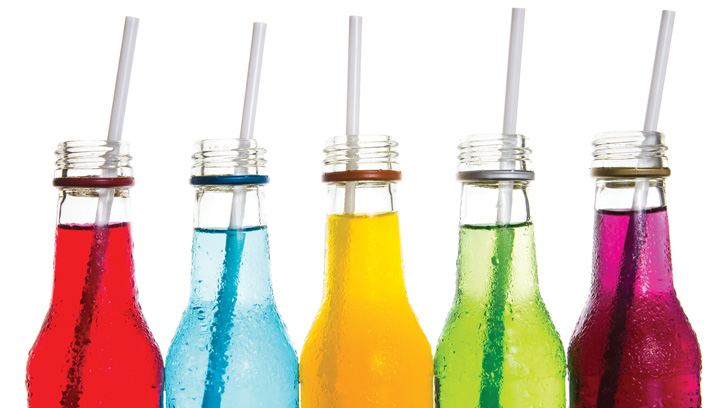
High-intensity sweeteners can present flavor challenges like negative off-flavors and different sweetness dynamics. © pinkomelet/iStock/Getty Images Plus
Consumers’ growing interest in healthier lifestyles is driving trends in fortified, functional, and other better-for-you foods and beverages, such as those with less sugar. But the benefits boost can come at the cost of off-flavors, whether it’s a nutrition bar, a plant-based meat, or a ready-to-drink wellness tea.
“The wealth of products with health and wellness benefits in the market now poses a unique challenge for flavorists and product developers,” says Darleen Shaffery, principal flavor chemist at Target Flavors. These products may have high levels of protein, vitamins, minerals, botanicals, caffeine, high-intensity sweeteners, or other ingredients that can contribute undesirable flavors, she says.
Understanding flavor masking—a strategy for disguising unwanted flavors—can be essential to creating successful products in the better-for-you arena. Flavor masking involves the use of ingredients that complement or cover the taste profile of a food or beverage, says Shaffery.
“There are two different approaches to flavor masking: psychochemical, which aims to trick the brain and how we perceive and recognize flavors, and physical, which changes how ingredients interact with odor or taste receptors,” explains Smaro Kokkinidou, principal food scientist at Cargill. Let’s take a step-by-step look at how to mask off-flavors to produce better-tasting food and beverage products.
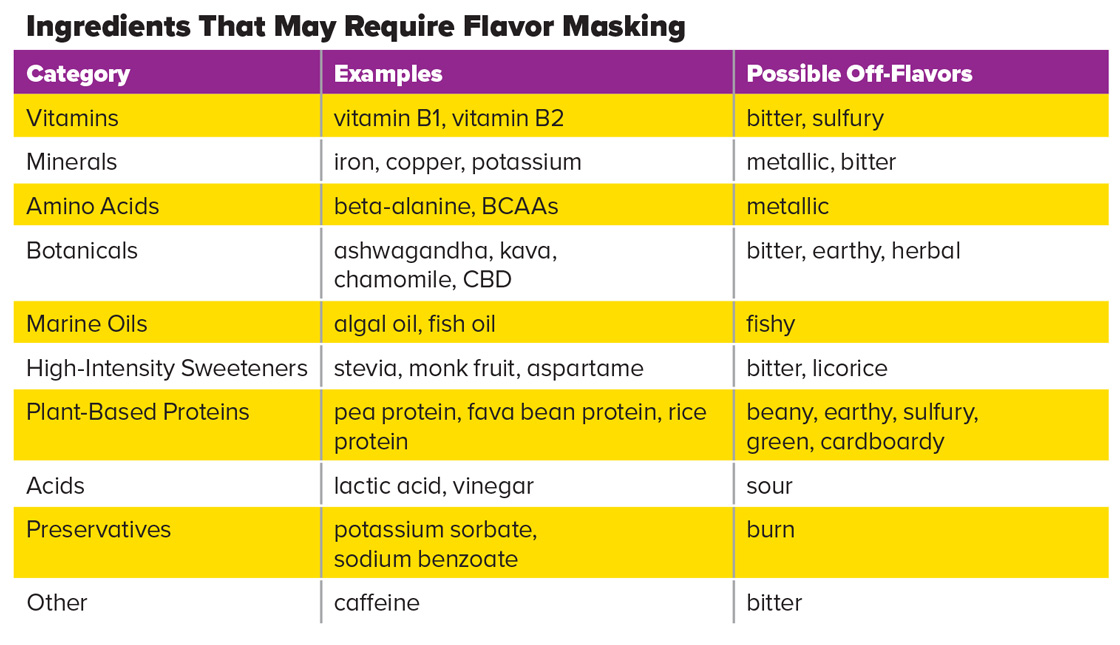
Ingredients That May Require Flavor Masking
Step 1: Optimizing the Base
Adding or increasing the amount of ingredients that impact the basic tastes is often the first step in flavor masking, accompanied by frequent tasting as you go. A slight amount of sweetness or salt, for example, can help mask bitter tastes, and sweetness can be used to mask acidic notes.
Sometimes reducing the perception of sweetness is desirable, but reducing the amount of sweetener would negatively impact body and mouthfeel. In these cases, salt, acid, or bitter tastes could be added. Fats, as well as viscosifying ingredients like gums, starches, and fibers, can minimize a variety of off-flavors because they not only coat the mouth but also slow the release of off-flavors from the food matrix.
Besides manipulating ingredients such as salt, acid, and fat early on to help neutralize off-notes, it’s important to choose the best type of each ingredient, says Ana Rodriguez, product manager at Imbibe. “For example, when tackling a stevia formulation, we would advise using a specific fat source, salt levels, and other food additive ingredients compared to a nonstevia-based formula,” she says.
Step 2: Choosing the Right Flavor
If an off-note is still coming through, the next step may be choosing a characterizing flavor that complements the off-note. The natural bitterness of dark chocolate, coffee, or grapefruit can complement bitter off-notes, for example, while orange or lemon may be good flavor choices for products with sour off-notes.
For earthy off-notes, adding a nut flavor can be effective, such as opting for peanut butter chocolate over plain chocolate. If the off-note is sulfury, as with some plant proteins, a ripe raspberry or strawberry flavor can add balance.
"The natural bitterness of dark chocolate, coffee, or grapefruit can complement bitter off-notes, while orange or lemon may be good flavor choices for products with sour off-notes."
Step 3: Using a Masking Solution
For challenging formulas, you may also need a masking solution. One option is to add a masking flavor (also known as a flavor masking agent or a flavor masker), a blend of flavor compounds designed to mask particular off-notes.
“Our current offerings include protein, bitter, stevia linger, acid, preservative, and vitamin masking flavors,” says Target Flavors’ Shaffery. When the off-notes come from multiple ingredients, however, “it’s better to design a single solution around the base in order to address all of the issues within the product,” she adds.
When and how to introduce masking tools is also a key aspect of the process, notes Rodriguez. If a flavor masker is used incorrectly or too late in the process, “it can risk muting characterizing flavors and turn what was once a complex flavor profile into a one-note experience,” she says. In addition, too much flavor masker can impart an off-note of its own.
Rodriguez cautions against using a masking flavor that contains flavor compounds found in the characterizing flavor. “For example, it’s common to see vanilla-forward masking flavors used to mitigate off-notes effectively,” she says, but in a vanilla-flavored product, these types of maskers don’t work well. Imbibe’s NonSense masking solutions account for this factor.
Cyclodextrins, another option, are best suited for flavor masking in beverages and other aqueous systems due to their hydrophilic exteriors. These ring-shaped oligosaccharides can trap certain types of molecules within their cavities, masking both flavors and odors. But because the cavity is hydrophobic, a molecule must be at least partly hydrophobic to bind to the site. It must also be able to fit in the space. Cyclodextrins like Wacker’s CAVAMAX products are available in three different ring sizes for broader application and can mask bitterness from functional botanicals including green tea catechins, ginkgo extract, and ginseng extract.
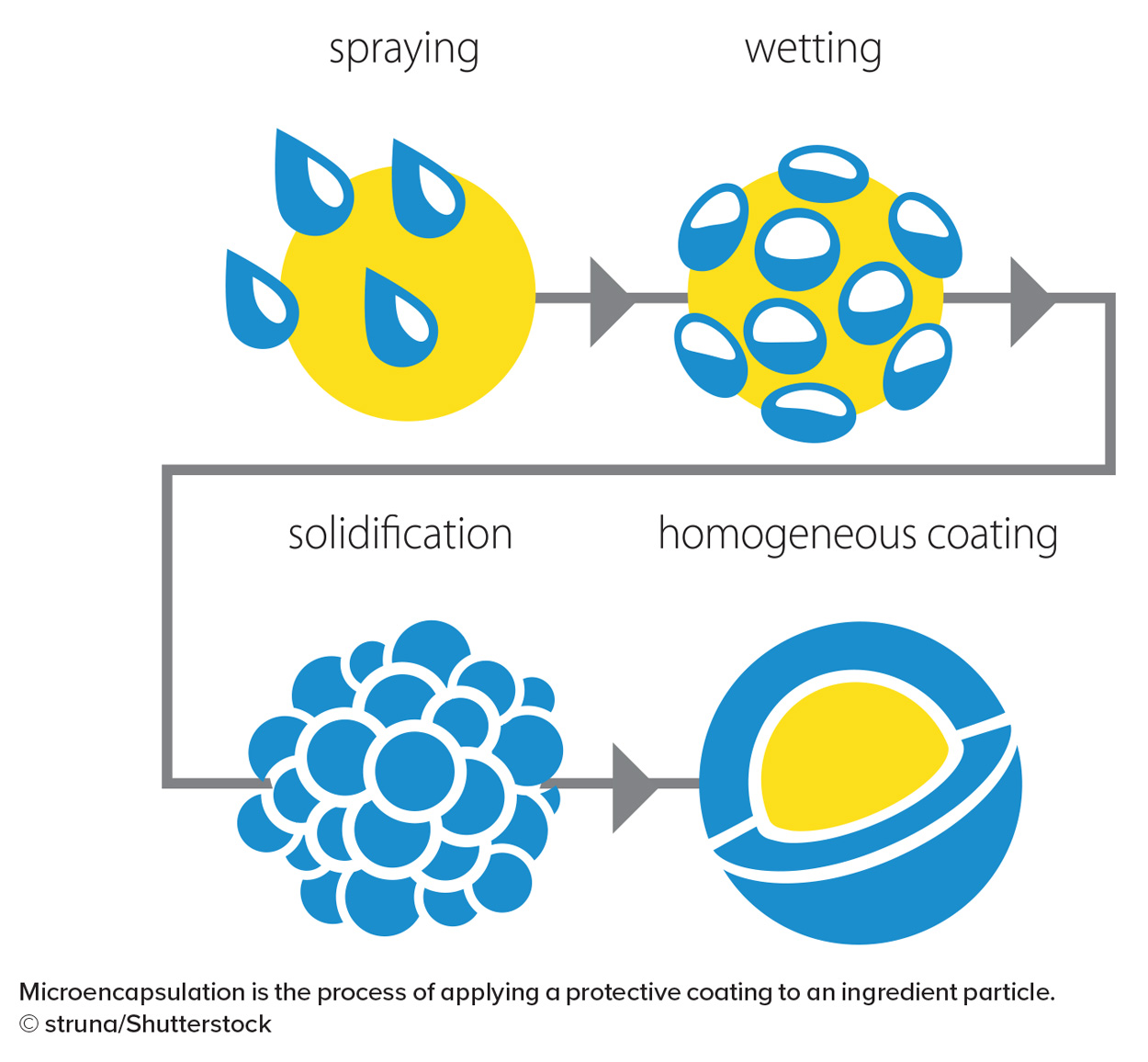
Microencapsulation is the process of applying a protective coating to an ingredient particle. © struna/Shutterstock
For the most stubborn ingredient off-notes, another possibility is microencapsulation, the process of applying a protective coating (such as ethyl cellulose) to an ingredient particle. Glanbia Nutritionals’ NutraShield Microencapsulations line, for instance, includes microencapsulated vitamins, minerals, amino acids, and botanicals like ashwagandha.
But microencapsulation is not just for flavor and odor masking, explains Gary Wada, director of process and technical operations at Glanbia Nutritionals. It can also improve stability, prevent ingredient interaction, and modify the release of ingredients, he says.
“[Microencapsulation] can even be used to slow the release of masking flavors into a finished product,” says Rodriguez.
Flavor Challenge: High-Intensity Sweeteners
Consumers are actively looking for products with less sugar, creating an expanding market for beverages, bars, baked goods, yogurts, and frozen desserts with reduced, low, or no sugar, as well as with no added sugars. Because high-intensity sweeteners often are the go-to solution, accommodating these preferences adds more complexity to flavor formulation, says Smaro Kokkinidou, principal food scientist at Cargill.
Kokkinidou notes that while high-intensity sweeteners potentially can match the intensity of sugar, the challenges include negative off-flavors and different sweetness dynamics such as delayed sweetness onset, as well as sweetness linger. Even among high-intensity sweeteners, “some have a slower sweetness onset and more sweetness linger, while others might have a faster sweetness onset and more rapid sweetness drop-off” compared with sucrose, she says.
Stevia is the most popular natural high-intensity sweetener on the market, and Cargill’s EverSweet stevia sweetener is based on Reb M and Reb D for a cleaner sweetness profile than Reb A sweeteners, which are known for their bitter and licorice off-notes at high concentrations.
“Our newest sweetener system, EverSweet + ClearFlo, goes one step further,” says Kokkinidou. “It takes our best-tasting stevia and combines it with a natural flavor to address taste, flavor, and other functionality, such as solubility and dissolution.”
Flavor Challenge: Plant Proteins
The rise of plant-based dairy and meat products, as well as the increased use of plant proteins in nutritional beverages and bars, has made effective flavor masking of these proteins more important than ever. “You now see 25 g of protein per serving, even as high as 40 g,” says Rajesh Potineni, vice president of Taste & Innovation R&D at Kerry Taste & Nutrition.
“Factors such as protein types, extraction processes (alkaline, enzymatic, fermentation), and separation techniques (centrifugation, slow sedimentation) impact the type of off-notes generated,” says Potineni, which is why plant proteins can taste very different from one supplier to another.
In developing Kerry Tastesense masking solutions, the sensory and taste innovation teams mapped out the off-flavors found in different plant proteins in the market. “In pea protein, for example, we’ve mapped four clusters of off-notes: cardboard/metallic, hay/earthy, green/potato, and fermented/sulfury,” says Potineni.
Effective plant protein flavor masking also requires knowing how much protein will be in the final product. “When protein serving size changes, the off-notes will change—it’s not linear,” cautions Potineni.
Hero Image: © pinkomelet/iStock/Getty Images Plus
Authors
-
Miranda Grizio
Miranda Grizio, MS, is a member of IFT and a case study writer for IFT’s Food Science for Relief and Development Program (miranda.grizio@gmail.com).
Categories
-
Flavors
-
Food Ingredients and Additives
-
Sugars and Sweeteners
-
Proteins
-
Food Technology Magazine


