
Risk Management: Will Conflicting Perspectives Affect Food Product Development?

 Kayt Sukel
Food Technology Magazine
There’s no question that, when it comes to the development and formulation of new foods, the United States and the European Union (EU) approach risk management differently. The two main regulatory bodies responsible for food safety, the U.S. Food and Drug Administration (FDA) and the European Food Safety Authority (EFSA) review and interpret scientific studies of different food additives or ingredients through different lenses.
It all comes down to an emphasis on hazard versus risk. The European Union tends to restrict any items they deem to be a potential hazard to consumers, says Steve Havlik, a former senior director at PepsiCo who now consults for Codex Alimentarius, an international organization created by the Food and Agriculture Organization of the United Nations (FAO) and the World Health Organization (WHO) with the mission of developing global food standards to both protect the health of consumers and ensure fair practices in the food trade. The United States, in contrast, looks at the risk, or the probability that such a hazard would lead to any undesirable effects.
“The United States tends to be more hands-off until they know there is absolutely something bad going on with an additive—and they have proof that is the case,” he explains. “The European Union takes a different approach where, if there is any chance that something could be wrong with an additive, they feel they need to regulate it or not have it in play at all.”
Now, with the passing of a new food safety bill in California, as well as new legislation that takes a more risk-averse approach to food additives under consideration in other states, the food community is watching, waiting, and asking themselves two key questions: How might these different risk-based approaches affect the development and formulation of new food products in the future? And is the food industry doing enough to educate consumers and policymakers about the science behind food safety?
The Precautionary Principle in Play
The European Union’s food safety efforts have long been governed by the “precautionary principle.” Simply defined, it states that the introduction of any new product, including food additives or ingredients, should be resisted if any associated hazards are disputed or unknown.
“When the European Union is not sure about the risk equation, or they don’t like certain aspects of the additive, the precautionary principle allows the European Union Food Safety Directorate-General to just say no,” said Craig Llewellyn, principal scientist in chemical regulation and food safety at Exponent, a consulting company with food safety expertise. “And often, when that happens, the decision can be political in nature and not necessarily based on any scientific study.”
The FDA, on the other hand, determines the safety of food additives based on the authority granted to them by the 1938 Federal Food, Drug, and Cosmetic Act. Food companies petition the FDA for approval before introducing new food additives or using existing additives in new ways, but if they believe an additive has already been determined to be “generally recognized as safe (GRAS)” by a recognized expert, they can submit evidence to that effect. In both cases, however, an FDA spokesperson said the FDA “requires the same level of data and information to establish safety” and “re-evaluates the safety of the use of food additives, both in response to submissions from industry and other stakeholders and on our initiative” when warranted.
Still, says John Ruff, IFT chief science advisor and former senior vice president of R&D/Quality at Kraft Foods, the FDA tends to allow additives until there is a preponderance of scientific evidence that something is dangerous.
“Even hundreds of years ago, [16th century Swiss physician and alchemist] Paracelsus said, ‘the dose makes the poison,’” Ruff notes. “Virtually everything we consume can become a hazard at some level. That’s why it’s important to look carefully at the scientific studies to see whether the different additives, in the amounts they are used, really are a problem.”
We need to find a way to educate the people who are making the decisions at the state level on the additives.

While many who compare and contrast American and European approaches to food safety tend to cast the United States as being laxer than the European Union, there are actually 16 color additives authorized for use outside the United States that are not permitted by the FDA.
“It often gets painted as a one-way street, but that’s not accurate,” says Havlik. “For example, there’s a color additive called E142, Green S, made from coal tar. That’s allowed in Europe but not in the United States. Still, in general, Europe tends to be more aggressive in banning additives because of the precautionary principle and their fundamental view of risk management.”
From Countries to States
While food safety advocates emphasize that one should not couch risk versus hazard approaches as right or wrong, per se—they simply offer different interpretations of the same science—they can influence how food manufacturers formulate products. Havlik says he can attest to that from his time working in product development.
“There are regulations and standards, but there are also fundamental differences in how you can approach making a product, particularly if you are going to market it multinationally,” he says. “So having these differences between the European Union and United States does impact how companies will have to formulate. For example, when I was working on a beverage, there were restrictions on colors. So, we had a different formula for Europe for fruit punch or lemon/lime flavors.”
Rob Dongoski, partner and global lead for food and agribusiness at Kearney, a strategy and management consulting firm, says differing product formulations between the United States and the European Union have been “the norm” for some time. What’s concerning are new state laws banning certain additives, which do not align with U.S. federal regulations but follow the European Union’s more precautionary style.
“The California Food Safety Act, and the discussion of similar bans in New York and other states definitely has companies paying attention,” he says. “Because while organizations are used to modifying formulations for the European market, looking at costs to customize state by state is a huge worry.”
The California Food Safety Act, signed into law in October 2023, prohibits the manufacture, sale, and distribution of food products containing brominated vegetable oil (BVO), potassium bromate, propylparaben, or Red No. 3 dye starting in 2027. Other states, including New York, Illinois, New Jersey, Pennsylvania, and Missouri, have introduced similar bills. In addition, in July, the FDA announced that it has revoked the food additive regulation for BVO, and it will no longer be allowed for use in food. The rule was effective on Aug. 2, 2024, and the compliance date is one year later.
While organizations are used to modifying formulations for the European market, looking at costs to customize state by state is a huge worry.

“The European Union approach can be a real challenge when the decisions made are more political than scientific—and when that is the case, it has limited innovation,” says Ruff. “And, with the addition of these state regulations, especially in the way they’ve been presented in the media where they say they are banning these additives because they aren’t safe and we don’t want chemicals in our food, it is going to become an even bigger impediment to future product development. It’s going to get in the way of companies wanting to invest time and money trying to develop new additives and ingredients.”
The Case Against Titanium Dioxide
Originally, the California Food Safety Act had a fifth additive on the ban list: titanium dioxide, E171, a white pigment used not only in foods but in a variety of pharmaceuticals and personal care products. Norbert Kaminski, director, Center for Research on Ingredient Safety at Michigan State University, says that after researchers from the University of Toulouse published a paper in 2017 suggesting that the pigment increased the risk of cancer in animals, EFSA banned its use in 2022. Unfortunately, he said, there were significant flaws in the study.
“The researchers put the titanium dioxide into the water for the animals they were exposing. However, titanium dioxide is not water soluble. Also, people are not exposed to titanium dioxide in water,” he says. “We have no idea how much titanium dioxide the animals were exposed to because it will not stay in suspension.”
Kaminski and colleagues conducted their own study, enlisting an independent company to prepare a special animal chow with known amounts of titanium dioxide that they fed to their test animals. The group went to a quite high dose of the additive, yet they did not see the same results as the Toulouse group.
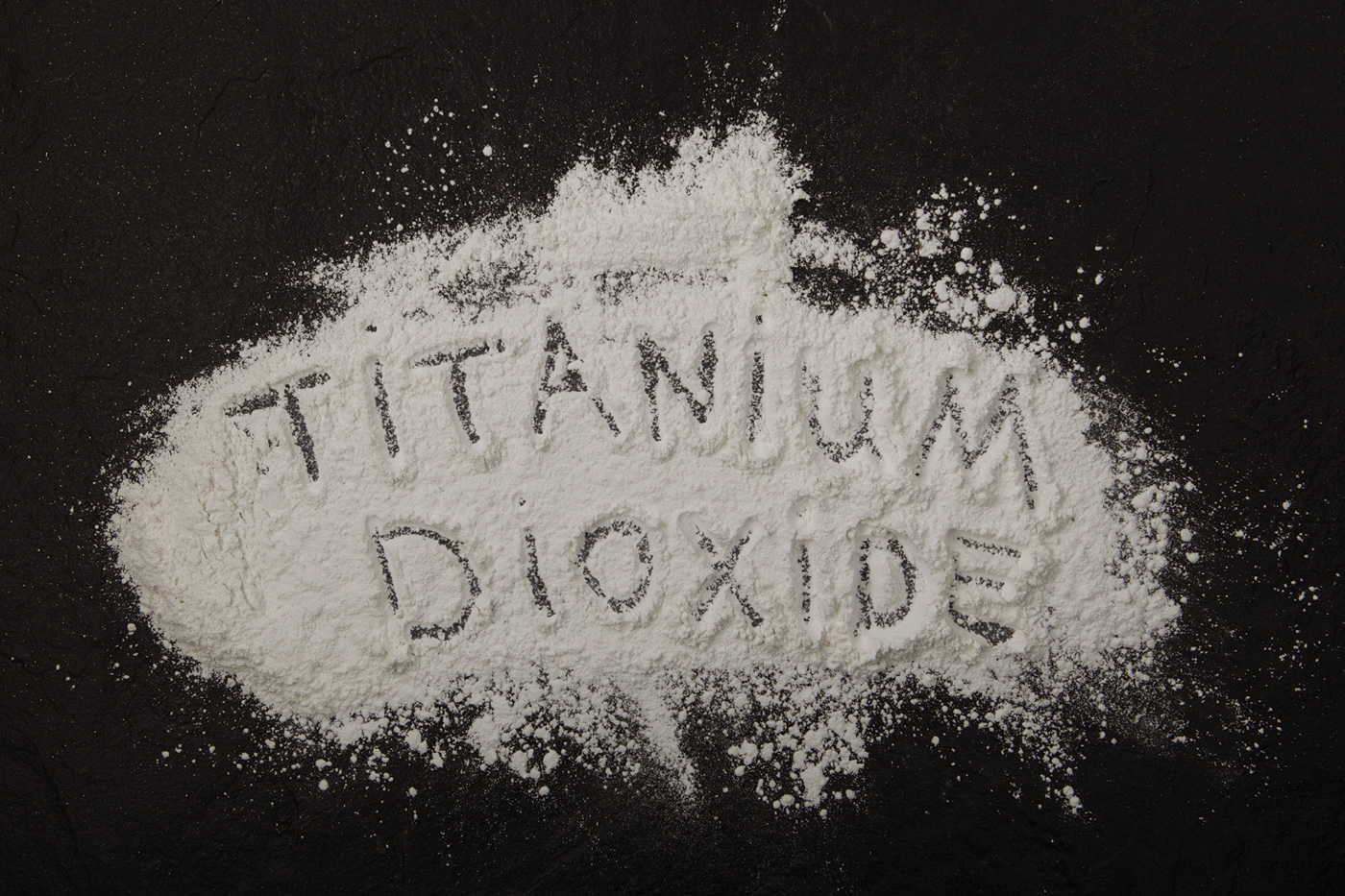
“It all blew up into a very political controversy in Europe,” Kaminski says. “But what’s interesting is that, since then, many other countries and their regulatory agencies have looked at the data on titanium dioxide and don’t agree with EFSA. That includes not only our FDA, but the United Kingdom, New Zealand, Australia, Japan, and other major countries. Even the Joint FAO/WHO Expert Committee on Food Additives recently reviewed the data and doesn’t agree with EFSA.”
California ultimately struck titanium dioxide from the list on their Food Safety Act, but New York and other states are still looking to prohibit its use. Havlik says there are even murmurs within California about banning it in the future.
“This is a classic case of the pendulum swinging too far,” he says. “The entire world outside Europe thinks that titanium dioxide is fine within the confines of usage levels that are prescribed and the way it is manufactured. … As a scientist, I find it alarming. There’s no scientific basis for its ban when it’s used within the parameters that the entire food industry abides by. And, to me, that says a lot about the quality of the people who are promoting the idea that it needs to be banned out of existence. They don’t understand the science.”
A Call for Common Communication and Standards
This, Ruff argues, leads back to not a risk management issue, but a communication one. He says that one of the biggest barriers to innovation in the development and formulation of future food products is going to be consumer pressure—the very thing, he says, that is driving many of today’s bans. Far too many consumers are asking for bans even though they do not understand what, exactly, the risk is with the additive they want to see gone.
“It will be a heck of a problem if a handful of states ban something because of these consumer concerns because it will effectively ban it nationally,” says Ruff. And that is especially true, he continues, “when the decision to enact some of these bans throws the scientific basis of what we understand about these different additives completely out the window.”
Llewellyn agrees, but says it is not always easy to educate consumers about the complex science involved with food safety matters.
“So often, consumers just want to know if a chemical is safe or not,” he says. “And if you have to explain, ‘it’s safe if used as intended,’ you tend to lose them. The chemicals sound scary and the marketing sound bites that say, ‘This food contains a chemical that you’ll find in a yoga mat. Do you want that same chemical in your body?’ move them more than the nuances of the science.”

Kaminski and colleagues at the Center for Research on Ingredient Safety have been writing a weekly blog to discuss food additives and other food safety issues for the past six years and even have an open call for blog post suggestions online. The FDA is currently working on two consumer education initiatives to develop “targeted, science-based materials,” providing information in plain language about chemicals used during food production and processing. But Ruff says a bigger difference could be made if the greater food industry worked to educate policy makers at the state and local level about the risks involved with different additives.
“We need to find a way to educate the people who are making the decisions at the state level on the additives,” he says. “We need to do more to interact and find ways to help key decision makers understand these issues as well as understand the science behind them in a way so they can make good decisions. We do it at the federal level, but we need to do it at the state level, too.”
Havlik adds that the industry would also benefit if it could move toward global food additive standards. He sees Codex Alimentarius as a happy medium between the risk and hazard management strategies. He describes it as closer to the “center line” of risk assessment.
So often, consumers just want to know if a chemical is safe or not. And if you have to explain, ‘it’s safe if used as intended,’ you tend to lose them.

“If we could get to a more harmonized approach, it would make it easier for product developers globally,” he says. “Codex takes a much more solid, holistic approach to assess whether an additive is a risk or not and takes a global view that an ingredient is acceptable to use at a certain level and is safe for human consumption based upon the best assessments that scientists have done at this point in time.”
It would also, he says, help ensure that food companies could continue to innovate in a rapid, cost-effective manner moving forward, while keeping food safety concerns top of mind.
“You can’t feed eight and a half billion people on this planet without food processing and food production,” Havlik says. “You can’t do that without food additives. Moving forward, we need to figure out a way to make the industry work in harmony.”ft
Hero Image: © MicroStockHub/E+/Getty Images
Authors
-
Kayt Sukel Author
Kayt Sukel is a book author, magazine writer, and public speaker who frequently covers scientific topics.
Categories
-
Food Ingredients and Additives
-
Food Policy
-
Food Laws and Regulations
-
Colors
-
Issues & Insights
-
Food Technology Magazine


