
Solid Growth, Some Shifts in Yogurt Market

-
Key Takeaway 1
Sales of dairy-based yogurt show strength while the nondairy product market has lost some ground.
-
Key Takeaway 2
General Mills has sold its U.S. yogurt business to Lactalis.
-
Key Takeaway 3
Added protein, reduced sugar, and probiotic and prebiotic benefits are yogurt category market drivers.
The yogurt category is large and continues to grow, perhaps counterintuitively, as General Mills divests its large U.S. yogurt business, including the Yoplait brand, to French dairy company Lactalis.
The overall category saw U.S. sales rise 6.5% to $10.8 billion for the 52 weeks ending August 11, 2024, with unit sales up 3.0% to 4.1 billion as prices rose 3.4%, according to multi-outlet data from Circana. Sales of dairy yogurt rose 6.8% to $9.2 billion, and dairy yogurt drinks were up 7.3% to $1.4 billion. The smaller dairy alternative categories lost ground: dairy alternative yogurt sales fell 5.8% to $282.9 million, while alternative yogurt drink sales plummeted 26.2% to $495,000.
John Crawford, senior vice president, client insights for Circana, says U.S. household penetration is 82% overall for the category, including 80% for dairy yogurt, 25% for yogurt drinks, and 6.7% for alternative yogurt products. “Growth is pretty darn strong,” he says. “Not a lot of categories are growing in dollars and volume.”
But there’s a juxtaposition, according to Crawford. “You’re seeing dairy doing well, and alternatives or plant-based not doing well,” he says.
Dairy Versus Alternatives
A set of consumers has moved away from the dairy category, but that’s mostly affected the milk subcategory, where plant-based accounts for 12% of the aisle, Crawford says. It’s not the case for other dairy subcategories. “They’re not abandoning yogurt, cheese, [and] cream cheese,” he says. “They’re still increasing their consumption of dairy overall.”
Data from Innova Market Insights show that spoonable dairy yogurt accounts for a much higher percentage of product launches than nondairy, although more consumers are increasing their consumption of both types. The greatest success for dairy yogurt is among women, those who have higher incomes, those who are more educated, millennials, and Generation Xers. For nondairy, the key demographic segments include those with higher incomes, those with more education, younger consumers, and those on vegan and other meat-reduced diets.
Nearly three-quarters of dairy yogurt consumers and more than 60% of nondairy yogurt consumers say they consume it at least weekly, according to Innova, with breakfast and afternoon snacks the most common occasions, along with morning snacks for the nondairy side. Among the top reasons people eat yogurt are taste, convenience, and healthfulness (natural ingredients and low-sugar formulations).
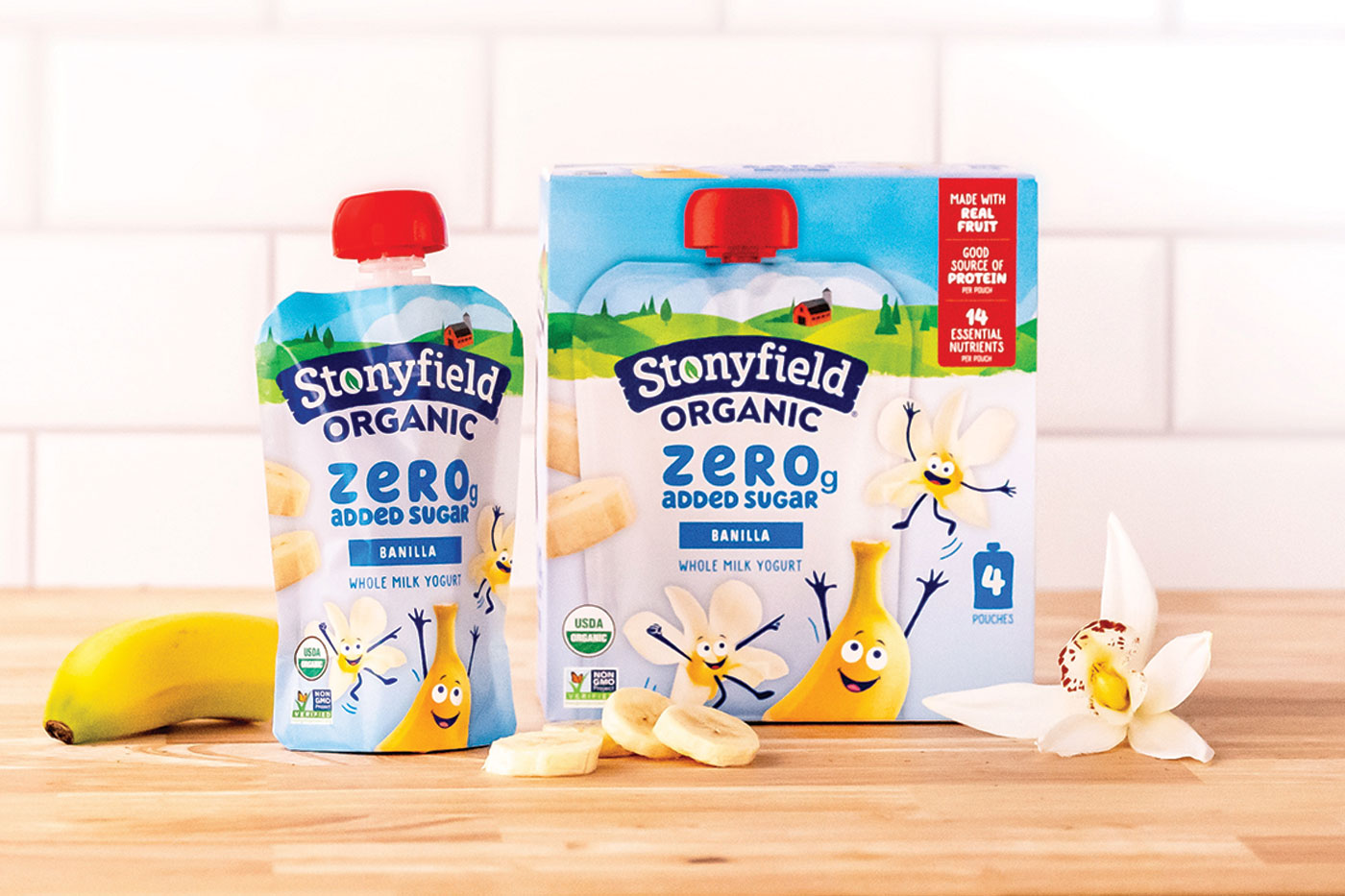
Stonyfield Organic ZERO Grams Added Sugar Yogurt for kids debuted early this summer. Photo courtesy of Stonyfield Farm
Is Innovation Lagging?
Although it’s a huge category in supermarkets, yogurt hasn’t seen as much innovation in the past five years as it had in the previous decade, says Maeve Webster, president of Menu Matters. “Protein is the only new [innovation] in the last few years,” she says. “Yogurt has reached a certain maturity point.” She notes that it will be interesting to see if yogurt maintains its strong presence in the refrigerated case going forward.
During the inflationary times of the past few years, Webster believes that those who consumed yogurt less frequently probably stopped eating it, while regulars might have traded down to a less expensive brand.
Plant-based products haven’t gained a foothold in the yogurt category to the extent that they have in the milk alternative category, in part because their texture or flavors “aren’t necessarily hitting what consumers are expecting,” Webster says. “That might be an area that will have a bit more innovation. Those products are very early stage. I’m sure they’ll improve. … If plant-based dairy products don’t mimic the dairy pretty closely, it’s hard for them to gain greater acceptance.”
Dairy yogurt hasn’t been impacted by consumers eschewing dairy overall because “yogurt has done a great job of being in the dairy category, but somewhat set apart,” Webster adds. “It has done so well in differentiating itself from other dairy products, with probiotics and prebiotics and other health benefits.”
Karuna Rawal, chief marketing officer and chief revenue officer for Nature’s Fynd, which makes its yogurt with a fungi protein, agrees that plant-based products have faced a challenging time but contends that in spite of its market growth, the dairy side does not connect with all consumers. Some are “looking to alternatives due to health concerns and the way dairy makes them feel … and to a lesser extent, sustainability concerns around the impact of animal agriculture,” she says.
Plant-based products haven’t gained a foothold in the yogurt category to the extent that they have in the milk alternative category.
The global compound annual growth rate (CAGR) for spoonable dairy yogurt product introductions declined by 4% between 2019 and 2023, Innova reports. Greek yogurt accounts for 20% of dairy launches. Nondairy yogurt entries rose slightly at 1% CAGR from 2019 to 2024. Introductions with base ingredients of coconut, soy, and oat have been growing, according to Innova.
Crawford of Circana sees varying levels of interest in Greek yogurt, which has leveled off a bit, along with Icelandic, Australian, and French yogurt. “You certainly have ‘flips’ and inclusions. You still have fruit on the bottom; that’s still a big category,” he says. “The Activias of the world are doing well. Dannon’s core products are doing well. Chobani, FAGE, and other mainstays are doing pretty darn well.”
Rawal sees a successful path ahead for the Nature’s Fynd fungi-powered products, which she notes introduce a source of net new protein and are neither plant- nor animal-based. “We’re introducing new protein by converting simple ingredients into the protein we need through fermentation, with no middleman,” she says. “This means less wasted land, water, and energy.”
Label Claims
Top health claims in the yogurt category include high protein, up 3% in dairy and 2% in nondairy entries, along with lactose-free claims, Innova reports. Other growing claims among nondairy products include plant-based, low fat, and vegetarian, along with environmental and human welfare benefits.
The claim of “no added sweeteners” is the most common one that Circana tracks in the yogurt category, up 41% for the 52 weeks ending September 8, 2024, while no/low/less sugar is up 24%, sweetener-free up 14%, and natural sweetener (mainly honey) up 8%, Crawford says.
“That’s where Yoplait, with all the sugar, and other products started to struggle,” he says. “Consumers are looking for claims about protein and probiotics. … Some of the traditional yogurt brands, certainly, are getting into Greek. They are understanding the importance of the nutrient density of the product, and the benefits, as opposed to talking about what’s not in the product.”
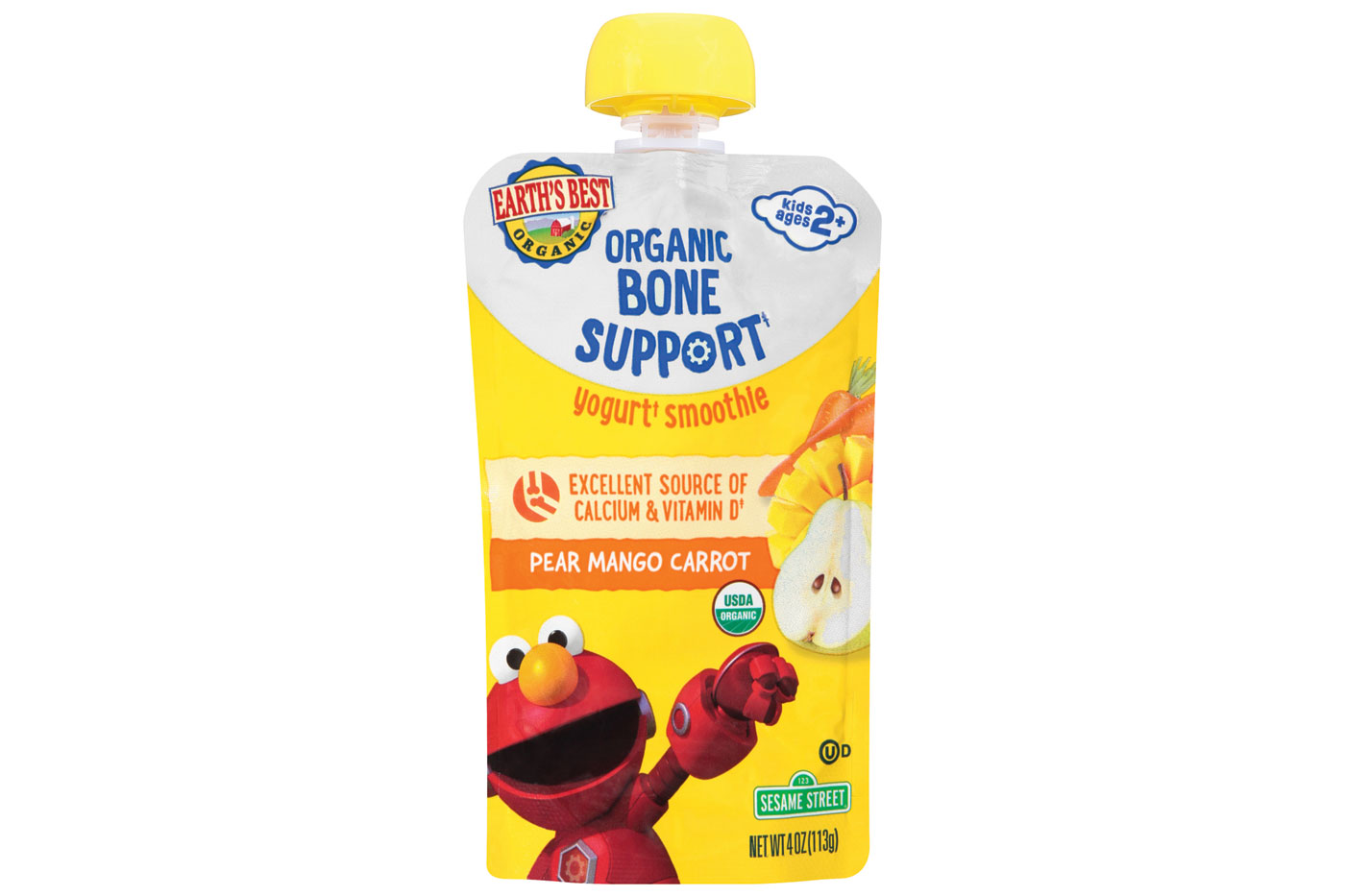
Calcium and vitamin D in Earth’s Best Organic Bone Support Smoothie support healthy bone development. Photo courtesy of The Hain Celestial Group
Webster of Menu Matters has noted greater interest in protein as a key functional benefit, whether products are animal- or plant-based. “Yogurt already had that extra boost of protein, naturally,” she says. “You’re seeing yogurts marketed as having additional protein.”
While some consumers are looking for lower-fat yogurt, other players in the category, such as Noosa, remain full fat, Webster says. “They certainly have a different positioning,” she says. “There’s also continued increasing concern regarding sugar; that’s particularly impactful to flavored yogurts, and how much sugar is in there, and how much sweetener they’re using.”
Dairy-free yogurt consumers are looking for the taste and texture of dairy yogurt along with more balanced, nutrient-dense offerings, Rawal says, noting the Nature’s Fynd Fy brand contains 8 grams of protein and 4 grams of fiber per serving. “Consumers value the presence of positives like protein, probiotics, and vitamins, and the absence of negatives like dairy, artificials, sugar, gluten, etc.,” she says.
In its 2023 Yogurt and Yogurt Drinks—U.S. report, Mintel notes that yogurt has maintained its position as a staple in consumer households due to affordability, familiarity, health benefits, and consumers’ increased snacking frequency. The report recommends that brands lean into health and convenience drivers at the core of the category’s novelty, including the use of yogurt as an ingredient in recipes for sweet and savory dishes.
Webster points out that yogurt already is turning up as an ingredient in sauces and baked goods, especially in Indian or Mediterranean food, which “speaks to the fact that consumers and foodservice operators see yogurt as a health-halo ingredient.”
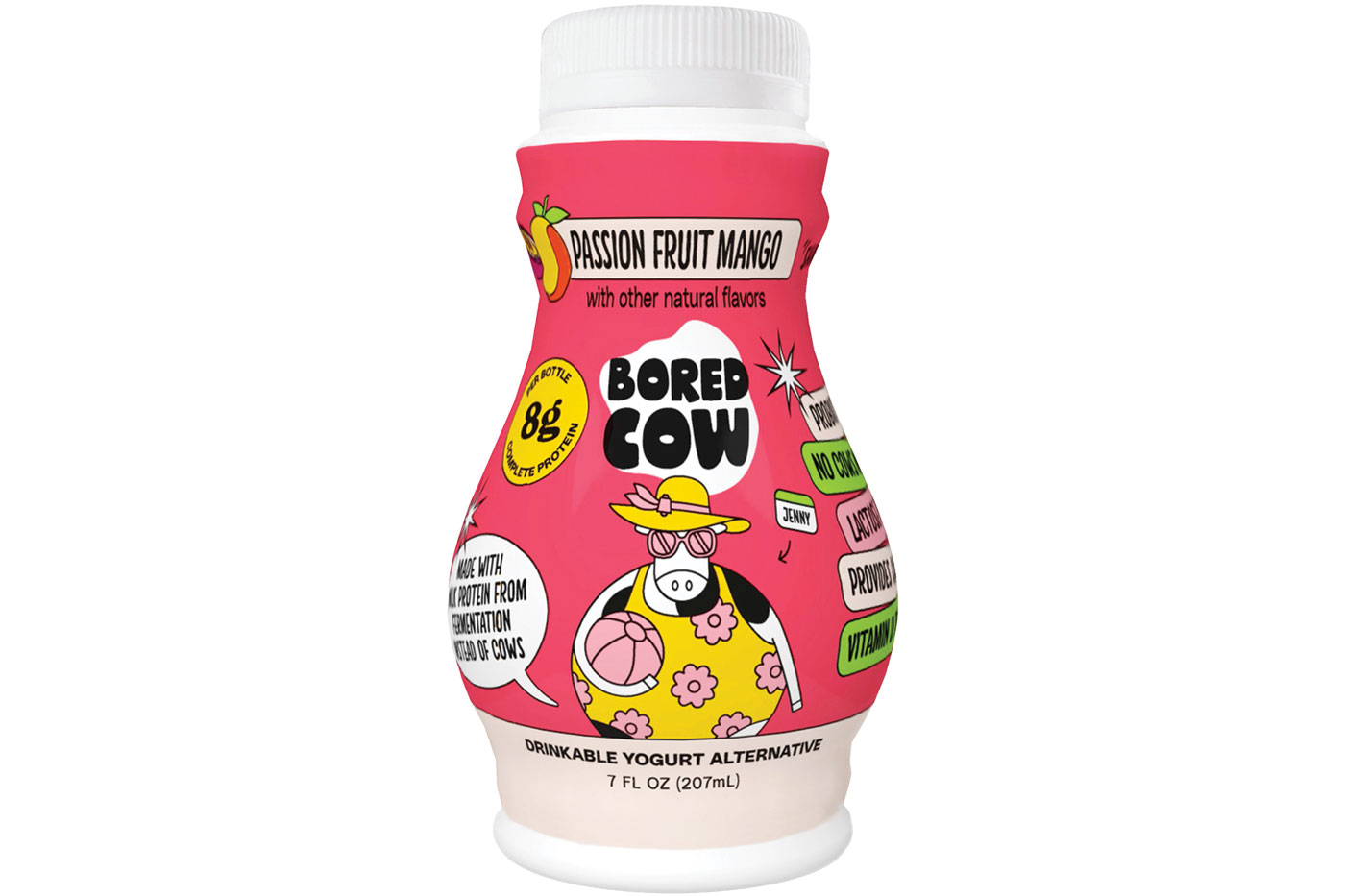
Bored Cow drinkable yogurt alternative is made using precision fermentation. Photo courtesy of Bored Cow
Flavors and Ingredients
Fruit flavors comprise the largest portion of spoonable yogurt entries; the most common are strawberry, peach, blueberry, mango, passion fruit, red raspberry, banana, and lemon, according to Innova. Nondairy yogurt in “brown flavors” such as vanilla and stracciatella grew 2% between 2019–2020 and 2022–2023, Innova found.
Non-nutritive sweeteners such as stevia are being included in dairy yogurt recipes, while recent nondairy entries have included modified starch, edible oils, protein, pulses and beans, probiotics, and fiber, Innova data show. Fewer dairy alternative entries are using coconut milk, but the use of coconut cream rose 6% between 2019–2020 and 2022–2023, per Innova. The use of pectin has declined, while granulated sugar and tapioca syrup are more common, Innova says.
Webster has noticed more use of nontraditional flavors, at least for the American market, some of them sweet and some savory, including “less common fruits and tropical flavors and spices,” she says. There’s also a trend toward savory functional ingredients like turmeric.
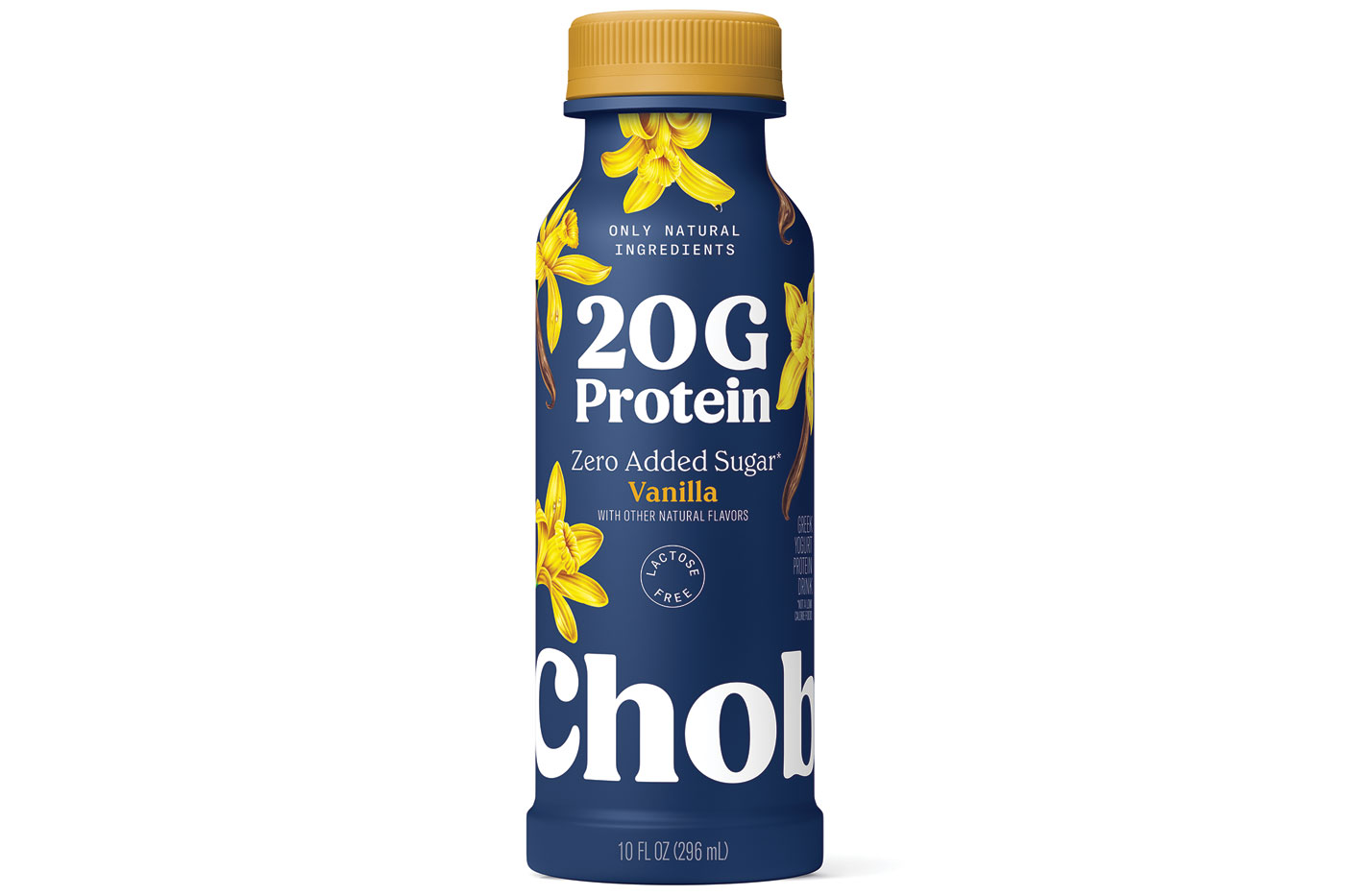
Chobani’s new High Protein line includes yogurt beverages as well as Greek yogurt cups. Photo courtesy of Chobani
New Products of Note
This fall, Chobani rolled out the Chobani High Protein product line of Greek yogurt cups and drinks. Each serving of cup yogurt contains 20 grams of protein, and the drinks supply 15 grams of protein per 7-ounce drink, 20 grams per 10-ounce drink, and 30 grams per 14-ounce drink. In addition to their protein content, the products are high in vitamin B12, which supports muscle health and energy, the company says. The drinks lineup includes some indulgent flavors such as Tropical Punch, Strawberries & Cream, and Vanilla Ice Cream.
Amy Marks-McGee, owner of marketing and research firm Trendincite, shared some recent product launch examples in a variety of subsegments within the category.
On the indulgent snack front, Marks-McGee mentions honey-flavored Greek Gods Greek Yogurt from Hain Celestial and Blueberry & Vanilla Yogurt Covered Raisins from Sun-Maid. Danone North America has added a mix-in component to several of its yogurt brands: Light + Fit REMIX comes in Brownie Sundae, Key Lime Pie, and Strawberry Cheesecake varieties; the Oikos REMIX lineup includes Coco Almond Chocolate, Salted Caramel, and S’mores; and Too Good & Co. REMIX options include Banana Dark Chocolate Honey, Blueberry Almond Oat Crisp, and Strawberry Dark Chocolate Almond.
New yogurt SKUs aimed at children include a couple of Hain Celestial entries in the Earth’s Best Organic Smoothies brand: an Immune Support Yogurt Smoothie with pineapple, orange, and banana ingredients, and a Bone Support Yogurt Smoothie with pears, mangos, and carrots. In addition, Stonyfield has launched whole milk Stonyfield Organic ZERO Grams Added Sugar Yogurt in pouches in both Blueberry Apple Carrot and Banilla (banana and vanilla) varieties.
On the dairy alternative side, Marks-McGee points to Oatmilk Skyr from Icelandic Provisions and drinkable yogurt from Bored Cow made using precision fermentation as well as Dairy-Free Fy Yogurt from Nature’s Fynd.
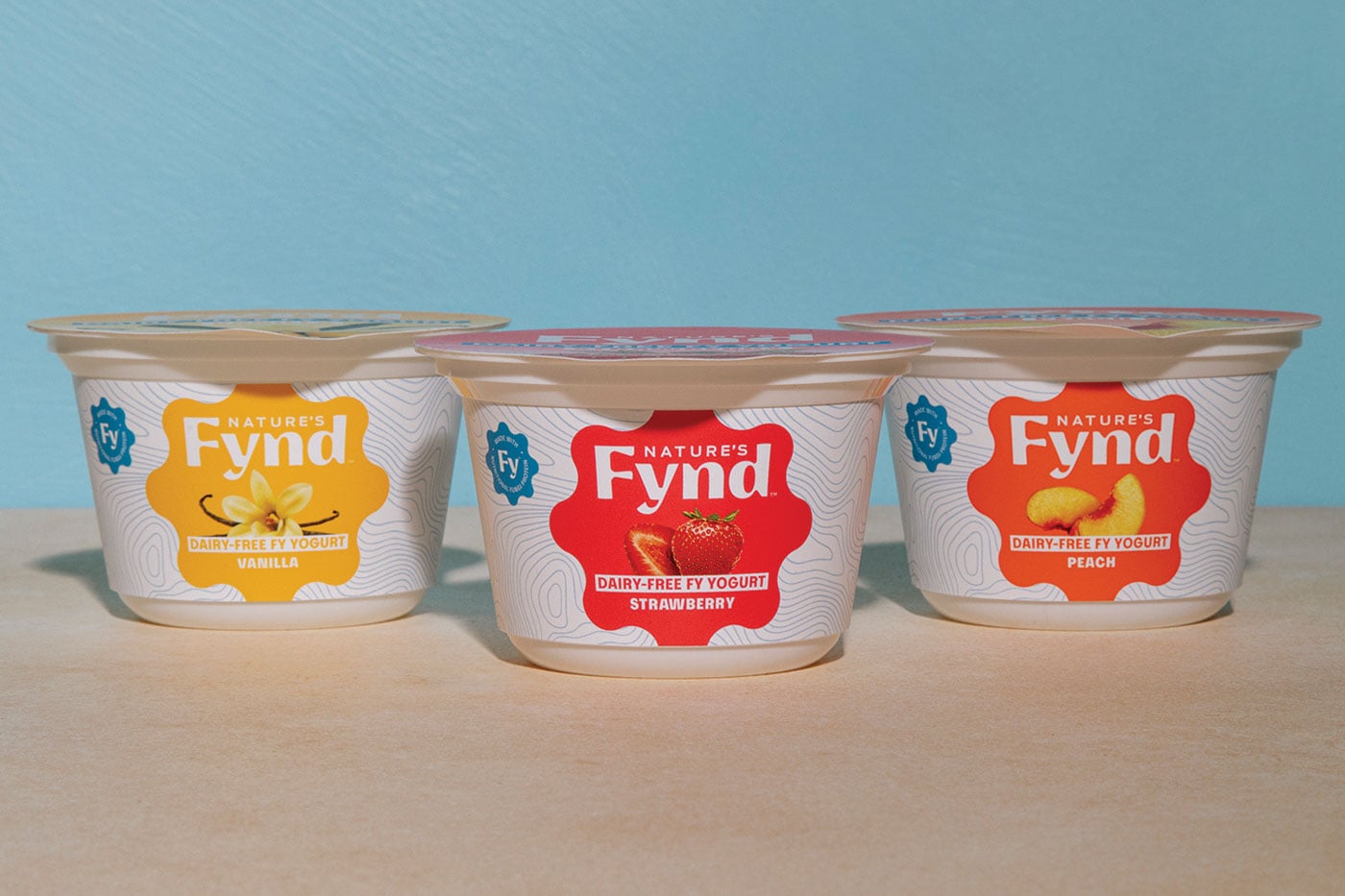
Nature’s Fynd Dairy-Free Fy Yogurt, available in three flavors, is made using the company’s fungi-derived complete protein ingredient. Photo courtesy of Nature’s Fynd
Trends Going Forward
Mintel reports that consumers’ perceptions of the category remain narrow—focused heavily on fruity, spoonable SKUs—and the potential exists to more aggressively expand into drinks, tubes, and pouches to match consumers’ on-the-go lifestyles, especially among younger, snack-oriented generations. Mintel predicts flat sales in the years ahead for less portable yogurt offerings, leading to an overall slump in the category.
Innova analysts expect to see boosted nutrition positioning in the category, including high protein, added vitamins and minerals, and gut or immune health features. Innova also expects reduced “negatives” claims, expanded nondairy spoonable options, increased ethical claims around environment and animal welfare, SKUs targeted to specific demographics, and add-ins like fruit, muesli, and candy.ft
Hero Image: © Weekend Images Inc./E+/Getty Images
Authors
-
Ed Finkel Journalist
Ed Finkel is a freelance journalist based in Evanston, Ill. (edfinkel@edfinkel.com).
Categories
-
Food Business Trends
-
Consumer and Marketplace Trends
-
Food Categories
-
Market Trends
-
Food Retailing
-
Dairy
-
Food Technology Magazine
-
Frozen Foods
-
Refrigerated Foods


