
The Iron Man

 Julie Larson Bricher
Food Technology Magazine
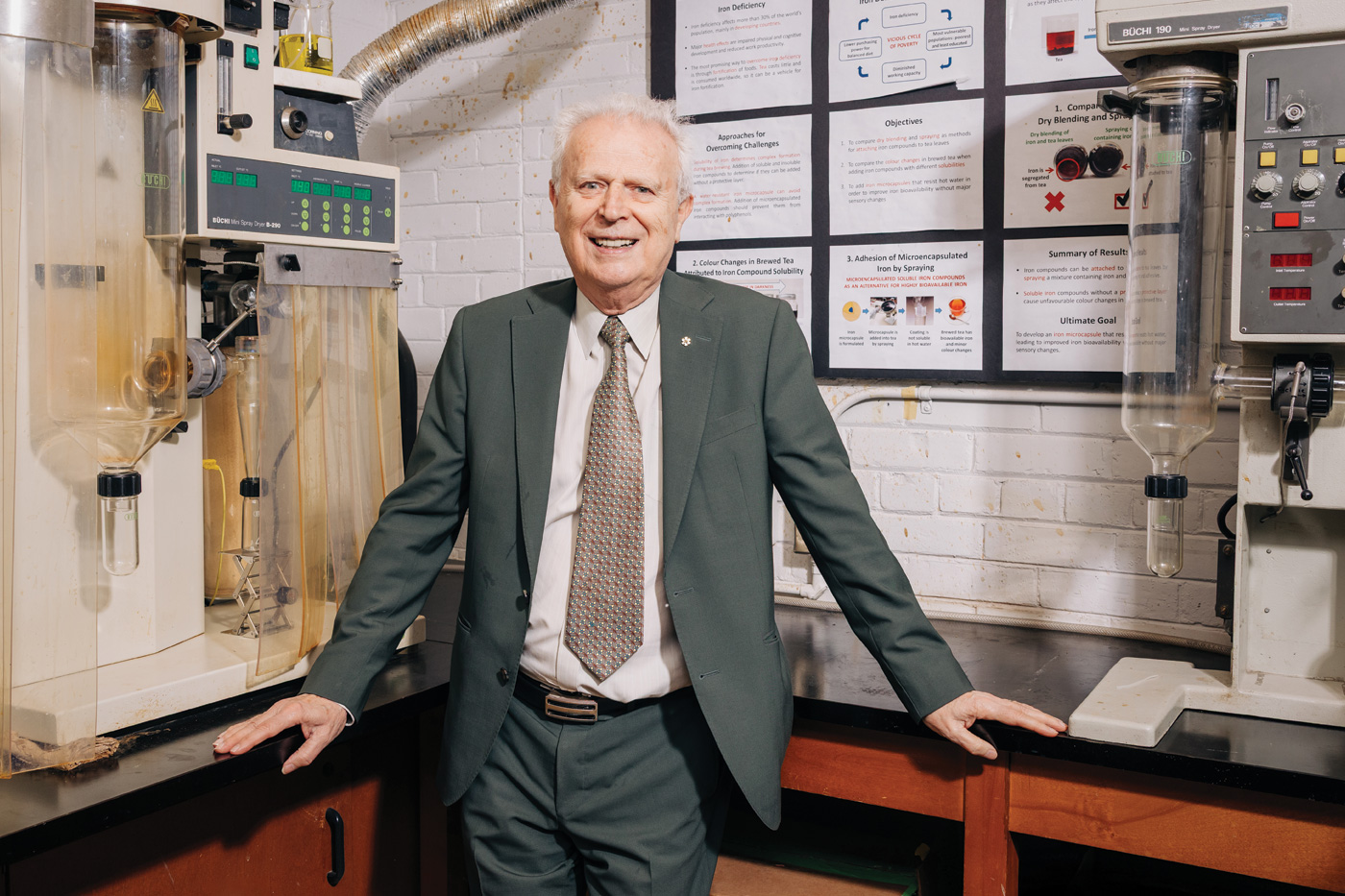
Not all heroes wear capes,” as the saying goes. In the case of Levente Diosady, recipient of the IFT 2025 Lifetime Achievement Award in Honor of Nicolas Appert, truer words were never spoken. Over the years, the University of Toronto chemical engineer and professor emeritus has been dubbed “The Iron Man” by the media—a nod to Diosady’s innovations that have had a transformative impact on global efforts to combat micronutrient deficiencies affecting billions of people, especially among vulnerable populations in developing regions.
The Iron Man moniker is directly related to one of his most significant contributions, the creation of double-fortified salt (DFS), which includes iron and iodine. Inadequate nutrition, particularly diets lacking essential minerals like iodine and iron, can significantly impair brain development and increase the risk of death among mothers and children in at-risk communities. Diosady realized that due to its widespread and consistent use, salt could serve as an effective medium for distributing vital nutrients over time. His team at the University of Toronto developed microencapsulation methods to maintain the nutrients’ stability and effectiveness, solving a long-time technical problem and global nutrition challenge at the same time.
This breakthrough has led to measurable improvements in public health—for example, India’s use of DFS in school meals reduced anemia rates by over 30% in just 10 months and today supports the daily heath of approximately 5.5 million children in Tamil Nadu, India’s southernmost state. More than 100 million people are benefiting from DFS, and research indicates that the technology has the capacity to enhance the well-being and productivity of over a billion people while fostering better cognitive development.
Building on this success, Diosady also created quadruple-fortified salt (QFS), which adds folic acid and vitamin B12 to further combat nutrient deficiencies. Trials of QFS in countries like Tanzania and India have shown marked improvements in key health indicators, including hemoglobin and folate levels. With backing from major organizations such as the Gates Foundation and Nutrition International, these technologies are now being adopted in regions across Africa, Asia, and Latin America, amplifying their global impact and offering scalable solutions to persistent public health challenges.
Food Technology chatted with Diosady about his remarkable five-decade career in food science and engineering, his groundbreaking advancements in global nutrition, and his continuing research.
How did you get into food science as a career?
I got into food science by accident. I always wanted to be a chemical engineer, [so] I did my PhD in catalysis, and my first job was with a consulting engineering company, Cambrian Engineering Group. They were based in Saskatoon, and the company was bought by Agra Foods, which owned an edible oil refinery in Northern Saskatchewan. All of a sudden, I needed to become an expert in edible oil processing, which I did become, eventually, and I still am a reasonable expert in that area. Later on, Dr. [Venkatesh] Mannar, who was the head of the Micronutrient Initiative [based in Ottawa], asked me a simple question about food fortification, and I became interested, and I got very much involved in this area of research, which is what I’ve been doing also for the last 25 years or so.
How did you feel at the time about taking a different direction in your career path?
Fortunately, I had always been interested in all areas of science, so I’ve never been a really good specialist in anything. I’ve dabbled in many, many different things, from geophysics to micronutrients, and so I welcomed the opportunity, and I enjoyed it.
I also became a professor essentially by accident, because I was invited to be the external examiner of a student who was in food science, although he was a chemical engineer, so this was the overlap, chemical engineering and food. Afterwards they said, “By the way, would you like to become a professor in this field? We want to start a new chair in food engineering.” I said, “Oh, okay, that sounds good,” so that’s how I became a professor, and I’ve been [at the University of Toronto] for 45 years.
I certainly enjoy the fact that the work I’ve been doing has had an impact on people’s health.
What do you like most about that change in your career arc?
Well, theoretically, engineers solve problems that are positive, and getting into the food area, there is a more direct impact of what you do in people’s lives and health. I certainly enjoy the fact that the work I’ve been doing has had an impact on people’s health.
What drives you today to advance scientific discovery in the areas of technology development for food fortification, micronutrient encapsulation, and oilseed processing?
It is a range, but really, as I like to say, I’m off the payroll, but I’m not retired. I still have a laboratory and a group of 11 very good people. I am still driven by the interest to push this research forward and to expand both the penetration of the fortified salts we have [developed] and to develop other applications that can have a positive effect on health. This whole area of food fortification has a number of different possibilities [to address] a number of different needs in the world, so I am happy to help advance this science.
I’m also driven by the fact that I would like to see somebody who takes my chair at the University of Toronto so that I could retire in peace, knowing that somebody’s continuing what we’ve been doing. Personally, probably my wife would kill me if I was hanging around and getting underfoot at home, so in that sense, continuing this work is very nice. I have something that I have to do and that I enjoy doing.
What would you say are your top research or scientific successes during your career?
Right now, I’m working with Nutrition International for introducing folic acid in Ethiopia, and the immediate results are very good, so there’s a chance that this is going to [be successful] and go into production on a larger scale. Of course, as an engineer, I like to see that. I like to see this stuff move out of the laboratory into proper large-scale processing. With simple double- fortified salt, this has happened in India. We have 100 million people [using] the technology, and it’s all pro bono, by the way, so the university or I don’t really look for anything in terms of financial return. The pilot study has just been completed, and the results are good, and the chances are pretty good that we’ll be asked to help with setting up something that will introduce folic acid fortified salt in Ethiopia on a larger scale.
I’ve been very fortunate to be drawn into this problem of fortifying salt with iron, and this has become, as I said, a large-scale operation now. Four different Indian states are promoting this technology and providing it to their food programs, and so it has reached about 100 million people as of 2023. So, that is by far the most obvious positive that we have, but in science, there’s lots of fun things that you do and little things which give you pleasure. It’s always nice to deal with young people that are keen and interested, and I have been very fortunate on that end as well. I have 100 graduate students that I’ve officially mentored, which includes 17 who became professors, one dean, and one president of a university who just retired, my second PhD.
As a teacher, you always take pleasure in the success of your students, and you really don’t know which students you have had a big influence on. It turns out, 20 years later, I have a wonderful Thai student that invited us to visit because he liked what he learned from me. And, of course, I certainly enjoy mentoring, even today, so I interact with my graduate students and I think that’s very satisfying.
In science, there’s lots of fun things that you do and little things which give you pleasure.
Tell us a bit more about your research with salt fortification that’s been so beneficial in India. Why was that a challenge that needed to be solved?
It started out as providing double-fortified salt, which contained iron and iodine. Of course, there’s a technical problem in doing that. The problem is that when iron and iodine interact, it results in the loss of iodine, so we had to find a way of making them compatible. The way we found to do it, which is pretty logical, is essentially to microencapsulate the iron. Originally, we microencapsulated the iodine, but since there was already an iodine system in place, it was easier to accept technology that will deal with the iron being encapsulated.
Once we did that, we realized that when we had these capsules that seemed to work, we could add other things into it. We started adding folic acid, and then because folic acid also needs vitamin B12, we added vitamin B12, so we have quadruple. We even have a quintuple, which has zinc added to it. We also have another project with a colleague in Cambodia where the problem is a vitamin B1 shortage, [the lack of which causes] beriberi in infants. There again, we could put vitamin B1 onto salt that could be incorporated in the diet. The tests are going on now, apparently quite well.
This problem needed to be solved because India has a huge problem with anemia, and a very large percentage of young women and women in general have very low iron status, [which] leads to all kinds of health problems, including a huge number of maternity-related deaths. This was a known issue, and while there was an iron-fortified flour, the thing is that India is a place where there’s still about 400 or 500 million people who are rural and who grow and make their own food and don’t buy it, so having fortified flour didn’t do a thing for them. We realized that salt is something that everybody has to get, and it all goes through some sort of processing or packaging. It’s iodized by law, and 92% or so of people in India get iodized salt, so it seemed like a natural place to put iron.
Why do you think you were able to solve the technical problem?
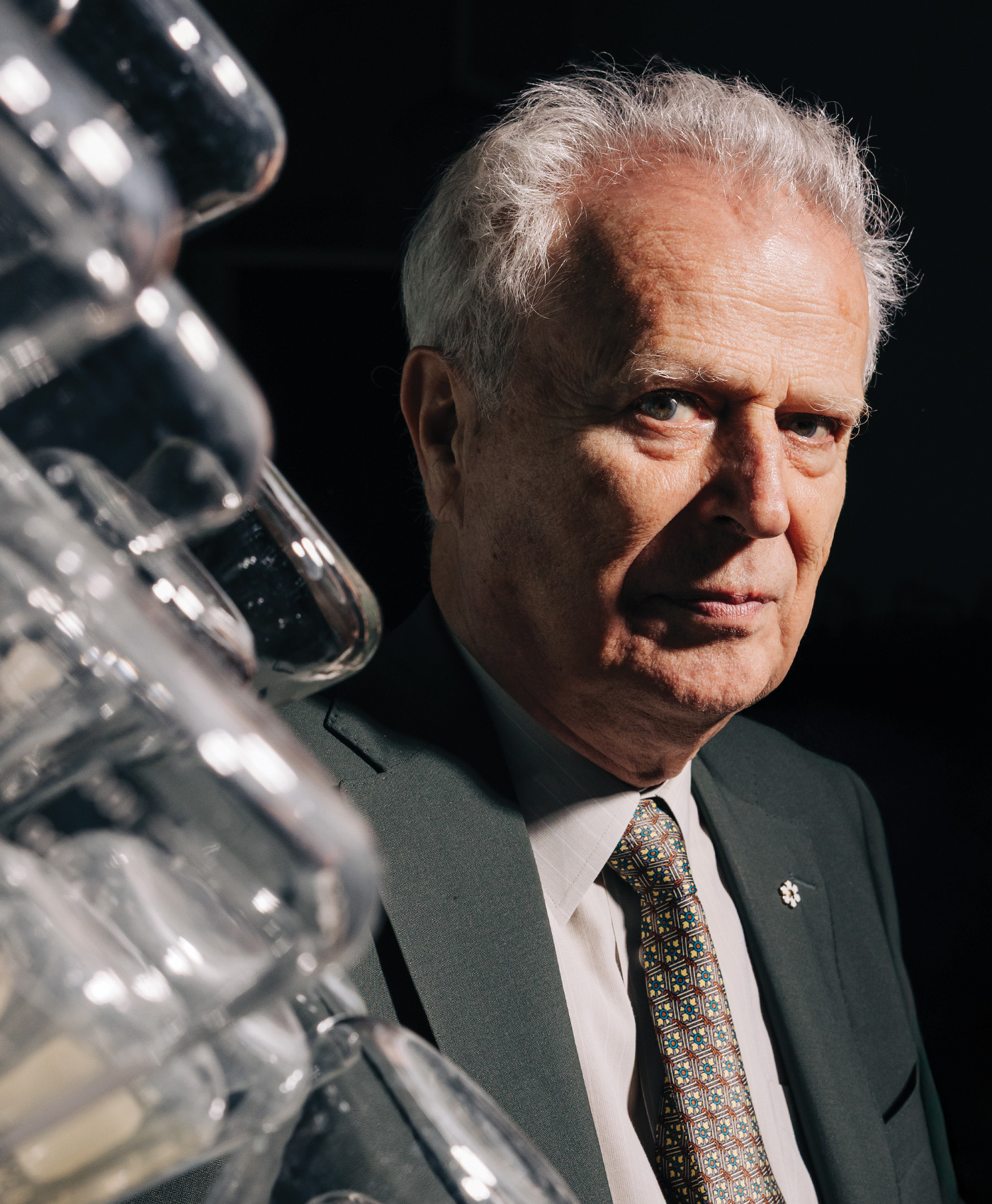
My advantage, and the reason why I was successful in this as opposed to others, is that I had an understanding of the whole problem, including the nutrition, the medical, the local systems, and a lot more. The problem on its own is not hugely difficult, and looking back, it should have been obvious, but having that broad overview and focusing on the technical problem made it possible to develop a system that is actually useful to people.
What is in your current research pipeline?
Again, primarily we’re looking at sticking other things onto salt, in different combinations. We have six [micronutrients] and we can do them in any combination now. And we’re working on scaling these solutions, keeping in mind different impurities, different systems, different countries, different rules, and so on.
I also have an ex-postdoc who’s a professor in Chile, and we’re working on trying to look at extracting proteins from granado beans, which is a local food in Chile. These beans are in the general diet, but it turns out that the proteins in concentrated form contain some peptides, which we still need to isolate, that seem to be preventing diabetes, type 2 diabetes. Diabetes is a huge problem in Chile, but I think it’s an even bigger problem in the United States and Canada, so we are working on that.
We’re also working on fortification of tea. Tea is the second most often drank beverage in the world after water, and in India, it is a primary staple. Everybody at all levels of society drinks tea. I’ve been told they drink two cups of tea every day. Adding iron to tea is also a very difficult technological problem, because the tea polyphenols interact with iron to form complexes, which mean the teas look blue or black, they look ugly, they taste ugly, and they’re not bioavailable.
Again, we have to look at technology to prevent this interaction. We have two different approaches. One of them is encapsulation. The other one is introducing competing chelating agents. I just found out last year that North American women are also iron short, and they drink lots of iced tea, and we think that maybe we can put iron into iced tea and decrease this problem, so I’m playing with that.
The advice I have is to read a lot, know about as many things as possible, and be open to different options, possibilities, and opportunities.
What advice do you most like to share with graduates or early career professionals as they start their own lifetimes of achievement?
I am not aligned with many of my colleagues on this, but some agree. I say, it really doesn’t matter what you do your PhD in. What a PhD teaches you is how to be an independent researcher and tackle problems. Engineering also teaches you to tackle problems, so really, the advice I have is to read a lot, know about as many things as possible, and be open to different options, possibilities, and opportunities because you never know where it’s going to take you.
What does the IFT Lifetime Achievement Award in honor of Nicolas Appert mean to you?
First of all, it is a wonderful recognition from your peers. Also, it’s nice being recognized in food science, especially for someone who has never had a formal course in food but has been an engineer all this time, I think it’s a wonderful recognition, and it’s a wonderful thing for IFT to do. It’s pretty nice that a refugee kid can, so many years later, end up at the top of the heap of something or other. This is certainly a heap that is very, very important, very nice, and so it is a recognition that I treasure.ft
Celebrating Achievement at IFT FIRST
Join those who will gather to recognize Levente Diosady and other exceptional food system contributors at the IFT Awards Ceremony and Celebration from 4:30 p.m. to 7 p.m. on Sunday, July 13, in Chicago’s McCormick Place.
Vital Statistics
Credentials: BASc, MASc, PhD, chemical engineering, University of Toronto
Research Interests: Oilseed processing, membrane processes, extrusion, advanced separation processes, and micronutrient fortification of food, including fortification of beverages for prevention of maternal and infant mortality and iron fortification of tea.
Noteworthy: His research group is working with Nutrition International and the Gates Foundation to develop technologies for the introduction of key micronutrients into widely consumed foods. His process for fortification of salt with iodine and iron reduced anemia by one million in a test with 3.4 million children in India and is now consumed by 100 million in India.
Selected Honors: IFT Lifetime Achievement Award in honor of Nicholas Appert (2025); President’s Impact Award, University of Toronto (2022); Order of Canada, Government of Canada (2019); R.S. Jane Memorial Award, The Chemical Institute of Canada (2019); Gold Medal, Engineers Canada (2018); Lifetime Achievement Award, International Association of Engineering and Food (2015); Lifetime Achievement Award, American Oil Chemists’ Society (2015); Officer’s Cross, Order of Merit, Government of Hungary (2015); Queen’s Diamond Jubilee Medal, Government of Canada (2012); IFT/ILSI Babcock Hart Award (2010)
Favorite Quote: “An engineer is a person who can do it for $1, and anyone else does it for $2.”—William Graydon, University of Toronto
LinkedIn: Meet Levente Diosady
Hero Image: photography by Shlomi Amiga
Authors
-
Julie Larson Bricher Editor
Julie Larson Bricher is Food Technology’s science and technology editor and IFT manager, creative content–multimedia (jbricher@ift.org).
Categories
-
Food Business Trends
-
Food Health Nutrition
-
Food Ingredients and Additives
-
Innovation and Insights
-
Innovation
-
Functional Foods
-
Encapsulation
-
Food Technology Magazine
-
Food Processing and Technologies


