
How the Cookie (Market) Crumbles

 Emily Little
Food Technology Magazine
-
Key Takeaway 1
The cookie market is evolving with trends like limited-time offerings and seasonal products to create a sense of nostalgia and connection for consumers.
-
Key Takeaway 2
Consumers are looking for cookies that allow permissible indulgences and include clean label ingredients.
-
Key Takeaway 3
There is a growing demand for functional cookies that promote health and wellness, as well as allergy-friendly options that cater to dietary restrictions.
If you give a consumer a cookie, chances are they’ll want that cookie to do more for them than just satisfy a craving. Health-conscious consumers are looking for their food to give them more value and benefits—and that applies even to their indulgences. Mintel reports that nearly one of five parents (19%) say they prefer healthy cookies. Product developers are working to address consumer interest in cookies with benefits.
Ryan Sensenbrenner, senior director of marketing at Enzymedica, a marketer of enzymes and supplements that recently debuted a line of cookies with functional benefits, says that labels are becoming increasingly important to customers.
“Clean is now mainstream,” he says. “In recent years, consumer interest has accelerated in the clean category, and retailers are rising to the demand.”
Enzymedica entered the sweets category early this year with its Digest Gold Fiber+ Cookies, which are formulated with probiotics and soluble corn fiber, a prebiotic fiber. The brand claims that the cookies relieve bloat and promote gut health while satisfying hunger and cravings.
“Fiber and probiotics are two of the fastest-growing categories within both dietary supplements and food,” Sensenbrenner says. “Our product combines both and is on trend with a movement towards food as a functional delivery system. We are supporting daily regularity and microbiome health.”
According to Mintel, 33% of consumers in North America choose sweet baked goods when they want to indulge.
“Consumers are increasingly looking for snacks that serve a purpose, helping them fuel their bodies efficiently,” says Jordan Bouey, owner of contract manufacturer Silver State Baking Company. “In today’s fast-paced society, many have overlooked the importance of rest, recovery, and proper nutrition.”
Nightfood, a brand specializing in foods formulated for sleep and nutrition, offers a line of sleep-friendly cookies available in three flavors: Prime-Time Chocolate Chip, Date Night Cherry Oat, and Snoozerdoodle. Founder Sean Folkson says he worked with experts in both sleep health and nutrition to create his product.
“Cravings for sweets naturally surge as bedtime approaches,” he explains. “Unfortunately, high-glycemic snacks interfere with sleep quality. What’s worse, over 90% of us snack at night regularly, and cookies are right at the top of the list. With sleep-friendly cookies, Nightfood allows people to satisfy those nighttime cravings with a snack formulated by sleep and nutrition experts to support better quality sleep.”
Sugar reduction is another common thread in the cookie category as product developers look toward alternative sweeteners to help consumers meet their goal of cutting back on sugar intake. J.M. Smucker Co.’s Voortman Bakery brand rolled out its Perfectly Sweet line of seven cookie varieties, all made with 25% less sugar than their full-sugar counterparts, earlier this year.
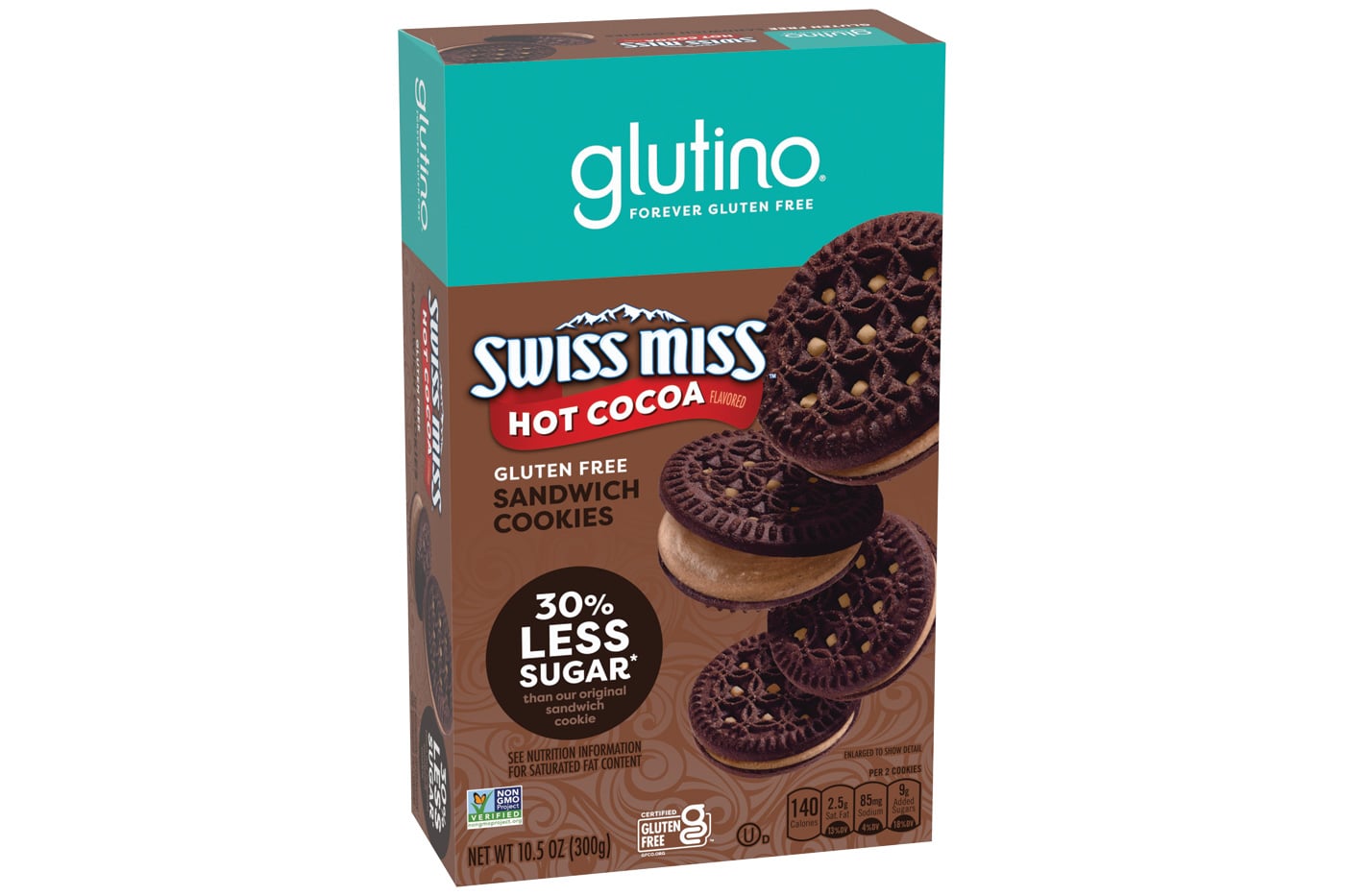
Glutino and Swiss Miss Hot Cocoa partnered to develop a gluten-free sandwich cookie with 30% less sugar than Glutino’s original offerings. Photo courtesy of Conagra Brands
Allergy-Friendly Treats
While traditional cookie formulations often contain allergens such as wheat, milk, eggs, and nuts, a number of companies are introducing gluten-free, dairy-free, and/or nut-free options.
Alice’s Sweet Tooth is a company born out of founder Elyse Eisenberg’s love of baking and her search for products with nonallergenic ingredients. She believes that the cookie space is ready for a wider array of options for those with dietary restrictions.
“Right now, while there are plant-based [and] gluten-free cookies out there, there is not a tremendous amount of variety compared to traditional cookies,” she says. “I think that area is just going to be growing with more interesting flavors.”
From April 2022 to March 2023, 23% of new product launches in the sweet baked goods category in the United States included gluten-free claims.
Products with gluten-free claims lead in new product launches for the past three years, especially in the United States, according to a report prepared for Food Technology by Innova Market Insights. In just the past year (from April 2022 to March 2023), 23% of new product launches in the sweet baked goods category in the United States featured gluten-free claims.
Even prominent brands are expanding their product offerings to include gluten-free varieties. Mondelēz International’s Chips Ahoy! brand launched its first gluten-free chocolate chip cookie this spring after experimenting with more than 40 recipes to replicate the brand’s signature texture.
Additionally, Conagra Brands rolled out gluten-free Glutino Swiss Miss Hot Cocoa Sandwich Cookies, tapping into the power of two of its brands. The hot cocoa–flavored cookies are made with 30% less sugar than Glutino’s original offerings.
“Consumers are looking for permissible indulgence, or items that taste delicious but don’t make them feel too guilty,” says Glutino brand manager Juliette van de Walle. “While we’ve seen growth in better-for-you/wellness snacking, permissible indulgence is driving greater growth. Glutino’s sandwich cookies are an ideal way to grab a delicious, sweet treat without the guilt.”
Authentic Indulgences
Authenticity is certainly a buzzword in the product development space, and the cookie category is no exception.
One method of providing authentic and enticing experiences for consumers is through limited-time offerings or seasonal products. Pepperidge Farm partnered with actor Hannah Waddingham to create a limited-edition London Fog variety of the brand’s well-known Milano cookie in the spring of 2024. Pairing the flavor of Earl Grey tea, milk chocolate, and vanilla, this new cookie is meant to evoke the experience of sipping tea in a streetside café.
“Brands are innovating beyond traditional confines of what a ‘seasonal’ cookie means and launching limited-time offerings for the warmer, and perhaps less expected, seasons of the year,” stated Mintel in a report prepared for Food Technology. “These products can create permissibility and fun surrounding new product trial and support more everyday special occasions with cookies.”
Additional seasonal offerings include Giant Eagle’s private label brand Market District S’Mores Crème Cookies, which were available in summer 2023, and Partake Foods’ Spring Sprinkle Mini Cookies.
Shica Little, founder of Dr. Shica’s Bakery, learned how to bake from her grandmother and applied those skills to her cookie business. The brand offers plant-based cookie mixes, ready-to-eat vegan cookies, and cookie “pucks” for foodservice and hospitality. High-quality ingredients are a priority.
“The best desserts are made from the best ingredients,” she explains. “I learned that from my grandmother. Don’t skimp on the quality of ingredients because it does show in the final product. And when it comes to bringing quality to the masses, you don’t need to add all of those artificial ingredients or preservatives. Those things really take away from the authentic flavor.”
Keeping It Tasty
When it comes to cookie lovers, the importance of taste can’t be discounted, of course. Flavor reigns supreme as a purchase factor for consumers, according to data from Mintel. Price, texture, and brand follow behind in terms of purchase factors.
One-third (33%) of consumers in North America choose sweet baked goods when they want to indulge, Mintel reports. Cookies tied with bakery ingredients and mixes for top rank in new product launches in North America, accounting for 36% of total launches from April 2020 to March 2023.
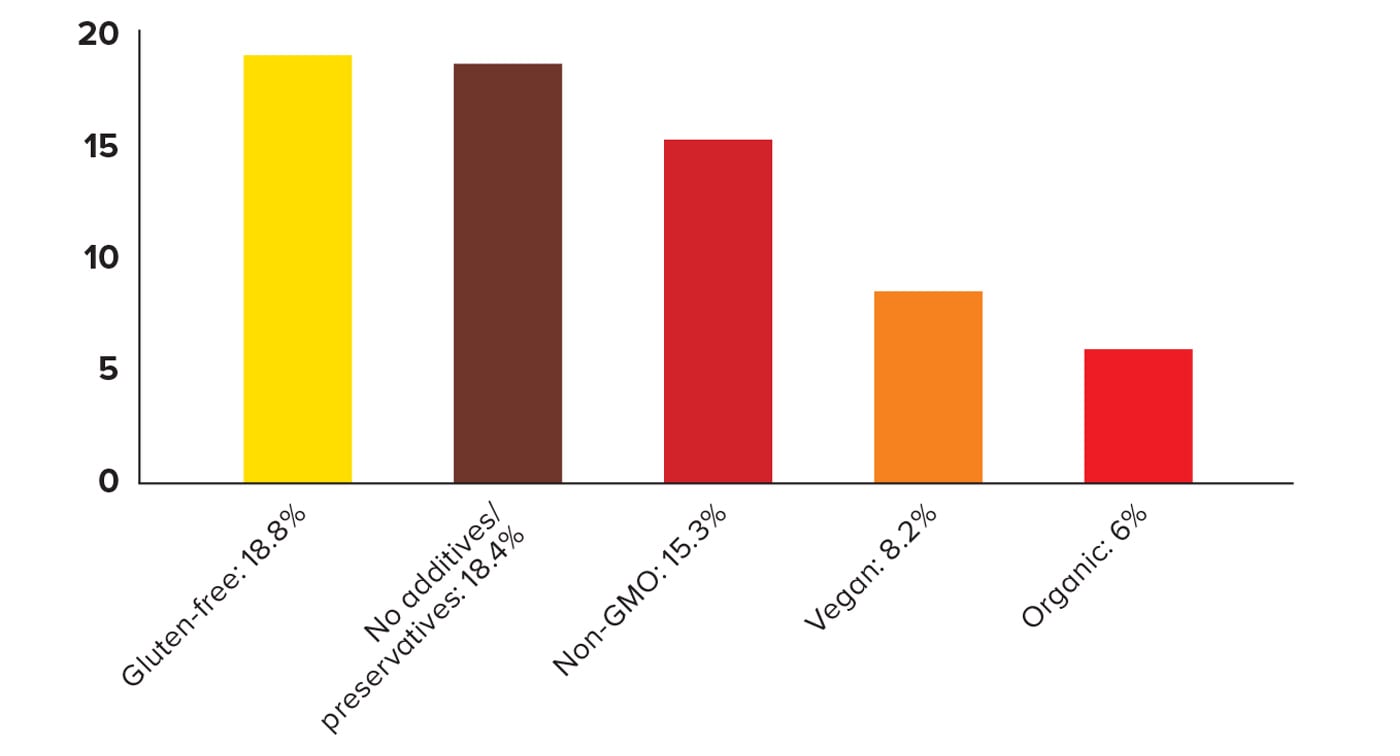
Source: Innova Market Insights
“Sweet baked goods are part of regular food consumed in the United States and Canada, as 50% of consumers in the region state they consume sweet baked goods at least once per week,” Innova’s consumer research report states. “Taste and indulgence are the prime motivations cited by consumers.”
Nearly half (48%) of consumers surveyed by Mintel reported being occasional eaters, or eating cookies either once a week or a few times in a week. Cookie consumption is strong across the generations, with baby boomers and Gen X leading. Packaged cookies at the supermarket are the most popular purchase, followed by those prepared in the bakery section of a supermarket, home-baked from scratch, and home-baked from a refrigerated mix.ft
No Oven, No Problem
Edible cookie dough has been growing in popularity in conjunction with trends such as nostalgia and indulgence. Several brands have developed versions of this sweet treat that can be consumed safely while allowing consumers to enjoy fond memories of licking the cookie dough bowl during their childhood cookie-making days. According to Future Market Insights, the edible cookie dough category is expected have a compound annual growth rate of 5.7% through 2033.
Doughy is a brand that developed a gluten-free, dairy-free, plant-based edible cookie dough made with seven ingredients or less. The brand boasts only 90 calories per serving and uses ingredients that support worker equity and environmental stewardship, the company says.
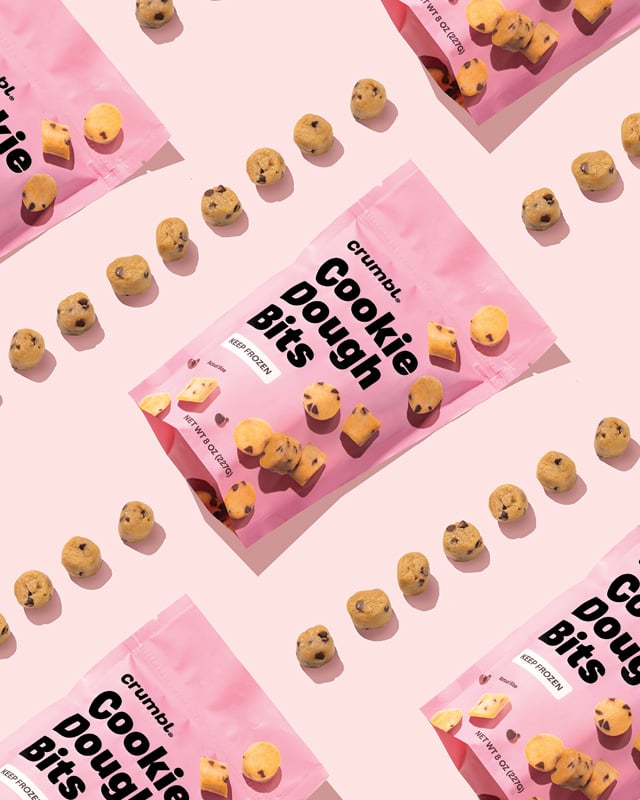
For fans of at-home cookie making, Crumbl began selling Cookie Dough Bits in its outlets this spring. Photo courtesy of Crumbl Cookies
“Doughy was inspired by my childhood memories of baking with my mom, but with a clean-ingredient twist that retains the indulgent flavor of classic cookie dough, minus the guilt,” said founder Kelly Ramey in a press release.
Established brands are also entering the edible cookie dough space. Crumbl, a foodservice chain known for its diverse range of weekly offerings, launched Cookie Dough Bits. Available in a semi-sweet chocolate chip flavor, the 8-ounce packages are offered year-round in the stores’ frozen section. Other legacy brands that have expanded to edible cookie dough include Otis Spunkmeyer, Ben & Jerry’s, and Nestlé Toll House.
Traditional cookie flavors such as chocolate chip, peanut butter, and double chocolate, tend to be the most popular when it comes to edible cookie dough, according to Future Market Insights. However, varieties like birthday cake, brownie batter, and red velvet provide consumers with new ways to experience beloved flavors.
Hero Image: © Ahmed/unsplash
Authors
-
Emily Little Associate Editor
Emily Little is associate editor, Food Technology (elittle@ift.org).
Categories
-
Food Business Trends
-
Consumer and Marketplace Trends
-
Food Categories
-
Bakery
-
Market Trends
-
Food Technology Magazine


