
Celebrating IFT Award Winners

 Emily Little
Food Technology Magazine
Ten IFT members were honored with Achievement Awards in 2024 for their contributions to the science of food. The award winners were celebrated at a ceremony during the IFT FIRST Annual Event and Expo.
IFT’s Achievement Awards recognize individuals and organizations in a variety of areas of the science of food, including lifetime achievement, leadership, service, and innovation. This year’s honorees represent a wide range of specialty areas and showcase the importance of collaboration and innovation. Each award winner was selected by a jury appointed by IFT’s Office of the President.
“The individuals we will honor next have made remarkable discoveries and big contributions to the science of food,” said IFT 2023–2024 President Sean Leighton during the ceremony. “I think they would be the first to say they did not accomplish anything solely by themselves but always in partnership—in collaboration—with others.”
Food Technology invited this year’s award winners to respond to a series of questions about issues of importance to the food system and their careers. Some of their thoughts follow.
Learn more about the 2024 IFT Achievement Award winners here.
Congratulations to IFT’s 2024 Achievement Award winners!
Lifetime Achievement Award in honor of Nicolas Appert

Harjinder Singh, PhD
Distinguished Professor, Massey University, New Zealand
Reflecting on your career, what aspects of your life’s work will continue to evolve in the future to make a tangible impact on society and industry?
“I think the research on food structure and nutrition will continue to advance with the development of more sophisticated techniques to understand computational and in vitro models of human digestion systems. These kinds of models will be critical to allow faster development of products with enhanced health attributes, and then at the same time, this understanding will allow public health [experts] to consider providing dietary advice to the public.”
Distinguished Career Award in honor of Carl R. Fellers, PhD

Rakesh K. Singh, PhD
Professor, University of Georgia
What advice do you have for early career professionals dedicated to advancing the science of food and its application?
“The advice I have for early career professionals in advancing the science of food is to expand their knowledge. They should do lifelong learning and learn new skills. Also, network with other professionals because that is how you can help them as well as they can teach you. And the most important aspect is being adaptable and have perseverance because life is not a straight line. There are ups and downs, so you have to be adaptable to new situations.”
Collaborative Research Grant in honor of Marcel Loncin
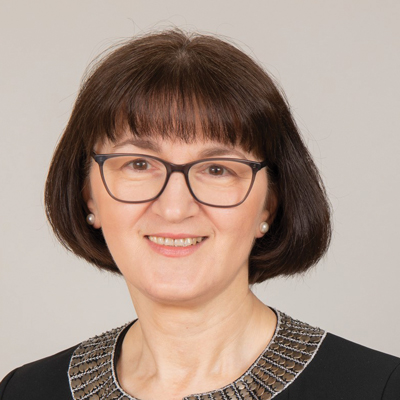
Carmen I. Moraru, PhD
Professor, Cornell University
How do you foresee your upcoming research impacting food processing and improvement of food quality?
“Currently, both the food industry and consumers have a strong interest in plant proteins and plant-based products for sustainability reasons. However, there are some challenges associated with plant proteins. To help address these challenges, my research group will use a biophysical approach that will induce desirable structural and functional changes in pulse proteins.”
Public Health Award in honor of Babcock-Hart & Gilbert A. Leveille
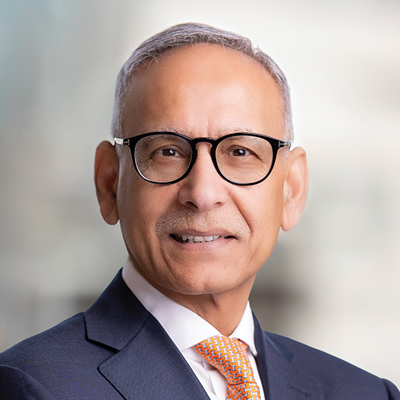
Mehmood A. Khan, MD, FRCP
Chief Executive Officer, Hevolution Foundation
What do you hope IFT’s community does next to advance public health on a global scale?
“I think the biggest thing that IFT needs as a community to think about is to look globally [and] systematically across the entire value chain. And if we can look at this holistically, we can look at where is going to be the greatest [return on investment] and focus the brilliant minds that compose IFT to actually solve for those issues.”
Outstanding Young Scientist Award in honor of Samuel Cate Prescott

Matthew Moore, PhD
Assistant Professor, University of Massachusetts, Amherst
What achievements and innovations do you aim to accomplish next?
“In terms of achievements and innovations related to the food safety research that our lab does, we have a number of really exciting projects related to concentrating and detecting foodborne viruses in foods in the environment, as well as trying to come up with better ways to control the transmission of these viruses in foods.”
International Food Security Award in honor of Bor S. Luh

Randy W. Worobo, PhD
Professor, Cornell University
Can you share a success story where your work has directly improved food security measures internationally?
“One of my most impactful international projects that I worked on in terms of food security is the Food Safety Innovation Lab, funded by Feed the Future and the U.S. Agency for International Development. I’m the associate director at Cornell, and I work with the director at Purdue.
“We’ve identified six different countries that we work closely with: Bangladesh, Nigeria, Cambodia, Senegal, Kenya, and Nepal. We did a preliminary food safety assessment of nutrient-dense foods that are popular in each of those countries, which pose the greatest risk in terms of food safety hazards as well as guaranteeing food security for those countries. We then funded projects with in-country collaborators, and these were to address mitigation, ways to enhance the safety, which enhances the food security for all the consumers in those countries.”
Excellence in Education Award in honor of William V. Cruess

Clint Stevenson, PhD
Associate Professor, North Carolina State University
How do you see educators helping IFT achieve its vision of a world where science and innovation are connected and universally accepted as essential to improving food for everyone?
“I see educators as helping IFT accomplish its vision by triangulating the piece of the puzzle between the students and the employers. We’re the ones who can connect those dots by making sure that we’re providing relevant instruction and working with the employers to understand what skills and knowledge students need to have. And as educators, we will direct students to shift. That’s why it’s important for us to continue to try to improve our effectiveness as educators, to make the content more engaging, to make these careers more interesting. The more we do that, the more we will be producing future leaders in our field.”
Achievements in Microbial Research for Food Safety Award in honor of Gerhard J. Haas

Martin Wiedmann, DVM, PhD
Gellert Family Professor in Food Safety, Cornell University
What do you hope IFT’s community does next to advance the public safety of the food supply?
“I think [there are] a lot of opportunities for IFT [and the] community to advance the safety of the food supply. I think first and foremost, it’s by facilitating the tough and difficult conversations around food safety. There’s a lot of concern about food safety at all levels of most companies and the public … but often there’s a disconnect within a given group that different parts of a company might look at differently. And to be honest, if you get people to be candid in companies, sometimes they still think of the food safety people as a profit prevention center.
“I think [IFT] can facilitate those communications, the conversations between different parts of the companies to make sure everyone is on the same page and can continue a productive journey to improve food safety.”
Food Packaging Award in honor of Don Riester, Rees Davis, and Aaron Brody
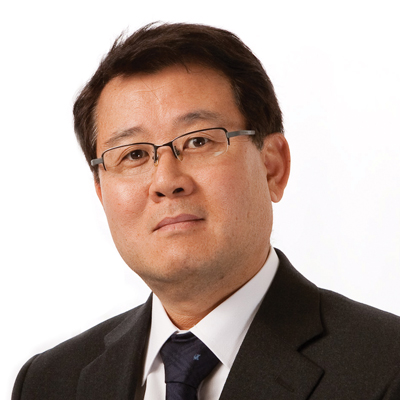
Hyun Jin Park, PhD
Distinguished Professor, Korea University
What is a significant challenge currently facing food systems, and in what ways can innovative food packaging play a pivotal role in addressing this issue?
“Packaging waste impacts environmental and sustainability issues, but we cannot live without food packaging systems. The guidelines say principles for designing environmentally friendly packaging developed in the early 1990s, [are] embodied in the four R’s, such as first, reduce; second, reuse; third, recycle; and fourth, recover. The packaging will impact the first R, or reduce, based on the increasing value properties, which will lead to weight reduction of packaging materials.”
Research and Development Award

Anwesha Sarkar, PhD
Professor, University of Leeds, England
Can you discuss a specific innovation or outcome from your R&D work that you are most proud of?
“A very specific innovation in our lab is the 3-D biomimetic tongue surface, which we created and which I’m extremely proud of. This is an interdisciplinary work, where we have created a tongue which actually replicates the stability, the roughness, as well as the abilities of a real human tongue. So imagine that you can really measure what kind of friction happens in the mouth, but outside the mouth, and the tongue is connected to a motor so you can measure objectively. And we have validated it with consumer sensory research, so it’s an exciting tool … which can help in product development.”ft
Hero Image: Robb Davidson
Authors
-
Emily Little Associate Editor
Emily Little is associate editor, Food Technology (elittle@ift.org).
Categories
-
Innovation
-
Career Development
-
Leadership
-
Food Technology Magazine


