The Lasting Impact of Food Science Research
AI is creating new opportunities to apply decades of peer-reviewed scientific knowledge to today's product development challenges—reinforcing the value of continued investment in research.
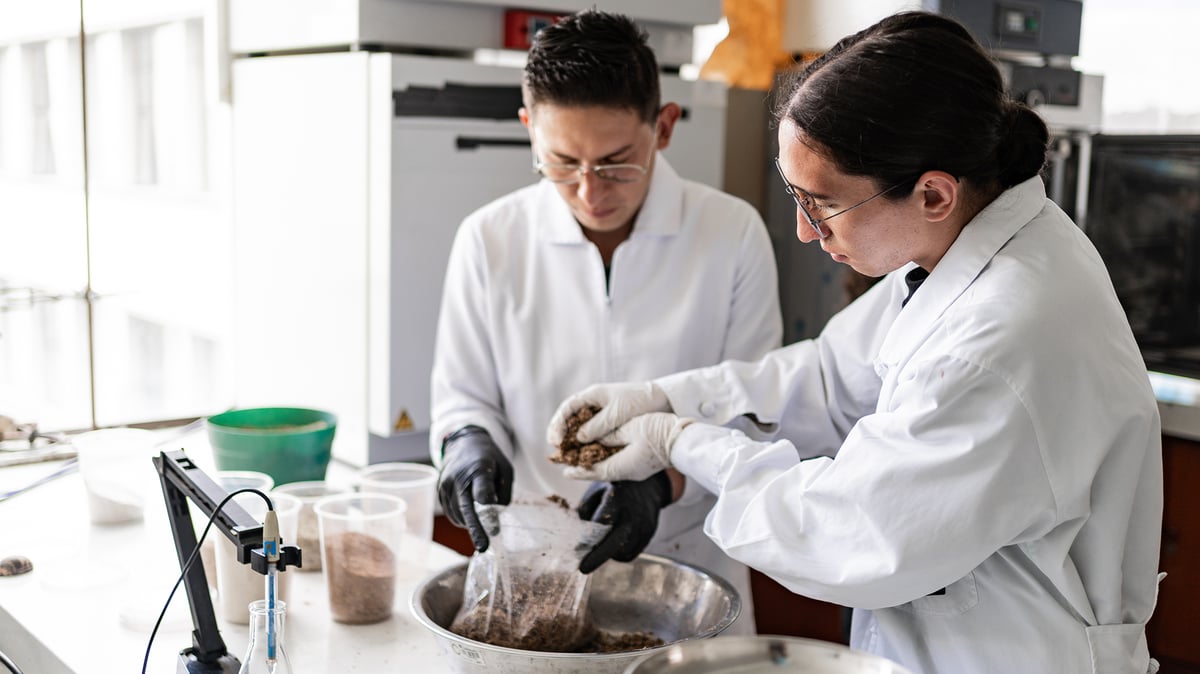
Changing one ingredient in a beverage can create a chain reaction. Reducing sugar, for example, may affect not only sweetness but also mouthfeel, flavor, stability, and shelf life. Solving those problems can mean consulting research in chemistry, microbiology, sensory science, and processing—sometimes published decades apart.
The challenge is not always a lack of scientific knowledge. It is finding the research that applies to a particular product and determining how to use it. Artificial intelligence (AI) is creating new opportunities to connect those dots, bringing research that once required extensive searching closer to the product development bench.
The Value of the Scientific Record
Scientific discoveries build on one another. An older study of protein functionality, emulsification, or thermal processing may still contain useful information for a formulation under development today.
IFT’s Journal of Food Science, which dates to 1936, and Comprehensive Reviews in Food Science and Food Safety together encompass more than 29,000 research and review articles. Their archives reflect generations of work by researchers, editors, and peer reviewers across many areas of food science.
Peer review does not make a scientific finding permanent or universally applicable. New evidence can challenge earlier conclusions. But published studies offer methods, results, and limitations that scientists can evaluate, compare, and test.
For Amanda Ferguson, IFT’s director of scientific journals, making that accumulated evidence discoverable is an important part of helping research reach beyond academia.
“Three of our six most-viewed articles so far this year were published in 2007,” explains Ferguson. “The most-viewed is a review of yerba mate tea, and by the end of September, it had already received more than twice as many full-text views as it did in all of 2025. That shows how research can find new relevance as interests and questions change.”
That opportunity grows as researchers continue to publish work on emerging ingredients, processing technologies, food safety, and nutrition.
Research can find new relevance as interests and questions change.

From the Archive to the Bench
Consider a team reformulating a reduced-sugar beverage. It might need to understand how a sweetener interacts with flavors, how a hydrocolloid changes texture, and whether a formulation change affects microbial stability. Those answers may be scattered across different journals and disciplines.
AI-assisted tools can help researchers identify relevant studies and connections among them. IFT’s CoDeveloper platform offers one example: its AI assistant, Sous, draws on IFT’s scientific journals and other IFT content to help users explore technical questions, with references that allow them to investigate the underlying sources. It can also work with the context users provide about their own products.
The value is not simply a faster answer. It is a more direct route from a development question to evidence a scientist can assess.
Jay Gilbert, IFT’s director of CoDeveloper and digital products, works on bringing that research into everyday R&D workflows.
“Say you’re replacing an emulsifier in a salad dressing,” says Gilbert. “You need to think about texture, stability, and shelf life, not just whether the substitute works on its own. Sous can point you to studies that address those questions, but give it the right context—the other ingredients in your formula, your processing parameters—and it moves from being an answer engine to a true thinking partner. Then it’s still up to the developer to weigh the evidence and test it in the actual formulation.”
For teams without a specialist in every discipline, that kind of collaboration may help widen the range of research considered before they decide what to test. The tool can suggest avenues to investigate; it cannot establish that a proposed approach will work in a finished food.
Sous can point you to studies that address those questions, but give it the right context.

Evidence Still Requires Expertise
An AI-generated response can sound authoritative even when it is incomplete or wrong. Grounding a tool in scientific literature can make its sources easier to examine, but it does not eliminate the need to judge study quality, relevance, and limitations.
Food systems are highly dependent on context. An ingredient may behave differently as pH, water activity, temperature, processing conditions, or storage changes. A result observed in one formulation may not transfer to another. Food scientists must still design experiments, evaluate safety and sensory performance, account for regulatory requirements, and validate results under manufacturing conditions.
Giving an AI tool that kind of context raises a practical question: confidentiality. Product development often involves proprietary ingredients, formulas, and processes. IFT says CoDeveloper keeps customers’ proprietary information separate and does not use it to train AI models—an important distinction for teams considering how to use AI in R&D.
Investing in the Research Behind Tomorrow’s Foods
Better access to scientific literature can give existing studies a longer and potentially broader life. Work conducted for one research question may help a different generation of scientists approach a challenge its authors never anticipated.
That is also a case for sustained investment in food science research. New studies expand the evidence available for future discovery, while rigorous review helps scientists examine what the findings do—and do not—show.
AI may shorten the distance between a question and a useful paper. Turning the insight into a safe, successful food will still depend on the expertise, curiosity, and judgment of the people who put that research to work.
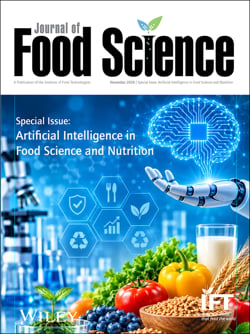 AI Research in the Journal of Food Science
The Journal of Food Science’s 2026 special issue, “Artificial Intelligence in Food Science and Nutrition,” features research on applications including computer vision, machine learning, food quality assessment, and personalized nutrition. The free-to-read collection offers a look at how researchers are investigating AI across food science.
Hero Image: © Frazao Studio Latino/E+/Getty Images Plus
Categories
-
Artificial Intelligence
-
Science of Food
-
Formulation
-
R and D
-
Brain Food Blog