
Evolving Seeds of Change

 Kayt Sukel
Food Technology Magazine
Key Takeaways
-
Key Takeaway 1
The Seeding The Future Global Food System Challenge awards rich-text__embed l-rte-pull-right million annually to transformative innovations that advance sustainable, equitable, and nutritious food systems.
-
Key Takeaway 2
This year’s Grand Prize winners—Oorja Development Solutions in India and the Savory Institute’s Kenya Mara program—demonstrated high-impact approaches to solar-powered irrigation, farmer advisory services, and regenerative grassland management.
-
Key Takeaway 3
Growth Grant winners from Ghana, Kenya, and Indonesia are tackling urgent challenges such as aflatoxin contamination, parasitic witchweed, and biodiversity loss through novel tools, bioherbicides, and community-driven regenerative practices.
For the past four years, IFT has hosted the annual Seeding The Future Global Food System Challenge, founded and funded by the Seeding The Future Foundation. The purpose of the Challenge is to incentivize and accelerate transformative innovations to help make food systems more sustainable and equitable and deliver food that is safe and nutritious, affordable, appealing, and trusted.
Bernhard van Lengerich, founder of the Seeding The Future Foundation and former chief science officer and vice president for technology strategy at General Mills, notes that this year’s 1,200-plus submissions impressed the Challenge judges with their “highly innovative nature and significant impact potential” and “the passion and enthusiasm of the teams we’ve seen in the selection process.”
He emphasizes that the Challenge’s core focus is on the “innovation white space,” which is located at the intersection of three innovation domains, visualized as the center of a Venn diagram (see figure on this page):
- Innovations leading to safe and nutritious food for healthy diets
- Innovations leading to sustainable practices
- Innovations enabling equitable access to food that is affordable, appealing, and trusted.
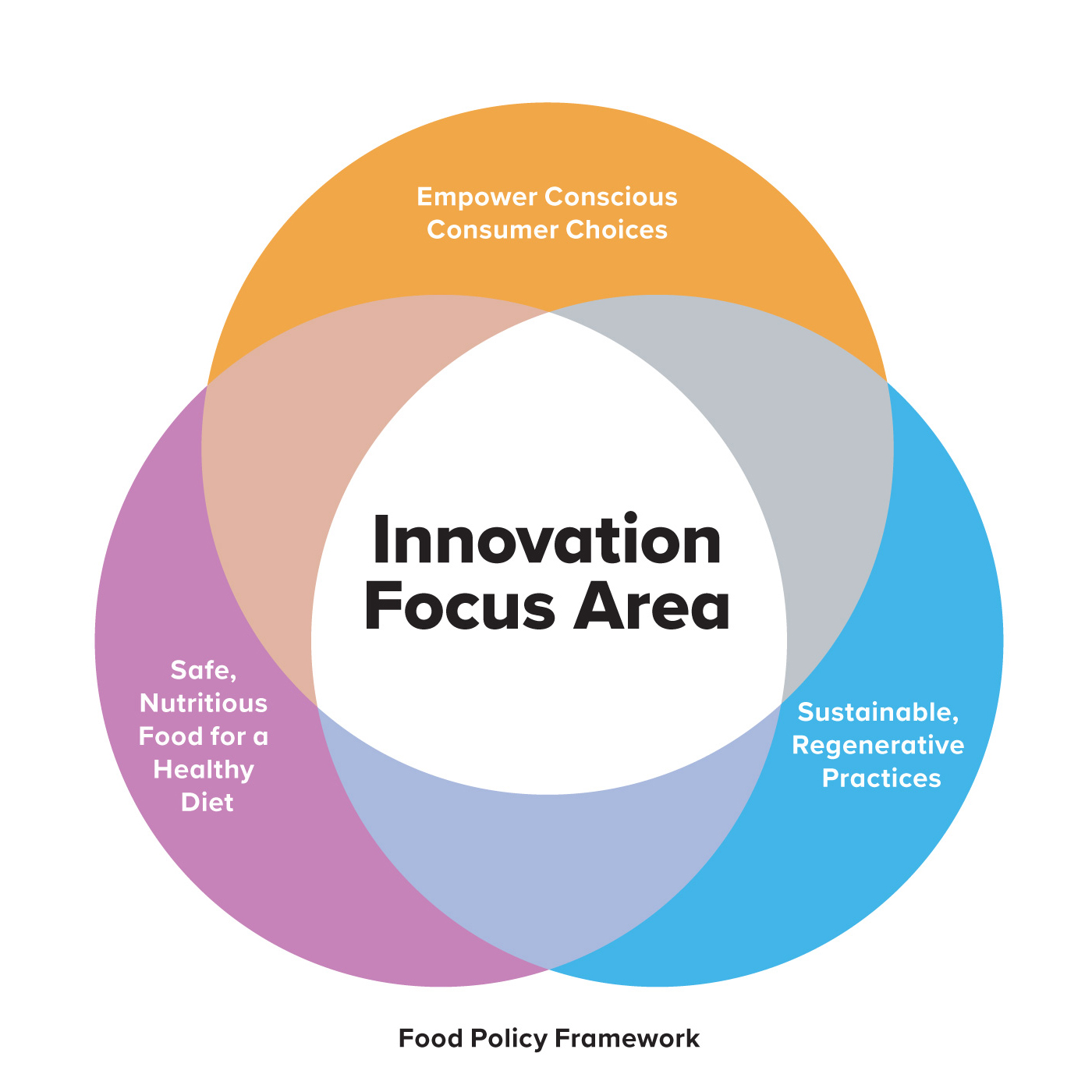
“The goal of our annual challenge,” van Lengerich emphasizes, “is not to address just one of these domains, but ideally all three. That is difficult but not impossible, and essential to sustainably transform food systems globally and benefit the health of people, their livelihoods, and the environment.”
As in prior years, two Grand Prize winners each received $250,000, while three Growth Prize winners earned $100,000 each. Yet van Lengerich stresses that even projects not selected for top prizes hold enormous potential. To amplify the impact of all high potential innovations, winners, finalists, semifinalists, and “runners-up” are being included in the Seeding The Future Global Food Innovation Database and Network. This artificial intelligence–supported, searchable, and interactive database of currently over 650 pre-vetted innovations is growing steadily and enables innovators, investors, startups, companies, and philanthropic organizations or intergovernmental organizations to discover, connect, and collaborate. Applicants themselves can also use the platform to network, share insights, and accelerate progress.
“While the database represents a powerful pipeline of high-impact innovations from the Seeding The Future Global Food System Challenge, going forward we plan to expand this database with innovations from other food systems competitions as well as to further accelerate its impact on the health of people and the environment,” van Lengerich says.
SEEDING THE FUTURE GRAND PRIZE WINNERS
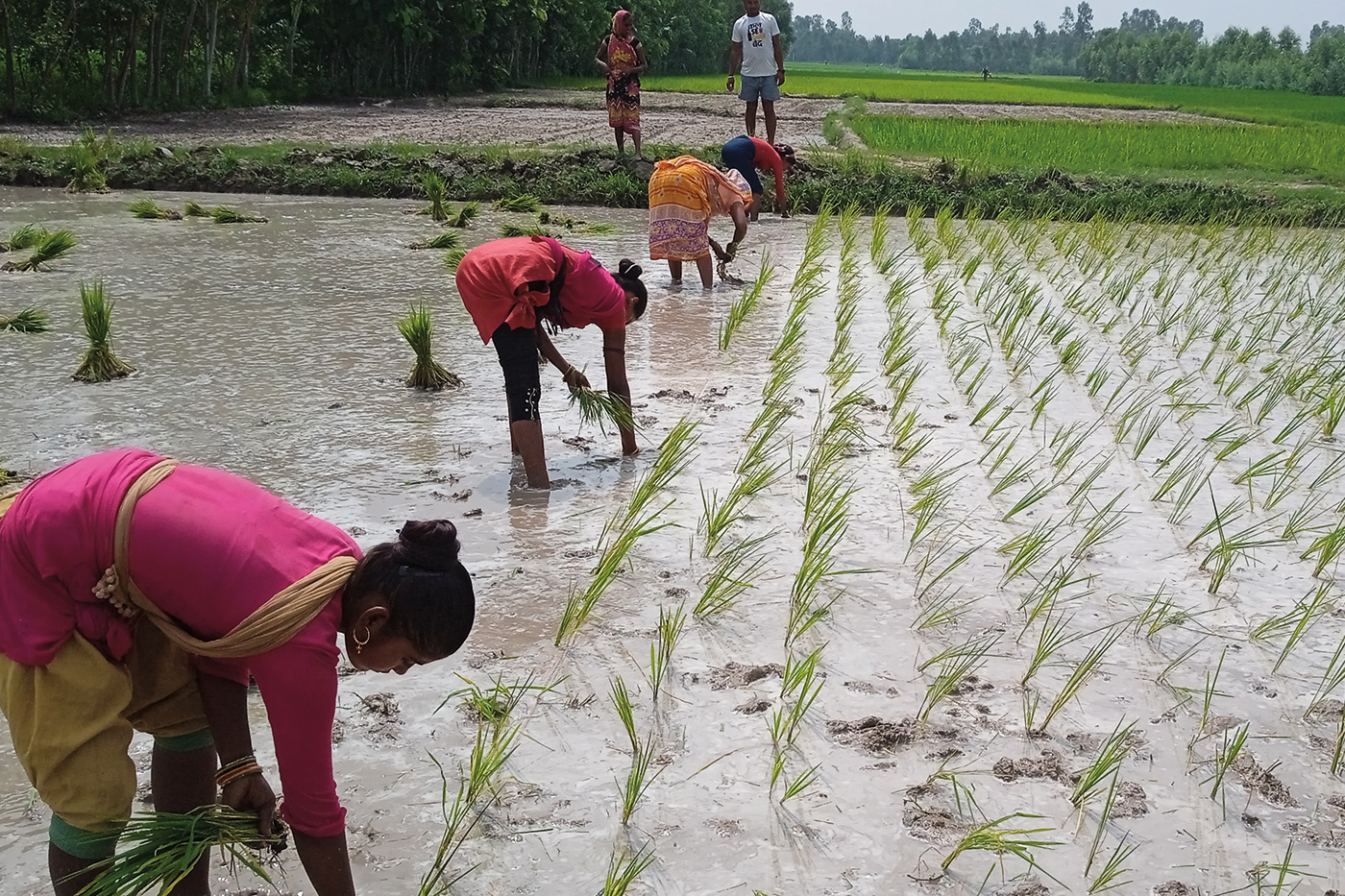
Oorja Development Solutions offers farmers in India access to affordable and reliable irrigation as well as training services. Photo courtesy of Oorja Development Solutions
Oorja Development Solutions
Oorja Development Solutions was born when Amit Saraogi met his cofounder, Clementine Chambon, at a climate entrepreneurship summer school more than a decade ago. The two knew they wanted to find novel ways to address the climate crisis in India and started their journey by deploying small solar energy projects to power homes.
“We spent nearly a year in the field trying to understand the pain points of those we wanted to serve,” Saraogi says. “After we started deploying the household energy projects, we found that many of our customers, who were farmers, were more interested in productive energy use that would help them generate income and improve their livelihoods.”
With that guidance, the duo pivoted to agriculture. They took the same participative design approach, quickly learning where in the value chain novel energy solutions were most required. They soon discovered that many farmers were struggling to power (and afford) irrigation—which, at the time, relied on diesel-powered technologies. Not only were these irrigation pumps too expensive for farmers, but the diesel combustion that powered them released concerning pollutants. Saraogi and Chambon knew there must be a better way.
“After doing a comprehensive analysis, we knew decentralized solar energy would be a good fit for irrigation. But even as solar prices were declining, they remained unaffordable for smallholder farmers. They didn’t have the capital to invest upfront,” he says.
Our mission is to reach one million farmers by 2035.

To address this problem, Oorja started to offer pay-per-use solar irrigation—which increased participating farmers’ yields and income by 10%–15%. Yet, Saraogi notes that Oorja could “multiply the impact” by adding climate advisory services to the package.
“We offer both things as a bundle. These farmers now get access to affordable and reliable irrigation, as well as access to demonstrations, workshops, and other trainings to help them, starting with inputs like seeds and fertilizers and then moving to sustainable practices and access to markets,” he says.
With the $250,000 Seeding The Future Grand Prize award, Saraogi says Oorja will be able to scale up operations and expand its climate advisory services to include soil testing, seed supply, and more. Oorja is also developing a farmer-facing mobile app that will include features like weather alerts and best practices in pest control.
“Our mission is to reach one million farmers by 2035,” he says. “This grant will go a long way in helping us reach that goal—and help connect farmers with the knowledge and experience they need to succeed.”
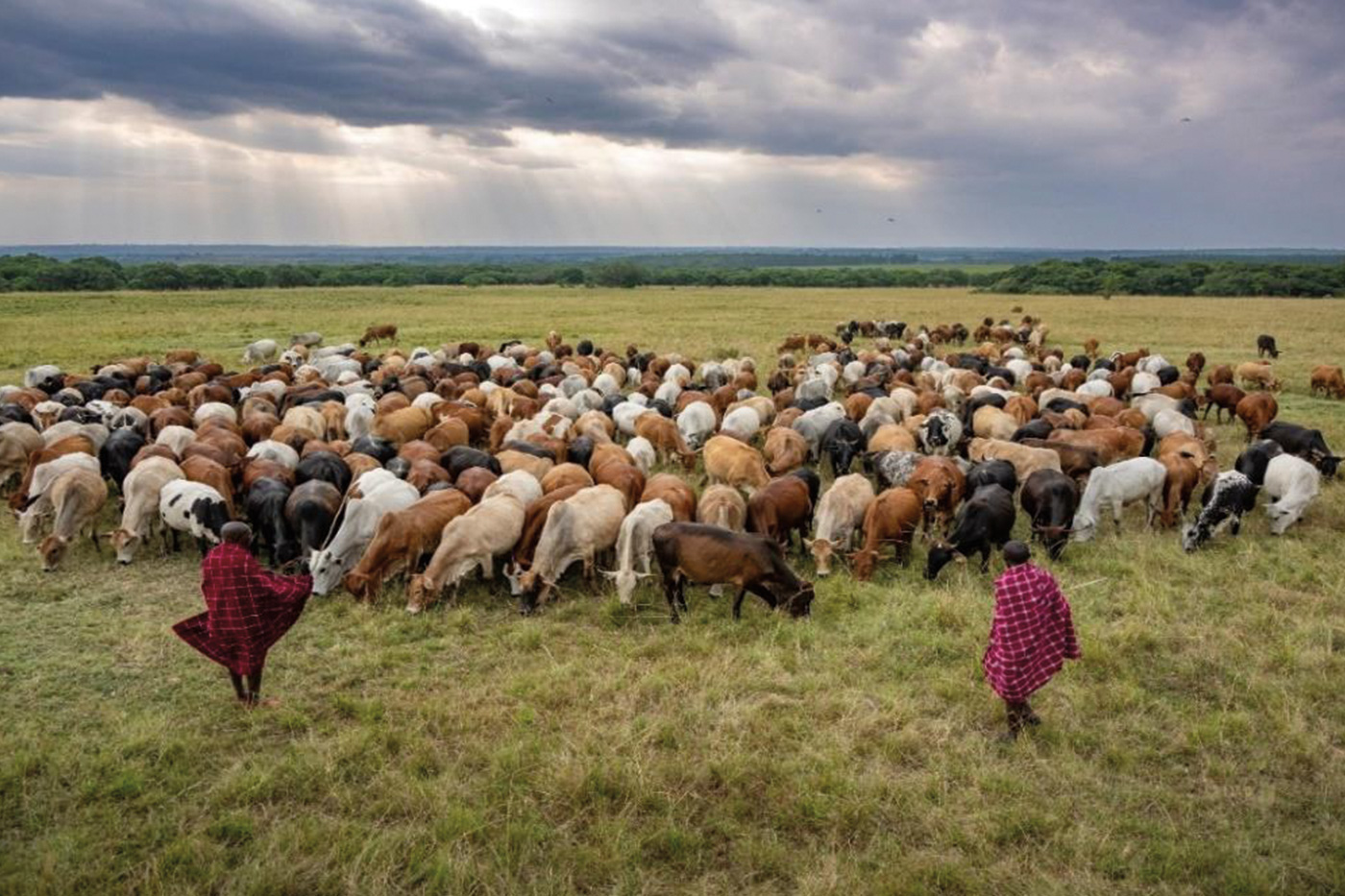
The Savory Institute’s Kenya Mara program supports a return to traditional herding practices, promoting greater sustainability and local land regeneration. Photo courtesy of Mara Training Centre
Savory Institute’s Kenya Mara Program
In 2009, Allan Savory, a former game and research officer in what’s now Zimbabwe, founded the Savory Institute, a global nonprofit organization with the mission of regenerating the world’s grasslands using holistic management—a decision-making framework that incorporates social, ecological, political, and economic contexts. Virginie Pointeau, proposal lead and global portfolio liaison at the Savory Institute, says the organization currently supports a network of independently owned and managed regional learning “hubs” all over the world to do just that.
“As you might imagine, every hub is unique based on their location and culture,” she explains. “The local community of land stewards, which could include farmers, ranchers, herders, or communal land managers, are responsible for operating in their own context and finding ways to manage their grasslands.”
For its entry in the Seeding The Future Global Food System Challenge, the Savory Institute described its plans to continue regenerating land and soil health, as well as improve local wildlife populations and biodiversity, through its Kenya Mara program. This innovative initiative will continue to help the Maasai people, who are, by tradition, herders, and who graze their livestock on nature conservancies like the Enonkishu Conservancy in the northern Mara region of Kenya.
“For the last six years or so, the program has worked on removing fences, and returning to traditional herding practices, to support and accelerate this idea of coexistence between the herders, their livestock, and the natural wildlife in the area like lions, hyenas, and giraffes,” explains Pointeau. “The program has been working on very little funding, yet they’ve achieved a great bit in just the last few years.”
By leveraging holistic management techniques, based on centuries of herding tradition, Pointeau says the project has the power to facilitate important changes to support greater sustainability and regeneration of the local lands. And with the addition of the Seeding The Future Grand Prize, those cascading, positive effects will have even more impact.
“With this program, we are hoping to see improvements in herd health. Because when the forage improves, and the ecology improves, and the soil health improves, you can capture more of the rain, ensure more ground cover, increase grass diversity, and not only see herds grow, but improve the overall wildlife habitat. Together, that will increase the biodiversity of the area for the good of everyone,” she says.
SEEDING THE FUTURE GROWTH GRANT WINNERS
Council for Scientific and Industrial Research – Savanna Agricultural Research Institute
Across sub-Saharan Africa, crops like corn and peanuts remain at the mercy of aflatoxins, natural toxins produced by mold species like Aspergillus flavus and Aspergillus parasiticus. These toxins, which have been linked to liver disease, can contaminate fields as well as crop storage areas, making yields unfit for human or animal consumption. As a result, scientists have been looking for innovative ways to prevent aflatoxin contamination—and help farmers sustainably produce and sell the foods they painstakingly grow.
Growing up in Ghana, Leslie Commey was all too familiar with the way aflatoxins could decimate crops—and, by extension, the livelihoods of the farmers trying to grow them. But it was only after he started a degree program in plant and soil science at Texas Tech University, in Lubbock, Texas, that he started to look at ways to reduce, or even prevent, aflatoxin contamination.
“In my research, my colleagues and I were able to identify a metabolite, a compound that can inhibit aflatoxin contamination, that naturally occurs in the peanut seed coat,” he says. “One approach in my studies was to see how we could utilize this metabolite, as well as other antifungal metabolites, to address the greater aflatoxin contamination problem.”
My colleagues and I were able to identify a metabolite, a compound that can inhibit aflatoxin contamination, that naturally occurs in the peanut seed coat.

After returning to Ghana, Commey started working with the Council for Scientific and Industrial Research – Savanna Agricultural Research Institute. There, he and his colleagues developed a near-infrared technology (NIR) tool that could identify anti-fungal metabolites like the one uncovered in his research and, consequently, determine whether a peanut is resistant to aflatoxin.
“We know the chemical signature of the metabolite that makes a peanut plant resistant,” he says. Thus, the NIR tool can be used to screen materials in order to differentiate between a resistant peanut and a nonresistant peanut.
To expand the ability of Ghanaian farmers to detect resistant peanut strains, Commey and colleagues applied for the Seeding The Future Global Food System Challenge to get funding to create new chemistry methods to estimate aflatoxin contamination in peanuts, as well as groundnuts.
“We want to use [the] liquid chromatography-mass spectrometry technique, which is a wet chemistry method,” he says. “We can combine that with the NIR tool to create a model that can help us screen for aflatoxin resistance. In time, we can scale up the use of the tool and educate people on how to use it with the goal of improving food security.”
Toothpick Company
Kayongo, or Striga hermonthica, is better known by its nickname, witchweed—and for good reason. This parasitic plant appears to “bewitch” its hosts, robbing them of the critical water and nutrients they need to survive. As a result, witchweed is one of the greatest threats to subsistence farmers across Africa. And it’s why farmers who have lost crops to the weed believe they have been cursed.
Claire Sands Baker, director of the Toothpick Project, says Striga attaches to the roots of sustenance crops like maize, sorghum, millet, dryland rice, and sugarcane, where it does its damage. And, historically, it has been nearly impossible to mitigate.
“As soon as you plant the crop, the germination of the crop seeds triggers growth of the Striga seeds from the previous season,” she says. “Within 72 hours, the Striga seeds germinate, attach to the crop, and suck the nutrients out of the plants.”
As part of his work at Montana State University, Baker’s father, David Sands, discovered a fungal bioherbicide with the power to overcome the Striga “curse.”
You could compare the idea of using a fungus or plant disease to kill off a weed to immunotherapy.

“You could compare the idea of using a fungus or plant disease to kill off a weed to immunotherapy or some of the new therapies that doctors use for cancer now,” she explains.
After doing proof-of-concept trials in 500 farms over two seasons in Kenya, and distributing the bioherbicide by adding dry spores on the tip of a toothpick—hence the project’s unique name—Toothpick Company saw a crop yield increase of 56% in long-range crops and 42% in short-range crops. Now, the organization has developed an easy-to-use seed coating, where the bioherbicidal fungus is grown in a liquid suspension mixed with wood powder and powdered sugar.
“Farmers can add water, mix their seeds in the resulting slurry for two minutes to coat the seeds, let the seeds dry for 15–20 minutes, and then plant,” she says.
With their Seeding The Future Growth Grant, the Toothpick Project plans to scale up its technologies—and look for new applications to help protect farms across Africa from the witchweed curse.
“We’ll be building out the capacity of our entire science team and further platform development,” Baker says. “It’s going to help increase crop yields not just in Kenya, but other countries that are dealing with parasitic weeds.”
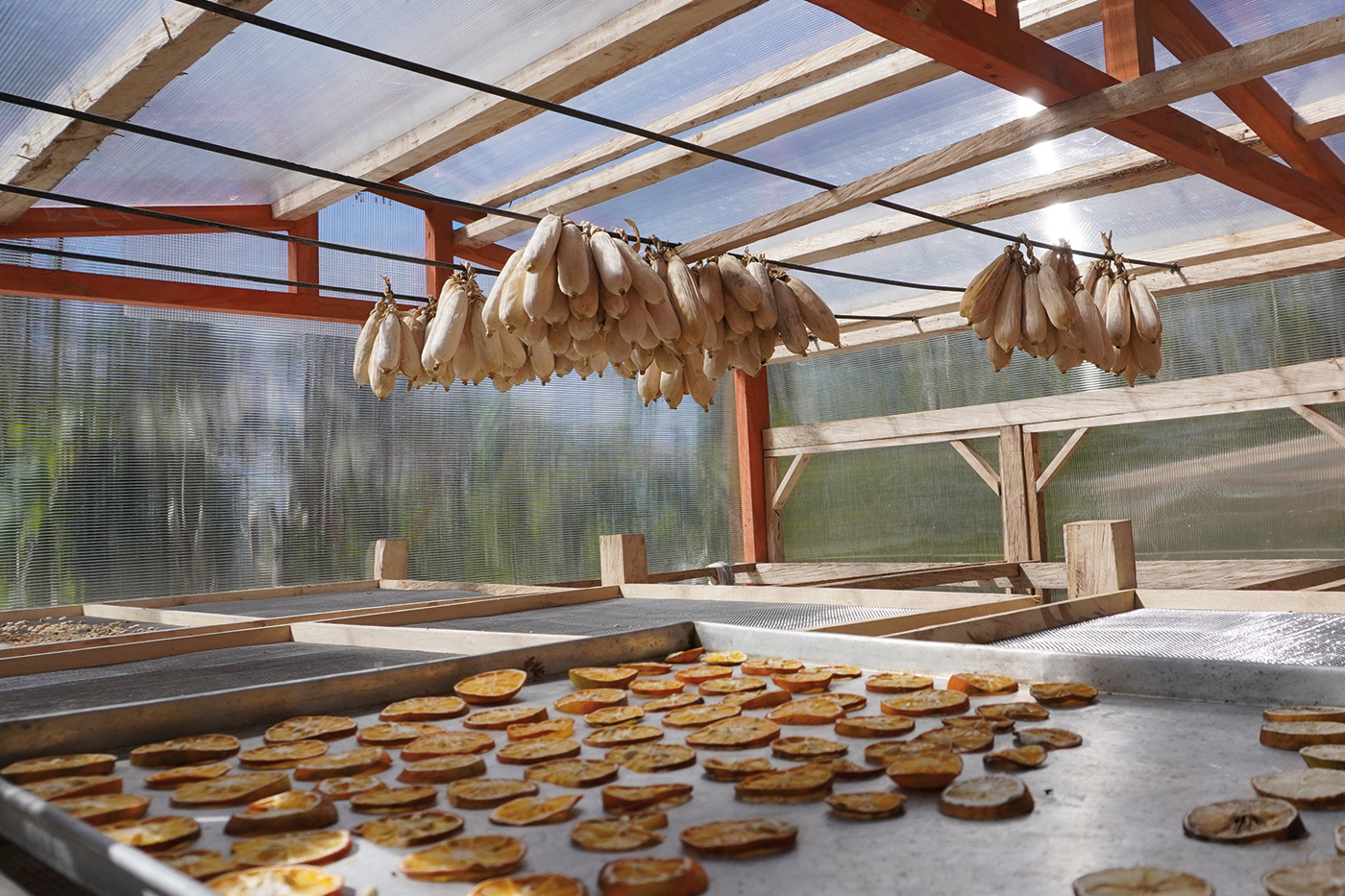
As part of Yayasan Kopernik’s PANGAN program, solar dryers have been tested with various commodities and have proven effective in accelerating the drying process, protecting produce from contamination, and extending shelf life. Photo courtesy of Yayasan Kopernik
Yayasan Kopernik’s PANGAN Program
The Indonesian word for food is pangan—and for centuries, farmers in the region have grown food using regenerative practices that emphasized biodiversity to support soil health and nutrient-rich crops. As new agricultural methods were introduced, the ecosystem began to face challenges. To respond, Yayasan Kopernik, a research and development lab, created the PANGAN program to revitalize local knowledge and strengthen sustainable food systems.
“West Timor, which is part of Indonesia, continues to maintain rich local knowledge and practices,” says Sergina Loncle, senior director of communications and community initiatives for Yayasan Kopernik. “Over the years, these practices have been less commonly used as newer, more modern agricultural methods were introduced. The increased use of chemical fertilizers has affected soil quality and local biodiversity, which in turn impacts food security in the region.”
To address these challenges, PANGAN has spent the past five years working with farmers, focusing on regenerative practices, clean water, nutrition, the use of local food, and other forms of agriculture-related knowledge.
“We started in small groups talking about stunting and the role of nutritious food in prevention,” says Loncle. “We began by identifying local food sources in their area, including those from nearby forests. We conducted workshops to develop new recipes and revive recipes passed down through generations. The key goal is to encourage households to prepare and enjoy local food; together we even created a cookbook with these recipes. We’ve also started experimenting with postharvest technologies like solar dryers to help farmers preserve their harvests.”
With their Seeding The Future Growth Grant award, the PANGAN team will pilot a Local Food Hub to take the program to the next level. Loncle says it will be a scalable model connecting micro-agribusinesses with local markets to strengthen community ties and expand access to sustainable, nutritious food across the region.
“We realized that farmers sometimes have limited access to buyers in their local area. This hub aims to connect their products to wider markets,” she says. “We’ll also be experimenting with different revenue-generation activities to see what works, so local farmers and agribusinesses can grow nutritious food while ensuring financial sustainability.”ft
Apply for a Challenge Award
The Seeding The Future Global Food System Challenge is now hosted by the German aid agency Welthungerhilfe. Applications are open through Dec. 15, 2025, at welthungerhilfe.org/global-food-system-challenge.
Hero Image: Photo courtesy of Toothpick Company
Authors
-
Kayt Sukel Author
Kayt Sukel is a book author, magazine writer, and public speaker who frequently covers scientific topics.
Categories
-
Food Health Nutrition
-
Sustainability
-
Food Security
-
Innovation
-
Food Quality
-
Food Technology Magazine


