
How Iconic Brands Stay Evergreen

 Dale Buss
Food Technology Magazine
-
Key Takeaway 1
Iconic brands like Reese’s and Cheerios are creatively expanding product lines with new flavors, limited-time offerings, and co-branded items to retain relevance and attract younger consumers.
-
Key Takeaway 2
Brands are using consumer insights from social media and e-commerce data to shape product development, ensuring new offerings align with evolving tastes and lifestyles.
-
Key Takeaway 3
These strategies reflect an industry shift toward rapid, consumer-centered innovations that enable legacy brands to better compete with startups and private-label products.
If you want to explore the cutting edge of food branding, visit the sushi section in a Kroger’s grocery store for a slice of SPAM Musubi, a new limited edition based on the popular Hawaiian concoction with rice wrapped in nori. Or look in the center store for the new Bush’s Best Grillin’ Beans featuring Mike’s Hot Honey, a sweet and spicy take on one of America’s blandest—but increasingly versatile—foods.
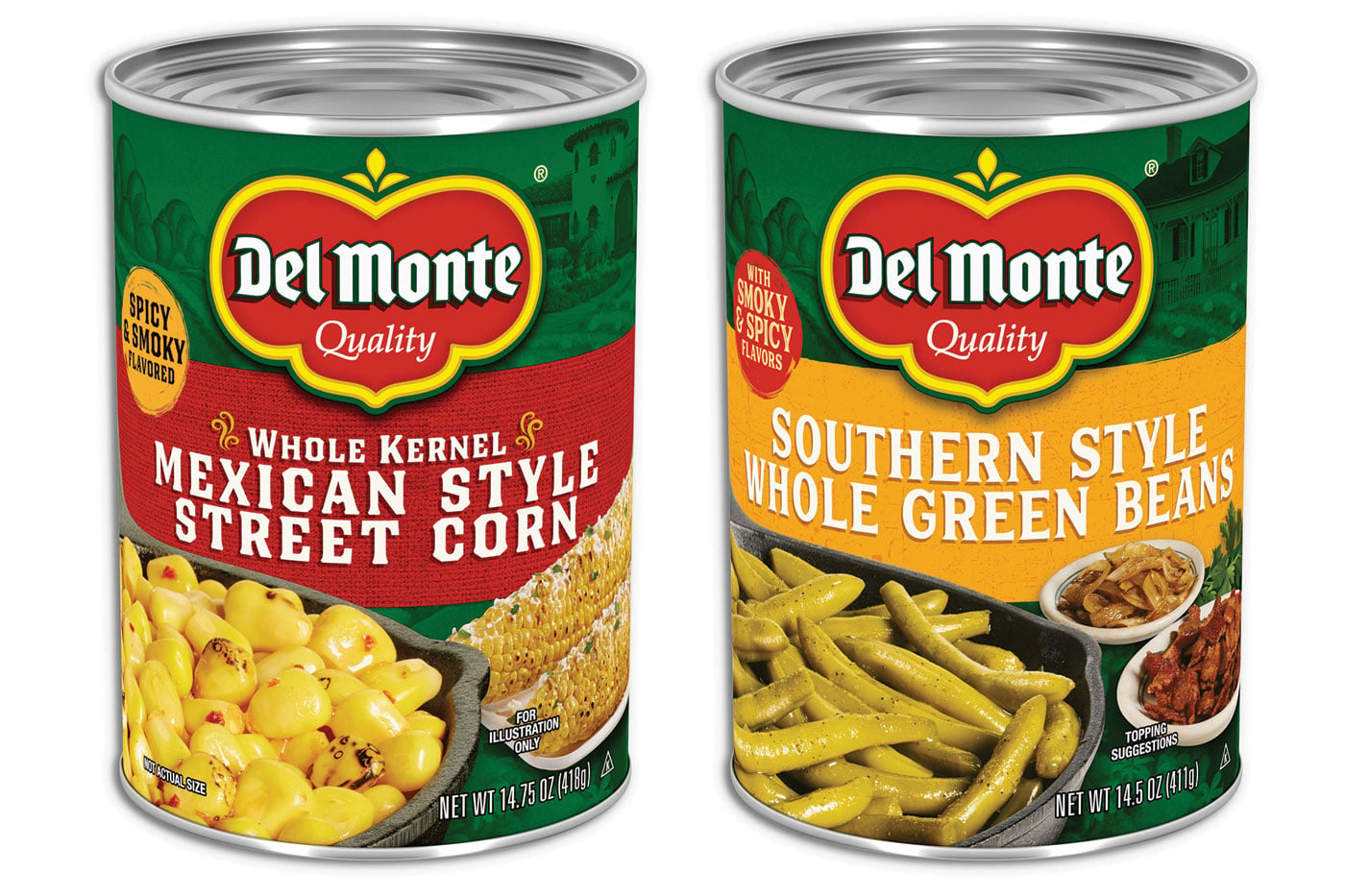
Move further down the canned vegetable aisle and consider Del Monte’s new Mexican Style Street Corn, a modern twist on a traditional Mexican cuisine favorite. Then loop over to the cookie section and see if you can still score some limited-edition Coca-Cola–flavored OREOs.
And before you leave the supermarket, behold the plethora of products under Hershey’s Reese’s brand, which may be in the candy aisle, at the impulse section by the checkouts, scattered on endcaps, and who knows where else. In addition to the classic package of two peanut butter cups, there also could be Reese’s miniature cups (wrapped and unwrapped), king-size cups, thins, sticks, dipped pretzels, drizzled popcorn, dipped animal crackers, and frozen dairy desserts in tubs, bars, and sandwiches. Depending on the season, there are Reese’s pumpkin-shaped peanut butter cups, ghosts, and Christmas trees. Of course, there’s an entire line of the hard-shelled candies known as Reese’s Pieces, but also Reese’s products called Crunchers, Colliders, and Cluster Bites.
Just to make sure the brand hadn’t actually skipped an opportunity, Reese’s recently launched its Chocolate Lava Big Cup at U.S. retailers. Melissa Blette, senior brand manager for Reese’s, gushed about the new SKU in an appropriately over-the-top press release. “On the heels of last year’s Reese’s Caramel Big Cup launch,” Blette said, “we felt the excitement that erupted for the extra layer in our Big Cup line and wanted to give our fans a delicious experience beyond the everyday.”
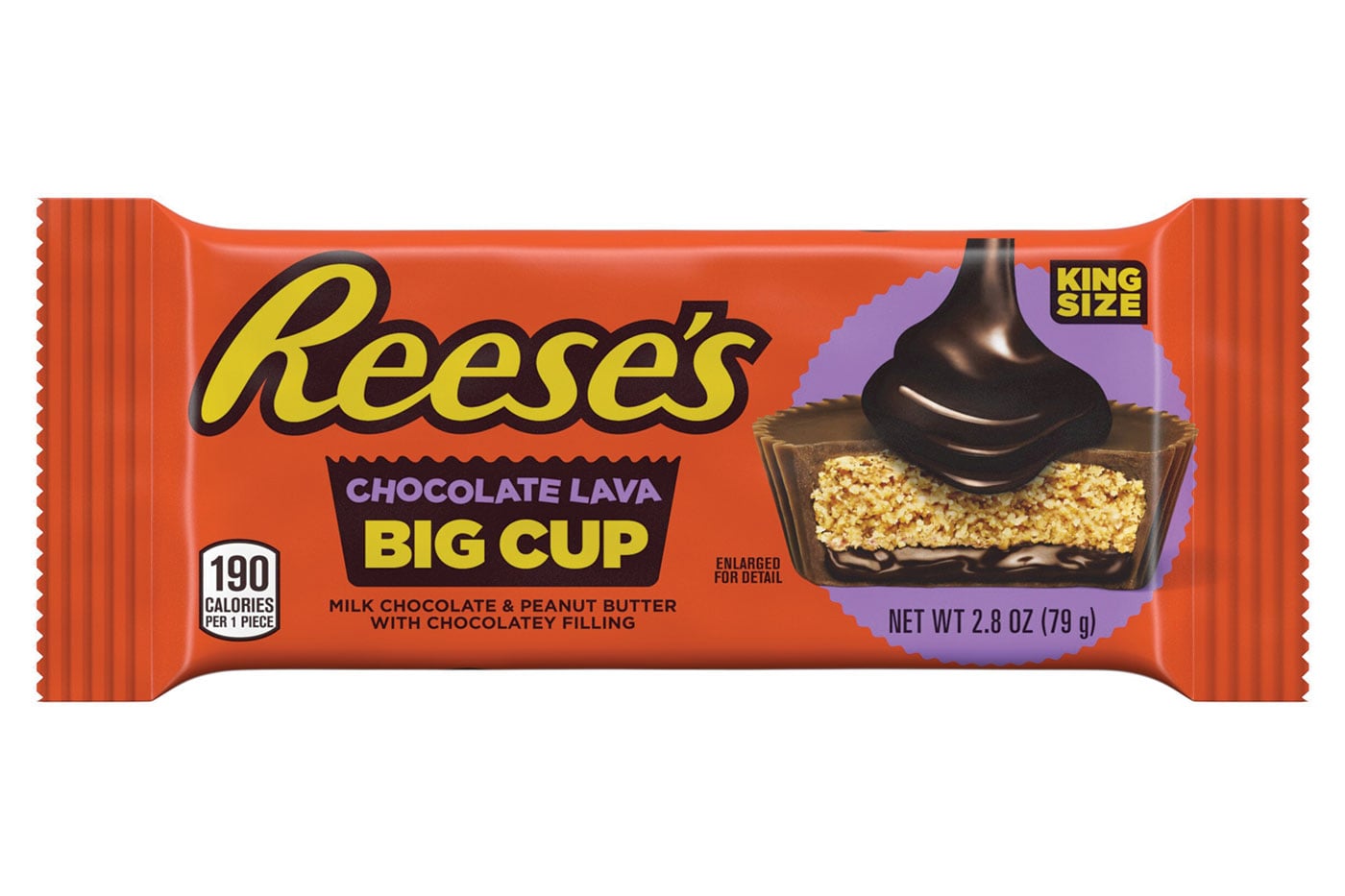
Branding consultant Kathy Guzmán Galloway notes that Reese’s is a “spectacular case study” of success in renewing and extending a legacy brand. “They’re staying close to what consumers are excited about today but not being afraid to look beyond the space they occupy today. ‘Yes, we’re a candy brand, and we make little cups of chocolate and peanut butter, but we also can take that and push it into a thousand different versions of candy and indulgence.’ That connection and deep understanding and appreciation of the consumer, and the need for innovation, has done well for them.”
Meanwhile, Cheerios for the first time is contemplating the introduction of new products that aren’t forms of its oat-based cereals or breakfast bars, the company tells Food Technology.
“There are other things we’re talking about that we can’t divulge,” says KC Glaser, head of external marketing and brand experience for Cheerios and General Mills’ other adult cereals. “We have to make sure it’s strategically in line. It has to make sense with who we are at the core and where we’re trying to go strategically and aspirationally.
CPG companies and foodservice brands are leveraging product development like never before in service of extending the reach of their iconic brands.
“It has to be something that consumers are going to believe is true to Cheerios. So we’re not going to have ‘Cheerios Hot Soup.’ There are things that just don’t make sense and things that are a little more strategic and on-brand for something like Cheerios.”
Cheerios and Reese’s are far from alone. CPG companies and foodservice brands are leveraging product development like never before in service of extending the reach of their iconic brands. They have accelerated their efforts to provide new twists to old marques by proliferating product forms, types, flavors, and other innovations.
The main reason is this: Startups and better-for-you propositions have taken big chunks out of the sales of legacy brands and have encroached mightily on their traditional share of supermarket shelves. Legacy CPG companies and restaurant brands also are trying to gain new currency with younger American consumers who are looking for new taste sensations, extending their appetites across new product types, and incorporating global flavors and textures into their culinary world—and who typically turn to challenger brands in that quest.
There’s a renewed interest in brand.

“There’s a renewed interest in brand,” says Ken Harris, managing partner of Cadent Consulting Group. “The idea is that you have this incredibly valuable asset that in many cases you’ve cultivated for years. So it’s much easier to embellish and build on a brand platform like that than build a new one.”
Guzmán Galloway says, “There was a time when consumer preferences changed slowly, and brands could go 10 or 20 years on a few pieces of innovation that stuck close to home. But since the mid-2010s in particular, and certainly during and since the pandemic, consumers have learned not only to research on their own but also have become much smarter about keeping up with what has changed.”
Nowadays, says Sally Lyons Wyatt, global executive vice president for consulting company Circana, product innovation “drives excitement and traffic into stores and drives people to click online. Innovation is what really drives any industry, but particularly ours, and especially now because consumers are looking for new ways to excite their lives.”
Building on legacy brands also is crucial for CPG companies, Lyons Wyatt says, because “retailers have done a really good job of developing their own private brands. It’s more important that manufacturers get their innovation engines running at the highest possible speed because that’s how they stay in the game.”
Still, Phil Lempert, a consultant known as The Supermarket Guru, insists that not all legacy brands are doing a great job of staying ahead of the game because challenger brands are continuing to produce innovations that the big companies aren’t.
“We’ve been seeing major soda companies doing smaller cans, for example,” he says. “That’s not innovation. We’re seeing innovation in those [startups] that are adding probiotics and reducing the amount of sugar in soda. That’s what expands the marketplace.”
CPG companies are going about renewing legacy brands with these things in mind:
Ideation. Social media brings CPG companies billions of data points about how their existing product lines and brands are being perceived by consumers and what people are doing with them in recipes that could lead to new product ideas for the company and offer windows into taste trends and other new ideas in foodservice, where continued creativity with fare can be crucial.
Campbell’s Pepperidge Farm Goldfish is “a really good example” of tapping ideation, says Emma Dunstone-Brown, founder, chief innovation strategist, LaunchJuice. “One of the things you can do in product development is address different eating occasions. So you see [the brand] launching family-pack sizes, small-pack sizes targeting soccer games for children, lunch-box sizes, [and] all kinds of flavors, including seasonal flavors. They’re trying to keep things interesting and trying to get to new consumers as well.”
It used to be that if I were the brand manager for OREO, I’d come up with a new kind of OREO every six months. But now that has evolved.

Lempert says that “smart CPG [companies] now are tracking how consumers are changing. It used to be that if I were the brand manager for OREO, I’d come up with a new kind of OREO every six months. But now that has evolved because, through food science and technology and understanding more consumer insights, these companies can target consumers that have a real need versus just trying to get more shelf space.”
E-commerce. Brands can put their entire product lineups online, including long-tail varieties that may have a loyal audience but simply aren’t cost-effective for finding space on physical store shelves. The availability of these products in the e-commerce realm helps consumers experiment and find new ways of attaching themselves to the brand.
“Online happened,” Harris says, “and the reason that’s so important is that online sales provide an unfettered, non-distractible connection between the consumer and the brand—a direct connection with the consumer, potentially at point of purchase, over and over again.”
Co-branding. Frito-Lay’s Doritos may have become the king of brand extenders several years ago in a series of co-branded products with Taco Bell called Doritos Locos Tacos. But CPG companies have been continuing and extending the co-branding gambit as an effective way to further grow their brands by borrowing equity from other brands—and saving trouble, time, and effort that might have to go into product development otherwise.
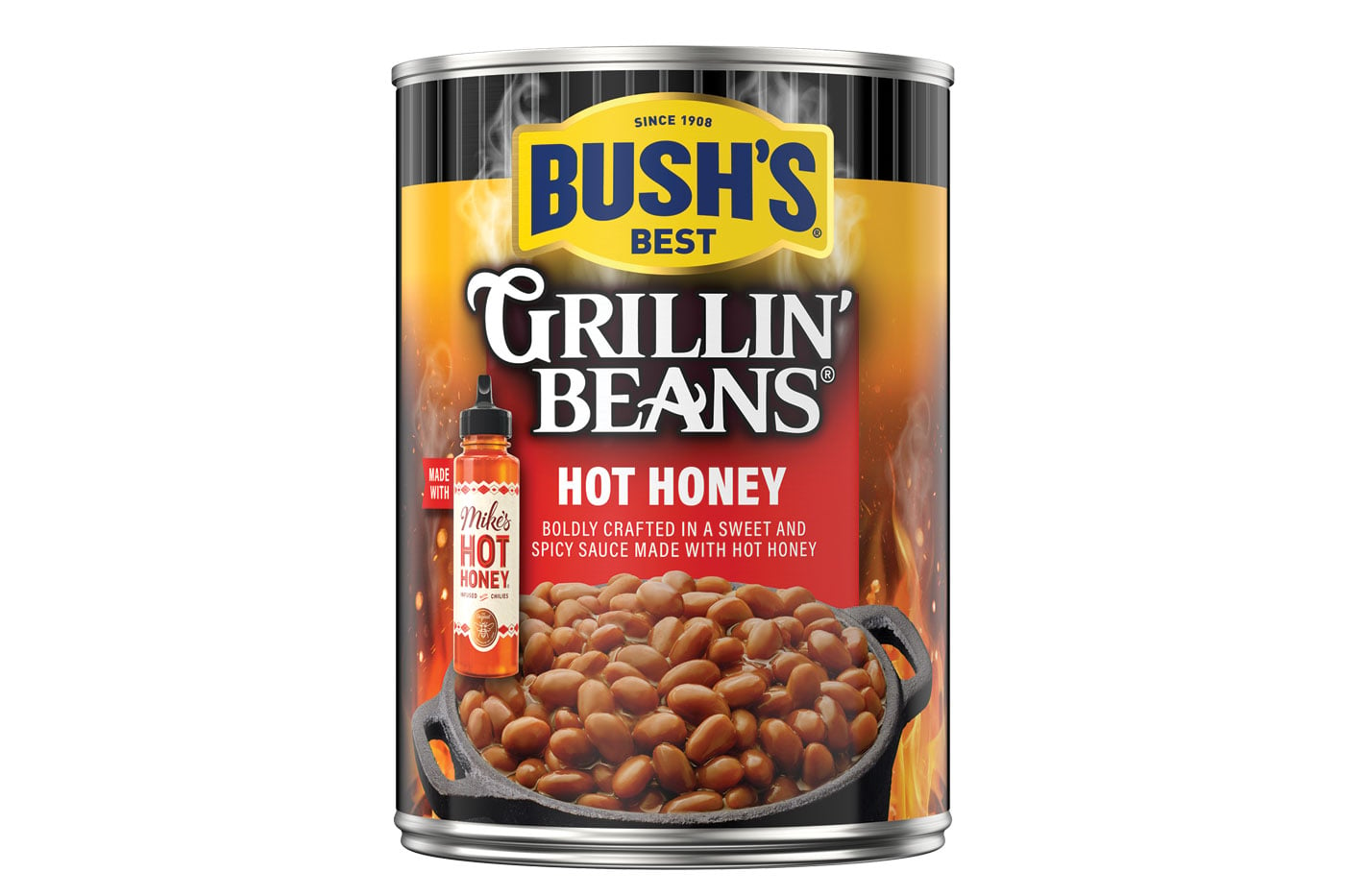
Bush’s, for instance, has partnered with Mike’s Hot Honey on a Grillin’ Beans product rather than go it alone. “We could have developed it internally,” says Stephen Palacios, senior vice president of marketing and innovation. “We just liked what [Mike’s was] doing. They were fun and represented getting people together for communal good times. That’s what our brand represents too.”
Yet, as Harris notes, “You have to be selective about how to do this. If ONE Protein Bars is going to have a peanut butter–flavored variety, why not add the credibility of Reese’s to do that? But a Reese’s Protein Bar wouldn’t do as well as a ONE Protein bar, because ONE is a protein bar.”
Limited-time offers. This is one of the most common ways CPG brands are deploying new products in the post-COVID era. “It’s basic consumer psychology,” says Purvi Shah, a marketing professor at Worcester Polytechnic Institute. “They create hype because they’re new and create interest and increase consumer desires for a product. And they create more demand. Plus, people are going to pay a premium for it.”
“Retailers love LTOs (limited-time offers),” Lyons Wyatt says. “They bring them excitement. Shoppers will come in and buy more than one, and they absolutely love LTOs. But to get it right, CPG [companies] really have to embrace retailers, make sure they’re on cadence with what retailers need to get the products in and out.”
Foodservice. Brands are experimenting more with products in restaurants and foodservice where they can benefit from exposure to the front lines of food experimentation and customer experience.
Heinz, for instance, has been experimenting both with condiment dispensers in restaurants and with a new line of limited-time Sauce Drops for restaurants. In 2023, they included Yuzu Wasabi, Creamy Chimichurri, and Hatch Chili Ranch sauces for foodservice. Because of such gambits, sales in Kraft Heinz’s Away From Home division jumped 14% in 2023.
Operations. Food companies are careful not to hamstring themselves in manufacturing operations, packaging, and distribution just to field a new product. Sometimes, the promise and early performance of a new SKU will require difficult decisions in that regard, to expand a processing operation or add new capabilities, but just as often, brands draw the line by asking: What twist can we supply in a new product that doesn’t add too much cost and complexity to its production?
Here are looks at how a handful of legacy brands are raising the bar through product development:
Cheerios
Wheaties may be the “breakfast of champions,” but the champion brand for General Mills cereals is Cheerios, a product the grain giant launched in 1941 as Cheerioats. “It was a way for people to spend less time at the stove cooking morning oatmeal and more time with family,” Glaser says.
Fast-forward 80-some years, and the approximately 20 mainstay flavors of Cheerios comprise one of the bedrocks of the entire $20 billion General Mills enterprise. The brand introduced Honey Nut Cheerios in 1979, one of its few significant product innovations since oat-puffing technology created the original Cheerios.
Nowadays, the Cheerios lineup also includes varieties such as Fruity, Hearty Nut Medley, Strawberry Banana, Frosted, Multi Grain, Very Berry, Oat Crunch Berry, Cinnamon, and Chocolate Peanut Butter. The brand also makes liberal use of limited-time-only offerings, such as Maple Cheerios, which many consumers embraced only to have the company discontinue it in 2023.
“Cheerios is an all-family, nutrition-first brand; we want to deliver nutrition the whole family can eat,” Glaser says. “As we build innovations, we test all potential new products with consumers. We want to make sure it makes sense in the lives and routines of consumers as well as for us as a brand.”

One clear winner has been Happy Heart Shapes Cheerios, which transform the “o’s” into little hearts. The gimmick is a visual reminder for consumers to take care of their heart health. The brand has brought the heart shapes back for five years running, in February, in honor of American Heart Month. And for the first time, in 2024 Cheerios offered cereals personalized with descriptors of individuals who inspire heart-healthy choices—mom, friends, and grandparents, for example.
Another product innovation that has made sense is Fruity Cheerios, a seasonal flavor that Cheerios keeps bringing back as a popular flavor play. Last spring, Cheerios also released Peach Mango Cheerios, designed as a limited-time offering.
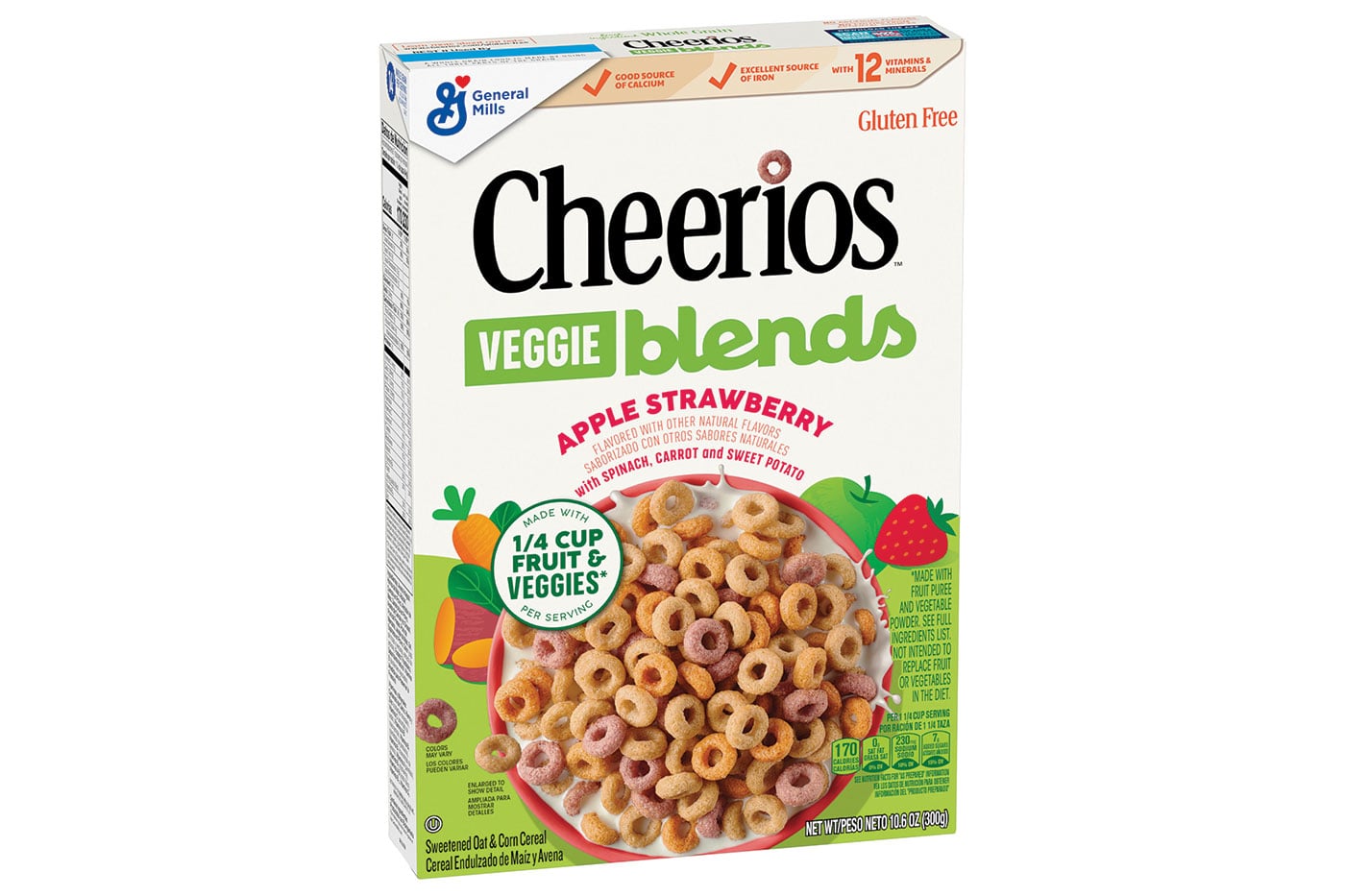
One new variety Glaser hopes will last is Veggie Blends. Indeed, more and more CPG products are blending vegetables with fruits. Veggie Blends includes sweet potatoes, spinach, and carrots, along with fruit ingredients and features a quarter-cup of vegetables and fruit per serving.
“Whole-grain oats are the first ingredient, but as we roll out different flavor varieties, the percentages are going to vary a little bit,” Glaser says. “Nothing nutritionally was taken out of [Veggie Blends], but we found a way to add that benefit. We just had to make sure the flavor was right.”
SPAM
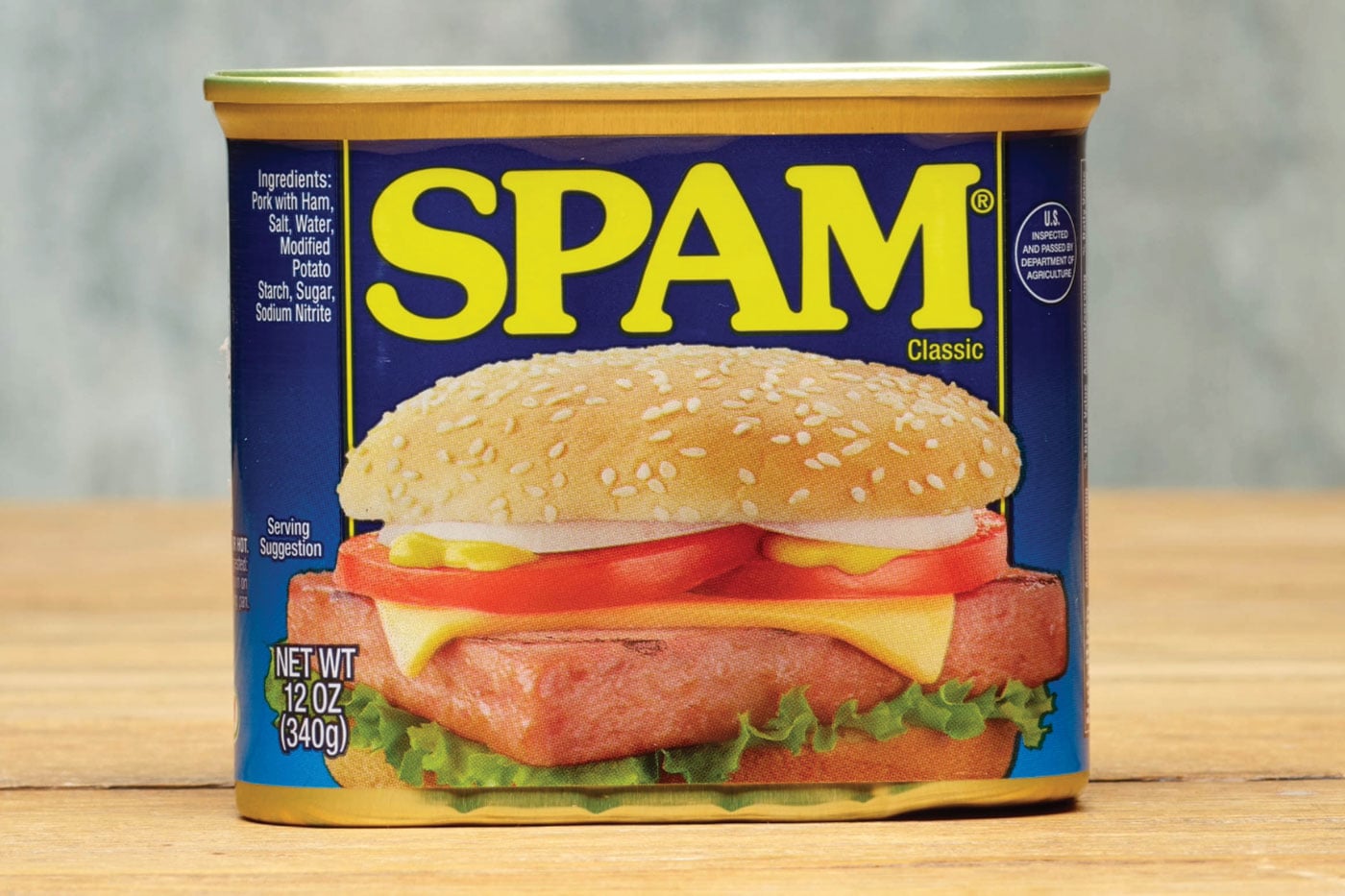
Few brands are more iconic than the 87-year-old canned-meat marque owned by Hormel Foods. And while SPAM long has been regarded as a commodity for the masses—attracted by the $4 to $5 price point for a 12-ounce can—product developers and marketers have managed to leverage new varieties that keep the brand fresh and interesting to consumers who may be coming to it for the first time.
In fact, Hormel has reported eight consecutive years of record sales of SPAM, including the addition of 1.2 million households to the brand in 2024. “We think there’s tremendous runway for growth,” says Jason Baskin, SPAM’s director of marketing.
The three staple SPAM products—Classic, 25% Less Sodium, and Lite—still are the brand’s top sellers year in and year out. Single slices of SPAM also appeal to “smaller households, to throw on rice or noodles,” he says. But increasing contributions are coming from others among the 12 permanent varieties of SPAM, including Korean BBQ, which Hormel launched last summer. “Half of the portfolio has been launched or relaunched in the last decade,” Baskin says.
One of the most dynamic aspects of the SPAM brand, and of how it develops products, is that about half its sales are outside the United States. Thus, SPAM flavors include Gochujang, Jalapeño, and Teriyaki. SPAM became ubiquitous in Allied countries in World War II as it followed U.S. troops. “It was born in America but raised around the world,” Baskin says. “We’ll go talk to consumers in Korea, and they can’t believe the United States has SPAM.”
Del Monte
The 135-year-old company has been a venerable player in canned fruits and vegetables for most of that time, and for the last few decades Del Monte also has had a large presence in refrigerated fresh-fruit snack cups.
Americans increasingly have migrated to the grocery store perimeter for fresh fruits and vegetables from around the world for their produce demands, and Del Monte is trying to lure them back into the center store with new canned varieties such as Mexican Style Street Corn and Southern Style Whole Green Beans, the latter of which seems to be based—though Del Monte won’t say—on the popular side dish at Cracker Barrel Old Country Store restaurants. On the fruit side, newer Del Monte products include Diced Peaches with Cinnamon and Brown Sugar.
“What we’re really trying to do is remind consumers about the benefits of our product categories,” says Bibie Wu, chief communications and technical development officer at Del Monte Foods. “It’s fruit and vegetables, so it’s very healthy. Americans are looking to eat more fruit and vegetables in their diets, so we’re putting a lot of effort into making the flavor profiles more contemporary and modern.”
The new products are partially a result of an effort Del Monte began about six years ago to accelerate innovation by adding more contemporary flavors and inventing more convenient packaging. Now, innovations launched in the past three to five years make up about 10% of annual sales for all the company’s brands, up from the low single digits a decade ago, and Del Monte is aiming to maintain at least the new percentage.
Del Monte gathers insights about where to focus product development efforts “by monitoring the latest food trends,” Wu says. That includes not only online revelations about what’s happening in foodservice but also digging out what other companies are doing in the fruit and vegetable space. “We play center-store but we look at what flavors and products are popular and being launched in frozen,” Wu says. “There are interesting ideas out there.”
The brand’s insights group then works with R&D and product teams “to build concepts and validate them too,” Wu says. Del Monte tests the ideas with “qualitative focus groups and smaller sessions” of consumers and also at that point brings in another key constituency—the retailers that sell its products.
“The strength of Del Monte is to bring retailers in early to have those conversations,” Wu says. “They know shoppers better than anyone. And they’re very sophisticated in the use of their data, especially Walmart, Costco, Target, and supermarket chains including Publix. They’re excited by the fact that we can take their feedback into account.”
We very responsibly and strategically manage our input costs and prices to the consumer.

For a category that traditionally has been commoditized, pricing is important. Prices for 75% of the Del Monte portfolio are $2 or less, and maintaining that affordability proposition is important to product development. “We very responsibly and strategically manage our input costs and prices to the consumer,” Wu says. “Like everyone else, we’ve seen prices and input costs go up, and we’ve reflected some of that to the consumer. But we still offer excellent value.”
Del Monte has been elevating the marketing and communication of its brand proposition as well. That’s where the real challenge comes in running an iconic brand: Consumers trust Del Monte and are used to seeing its products in certain traditional ways. “People know about green-bean casserole and sliced pineapple in a pineapple upside-down cake,” as Wu puts it.
But extending the product line effectively means getting consumers to embrace the brand in new ways. “Ultimately, what you develop from product development as well as your communications strategy is about purpose and brand DNA,” Wu says. “We’re about cultivating a healthy and hopeful tomorrow by bringing accessible nutrition to all. So now that means emphasizing things like the Southern-style green beans people enjoy at a family restaurant, and showing people how to make pineapple mojitos, and talking about our brands on platforms like Pinterest.”ft
TO LEARN MORE
Product Development at Domino’s: A Domino’s marketing executive shares the company’s approach. Please visit iftexclusives.org/dominos-product-development
Hero Image: © Zigmunds Dizgalvisistock/getty images plus
Authors
-
Dale Buss Writer
Dale Buss is an award-winning journalist and book author whose career has included reporting for The Wall Street Journal, where he was nominated for a Pulitzer Prize (daledbuss@aol.com).
Categories
-
Food Business Trends
-
Consumer and Marketplace Trends
-
Food Categories
-
Food Retailing
-
Issues & Insights
-
Confectionery
-
Cereals
-
Food Technology Magazine


