
OMNIVORE
New regeneratively grown blueberries debut, Recognizing IFT’s 50-year members

 Emily Little
Food Technology Magazine
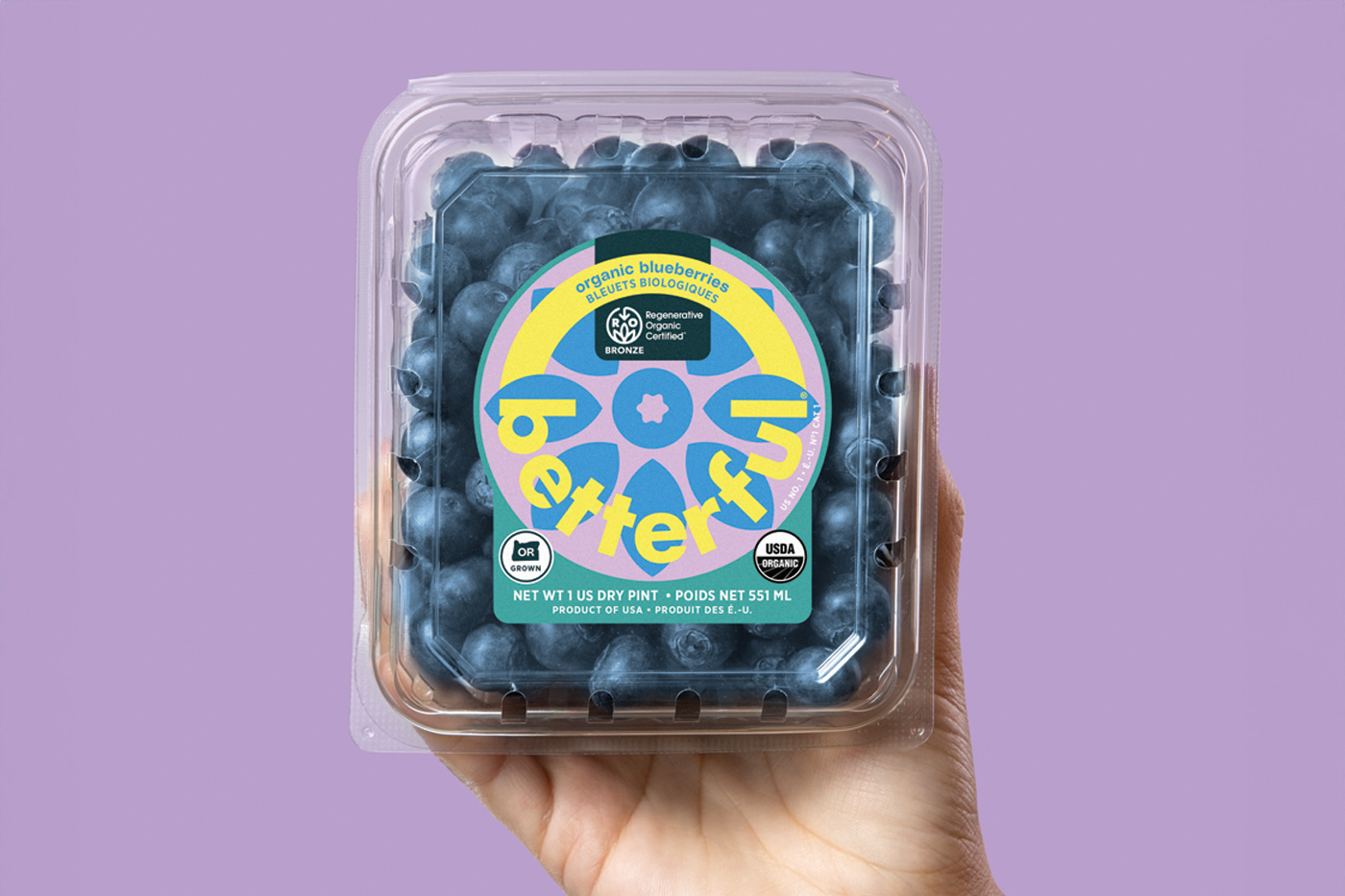
Photo courtesy of AC Foods
New regeneratively grown blueberries debut
AC Foods, a vertically integrated producer focused on sustainable farming, recently launched betterful, a line of regenerative, organic-certified blueberries.
Betterful’s mission is to enhance the growing, harvesting, and delivery processes to provide berries that are fresher and healthier for the planet. The berries, which are grown on California and Oregon farms, are available in select U.S. grocers through September.
AC Foods representatives said that the betterful farms in Oregon will become Regenerative Organic Certified later this year. This certification reflects high standards for soil health, animal welfare, and farmworker fairness.
“We have been farming blueberries for a long time and have always worked to implement farming practices that not only are sustainable to maintain the land, crop, and community, but are able to improve and grow each of these areas,” said Sunnia Gull, vice president of marketing at AC Foods, in an interview with Food Technology. “For us, it was a natural next step to seek a formal regenerative certification for practices we have been focused on for years in order to continue delivering delicious, high-quality blueberries.”
According to the brand’s website, betterful farms have improved soil health, reduced water and energy usage, and supported pollinators. These farming practices do not affect the quality of the berries, according to Gull.
“Through our years of experience farming blueberries, we have improved every step of the growing, harvesting, and delivery process,” she explained. “This led to a natural fit to connect our established practices and vertically integrated farming model to a brand consumers can find on the shelf.”
The brand hopes that introducing regenerative, organic-certified berries into the market will encourage further investment in regenerative practices.
“With betterful, we want to ensure that the blueberries we grow are not only tastier for our consumers, but better for the planet, and regenerative agriculture is at the center of this,” Gull said. “It is critical to invest in ways to provide sustainable food systems while ensuring we are building a lasting, regenerative ecosystem for future crop growth.”
Fruit and vegetable consumption linked to sleep habits
Consumption of fruits and vegetables has a connection to sleep patterns, according to a study from the University of Helsinki and the Finnish Institute for Health and Welfare.
The study, published in Frontiers in Nutrition, analyzed data from the National FinHealth 2017 Study, which involved over 5,000 adults in Finland. Participants in the survey reported their sleep durations and dietary consumption through a questionnaire.
Adults who consumed a smaller number of fruits and vegetables demonstrated irregular sleep durations, the study showed. Irregular sleep durations were defined as any duration less than seven hours or more than nine hours. Further, the researchers used their findings to predict sleep patterns based on fruit and vegetable consumption. They believe that these findings show the importance of considering sleep patterns in dietary intervention.
The link between fruit and vegetable consumption and sleep duration is related to the willingness to adopt healthy lifestyles, the researchers hypothesized. Those with normal sleep patterns are more likely to adopt healthy changes, such as increased fruit and vegetable consumption and regular physical activity. Additionally, certain fruits and vegetables, such as cherries, kiwi, tomatoes, and cucumbers, are naturally high in melatonin, a hormone that regulates circadian rhythms and sleep patterns.
To build on these findings, the researchers hope to see targeted interventions focusing on certain fruit and vegetable groups to enhance this study. Additionally, since this study was only observational, further work is needed to determine the biological mechanisms involved in this association.

© gilaxia/iStock/Getty Images Plus
Taste, animal welfare trump sustainability for shoppers
Consumers value factors such as taste and animal welfare more than environmental sustainability when purchasing meat and dairy products, according to a new study from the University of Portsmouth.
The study was conducted online across five European countries: the Czech Republic, Spain, Sweden, Switzerland, and the United Kingdom. Participants were asked to rate the importance of 18 different factors when shopping for these products on a scale from one to five. The factors included quality/taste, price, animal welfare, and carbon footprint.
Consumers in all surveyed countries prioritized freshness, taste, and animal welfare when purchasing meat and dairy products. The participants indicated that sustainability labels on food products were helpful, but certain environmental factors such as food miles, carbon footprint, and organic production were less important in influencing purchases.
“Our study highlights the complex interplay of factors that influence consumer behavior when buying meat and dairy products,” said co-author and senior lecturer Andy Jin in a press release. “The findings demonstrate the importance of labeling strategies that encompass multiple aspects of product attributes, beyond environmental considerations alone.”
The researchers acknowledged that the term “animal welfare” is broad, but stated that their data shows this general attribute was valued more than more specific attributes regarding production, such as “free range” or “pasture-fed.” The authors hypothesized that consumers associate products with animal welfare claims with better taste and quality.
Jin concluded that this study shows the importance of policy measures to address consumer attitudes.
“Labels on their own are not enough to change behavior, especially for consumers who have low or no intention to buy sustainable meat or dairy products,” he said. “These results should be translated into additional policy measures, such as nudges or behavioral interventions, helping individuals translate their attitudes into behavior and facilitating the choice of sustainably produced products.”

© Jogy Abraham/iStock/Getty Images Plus
North Carolina State University receives grant for alt proteins
North Carolina State University received $30 million from the Bezos Earth Fund to establish a center for research and cultivation of sustainable meat alternatives.
The grant, which will be administered over a period of five years, will support research on three types of alternative proteins: plant-based products, precision fermentation products, and lab-grown meat.
“Sustainable protein has tremendous potential, but more research is needed to reduce the price and boost the flavor and texture to ensure nutritious, affordable products are available,” said Andrew Steer, president and CEO of the Bezos Earth Fund, in a press release. “Food production is the second-largest source of greenhouse gas emissions, so it’s critical we find ways to feed a growing population without degrading the planet.”
The Bezos Earth Fund has committed $1 billion to help transform food and agricultural systems, $100 million of which has been dedicated to alternative proteins. Low-cost virtual fencing for cattle farmers, alternatives to crop burning in indigenous agriculture, and investment in seaweed farming are the among the projects that have been previous grant recipients.
There are more than 20 industry partners and four academic partners committed to the new research center. These partners stated they are committed to providing students with internships and mentorships. Additionally, the center is intended to serve as a magnet for biomanufacturing firms, thus creating jobs and economic growth.
“This is a significant opportunity for North Carolina to not only be a state with a thriving animal-sourced food sector, but also one where it is a powerhouse in complementary proteins, building new industry, and driving economic growth for the state,” said Bill Aimutis, co-principal investigator on the grant and co-director of the center, in a press release.

Dr. Dariush Mozaffarian, Photo courtesy of U.S. Senate
Experts to U.S. Senate: ‘Food is medicine’ boosts health, economy
“Food is medicine” programs, such as medically tailored meals and produce prescriptions, have the potential to improve health and stimulate local economies, according to a panel of experts who spoke at a hearing held by the U.S. Senate Committee on Health, Education, Labor, and Pensions.
The hearing, titled “Feeding a Healthier America: Current Efforts and Potential Opportunities for Food is Medicine,” featured witness testimony from four experts: Jean Terranova, senior director of policy and research at Community Servings in Boston; Erin Martin, founder and director of FreshRx Oklahoma in Tulsa, Okla.; Dr. Dariush Mozaffarian, director of the Food is Medicine Institute at Tufts University in Boston; and James Carter Williams, CEO and managing principal at iSelect Fund in St. Louis.
Mozaffarian explained that nutrition-related illness is becoming more prevalent throughout the United States. “Poor nutrition is the top cause of death and disability in the United States,” he said. “I should drop the microphone right there.”
Recognizing IFT’s 50-year members
The following individuals are celebrating their 50th anniversary as IFT members: Helen Alexanderson-Lee, Thomas Aurand, Stanley Biede, Raymond Bourque, Scott Butler, Julia Castellanos, Sin Bin Chua, Guillermo Dies, Leah Lyon Domrzalski, John Dwyer, P. Economidou-Hadjilucas, E. Allen Foegeding, Deborah Ann Fritts, Vicki Guy, Leslie Herzog, Diane Hnat, Ashfaq Husain, Robert Joseph, James Kamman, Bob Koch, Kenneth Marsh, Ronald McDermott, Pamela Micik, Thomas Montville, Michael Thomas Morrissey, Barbara Munce, Patricia Murphy, Susan Nielsen, Edward O’Neill, Elvira Paz, Conrad Perera, Radhakrishna Pocha, Horacio Ramirez, Kathleen Rajkowski, V. N. Mohan Rao, Cynthia L.T. Sasaki, Mary Schmidl, Charles Schmidt, James Seiple Jr., Robert Swaine Jr., Thomas Szalkucki, Mark Uebersax, Raymond Winger, and Arnold Zimmerman.ft
Hero Image: Photo courtesy of AC Foods
Authors
-
Emily Little Associate Editor
Emily Little is associate editor, Food Technology (elittle@ift.org).
Categories
-
Food Business Trends
-
Consumer and Marketplace Trends
-
Omnivore
-
Food Technology Magazine


