

Building Circularity Into the Supply Chain
From spent grains and wheat-stalk fiber to coffee grounds and whey, upcycled side streams are expanding the ingredient toolbox.
 Kayt Sukel
Food Technology Magazine
Key Takeaways
-
Food companies are increasingly using byproducts and side streams to reduce waste, conserve resources, and create new value streams through more circular formulation.
-
Upcycled inputs now span everything from spent-grain flours and wheat-stalk prebiotic fiber to coffee ground extracts and surplus produce components.
-
With consumers showing limited willingness to pay a premium for upcycled claims, growth is likely to come via B2B adoption, stronger supply-chain collaborations, and better performance-driven use cases.
The global food system produces a tremendous amount of waste. According to ReFED, a nonprofit organization dedicated to finding solutions to reduce that waste, the United States allowed 29% of the country’s food supply to go unsold or uneaten in 2024. The United Nations World Food Programme estimates that one-fifth of the food supply is lost or wasted globally, costing the world’s economy $1 trillion.
With a growing population to feed, it is imperative to address this persistent waste. But doing so requires coordinated changes in both policy and production. Yet the food system, as a whole, could significantly reduce this waste by taking a more circular approach—and finding new and innovative ways to recover and reuse ingredients before they are squandered in the field or lost to a landfill.
“With all the love and labor we put into producing food, we should make sure that every ingredient is put to its highest and best use, ideally in the human supply chain,” says Amanda Oenbring, chief executive officer of the Upcycled Food Association, a nonprofit organization that champions upcycling to reduce waste as well as mitigate the impact of the climate crisis on food production. Tapping into upcycled ingredients not usually used for human consumption but produced and procured using verifiable supply chains has the potential to reduce waste and transform cost centers into value streams, Oenbring says.
The idea of upcycling is not a new one. Francis Nephi Grigg, one of the founders of Ore-Ida, presented one of the first documented upcycled products at the 1954 National Potato Convention. This innovative new item, later branded the “tater tot,” took waste from the company’s frozen French fry production line—“the slivers and small pieces of potatoes that occurred [when] slicing the irregular shaped potatoes,” Grigg said. The bits and pieces that had been feeding Grigg’s cattle were brought back into the human food supply, transforming what was once considered waste into a crunchy, fried treat that remains a mainstay of diners, school cafeterias, and family kitchens across the country to this very day.
Dana Gunders, president of ReFED, says there is great opportunity in upcycling to reduce waste, conserve resources, and lower costs—and food companies that take the time to identify potential waste streams that could be “refed” into the food system can benefit from the approach.
“We’ve seen upcycling go from being a startup thing to a more standard practice,” she explains. “Many companies are finding ways to use byproducts from their core products or are working with partners who have an upcycled ingredient that fits a particular nutritional profile. It’s making people go back and take a second look at some of these opportunities within the ingredient space to innovate and support more sustainable food production.”
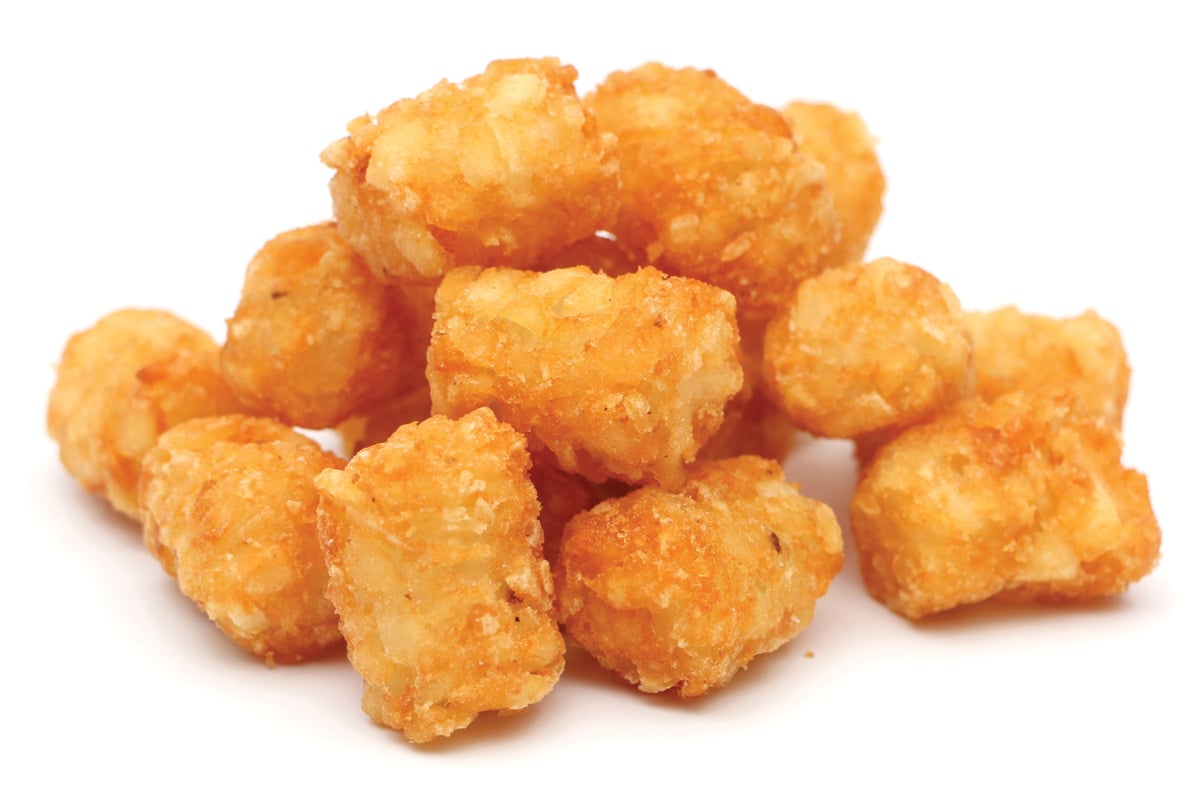
Tater tots, produced using ingredients from potato processing waste streams, are one of the earliest examples of an upcycled food product. © pamela_d_mcadams/iStock/Getty Images Plus
Adding Value From Byproducts
Over the past few years, there’s been a growing emphasis on upcycling spent grains with companies like ReGrained and NETZRO creating nutrient-rich flour blends from the byproducts of brewing and distilling operations. COMET has taken a different approach to grains, developing a prebiotic fiber, Arrabina, from leftover wheat crop stalks—demonstrating that there is more than one way to leverage upcycling as companies investigate new ingredient options.
“We’re taking this fiber that would otherwise be discarded and helping companies add it back to food and provide this much-needed type of nutrition,” says Hannah Ackermann, vice president of marketing and nutrition affairs at COMET. “And that’s the beauty of upcycling and sustainable nutrition. It allows us to take a step back and ask how we can do more with the food system we already have, reducing the waste and repurposing it to help feed people.”
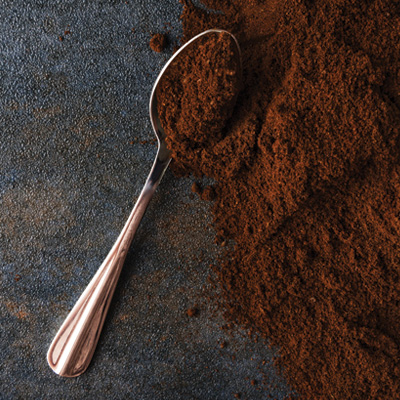
Coffee grounds are a rich source of beneficial compounds. © Viktoriia Oleinichenko/iStock/Getty Images Plus
In terms of where upcycling is currently gaining the most ground, many companies are exploring beanless coffee and chocolate development thanks to increased resource scarcity, as well as sustainability concerns. But Alejandro Franco, cofounder and chief commercial officer at Kaffe Bueno, a company that transforms coffee byproducts into ingredients for functional foods, cosmetics, and other applications, says there are numerous opportunities to add value and reduce environmental impact when you can transform side streams into valuable ingredients. Take coffee itself, he says—we drink “water that tastes like coffee” and then throw away the grounds, which are full of antioxidants, essential fatty acids, and fibers, without a second thought.
“We can leverage the beneficial compounds in those grounds for applications aimed at improving health,” Franco explains. “In personal care, nutrition, and other industries, companies have difficulty substituting natural ingredients for petrochemicals and synthetics due to underperformance and costs. We focus on unlocking the performance potential of these compounds through scientific studies that make it easy for formulators and brands to make the switch.”
The upcycling market is expanding in other surprising ways. Oenbring said more pet products are leveraging the circular economy and including upcycled ingredients in snacks and kibble. Gunders adds that many companies are also finding innovative uses for other waste streams, including surplus produce. Your favorite snack or nutrition bar may well be making use of not only unattractive-looking fruits and veggies, but the bits that may be wasted in current production lines—including fruit peels and husks.
We focus on unlocking the performance potential of these compounds through scientific studies that make it easy for formulators and brands to make the switch.

“There is such a large quantity of different byproducts to consider for upcycling—and they may already be in-house,” Gunders says.
Dairy applications are also growing. While the use of whey to help meet the ever-increasing consumer demand for protein through powders and supplements is not new, this dairy byproduct is also being leveraged for sauces, desserts, and even bread products. Yet another promising application for whey is in new alcoholic beverages. Emily Darchuk, a food scientist and founder of Wheyward Spirit, which produces an alcoholic spirit from leftover whey, says the promise of upcycling for food scientists is the ability to pair “versatility with values.”
“We work directly with sustainable dairy partners, upcycling their whey, so instead of it going to animal feed or down the drain, we capture it, divert it, and use it as the fermentative base for our spirit,” she says. “Our product retains a really beautiful signature profile that’s unique and adds value because it can replace vodka, gin, or tequila in a cocktail. … I’m valorizing a waste stream and also delivering a better-tasting spirit.”
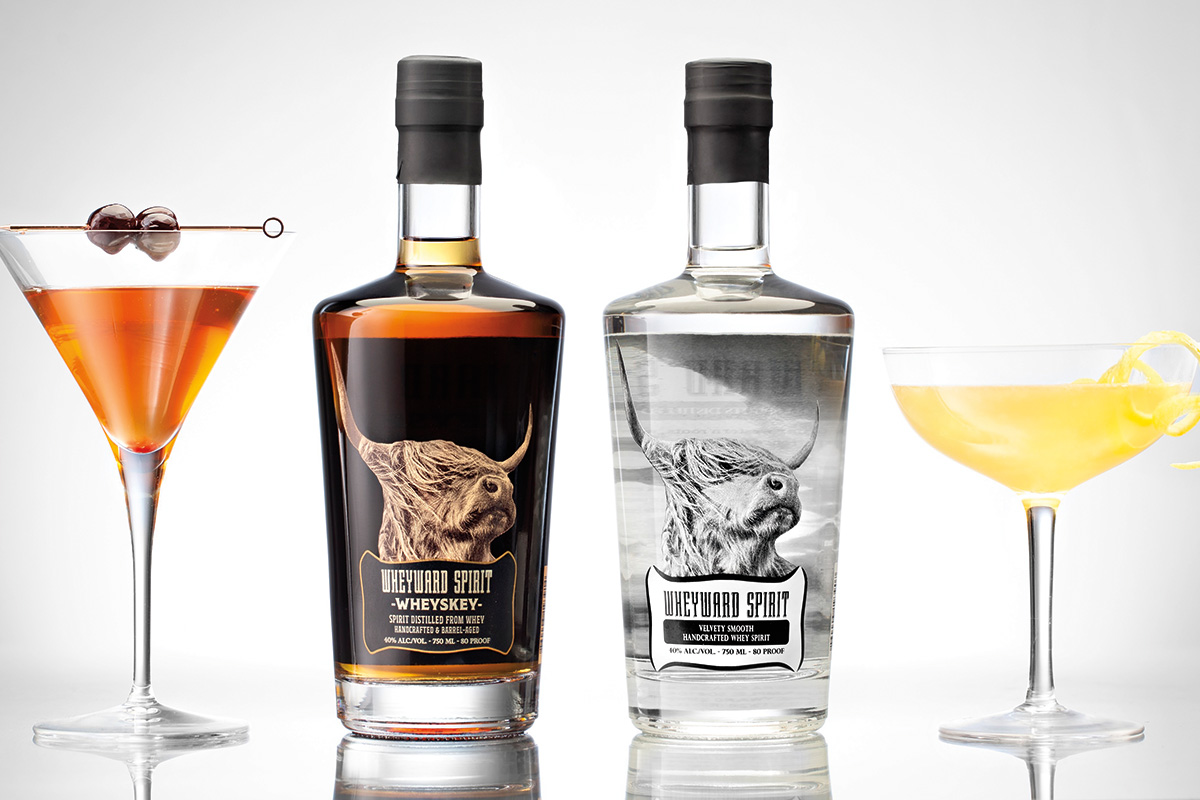
Distilled from dairy byproduct whey, Wheyward Spirit and Wheyward Wheyskey are handcrafted, sustainably made specialty spirits. Photo courtesy of Wheyward Spirit
Formulation Challenges
Over the past few years, there have been a number of smaller startups that have leveraged upcycled ingredients in one form or another. But to gain more traction, formulators and product developers must find a way to balance costs, consumer needs, and, of course, taste. That comes with challenges. And the first is ensuring the consistency of your supply chain, says Ackermann.
“Unfortunately, it’s really hard to standardize an upcycled ingredient,” she says. “You need the right processes to get it to spec.”
That challenge can be overcome by innovative new processes—as well as trusted ingredient sources. But even with consistent raw material sourcing, Franco says formulators must then find ways to match the sensory and technical performance of traditional ingredients. It’s not easy.
Then there’s the matter of costs. While valorizing a waste stream might reduce costs in one column of a spreadsheet, it could add dollars to another.
It’s been exciting to see a lot of the work and research going into side streams from current manufacturing.

“Cost factors include sourcing and processing the byproduct, as well as any additional certification or compliance costs,” Franco explains. “These may or may not be passed on to consumers, depending on scale and positioning.”
While a good sustainability story has helped to expand markets for new products in other areas—especially with younger consumers who are willing to spend more on higher-quality food and consumer products—Gunders says she would be surprised if there is enough of a consumer cohort currently willing to take on extra costs for products just because they boast an upcycled ingredient. And there is data to support that notion. Datassential’s recent research suggests that menu items featuring upcycled ingredients were among the least compelling sustainability initiatives, with only 9% of consumers willing to pay more for such offerings.
Oenbring believes that continued exploration and innovation can address these challenges—and introduce new ingredients and products to support greater circularity in the food system.
“It’s been exciting to see a lot of the work and research going into side streams from current manufacturing, like olive pomace, apple pomace, nutshells—all these ingredients that don’t typically get put to their highest and best use,” she says. “So, capturing that nutrition, understanding it, and finding ways to apply it within formulation provides an opportunity for exciting applications in the future.”
Mainstream or Niche Concept?
Fortune Business Insights valued the upcycled food products market at nearly $39 billion in 2024—and projects growth to more than $65 billion by 2032. But it will take strong partnerships to move circularity from a niche concept to a more widely adopted practice. The fact that so many startup companies who relied on upcycled ingredients have moved from the business-to-consumer (B2C) space to business-to-business (B2B) ventures shows just how important the right relationships are to see value—and encourage greater adoption of upcycling.
“We’re seeing this B2C to B2B trend in a lot of different companies,” says Gunders. “Outside companies find a use for an upcycled product, they demonstrate that use, and the bigger companies will then adopt it.”
Darchuk, for her part, believes organizations interested in reducing food waste and producing more sustainable products should come together to support future innovation and development in upcycling.
With more companies exploring the use of artificial intelligence, I think there will be a greater exploration of some of these big byproduct streams to find new uses for them.

“The food industry, at its core, is a supply chain industry,” she says. “We need to create a broader community to lift this idea up so we can do collaborations, share insights, and drive opportunity.”
Certainly, organizations like ReFED and the Upcycled Food Association are acting as hubs, helping to bring together interested parties to identify new opportunities and to share research and policy updates and important lessons learned. Such connections will become even more important as a growing number of organizations experience ingredient scarcity, perhaps forcing their hand to consider upcycled ingredients for current and future products.
“Ingredient innovation will ultimately unlock new product formulation,” Gunders predicts. “There’s a new generation of food science that is happening—and new challenges that need to be met. And with more companies exploring the use of artificial intelligence, I think there will be a greater exploration of some of these big byproduct streams to find new uses for them. I think we’ll see the slow but steady growth of new ingredient options from these side streams, that are functional and provide the right texture, nutrition, shelf life, and other characteristics, that will shape the future performance of food products.”
Hero Image: © Sergii Vasylchenko, michieldb, Voyagerix, Sotnikova_Vera/iStock/Getty Images Plus
Authors
-
Kayt Sukel Author
Kayt Sukel is a book author, magazine writer, and public speaker who frequently covers scientific topics (ksukel@hotmail.com).
Categories
-
Food Waste
-
Food Ingredients and Additives
-
Food Technology Magazine
-
Sustainable Food Systems
-
Innovation


